Shop on Lazada
MINI BALA products
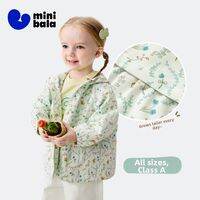
MINI BALA | Mini Soft Outdoor Protective Girls Coat
₱3,109.63₱3,978.81
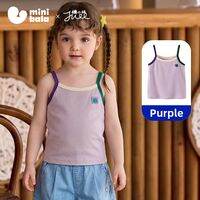
MINI BALA | Mini Cotton Soft Breathable Toddler Tank Top
₱625.04₱1,185.84
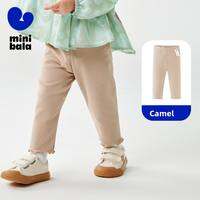
MINI BALA | Elastic Non-slipping Baby Girls Tights Pants
₱630.06₱929.24
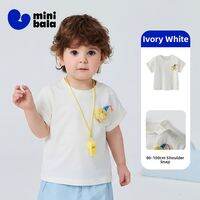
MINI BALA | Cotton Children T-Shirt
₱834.08₱1,493.10
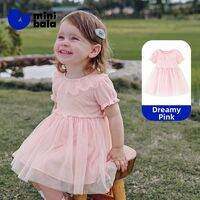
MINI BALA | Breathable Tulle Dress
₱1,079.29₱3,112.01
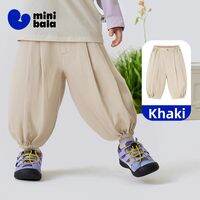
MINI BALA | Soft Non-deformable Comfortable Girls Trousers
₱1,413.08₱1,968.54
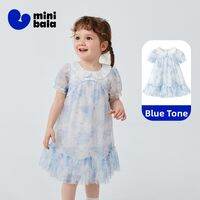
MINI BALA | Artistic Print Mini Ceremony Girl Dress
₱1,213.87₱3,924.23
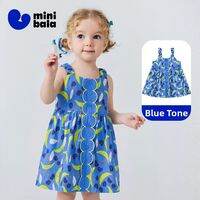
MINI BALA | Soft Breathable Linen Cotton Dress for Girls
₱1,245.54₱3,502.46
About MINI BALA
MINI BALA (Chinese: 迷你巴拉; formerly known as Mini Balabala or 迷你巴拉巴拉) is a Chinese children’s and parent-child lifestyle brand operated by Zhejiang Semir Garment Co., Ltd. The company also owns the well-known Balabala children’s-wear label. MINI BALA focuses primarily on infants, young children, and modern families, offering a combination of apparel, footwear, accessories, and parent-child products. 1
The brand’s origins date to the early 2010s. Industry reports indicate that Mini Balabala launched in 2013 as an infant and young-child clothing line, while later corporate materials from Semir generally cite 2014 as the founding period. Its original ambition was to establish a one-stop shopping concept for infant and children’s products rather than functioning solely as a clothing retailer. 1
Brand overview
| Field | Information |
|---|---|
| Brand name | MINI BALA / mini bala |
| Chinese name | 迷你巴拉 |
| Earlier name | Mini Balabala / 迷你巴拉巴拉 |
| Parent company | Zhejiang Semir Garment Co., Ltd. |
| Country of origin | China |
| Industry | Children’s fashion, infant apparel, parent-child lifestyle |
| Primary age group | Approximately 0–6 years |
| Core customers | Young families, parents and children |
| Main categories | Children’s clothing, footwear, accessories, parent-child apparel and related products |
| Current positioning | Natural, comfortable and child-oriented lifestyle brand |
| Current brand concept | “Mini Me Better Me” / “自然而然成为更好的自己” |
| Current positioning statement | Global natural-aesthetic lifestyle leader |
Semir’s 2025 annual report describes the target consumers of MINI BALA as new-generation families with children aged 0–6, young urban professionals, and sophisticated mothers. In China, the principal price range is reported to be approximately RMB 100–700.
History
Early development
MINI BALA emerged from Semir’s expansion into specialized children’s and infant products. In 2013, the company introduced the brand as an infant-oriented extension of its existing children’s business ecosystem. Early descriptions emphasized a full-category, one-stop shopping experience covering clothing and related goods. 1
The initial positioning was broader than conventional children’s clothing. Industry materials described products and concepts spanning clothing, shoes, accessories, home textiles, toys, and other children’s items, with a specific emphasis on convenience for new parents.
Development through the 2010s
As the brand matured, MINI BALA increasingly focused on infant and young-child apparel while retaining the broader parent-child lifestyle concept. Corporate reports from Semir have categorized it as a fashion-oriented, high-quality maternal-and-child brand serving new-generation families.
The brand became part of Semir’s multi-brand strategy alongside Balabala and other children’s businesses. This integration provided MINI BALA with access to Semir’s supply chain, retail infrastructure, and expertise in children’s fashion.
Repositioning in the 2020s
A significant strategic shift occurred as the Chinese parenting market evolved. Rather than presenting parents primarily as authority figures, MINI BALA began to emphasize parent-child companionship and mutual growth.
In 2022, the brand explicitly upgraded its positioning around the concept of parents and children as partners. The visual identity was refreshed with a new logo incorporating two forms representing a parent and child, utilizing a heart-inspired design to express love, companionship, and friendship.
In 2024, MINI BALA continued this direction through experiential marketing activities such as “Mini Parent-Child City Study Tours,” which combined family travel, cultural experiences, and product engagement.
2025 rebranding
One of the most significant recent developments was the brand’s repositioning in 2025. Semir’s 2025 annual report states that MINI BALA adopted the new positioning of “Global Natural Aesthetic Lifestyle Leader” alongside the brand philosophy “Mini Me Better Me” (Chinese: “自然而然成为更好的自己”).
This concept represents a transition from being solely an infant-clothing label toward a broader natural lifestyle and parent-child brand. The underlying philosophy suggests that children should be allowed to develop naturally while parents maintain their own identities and lifestyles. Earlier communications similarly stressed that parenting does not have a single correct answer and that children and parents should grow together. 1
Products
The product portfolio of MINI BALA has evolved considerably since its inception.
Children’s clothing
Clothing remains the central category for the brand. Offerings include:
- T-shirts
- Shirts and polo shirts
- Trousers
- Dresses
- Pajamas
- Outerwear
- Jackets
- Down clothing
- Children’s sets
- Seasonal and outdoor apparel
The brand’s U.S. trademark filing covers a broad range of apparel, including tops, bottoms, dresses, pajamas, coats, bodysuits, rainwear, swimwear, shoes, hats, and accessories. This trademark was registered in the United States in April 2026. 2
Infant and toddler products
Historically, the brand concentrated heavily on babies and young children. Designs are oriented toward practical requirements such as softness, comfort, ease of movement, temperature regulation, easy dressing, outdoor protection, child-friendly construction, and safety.
Recent descriptions from Semir emphasize products designed around children’s real-life situations rather than simply adapting adult clothing to smaller sizes.
Parent-child clothing
Parent-child matching has become a key component of the brand’s identity. The concept extends beyond identical clothing for adults and children; MINI BALA uses parent-child apparel as a method of expressing companionship, allowing families to participate in shared activities. Retail listings include matching parent-child T-shirts and other coordinated products. 3
Outdoor and functional clothing
In recent years, MINI BALA has placed greater emphasis on outdoor parent-child activities. Reporting from 2025 describes four broad outdoor-oriented usage scenarios and highlights products designed for sun protection, quick drying, wind protection, warmth, and outdoor comfort.
The company has developed proprietary product concepts such as the “小魔纤” quick-drying cotton-feel T-shirt collection and other functional fabric groups.
Design philosophy
A central tenet of MINI BALA is that children’s clothing should be designed specifically for children rather than serving as miniature versions of adult garments. The brand describes its development philosophy as essentially “not adult clothing in a smaller size.” Product development begins with children’s actual movements, comfort requirements, safety needs, and everyday environments. 1
This approach results in a combination of natural aesthetics, functionality, comfort, and parent-child interaction. The aesthetic is generally more relaxed than traditional formal children’s fashion, emphasizing simple silhouettes, comfortable materials, soft colors, and designs suitable for daily family activities.
Brand philosophy
While the philosophy of MINI BALA has evolved over time, several core themes remain consistent.
Companionship
The brand increasingly views parents and children as partners rather than positioning parents purely as teachers. The 2022 repositioning explicitly promoted the idea of parents and children learning and growing together.
Natural growth
The current “Mini Me Better Me” philosophy emphasizes allowing both children and parents to become better versions of themselves naturally, rather than imposing rigid definitions of what constitutes a “good child” or “good parent.”
Natural aesthetics
The 2025 repositioning places considerable emphasis on nature, art, and lifestyle. Consequently, the brand is moving toward a more lifestyle-oriented identity rather than being viewed solely as a basic children’s-clothing retailer.
Child-centered functionality
Safety, comfort, and real-life usability remain critical product-development principles. The company maintains requirements above applicable national standards for relevant products.
Relationship with Balabala
MINI BALA is closely associated with Balabala, Semir’s larger children’s clothing brand, but the two are distinct entities.
Balabala historically serves a broader age range and represents Semir’s mass-market children’s-fashion business. By comparison, MINI BALA concentrates more strongly on infants, toddlers, young children, and parent-child families, with a greater emphasis on early childhood, natural lifestyle, and companionship. Current corporate reporting identifies MINI BALA separately as its own brand within the company’s portfolio.
Brand identity
The visual identity of MINI BALA has evolved alongside its strategic positioning. The 2022 logo redesign utilized two simplified figures to represent a parent and child, incorporating a heart-like visual concept. This design was intended to communicate love, companionship, attention, parent-child connection, and friendship.
This change reflected the brand’s broader shift from simply selling products for children toward communicating a relationship-oriented parenting philosophy.
Quality and product development
Quality and safety have become increasingly important aspects of the positioning of MINI BALA. In 2025, the brand’s products received recognition in China’s “沸腾质量奖” (Boiling Quality Award) evaluations. Recognized items included the “真心绒” down products and children’s trousers designed to reduce waist pressure.
This illustrates a strategy of competing through fabric technology, safety, comfort, and functional design in addition to appearance and price.
Market positioning
MINI BALA occupies a specialized position within Semir’s brand portfolio. Its core proposition is that of a contemporary Chinese parent-child lifestyle brand centered on young children, natural aesthetics, comfort, and shared family experiences.
The target consumer profile has expanded beyond mothers buying baby clothes to include new-generation families and younger parents who prioritize children’s comfort while also valuing fashion, outdoor experiences, aesthetics, and quality of life.
International presence
Although MINI BALA originated as a Chinese brand, trademark activity indicates efforts to establish the name internationally. Zhejiang Semir Garment Co., Ltd. filed the MINI BALA trademark in the United States in July 2024, covering clothing, footwear, and headwear; registration was finalized on April 21, 2026. 2
The brand is also visible on international e-commerce platforms accessible in the Philippines, including SHEIN, where MINI BALA products are offered in sizes ranging from infant and toddler to older children. 2
Corporate ownership
MINI BALA is part of Zhejiang Semir Garment Co., Ltd., commonly known as Semir or 森马服饰. Semir is a major Chinese apparel company with a portfolio spanning adult and children’s brands. MINI BALA benefits from the company’s capabilities in apparel design, manufacturing, supply-chain management, retail, e-commerce, children’s apparel research, and brand marketing.
Annual reports from Semir consistently list MINI BALA (迷你巴拉) as one of its primary brands.
Timeline
- 2013 — Mini Balabala is introduced as an infant and young-child brand within Semir’s children’s business. 1
- 2014 — The brand becomes more publicly established as a specialized infant and children’s full-category concept; later materials identify this period as its founding era. 1
- 2020 — Corporate materials identify MINI BALA as a fashion and high-quality maternal-and-child brand serving new-generation families.
- 2022 — Major brand positioning and visual-identity upgrade centered on parent-child companionship and partnership.
- 2024 — Expansion of parent-child experiential marketing through activities such as Mini Parent-Child City Study Tours.
- 2025 — Adoption of the “Mini Me Better Me” philosophy and positioning around a natural-aesthetic lifestyle; strengthening of outdoor, functional, and quality-oriented product development.
- 2026 — U.S. trademark registration for MINI BALA becomes active, covering a broad range of apparel categories. 2