Shop on Lazada
Mitsubishi products

Mitsubishi VD-23Z Ducted Exhaust Ventilation Fan with Stylish White Metal Grille
₱14,040.00₱15,600.00
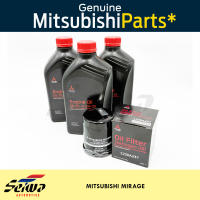
Mitsubishi Mirage Change Oil Package 0W20 - Genuine Mitsubishi Auto Parts - Fully Synthetic Oil GF5 - OIL FILTER NOW 1230A237
₱2,366.00₱2,390.00
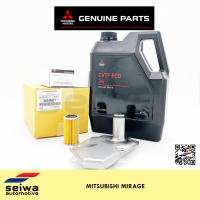
Mitsubishi Mirage Transmission Filter Change Package - Genuine Mitsubishi Auto Parts
₱5,435.00₱5,490.00
L300 FB Door Sidings (Pair / left and Right)
₱2,199.00
Buy on Lazada
Mitsubishi Genuine Fully Synthetic 5W-40 Oil Change Bundle for Mitsubishi Montero ( 2008 - 2015 ) Mitsubishi Strada ( 2008 - 2015 ) 7 Liters + Oil Filter
₱4,037.60₱4,120.00
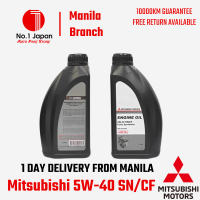
Mitsubishi Genuine Motor Oil Fully Synthetic 5W-40 SN/CF 1L ( 1 Liter ) For Gas and Diesel Engines 5w40 oil fluids fluid
₱294.00₱400.00
![Mitsubishi Fully Synthetic Engine Oil 5W-40 [3 Liters + Oil Filter MD135737 (C-415)] Oil Change for Mirage](https://ph-live.slatic.net/p/71857896453c5dc5ce09e8b93905c96a.png_200x200q80.jpg)
Mitsubishi Fully Synthetic Engine Oil 5W-40 [3 Liters + Oil Filter MD135737 (C-415)] Oil Change for Mirage
₱1,381.80₱1,800.00
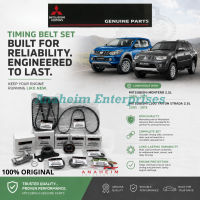
Mitsubishi Montero 2.5L 2008 - 2015 L200 Triton Strada 2.5L 2005 - 2015 Timing Belt Set
₱16,990.00
Buy on LazadaAbout Mitsubishi
Mitsubishi is one of Japan’s oldest and most influential business groups. Rather than being a single company, Mitsubishi is a network of independent companies that share a common heritage, the iconic three-diamond logo, and a shared corporate philosophy. Today, Mitsubishi companies operate across a wide range of industries, including automobiles, heavy industries, banking, electronics, chemicals, real estate, energy, shipping, and trading. [1]
Overview
-
Founded: 1870
-
Founder: Yataro Iwasaki
-
Origin: Tokyo, Japan (originally a shipping company)
-
Industry: Diversified conglomerate
-
Headquarters (group companies): Primarily Tokyo, Japan
-
Logo: Three red diamonds
-
Global Presence: More than 90 countries through numerous affiliated companies
-
Core Philosophy: Corporate responsibility, integrity, and global business development. [2]
History
Foundation (1870)
Mitsubishi began in 1870 when Yataro Iwasaki established a shipping company with only three steamships. During Japan’s rapid modernization in the Meiji era, the company expanded into mining, shipbuilding, finance, insurance, and international trade. [3]
Growth into a Conglomerate
Throughout the late 19th and early 20th centuries, Mitsubishi became one of Japan’s largest zaibatsu (family-controlled industrial conglomerates). The company expanded into:
-
Mining
-
Banking
-
Shipbuilding
-
Heavy machinery
-
Manufacturing
-
Insurance
-
International commerce
Its rapid diversification made Mitsubishi one of the driving forces behind Japan’s industrialization. [4]
After World War II
Following Japan’s defeat in World War II, the Allied occupation authorities dissolved the centralized Mitsubishi organization in 1946. Instead of disappearing, its businesses became independent companies. Many later resumed using the Mitsubishi name and logo while remaining legally separate organizations connected through historical ties and cooperation rather than common ownership. [5]
Meaning of the Name
The word “Mitsubishi” combines two Japanese words:
-
Mitsu (三) = Three
-
Hishi (菱) = Water chestnut (diamond-shaped)
When combined, hishi is pronounced bishi, resulting in Mitsubishi, meaning “three diamonds.” The name reflects the famous three-diamond emblem. [6]
Logo
The Mitsubishi logo consists of three red diamonds.
It combines two traditional Japanese family crests:
-
The three-tiered diamond crest of the Iwasaki family.
-
The three oak leaves crest of the Yamauchi family, rulers of the Tosa domain where the founder originated.
The logo symbolizes:
-
Trust
-
Integrity
-
Quality
-
Stability
-
Unity
It has become one of the most recognizable corporate symbols in the world. [7]
Business Philosophy
All Mitsubishi companies share the Three Principles (Sankoryo):
-
Corporate Responsibility to Society
-
Contribute positively to society through business.
-
Integrity and Fairness
-
Conduct business honestly, transparently, and ethically.
-
Global Understanding
-
Promote international cooperation and responsible global business.
These principles have guided Mitsubishi companies for decades. [8]
Major Mitsubishi Companies
The Mitsubishi name is shared by many independent companies. Some of the best known include:
Mitsubishi Corporation
Japan’s largest general trading company, active in energy, metals, food, infrastructure, finance, chemicals, and global investments.
Mitsubishi Heavy Industries (MHI)
Manufactures:
-
Aircraft
-
Rockets
-
Ships
-
Defense systems
-
Industrial machinery
-
Power plants
-
Energy technologies
Mitsubishi Motors
Produces passenger cars, SUVs, pickup trucks, electric vehicles, and plug-in hybrid vehicles.
Popular models include:
-
Outlander
-
Pajero (Montero)
-
Triton/L200
-
Xpander
-
Mirage
-
Eclipse Cross
Mitsubishi Electric
Produces:
-
Air conditioners
-
Factory automation systems
-
Elevators
-
Robotics
-
Satellites
-
Semiconductor devices
-
Consumer electronics
MUFG (Mitsubishi UFJ Financial Group)
One of the world’s largest banking and financial institutions.
Mitsubishi Chemical Group
Produces chemicals, pharmaceuticals, advanced materials, and industrial products.
Mitsubishi Estate
Develops office buildings, commercial properties, residential projects, and urban infrastructure. [9]
Industries
Mitsubishi companies collectively operate in:
-
Automotive
-
Aerospace
-
Energy
-
Electronics
-
Banking
-
Finance
-
Real estate
-
Heavy machinery
-
Construction
-
Shipbuilding
-
Chemicals
-
Food
-
Healthcare
-
Logistics
-
Mining
-
Trading
-
Environmental technologies
-
Telecommunications [10]
Global Presence
Mitsubishi companies conduct business in over 90 countries and maintain manufacturing plants, research centers, and regional offices worldwide. Their products and services support industries, governments, and consumers across Asia, Europe, the Americas, Africa, and Oceania. [11]
Innovation
Over its history, Mitsubishi companies have contributed to developments in:
-
Electric and hybrid vehicles
-
Space systems
-
Industrial robotics
-
Renewable energy
-
Smart infrastructure
-
High-speed transportation
-
Factory automation
-
Artificial intelligence applications
-
Carbon reduction technologies
Research and development remain a major focus across the group. [12]
Mitsubishi Motors
Although it shares the Mitsubishi name and logo, Mitsubishi Motors is an independent company within the broader Mitsubishi group.
It is especially known for:
-
SUVs
-
Pickup trucks
-
Rally racing heritage
-
Plug-in hybrid electric vehicles (PHEVs)
-
Reliable commercial vehicles
Notable achievements include multiple victories in the Dakar Rally and a strong reputation in all-wheel-drive engineering. [13]
Reputation
Mitsubishi is widely recognized for:
Strengths
-
Long corporate history
-
Engineering expertise
-
Manufacturing quality
-
Global business reach
-
Technological innovation
-
Strong industrial capabilities
-
Diversified operations
Like many large multinational groups, some Mitsubishi companies have also faced business and regulatory challenges over the years, but the Mitsubishi name remains among Japan’s most recognizable corporate brands. [14]
Interesting Facts
-
Mitsubishi is over 150 years old.
-
It began as a shipping business with only three steamships.
-
The three-diamond logo has remained largely unchanged since the company’s early years.
-
Mitsubishi is not a single corporation but a collection of independent companies sharing a common heritage and guiding principles.
-
The Mitsubishi name appears on products ranging from automobiles and air conditioners to satellites, power plants, elevators, and financial services. [15]
Summary
Mitsubishi is one of the world’s most established industrial brands, with origins dating to 1870. Founded by Yataro Iwasaki as a shipping enterprise, it evolved into a diversified Japanese business group spanning automotive manufacturing, heavy industries, finance, electronics, chemicals, infrastructure, and global trade. Although its companies are legally independent today, they remain linked by the iconic three-diamond emblem and the shared principles of corporate responsibility, integrity, and a global outlook. Over more than a century and a half, Mitsubishi has played a significant role in Japan’s industrial development while building a substantial international presence. [16]