Shop on Lazada
Moccona products
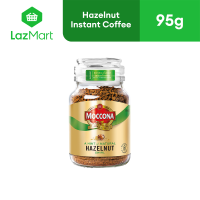
Moccona Hazelnut Flavored Instant Coffee 95g
₱347.80₱370.00
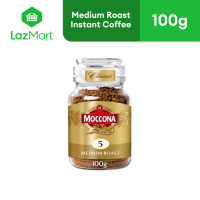
Moccona Classic Medium Roast Instant Coffee 100g
₱340.40₱370.00
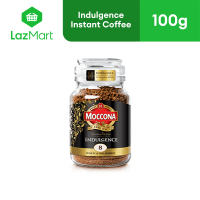
Moccona Specialy Blend Indulgence Instant Coffee 100g
₱340.40₱370.00
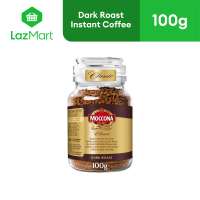
Moccona Classic Dark Roast Instant Coffee 100g
₱347.80₱370.00
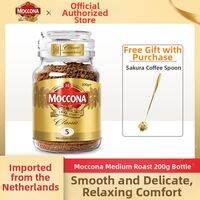
Moccona | Freeze Dried Instant Jar Coffee 8 No
₱1,527.00₱1,812.00
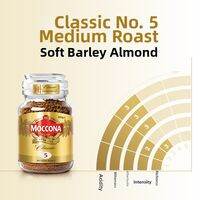
Moccona | Hazel Nut Flavor Intense Espresso Instant Sugar-Free Freeze-Dried Coffee
₱1,723.00₱2,409.00
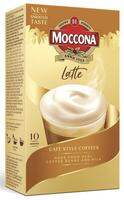
Moccona Latte Cafe Style Coffee (10 sachets) 160g
₱338.00
Buy on Lazada
Moccona | Hazelnut Caramel Medium Low-Caffeine Sugar-Free Freeze-Dried Coffee
₱920.00₱2,530.00
About Moccona
Moccona is a Dutch-origin coffee brand best known internationally for its premium instant coffee, particularly its freeze-dried coffee sold in distinctive glass jars. Today, Moccona is part of JDE Peet’s, the global coffee-and-tea company whose portfolio also includes brands such as Jacobs, L’OR, Peet’s, Douwe Egberts, Senseo and Tassimo.
Although Moccona’s corporate heritage reaches back to 1753, it is important to distinguish the history of the Douwe Egberts business from the history of the Moccona brand itself. Douwe Egberts began in 1753, while Moccona instant coffee was introduced in the Netherlands in 1954. Moccona subsequently became particularly successful in Australia and New Zealand, where it has been positioned as a premium coffee brand since the 1960s.
Infobox
| Moccona | |
|---|---|
| Brand name | Moccona |
| Category | Coffee |
| Main specialty | Instant coffee |
| Origin | Netherlands |
| Heritage | Douwe Egberts |
| Parent company | JDE Peet’s |
| Heritage date | 1753 |
| Moccona instant coffee introduced | 1954 |
| Australian launch | 1960 |
| New Zealand launch | 1980 |
| Major markets | Australia, New Zealand, Southeast Asia and other international markets |
| Known for | Premium instant coffee, glass jars, freeze-dried coffee |
| Brand positioning | Premium / indulgent / coffee-lover focused |
| Current brand purpose | “Moccona. For lovers of coffee” |
The corporate heritage and launch dates are documented by Douwe Egberts and JDE Peet’s.1
Origins
The story behind Moccona begins with Douwe Egberts, one of the Netherlands’ historic coffee companies.
In 1753, Egbert Douwes and his wife Akke Thijsses opened a small grocery store called De Witte Os in Joure, Friesland, in the northern Netherlands. Among the products they sold were coffee, tea and tobacco. Coffee gradually became one of the company’s defining products.2
Over the following two centuries, the business developed from a local grocery shop into a major coffee and tea company. This is why Moccona’s modern branding frequently refers to 1753 as the beginning of its story, even though the Moccona product itself did not exist at that time. Moccona’s own sustainability site similarly describes its story as beginning in 1753.2
The key historical milestones are:
- 1753: Douwe Egberts heritage established
- 1954: Moccona instant coffee introduced
- 1960: Moccona launched in Australia
- 1980: Moccona launched in New Zealand
Birth of Moccona
The actual Moccona product emerged during the post-war expansion of instant coffee.
In 1954, Douwe Egberts introduced Moccona instant coffee in the Netherlands, initially selling it in 50-gram jars. Instant coffee was becoming increasingly attractive because it offered consumers a quick and convenient way to prepare coffee without traditional brewing equipment.3
This was an important transition for the company: rather than selling only roasted coffee that consumers prepared themselves, Douwe Egberts could offer a ready-to-use coffee product with a longer shelf life and much greater convenience. Moccona eventually developed a reputation for combining the convenience of instant coffee with a more premium presentation and taste experience.
Expansion to Australia and New Zealand
Australia became particularly important to the Moccona brand. JDE Peet’s records that Moccona was launched in Australia in 1960 and in New Zealand in 1980. The brand built a premium position partly around its distinctive glass jar.4
In Australia and New Zealand, Moccona became strongly associated with premium instant coffee, European coffee heritage, distinctive glass packaging, richer coffee flavour, and an indulgent, sophisticated image. JDE Peet’s currently describes Moccona as the number one instant brand in Australia and New Zealand and reports that about 4.3 million Moccona cups are consumed daily in Australia.5
Consequently, although Moccona is Dutch in origin, its modern brand identity is particularly closely associated with Australia and New Zealand.
Product differentiation
Moccona has traditionally attempted to occupy a space between ordinary instant coffee and freshly brewed café coffee. Its proposition combines convenience, premium taste, European heritage and indulgence. The brand’s instant coffees use blends of coffee beans, with JDE Professional describing Moccona’s coffee as using Arabica and Robusta. Arabica contributes softer and sweeter characteristics, while Robusta contributes body and intensity.3
This positioning is significant because instant coffee is often associated primarily with speed and convenience. Moccona instead emphasizes the idea that instant coffee can also be a pleasurable, premium experience.
The iconic Moccona jar
One of Moccona’s most recognizable brand assets is its glass coffee jar. The jar is more than simply packaging; it has become part of the brand’s visual identity and has helped communicate Moccona’s premium positioning. JDE Peet’s specifically notes that the Australian launch built a premium positioning around the distinctive glass jar.4
The jar has also acquired a second life after the coffee is consumed. Moccona actively promotes upcycling its jars, publishing ideas for turning empty jars into decorative objects, candle holders and other household items.4 JDE has also run limited-edition decorative jar collaborations with artists and designers since 2012, demonstrating how important the jar has become as a piece of the brand’s identity.5
Product range
Moccona is no longer limited to one type of instant coffee. Its portfolio has expanded into several formats.
Instant coffee
This remains the core of the brand. Different products emphasize different roast intensities and flavour profiles.
Café-style sachets
Moccona produces powdered coffee mixes designed to reproduce popular café beverages at home, including Cappuccino, Latte, Mocha, Vanilla Latte, Caramel Latte, Hazelnut Latte and other specialty beverages.6 The company describes its Café Style range as offering a smooth coffee taste and velvety froth.6
Specialty mixes
Moccona has also moved further into indulgent coffee mixes. Its partnership with Cadbury, for example, has produced Mocha and Hazelnut Latte products combining coffee and chocolate-oriented flavours.7
Liquid coffee
More recently, Moccona has expanded beyond traditional powdered instant coffee. Its Liquid Espresso Coffee is made with 100% Arabica coffee and is designed to be mixed with hot or cold water or milk.8 This illustrates a broader strategy: Moccona is increasingly trying to participate in the café-at-home and iced-coffee market, rather than relying exclusively on conventional instant coffee.
Brand identity
Moccona’s brand identity is built around the idea of enjoying coffee as a small moment of pleasure. Its current global positioning uses the line: “Moccona. For lovers of coffee.”13 JDE Peet’s describes the brand purpose as being about reigniting the thrill of romance and creating moments of unmistakable delight.13
This gives Moccona a somewhat different personality from brands that focus heavily on functionality. Instead of simply promoting coffee as a stimulant, Moccona’s communication tends to suggest that coffee is a moment worth enjoying. That distinction is central to its premium positioning.
Moccona and JDE Peet’s
Today, Moccona belongs to JDE Peet’s, one of the world’s largest coffee and tea companies. JDE’s history is itself the result of several major corporate developments. In 2014, Mondelēz International and D.E Master Blenders 1753 announced plans to combine their coffee businesses, creating Jacobs Douwe Egberts (JDE).9
JDE subsequently expanded its portfolio, including its acquisition of Super Group in 2017. Moccona was among the brands identified within JDE’s growing Asia-Pacific portfolio.10 In 2019, Jacobs Douwe Egberts merged with Peet’s, creating JDE Peet’s.11
The corporate lineage can therefore be simplified as:
- Douwe Egberts
- JDE
- JDE Peet’s
- Moccona
Moccona itself remains a distinct consumer brand rather than being renamed JDE Peet’s.
Moccona in Asia and the Philippines
Although Australia and New Zealand remain exceptionally important markets, Moccona has expanded throughout Asia. JDE Peet’s identifies Moccona as a regional hero brand in Asia-Pacific, alongside other brands in its portfolio. Its Asia-Pacific operations include markets such as Australia, China, Malaysia, New Zealand, Singapore, Thailand and the Philippines.1015
In the Philippines, Moccona maintains a dedicated local presence with official channels promoting its range of instant and café-style coffees.1516 The brand operates not simply as a standardized European product but as a brand whose product formats and communications are adapted to individual Asian markets. For instance, in neighbouring Thailand, Moccona has developed substantial local marketing and products adapted for local consumers, such as Moccona Trio Espresso and Moccona Royal Gold.12 Similar regional adaptations support Moccona’s position across Southeast Asia.1417
Position in the coffee market
Moccona’s most interesting characteristic is its position within the instant-coffee category. There are broadly three levels of coffee consumption:
- Traditional coffee: beans, ground coffee and brewing
- Mass-market instant coffee: convenience and affordability
- Premium instant coffee: convenience combined with higher perceived quality and experience
Moccona primarily occupies the third category. This gives it an unusual competitive proposition: consumers do not have to choose completely between the convenience of instant coffee and the emotional appeal of premium coffee. The brand essentially communicates that one can have a sophisticated coffee experience without having to brew a complicated cup.
Sustainability
Sustainability has increasingly become part of Moccona’s corporate story. Moccona participates in JDE Peet’s Common Grounds sustainability program, which covers areas including responsible sourcing, environmental impact and communities connected to coffee production.11
The brand says it is working toward responsible coffee sourcing, lower environmental impact, recyclable, reusable or compostable packaging, and improved livelihoods for coffee-growing communities. Moccona also reports that 50% of its jars are made from recycled glass and that its 180g refill pouches use 97% less packaging than a 200g glass jar and lid, calculated per gram of coffee.2
These initiatives are particularly relevant to Moccona because its glass jar is one of its strongest brand assets. The company therefore has an opportunity to make the packaging itself part of a sustainability story rather than treating it purely as disposable packaging.
Association with Australia
If one looks only at the company’s origins, Moccona is a Dutch coffee brand. However, in terms of cultural and commercial identity, Australia is arguably its most important historical market. Moccona launched there in 1960 and subsequently became deeply established in Australian coffee culture. JDE Peet’s describes it as Australia’s most-loved coffee brand in its historical reporting and currently identifies it as the leading instant brand in Australia and New Zealand.13
This creates a distinct identity trajectory: Dutch heritage leading to Australian success, followed by Asia-Pacific expansion and global premium positioning. That path distinguishes Moccona from many traditional European coffee brands.
Heritage versus modern brand
A useful way to understand Moccona is to separate its heritage story from its modern consumer proposition.
Heritage
- 1753 Dutch coffee heritage
- Douwe Egberts
- European coffee craftsmanship
- Centuries of coffee and tea experience
- Moccona instant coffee introduced in 1954
Modern brand
- Premium instant coffee
- Distinctive glass jars
- Indulgent coffee moments
- Café-style beverages
- Specialty mixes
- Modern sustainability initiatives
- Strong Australian, New Zealand and Asian presence
This combination allows Moccona to use its history as a credibility signal while continuing to develop products for contemporary consumers.
Key milestones
| Year | Milestone |
|---|---|
| 1753 | Egbert Douwes and Akke Thijsses establish De Witte Os in Joure, forming the foundation of the Douwe Egberts heritage. |
| 1954 | Douwe Egberts introduces Moccona instant coffee in the Netherlands. |
| 1960 | Moccona launches in Australia. |
| 1980 | Moccona launches in New Zealand. |
| 2014 | Mondelēz and D.E Master Blenders announce the creation of Jacobs Douwe Egberts. |
| 2017 | JDE completes its acquisition of Super Group, strengthening its Asia-Pacific coffee portfolio. |
| 2019/20 | JDE combines with Peet’s, creating JDE Peet’s. |
| 2020s | Moccona expands its instant, café-style, specialty-mix and other coffee formats across Asia-Pacific and other markets. |
Sources: Douwe Egberts, JDE/JDE Peet’s and Moccona.13
Moccona today
As of 2026, Moccona is best understood as a premium international instant-coffee brand within JDE Peet’s, with particularly strong heritage in Australia and New Zealand and a growing presence across Asia. Its business has evolved considerably from the original 1954 instant coffee. Today’s Moccona encompasses:
- Instant coffee: its traditional core
- Premium coffee: stronger emphasis on taste, roast and quality
- Café-style drinks: cappuccino, latte, mocha and related formats
- Specialty mixes: indulgent flavours and collaborations
- New coffee formats: including liquid espresso
- Lifestyle branding: romance, pleasure, indulgence and coffee appreciation
- Sustainability: responsible sourcing, recycled glass and reduced packaging
JDE Peet’s reported that Moccona remained the number one instant brand in Australia and New Zealand and that its expansion into Asia continued.13
Historical note on founding date
Websites sometimes describe Moccona as “founded in 1753.” Strictly speaking, 1753 is the founding of the Douwe Egberts business and heritage, not the launch of the Moccona brand. The official Douwe Egberts history gives 1954 as the introduction of Moccona instant coffee.13
References
- JDE PEET’S N.V.
- Sustainability | Moccona AU
- Moccona – Premium European Coffee | JDE Professional Australia
- Frosted candles | Moccona AU
- JDE112_Dec_Jar_Student_Brief_FINAL_31August21
- Café Style Coffees | Moccona AU
- Created with Cadbury | Moccona AU
- Liquid Espresso Coffee | Moccona AU
- Moccona摩可纳品牌介绍-摩可纳黑咖啡_咖啡-买购APP
- JDE Peet’s takes the next step in its innovation agenda with the launch of Maxwell House and Moccona Cold Brew Pure Instant Coffees in China [2324086] | JDE Peet’s
- sec.gov
- mocconathailand_official Official: Instagram, Facebook | Linktree
- Our Story | Moccona AU
- Moccona MY | Moccona MY
- Moccona PH | Moccona PH
- Our Story | Moccona PH
- Moccona – The perfect coffee to enjoy every day | Pratham Foods Pvt. Ltd.