Shop on Lazada
Crisco products
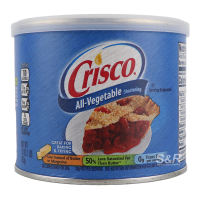
Crisco All-Vegetable Shortening 453g
₱329.00
Buy on Lazada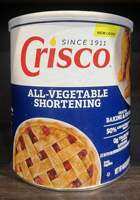
48oz Crisco All Vegetable Shortening 1.36kg Use Instead of Butter or Margarine
₱998.00₱999.00
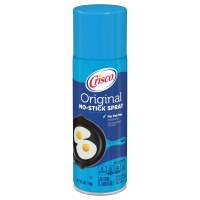
Crisco Original No-Stick Cooking Spray 170g - For Fat Free Cooking
₱499.00₱599.00
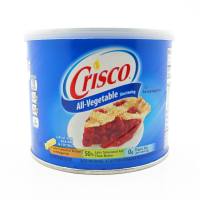
Crisco All-Vegetable Shortening 453g (Great For Baking & Frying)
₱499.00₱599.00
Crisco All Vegetable Shortening 453g From USA
₱599.00₱999.00
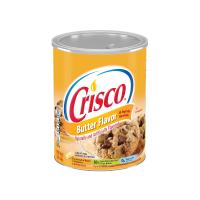
Crisco Butter Flavor All-Vegetable Shortening 1.36kg
₱1,998.00
Buy on LazadaAbout Crisco
Crisco is an American brand of cooking and baking products best known for its vegetable shortening. Introduced in 1911 by Procter & Gamble, Crisco became one of the earliest major commercially successful solid fats made entirely from vegetable oil and played a significant role in changing American cooking and baking practices.12
The brand was originally associated primarily with shortening made from hydrogenated cottonseed oil, which was developed as a plant-based alternative to animal fats such as lard. Over the following century, Crisco expanded into cooking oils, baking products, and non-stick cooking sprays. Today, its product range includes all-vegetable shortening, shortening baking sticks, cooking oils, and cooking sprays.12
Crisco is particularly associated with American home baking, especially pie crusts, cookies, cakes, frosting, biscuits, and fried foods. The brand has also become a notable example in the history of food marketing and industrialized food production in the United States.
Brand overview
| Category | Information |
|---|---|
| Brand | Crisco |
| Industry | Food and cooking products |
| Primary category | Shortening and cooking oils |
| Country of origin | United States |
| Introduced | 1911 |
| Original company | Procter & Gamble |
| Original principal ingredient | Cottonseed oil |
| Current flagship product | Crisco All-Vegetable Shortening |
| Current product categories | Shortening, baking sticks, cooking oils, cooking sprays |
| Website | crisco.com |
History
Origins
The origins of Crisco are closely connected to the development of vegetable-oil hydrogenation in the early 20th century.
At the time, cooking fats in American households were dominated by products such as butter and lard. Procter & Gamble, which had traditionally been involved in soap and candle production, became interested in finding commercial uses for vegetable oils. Researchers working with the company developed methods for hydrogenating cottonseed oil, turning a normally liquid vegetable oil into a solid fat at room temperature.2
The resulting material had characteristics similar to lard: it was solid, relatively stable, and useful for frying and baking. This opened the possibility of selling a vegetable-based fat directly to consumers.
Introduction in 1911
Procter & Gamble introduced Crisco in 1911. The company promoted it as an alternative to animal fats and positioned it as a modern, convenient cooking ingredient. Crisco’s introduction is widely regarded as an important milestone in the history of commercially manufactured cooking fats.12
The name “Crisco” is generally understood to have been derived from the phrase “crystallized cottonseed oil.” Historical accounts describe the company’s experimentation with other potential names before settling on Crisco.2
Early marketing
Crisco’s success was not based solely on the product itself. Its launch became an important example of modern food marketing.
One of the company’s most influential strategies was to teach consumers how to use the new product. Rather than simply advertising Crisco as a substitute for lard, Procter & Gamble promoted recipes and cooking instructions that demonstrated its versatility.
The company distributed cookbooks containing recipes using Crisco, helping introduce the product into American kitchens. These recipes showed consumers how the shortening could be used for everything from pie crusts and cakes to frying.1
This approach helped transform Crisco from an unfamiliar industrial product into a recognizable household cooking ingredient.
The Crisco cookbook
The Crisco cookbook became particularly important to the brand’s early identity.
By providing consumers with practical recipes, Procter & Gamble effectively created an educational marketing system: consumers purchased Crisco, learned recipes using it, and then incorporated the product into their regular cooking.
This strategy helped establish a connection between Crisco and home baking, a relationship that remains central to the brand today.
Evolution of the product
Crisco’s original formulation was based largely on hydrogenated cottonseed oil. Over time, the brand’s formulations changed as vegetable oils, nutrition science, food regulations, and consumer preferences evolved.
The company eventually moved beyond its original shortening product and developed a broader portfolio of cooking products.
Among the notable developments were:
- 1911: Crisco shortening was introduced.
- 1940s: Packaging changed during World War II to conserve metal.
- 1949: Crisco appeared in television advertising.
- 1960: Crisco cooking oil was introduced.
- 1981: Butter-flavored shortening was introduced.
- 1990s: Shortening became available in convenient baking-stick formats.
- 2007: Crisco shortening was reformulated to contain 0 grams of trans fat per serving.1
The brand’s Canadian heritage history also records the introduction of butter-flavored shortening and baking sticks as part of its effort to adapt to changing consumer preferences.3
Trans fat and reformulation
One of the most significant changes in Crisco’s modern history involved trans fats.
Traditional partially hydrogenated oils could contain industrially produced trans fatty acids. As scientific research and public-health policy increasingly focused on the health effects of industrial trans fats, food manufacturers began reformulating products.
Crisco subsequently changed its shortening formulation. The current All-Vegetable Shortening is made using a combination of soybean oil, fully hydrogenated palm oil, and palm oil, rather than the original partially hydrogenated cottonseed-oil formulation. The current product lists 0 grams of trans fat per serving.12
This is an important distinction when discussing Crisco historically: modern Crisco is not the same formulation as the original Crisco sold in 1911.
Ownership history
Crisco has had several major corporate owners throughout its history.
Procter & Gamble
Crisco was created and launched by Procter & Gamble (P&G) in 1911. For most of the 20th century, Crisco was one of P&G’s major food brands.2
The J.M. Smucker Company
In 2002, P&G divested Crisco along with Jif peanut butter. The brands became part of The J.M. Smucker Company. Smucker itself confirms that it added Jif and Crisco to its portfolio in June 2002.
B&G Foods
In 2020, Crisco was acquired by B&G Foods. Consequently, Crisco is no longer a Procter & Gamble or J.M. Smucker brand. Its current corporate ownership is associated with B&G Foods.2
Products
Although Crisco originally became famous for shortening, the modern brand has a broader product portfolio.
All-Vegetable Shortening
The flagship product remains Crisco All-Vegetable Shortening.
It is a solid fat designed primarily for baking and frying. Crisco markets it as useful for producing:
- flaky pie crusts
- tender cakes
- soft cookies
- fluffy frosting
- crispy fried foods
The shortening is also plant-based and contains no dairy ingredients.12
Baking sticks
Crisco also sells its shortening in baking-stick form, designed to make measuring easier. One stick corresponds to one cup of shortening, making it particularly convenient for recipes.1
Butter-flavored shortening
Another variation is Butter Flavor All-Vegetable Shortening, which is designed to provide the functional characteristics of shortening while adding a buttery flavor.1
Cooking oils
Crisco’s current oil portfolio includes products such as:
- Pure Vegetable Oil
- Pure Canola Oil
- Pure Corn Oil
- Frying Oil Blend1
Cooking sprays
The brand also produces non-stick cooking sprays, including original, butter-flavored, and olive-oil varieties.1
How Crisco is used
Crisco’s strongest association is with baking.
Shortening has properties that make it particularly useful in pastry. Because it contains very little water compared with butter, it can contribute to tender and flaky textures. Crisco specifically emphasizes its use in pie crusts, cookies, cakes, frosting, and fried foods.12
It can also be used for:
- frying chicken and other foods
- greasing baking pans
- making biscuits
- preparing pie dough
- making frosting
- sautéing and roasting
- producing crispy fried textures
Crisco and American baking culture
Crisco’s significance goes beyond being a cooking ingredient.
The brand became intertwined with the development of 20th-century American home cooking. Its marketing encouraged consumers to think of cooking as something that could be standardized through recipes, packaged ingredients, and repeatable techniques.
The classic image of Crisco—particularly the familiar container of white shortening—became associated with homemade pies, Southern cooking, holiday baking, and traditional American recipes.
The brand itself describes Crisco as having associations with homemade and traditional meals and as a product recognized across generations.1
Packaging and visual identity
One of Crisco’s most recognizable characteristics has historically been its simple blue-and-white packaging.
The visual identity has changed over more than a century, but the brand has retained a deliberately traditional appearance intended to communicate familiarity and reliability.
The packaging has therefore become almost as recognizable as the product itself, particularly among American consumers familiar with traditional baking.
Nutrition and modern positioning
Modern Crisco has repositioned itself considerably compared with the product’s early history.
Current Crisco All-Vegetable Shortening contains 0 grams of trans fat per serving and is marketed as having 50% less saturated fat than butter.12
A tablespoon of the current butter-flavored shortening, for example, contains 12 grams of total fat and 3.5 grams of saturated fat, according to the brand’s current nutrition information.1
These figures apply to current formulations and should not be projected backward onto historical Crisco products.
Cultural and historical significance
Crisco is significant for several reasons.
First, it helped popularize vegetable shortening as a mainstream alternative to animal fats.
Second, its launch demonstrated the power of combining food science with consumer education and recipe-based marketing.
Third, Crisco became an important part of the history of industrialized food production in the United States. The product transformed an inexpensive industrial by-product—cottonseed oil—into a commercially valuable food ingredient.4
Finally, the brand illustrates how food products can evolve in response to changing scientific understanding. The original Crisco depended on hydrogenation technology, while modern Crisco has been reformulated to eliminate industrial trans fat from its shortening.
Brand identity
At its core, Crisco has historically positioned itself around four ideas:
Tradition — More than a century of use in American kitchens.
Baking performance — Particularly flaky pastry, tender baked goods, and crispy frying.
Versatility — A single brand spanning shortening, oils, sprays, baking, and frying.
Accessibility — Presenting cooking and baking as achievable through familiar recipes and practical ingredients.
The brand’s present-day messaging continues to emphasize baking, cooking, family meals, and the idea of creating memorable homemade food.1
Timeline
| Year | Event |
|---|---|
| 1911 | Procter & Gamble introduces Crisco shortening. |
| 1910s | Crisco cookbooks and recipe-based marketing help popularize the product. |
| 1940s | Packaging changes during World War II to conserve metal. |
| 1949 | Crisco enters television advertising. |
| 1960 | Crisco cooking oil is introduced. |
| 1981 | Butter-flavored shortening is introduced. |
| 1990s | Baking sticks become part of the product line. |
| 2002 | Crisco becomes part of The J.M. Smucker Company’s brand portfolio. |
| 2007 | Crisco shortening is reformulated to contain 0g trans fat per serving. |
| 2020 | B&G Foods acquires the Crisco brand. |
| 2026 | Crisco continues to sell shortening, baking products, cooking oils, and cooking sprays. |