Shop on Lazada
Moto products
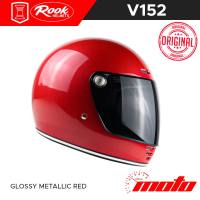
Rook V152 V2 Plain Colors Single Visor Helmet with Free clear lens
₱4,500.00
Buy on Lazada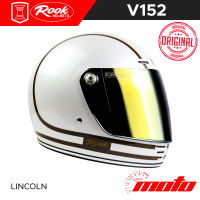
Rook Helmets V152 Lincoln with Free Clear Lens
₱4,700.00
Buy on Lazada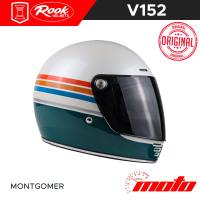
Rook Helmets V152 Montgomer with Free Clear Lens
₱4,700.00
Buy on Lazada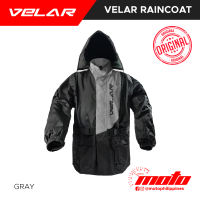
Velar Motorcycle Rain Coat with Pants
₱1,795.00
Buy on Lazada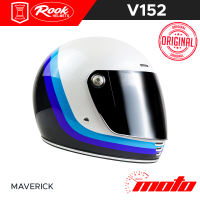
ROOK V152 MAVERICK Single Visor Helmet with Free clear lens
₱4,700.00
Buy on Lazada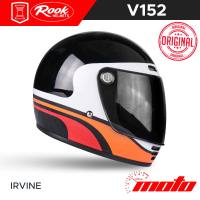
Rook Helmets V152 Irvine with Free Clear Lens
₱4,700.00
Buy on Lazada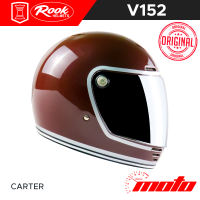
ROOK V152 CARTER Single Visor Helmet with Free clear lens
₱4,700.00
Buy on Lazada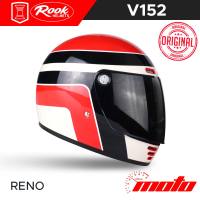
ROOK V152 RENO Single Visor Helmet
₱4,700.00
Buy on LazadaAbout Moto
Moto is a consumer technology brand primarily associated with Motorola Mobility, the mobile device business owned by Lenovo. While best known for its Android smartphones, the brand’s portfolio has also encompassed tablets, smartwatches, accessories, and other connected devices. Moto operates not as a standalone company like Apple or Samsung, but as a major product and branding family within Motorola Mobility.1
Currently, Moto functions within the broader Motorola brand ecosystem alongside product families such as Razr, Edge, and G. In markets such as Indonesia, Motorola’s official website lists current products including the moto g45 5G, moto edge 60 fusion, moto edge 60 pro, and moto g86 power 5G.2
Quick facts
| Category | Information |
|---|---|
| Brand | Moto |
| Parent company | Lenovo |
| Operating company | Motorola Mobility LLC |
| Industry | Consumer electronics / Telecommunications |
| Best known for | Android smartphones |
| Major product families | Moto G, Moto E, Moto X, Moto Z; currently also associated with Razr, Edge, and G families |
| Operating system | Primarily Android |
| Origin | United States |
| Motorola heritage | Founded in Chicago in 1928 |
| Current corporate ownership | Lenovo (since 2014) |
| Official website | Motorola Indonesia |
Definition and corporate structure
Moto serves as the modern consumer product identity derived from Motorola’s mobile phone business. Understanding the distinction between the various Motorola entities is essential for clarity:
- Motorola is the overarching consumer brand and historic name.
- Motorola Mobility is the Lenovo-owned entity responsible for consumer mobile devices.
- Moto is the specific product and brand identity used across Motorola’s smartphone lines.
- Motorola Solutions is a separate, independent company focused on enterprise and public safety communications. It does not manufacture Moto smartphones but licenses the Motorola trademarks from Motorola Trademark Holdings, which is owned by Motorola Mobility and Lenovo.3
Consequently, the term “Moto phone” refers specifically to a smartphone manufactured by Motorola Mobility and marketed under the Moto or Motorola consumer branding.
Origins and Motorola legacy
The history of Moto is intrinsically linked to the broader history of Motorola. The company’s predecessor, Galvin Manufacturing Corporation, was established by brothers Paul V. Galvin and Joseph Galvin in Chicago in 1928. Initially focused on radio technology, the firm became a significant player in automotive radios, two-way radios, televisions, semiconductors, and telecommunications.4
The name Motorola was coined by combining “motor,” reflecting the company’s ambitions in automotive radio, with the “-ola” suffix common in audio products of the era, such as Victrola. The corporation officially adopted the name Motorola in 1947.5
Motorola subsequently achieved numerous milestones in mobile communications, most notably the development of the DynaTAC 8000X, which became the first commercially available handheld cellular phone in 1983.6 This heritage distinguishes Moto from newer smartphone startups, positioning it as the consumer mobile continuation of a company with nearly a century of communications history.
Formation of Motorola Mobility
As Motorola expanded into diverse areas of electronics and communications, it eventually underwent a significant restructuring. On January 4, 2011, the company split into two independent entities:7
Motorola Mobility
Focused on consumer-facing products including:
* Mobile phones and smartphones
* Consumer devices
* Connected-home products
Motorola Solutions
Focused on enterprise and government sectors including:
* Public safety communications
* Professional radio systems
* Enterprise communications
* Government and emergency service technology
Following the split, Google acquired Motorola Mobility in 2012. Google later sold the business to Lenovo, with the acquisition finalised on October 30, 2014.8
Acquisition by Lenovo
Lenovo purchased Motorola Mobility from Google for approximately US$2.91 billion. This transaction granted Lenovo control of the Motorola brand and its smartphone portfolio, including the Moto X, Moto G, and Moto E lines. Motorola Mobility retained its headquarters in Chicago and continued operations as a Lenovo subsidiary.9
A critical aspect of the deal was that Google retained the majority of Motorola Mobility’s patent portfolio. Lenovo acquired the Motorola brand, the product business, and over 2,000 patent assets.10 This structure allowed Motorola to maintain its status as a recognisable global consumer brand while leveraging Lenovo’s manufacturing, distribution, and corporate resources.
Evolution of the Moto naming convention
Moto emerged as a prominent shorthand for Motorola’s consumer mobile products, becoming widely recognised through devices such as the Moto X, Moto G, Moto E, Moto Z, and Moto 360. This naming system helped differentiate the consumer mobile portfolio from the broader corporate identity.
During the early years of Lenovo’s ownership, there was a period when the company considered emphasising the “Moto by Lenovo” branding and reducing the visibility of the Motorola name. However, due to its substantial historical recognition and consumer value, the Motorola brand was ultimately retained.11
Key product families
Moto G
Introduced in 2013, the Moto G is historically one of the brand’s most significant products. It brought capable Android hardware to consumers at price points significantly lower than flagship competitors. The series was built on a philosophy of combining good hardware, clean software, and affordable pricing, establishing Moto as a value-oriented brand. The Moto G family expanded into numerous generations and variants, covering multiple price tiers. Google itself highlighted the Moto G and Moto X as particularly successful products during its ownership of Motorola Mobility.12
Moto X
Launched in 2013, the Moto X represented a more premium and personalised segment of the portfolio. Unlike the value-focused Moto G, the Moto X emphasised customisation, voice interaction, ergonomic design, and software features. This approach demonstrated Motorola’s willingness to differentiate through user experience rather than specifications alone. The line saw multiple generations before being discontinued.
Moto E
Positioned below the Moto G, the Moto E aimed to make smartphone ownership accessible to a wider audience through basic Android functionality at entry-level prices. Over successive generations, Moto E devices became associated with large displays, long battery life, simple software experiences, and mass-market availability. This completed a historical hierarchy within the portfolio:
- Moto E: Affordable entry level
- Moto G: Mainstream value
- Moto X: Premium mainstream flagship
- Moto Z: Modular premium experimentation
In some markets, the Moto E family has become less central as the G-series portfolio has expanded.
Moto Z and modular smartphones
The Moto Z family attempted to commercialise modular smartphones through Moto Mods. These physical accessories attached magnetically to the back of compatible phones and included battery modules, speakers, cameras, projectors, and game controllers. Although the modular concept did not achieve mainstream adoption, Moto Z remains one of Motorola’s most distinctive experiments.
Moto 360
Introduced in 2014, the Moto 360 was one of Motorola’s earliest major smartwatches, notable for its traditional circular design. Lenovo cited the Moto 360 as evidence of Motorola expanding beyond smartphones into emerging device categories at the time of acquisition. It helped establish the concept of Moto as a broader personal technology ecosystem.
Design philosophy and software
Moto has historically differentiated itself through several recurring principles:
Clean Android
Motorola is known for keeping its Android interface close to Google’s standard implementation. This approach appeals to users seeking minimal software clutter, a simple interface, fast access to updates, and a familiar Google-centric experience.
Practical hardware
Moto devices have traditionally emphasised practical features such as large batteries, functional cameras, durable construction, large displays, headphone jacks on many models, and competitive processors for their respective price classes.
Value proposition
Rather than competing solely on absolute specifications against premium brands, Moto has frequently aimed to offer balanced packages at lower price points.
Distinctive design
The brand has periodically experimented with unique designs and materials, ranging from customisable Moto X backs to the modular Moto Z and modern foldable Razr devices.
Throughout the smartphone era, Moto has maintained a close association with Android. Following Google’s 2012 acquisition, Motorola’s clean Android implementation became a key selling point. Even after the transition to Lenovo, the company continued these design principles, and contemporary Moto products remain Android-based.
Current portfolio
As of 2026, Motorola’s consumer smartphone portfolio extends beyond the classic Moto E/G/X/Z naming system. Devices are currently organised into the following families:
Razr
The Razr family represents Motorola’s foldable smartphones, serving as the modern continuation of the iconic Razr name from the feature-phone era.
Edge
The Edge family comprises Motorola’s premium conventional smartphones. Current listings include devices such as the moto edge 60 fusion and moto edge 60 pro.13
G
The G family continues the company’s long-standing value-oriented strategy. Current products include the moto g45 5G and moto g86 power 5G.14
Tablets
Motorola has re-entered the tablet market with products carrying the moto pad name, including the moto pad 60 series.15
Corporate relationships
The corporate structure governing the brand can be understood as follows:
- Lenovo (Parent Company)
- Motorola Mobility (Operating Subsidiary)
- Motorola consumer brand
- Moto / Razr / Edge / G product families
Separately, Motorola Solutions operates as an independent company focused on professional and public safety communications, licensing the Motorola trademarks. While Motorola Solutions and Motorola Mobility share historical roots and trademark rights, they are distinct business entities.16
Brand identity evolution
Moto’s identity has evolved significantly over time:
- Early identity: Motorola was synonymous with communications innovation, radios, and pioneering mobile phones.
- 2010s identity: The Moto G, X, and Z era established a modern identity centred on affordable, clean, and innovative Android devices.
- Current identity: Motorola and Moto now represent accessible consumer technology spanning entry-level phones, mid-range devices, premium smartphones, foldables, and tablets.
The company describes its mission as creating purposeful innovations that help people discover, share, and connect with the world.17
Historical product significance
| Family | Approximate role | Significance |
|---|---|---|
| Moto E | Entry level | Affordable smartphones |
| Moto G | Value/midrange | One of Motorola’s most successful smartphone families |
| Moto X | Premium/mainstream | Customisation and software innovation |
| Moto Z | Premium | Moto Mods modular ecosystem |
| Moto 360 | Smartwatch | Expansion beyond phones |
| Moto Razr | Foldable/premium | Revival of Motorola’s iconic Razr identity |
| Moto Edge | Premium | Modern flagship-oriented lineup |
| Moto G (current) | Value/midrange | Continues Motorola’s mass-market strategy |
| Moto Pad | Tablet | Expansion into larger-screen devices |
Moto’s primary contribution to the modern smartphone market was demonstrating that a device could be affordable, well-designed, and run relatively clean Android software while carrying a recognisable brand. The original Moto G, in particular, popularised the notion that consumers did not need to pay flagship prices for a competent smartphone. This positioning carved out a distinct niche between ultra-budget manufacturers and premium companies like Apple and Samsung.
Strengths and challenges
Strengths
- Strong heritage: Motorola has been involved in communications technology since 1928 and played a pivotal role in the development of cellular phones.18
- Android expertise: The brand possesses decades of experience in developing Android smartphones.
- Value proposition: The G series historically established a strong reputation for balancing price and hardware capabilities.
- Recognisable design: Motorola has repeatedly experimented with distinctive form factors and materials.
- Global presence: Motorola products are sold in numerous international markets.19
- Lenovo resources: Since 2014, Motorola Mobility has benefited from integration into Lenovo’s global technology organisation.20
Challenges
Moto operates in an intensely competitive market, facing rivalry from Apple in the premium segment, Samsung across nearly all price categories, and Chinese manufacturers including Xiaomi, OPPO, vivo, realme, and HONOR. Differentiation has become increasingly difficult as display, camera, processor, and battery technologies have converged across brands. Consequently, Motorola relies heavily on recognisable design, software features, pricing strategies, foldable technology, and brand heritage to distinguish itself.
Market positioning
| Segment | Moto/Motorola approach |
|---|---|
| Budget | G-series and historically E-series |
| Midrange | G-series |
| Upper-midrange | Higher-end G / Edge models |
| Premium | Edge |
| Foldable premium | Razr |
| Tablet | Moto Pad |
| Software | Android with Motorola customisations |
This positioning characterises Moto and Motorola as a broad-market Android manufacturer rather than a company focused exclusively on either budget or premium devices.
Visual identity
The Motorola identity is strongly linked to the stylised batwing “M” logo and the “Hello Moto” advertising signature. “Hello Moto” became one of the most recognisable phrases in mobile phone history during the feature-phone era. Despite significant changes to the product portfolio, this visual identity remains a key element in the company’s efforts to leverage its heritage.
Summary
Moto is best understood as a consumer technology brand within Motorola Mobility rather than as an independent company. Its trajectory spans from Motorola’s founding in Chicago in 1928, through the launch of the first commercial handheld cellular phone in 1983, the 2011 corporate split, and acquisitions by Google and Lenovo. Today, Moto and Motorola remain a Lenovo-owned global Android consumer electronics brand, with a portfolio focusing on value, mid-range, premium, and foldable categories.21
In summary, Moto is the consumer-facing mobile device identity of Motorola Mobility, a Lenovo-owned company whose roots trace back to Motorola’s founding in Chicago in 1928, and whose modern portfolio focuses primarily on Android smartphones across value, mid-range, premium, and foldable categories.22
References
- About Us: Motorola Products, Services & Brand Story | motorola
- Motorola | motorola
- All smartphones | motorola
- Motorola Solutions
- 2025Annual Reportto shareholders
- Company Timeline – Motorola Solutions Asia
- Motorola
- Lenovo to acquire Motorola Mobility
- Lenovo Completes Acquisition of Motorola Mobility from Google – Lenovo StoryHub
- Lenovo to Acquire Motorola Mobility from Google – Lenovo StoryHub
- Motorola Mobility
- Motorola Moto
- Sobre Nós: Conheça a Motorola | Loja Oficial Motorola
- Timeline – Motorola Solutions EMEA
- Timeline – Motorola Solutions USA – Motorola Solutions LACR
- buy moto smartphones – shop all models – Motorola
- About Motorola | motorola AU
- all-smartphones | motorola
- motorola | Smartphones, Accessories & Smart Home Devices | motorola
- Motorola Edge Family | motorola UK | motorola
- Android Smartphones | motorola KSA | motorola
- moto-global-edge-70-pro | motorola