Shop on Lazada
NAN products
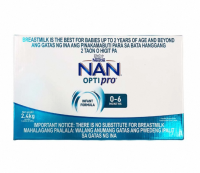
Nan Optipro One Infant Formula For 0-6 Months 2.4kg
₱3,917.01
Buy on Lazada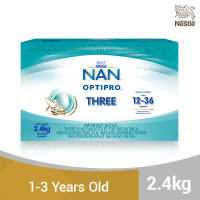
NAN OptiPro Three Milk Supplement For Children 1-3 Years Old 2.4KG
₱2,996.51
Buy on Lazada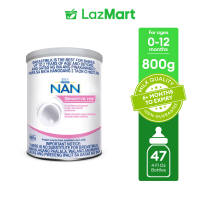
NAN SENSITIVE (Milk Supplement for Infants from 0-12 Months) 800g
₱1,960.00
Buy on Lazada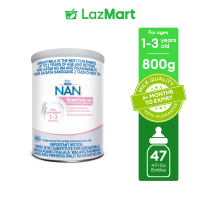
NAN SENSITIVE HW Growing-up Milk Supplement for 1-3 years old 800g
₱1,655.00
Buy on Lazada
NAN® OptiPro® Three Milk Supplement for Children 1-3 Years Old 1.8kg
₱2,343.92
Buy on Lazada
NAN® Infinipro® HA One 800g 1.4kg 2.1Kg for 0-6 2027 expiry
₱4,650.00
Buy on Lazada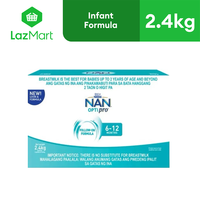
NAN Optipro Two Follow-up Formula for 6-12 Months 2.4kg
₱3,954.00
Buy on Lazada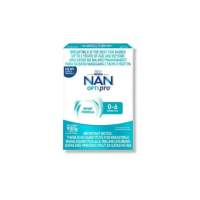
Nan Optipro 0-6Mos Infant 900G
₱1,823.32
Buy on LazadaAbout NAN
NAN is a global infant and early-childhood nutrition brand owned by Nestlé. It is primarily associated with infant formula, growing-up milk, and specialized early-life nutrition products. Nestlé positions NAN around scientific research into infant nutrition, particularly focusing on protein composition, probiotics, human milk oligosaccharides (HMOs), and other nutrients relevant to early development.
Note: NAN is a commercial infant-nutrition brand, not a separate company. Product names, formulations, age stages, and availability differ substantially between countries, including the Philippines.
Overview
| Item | Information |
|---|---|
| Brand | NAN / Nestlé NAN |
| Owner | Nestlé |
| Industry | Infant & early-life nutrition |
| Parent company | Nestlé S.A. |
| Origin | Switzerland / Nestlé research network |
| First NAN formula | 1960s |
| First NAN formula launch | Mexico |
| Main products | Infant formula, follow-on formula, growing-up milk, specialized formulas |
| Major markets | Europe, Asia, Latin America, Middle East and other international markets |
| Key positioning | Science-based early-life nutrition |
| Major technologies/ingredients | Optimized proteins, probiotics, HMOs, DHA/ARA and other micronutrients |
Nestlé’s historical research material identifies 1961 as the beginning of the NAN brand, when its first formula was launched in Mexico. The product was developed to make its protein composition closer to that of breast milk, using demineralized whey to modify the casein-to-whey ratio and amino-acid profile.
Brand nomenclature
The brand is typically presented simply as NAN, rather than as a conventional acronym. Nestlé uses NAN as a master brand, with specific product lines such as NAN Optipro, NAN Supreme, NAN Organic, NAN ExpertPro, NAN Infinipro A2, and NAN Sinergity appearing in various markets.
Because Nestlé adjusts product formulations and naming conventions by market, NAN should not be interpreted as a single formula. Instead, it functions as an umbrella brand covering multiple nutritional formulations tailored to local regulations and consumer needs.
Historical background
The history of NAN is situated within Nestlé’s broader legacy in infant nutrition.
Origins in infant nutrition
Henri Nestlé developed Farine Lactée, a milk-based infant food, in Switzerland in 1867. Combining cow’s milk, wheat flour, and sugar, it provided an alternative nutrition source for infants who could not be breastfed and became a foundation of the Nestlé business. However, Farine Lactée was distinct from NAN, which emerged nearly a century later.
Launch of NAN
Nestlé identifies 1961 as the launch year of the first NAN formula in Mexico. This original formulation was based on research aimed at aligning infant formula protein composition more closely with breast milk through the use of demineralized whey to alter the casein/whey ratio and amino-acid profile. This focus on protein quality became a defining characteristic of the brand’s subsequent development.
Hypoallergenic nutrition
Research into modified milk proteins led to the development of NAN HA. Nestlé developed a partially hydrolyzed whey-protein technology and launched NAN HA in 1987 to address specific dietary needs.
Introduction of probiotics
In 1991, Nestlé added probiotic bifidus cultures to NAN, reflecting growing scientific interest in the relationship between intestinal microbiota, digestion, and infant health.
Expansion of nutrient profiles
Formulations introduced in the 2000s incorporated additional nutrients and technologies, including long-chain polyunsaturated fatty acids (LC-PUFAs), DHA, ARA, probiotic cultures, and modified protein systems. During this period, Nestlé continued to develop milk-protein technology, optimizing protein content to better match the amino-acid profile of breast milk.
Key technologies and ingredients
Optipro
NAN Optipro is built around the concept of optimized protein quality and quantity. Nestlé describes it as a formula designed to provide appropriate protein supply while supporting healthy growth. This reflects a shift in infant-formula research from simply providing sufficient protein to examining the amount, quality, and amino-acid composition of protein. Consequently, Optipro has become a central element of NAN’s global product identity.
Probiotics
Probiotics have been a component of NAN since 1991, based on the premise that beneficial microorganisms interact with the developing gut microbiome. Modern NAN products may use different probiotic strains or combinations depending on the specific formulation and country. Therefore, not every NAN product contains identical probiotic ingredients; composition varies according to local packaging and regulatory documentation.
Human Milk Oligosaccharides (HMOs)
Newer generations of NAN products emphasize HMOs, complex carbohydrates naturally found in human breast milk that interact with the infant gut microbiome and immune system. For example, Nestlé introduced NAN Supreme 3 with 2′-FL and LNnT in Vietnam in 2020, marking the first time this combination appeared in the country’s NAN portfolio 1. More recently, Nestlé developed NAN Sinergity, which combines probiotics with six HMOs structurally identical to those in breast milk, representing a major platform in its early-life nutrition strategy 2.
This evolution signifies a shift from traditional milk formula positioning toward a sophisticated microbiome-and-immunity-oriented nutrition platform.
Major product families
While portfolios vary by country, key NAN families include:
- NAN Optipro: The mainstream line built around optimized protein, available in infant, follow-on, and toddler stages depending on the market.
- NAN Supreme / SupremePro: A premium family emphasizing advanced nutritional components, often combining HMOs, specialized proteins, and probiotics.
- NAN HA / ExpertPro: Specialized products featuring partially hydrolyzed proteins or formulas for specific digestive or allergy-related needs. These are not interchangeable with standard formula and depend on specific medical or nutritional circumstances.
- NAN Organic: An organic-oriented family available in select markets, utilizing certified organic ingredients 3.
- NAN Infinipro A2: A newer family incorporating A2 milk protein. In Vietnam, an updated NAN Infinipro A2 Step 3 was introduced in 2025, combining A2 protein with six HMOs and a dual-probiotic system 4.
- NAN Sinergity: A science-led platform combining six HMOs with probiotics, with international expansion beginning in Europe and extending to Latin America, the Middle East, and Asia 2.
Product architecture
NAN is best understood as a brand platform rather than a single product. Its structure follows a hierarchy:
- NAN (Master Brand)
- Product family (e.g., Optipro, Supreme)
- Nutritional technology
- Age/stage
- Country-specific formulation
For instance, “NAN Optipro Stage 3” is not nutritionally equivalent to “NAN Supreme Stage 3” or “NAN Infinipro A2 Stage 3.” Even products with similar names may contain different ingredients depending on the country due to local regulations. Comparing NAN products internationally solely by name can therefore be misleading.
Target consumers and positioning
NAN targets newborns, infants transitioning between feeding stages, toddlers, parents and caregivers, healthcare professionals, and families seeking specialized nutritional formulations. It operates across the broader early-life nutrition category rather than merely selling conventional powdered milk.
The brand’s positioning emphasizes science over lifestyle branding, focusing on:
- Scientific research: Understanding breast milk and infant nutritional requirements.
- Protein science: Optimized protein quality and quantity.
- Microbiome science: Probiotics and prebiotics.
- HMO research: Sophisticated oligosaccharide systems.
- Specialized nutrition: HA, digestive, and other targeted formulations.
- International R&D: Leveraging Nestlé’s global research infrastructure.
Nestlé explicitly bases its early-life nutrition strategy on scientific understanding of breast milk, probiotics, HMOs, and infant development 5.
Relationship with breast milk
NAN is not presented as equivalent to breast milk. Nestlé states that breast milk is the ideal nutrition for babies and promotes the WHO recommendation of exclusive breastfeeding for the first six months where possible 7. The scientific strategy behind NAN involves studying the components and functions of human milk to improve infant-formula composition. Thus, breast milk serves as the scientific reference point for NAN’s research and development.
Market presence and safety notices
NAN is an established international brand marketed by Nestlé affiliates globally. While specific product launches cited in available sources pertain to markets such as Vietnam—including the 2020 launch of NAN Supreme 3 with HMOs 1 and the 2025 introduction of NAN Infinipro A2 Step 3 4—the brand maintains a significant presence in the Philippines and other regions. Portfolios are adapted to comply with local food regulations, composition requirements, labeling standards, and marketing restrictions.
Consumers should always verify product information against local packaging. For example, in other markets, Nestlé has issued preventive voluntary recall notices for specific lots while explicitly excluding other product lines 5. Such distinctions highlight the importance of checking exact product names and lot numbers rather than assuming brand-wide issues. Philippine consumers should consult official Nestlé Philippines channels for local safety updates and product availability.
Global reach and regulation
NAN has expanded from its origins in Mexico to dozens of countries 8. As a multinational infant formula brand, it must adhere to diverse local regulations regarding composition, labeling, permitted ingredients, age-stage definitions, and marketing. Consequently, a product named “NAN Supreme” in one country should not be assumed to have the exact same formulation as “NAN Supreme” in another.
Research and innovation trajectory
NAN’s differentiation lies in its connection to Nestlé’s nutrition research infrastructure. Its development path includes:
- 1960s: Protein composition and whey/casein optimization.
- 1980s: Hydrolyzed proteins and hypoallergenic formulations.
- 1990s: Probiotics.
- 2000s: LC-PUFAs, DHA/ARA, and advanced protein technology.
- 2010s: Optimized proteins and early HMO research.
- 2020s: HMOs, probiotics, and microbiome-oriented formulations.
Nestlé states that its HMO research spans more than 30 years, with platforms like Sinergity representing key outcomes of this program 2.
Brand strengths
- Long history: Developed for over six decades since 1961.
- Strong parent company: Supported by Nestlé’s global manufacturing, R&D, and distribution capabilities.
- Scientific positioning: Identity built on infant-nutrition research rather than generic milk marketing.
- Broad portfolio: Addresses mainstream, premium, organic, and specialized segments.
- Global presence: Extensive international distribution.
- Continuous innovation: Evolution from protein optimization to probiotics and HMOs demonstrates ongoing adaptation to scientific advancements.
Criticism and controversies
NAN exists within the broader context of controversies surrounding commercial infant formula and the marketing of breast-milk substitutes. Nestlé has faced decades of criticism regarding marketing practices, particularly in developing countries, which contributed to international debates leading to the WHO International Code of Marketing of Breast-milk Substitutes. Nestlé maintains historical documentation on this issue and describes the evolution of its policies 6. Because infant formula is a highly regulated and ethically sensitive category, any comprehensive profile of NAN must acknowledge both its scientific achievements and the historical controversies regarding marketing practices.
Distinction from Nestlé
Nestlé is the multinational corporation, while NAN is one of its brands within the nutrition and early-life nutrition category 5. The hierarchy is structured as follows:
Nestlé S.A. → Nutrition / Early-Life Nutrition → NAN → Optipro / Supreme / Organic / Infinipro / Sinergity / specialized products
Strategic direction
As of 2026, NAN’s strategic direction emphasizes the combination of HMOs, probiotics, and optimized nutritional systems. Products like NAN Sinergity, which combines six HMOs with probiotics, and newer formulations incorporating A2 protein, illustrate a shift from a model of simple nutrient supply to a science-based early-life nutrition system designed around protein, microbiome, immunity, and development 2.
Summary
NAN is Nestlé’s flagship international infant-nutrition brand, originating in the early 1960s and evolving through decades of research into protein quality, hydrolyzed proteins, probiotics, fatty acids, HMOs, and other components of early-life nutrition. Its identity has transformed from a protein-focused infant formula in the 1960s into a broad, science-led portfolio centered today on optimized proteins, probiotics, HMOs, and integrated nutritional systems for infants and toddlers 910.
References
- NAN SUPREME 3 mới với công thức đầu tiên bổ sung HMOs 2-FL và LNnT
- Nestlé’s groundbreaking Sinergity is going global | Nestlé Global
- Sản phẩm dinh dưỡng hữu cơ NAN ORGANIC3 & GERBER ORGANIC
- Nestlé ra mắt NAN INFINIPRO A2 BƯỚC 3 cải tiến mới
- Sản phẩm dinh dưỡng công thức – Sữa bột Nestlé NAN
- Marketing infant nutrition: getting it right | Nestlé Global
- Nestlé Mở Hội Thảo “Chọn Sữa Mát Vì Điều Tốt Nhất Cho Con”
- Nestlé 9-month sales: +9% – Continued strong organic growth of 7.2% – Full-year outlook confirmed | Nestlé Global
- NAN Pro 3 | Nestlé Việt Nam – Sống Vui Khoẻ
- Nestlé NAN Optipro 4 | Nestlé Việt Nam – Sống Vui Khoẻ