Shop on Lazada
National Geographic products
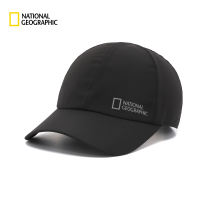
NATIONAL GEOGRAPHIC URBAN GORE-TEX CAP - BLACK
₱3,495.00
Buy on Lazada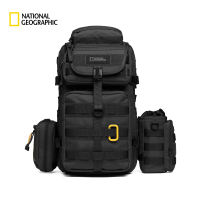
NATIONAL GEOGRAPHIC ULTIMATE BACKPACK - BLACK
₱16,995.00
Buy on Lazada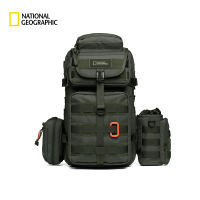
NATIONAL GEOGRAPHIC ULTIMATE BACKPACK - KHAKI
₱16,995.00
Buy on Lazada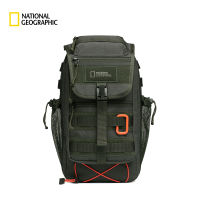
NATIONAL GEOGRAPHIC CORDURA CROSSBAG - KHAKI
₱8,995.00
Buy on Lazada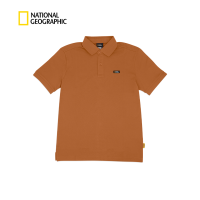
NATIONAL GEOGRAPHIC Unisex Pique Poloshirt W/ Small Logo
₱3,995.00
Buy on Lazada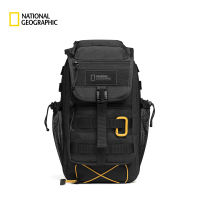
NATIONAL GEOGRAPHIC CORDURA CROSSBAG - BLACK
₱8,995.00
Buy on Lazada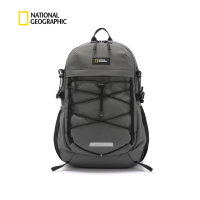
NATIONAL GEOGRAPHIC BRAVE MINI BACKPACK- GREY
₱5,995.00
Buy on Lazada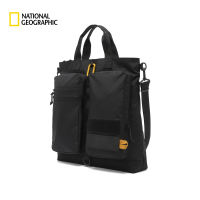
NATIONAL GEOGRAPHIC UNISEX CREST HELMET BAG - BLACK
₱5,995.00
Buy on LazadaAbout National Geographic
Overview
National Geographic is a globally recognized media brand and organization dedicated to science, exploration, education, conservation, geography, history, culture, and visual storytelling. While commonly associated with its iconic magazine and television programming, the name represents two distinct entities: the nonprofit National Geographic Society and the commercial media brand operated through National Geographic Partners, a joint venture between the Society and The Walt Disney Company.2
| Information | Details |
|---|---|
| Name | National Geographic |
| Common abbreviation | Nat Geo |
| Founded | January 13, 1888 |
| Original organization | National Geographic Society |
| Founder group | 33 scholars, scientists, explorers and other prominent figures |
| Headquarters of Society | Washington, D.C., United States |
| Main fields | Geography, science, exploration, wildlife, history, culture, conservation, travel and education |
| Best known for | National Geographic magazine, photography, documentaries, television, digital media and exploration |
| Commercial media partner | The Walt Disney Company |
| Nonprofit partner | National Geographic Society |
| Iconic visual symbol | The yellow rectangular border |
| Current Society CEO | Jill Tiefenthaler |
| Current status | Global nonprofit-and-media brand ecosystem |
History
Foundation
The origins of National Geographic trace back to Washington, D.C., on January 13, 1888, when 33 scholars, scientists, explorers, and prominent figures established the National Geographic Society. The founding mission was defined as the “increase and diffusion of geographic knowledge.”1 Contrary to its modern identity as a mass-media giant, the organization was originally conceived as a learned society intended to encourage geographic research and share knowledge about the world.
The Society began supporting scientific work and exploration early in its history. In 1890, Explorer Israel Russell led an expedition to survey and map the Mount St. Elias region of North America, marking the first scientific expedition funded by the organization and establishing a long tradition of field support.4
The National Geographic Magazine
The publication now known as National Geographic magazine was first issued in October 1888, only months after the Society’s founding. This inaugural issue differed significantly from the modern product; it featured a brown cover, contained no photographs, and was priced at 50 cents.5 Over time, the publication evolved from an academic geographical journal into one of the world’s most recognizable illustrated magazines.
Photography eventually became central to the brand’s identity. Although absent from the first issue, photographs began appearing in the magazine in 1905, fundamentally changing its format and appeal.6
Photography and Visual Identity
Throughout the 20th century, National Geographic photographers documented remote landscapes, wildlife, indigenous communities, archaeological discoveries, scientific expeditions, major historical events, underwater environments, space exploration, environmental change, and everyday life across the globe. The combination of scientific information, professional photography, and narrative storytelling distinguished the publication from standard travel magazines and introduced audiences to cultures and places they might otherwise never encounter.
The Yellow Border
The yellow rectangular border, perhaps the most recognizable element of the National Geographic brand, first appeared on the magazine cover in 1910.7 It subsequently evolved beyond a design feature into a globally recognized symbol associated with exploration, discovery, photography, science, nature, travel, education, and curiosity. Today, the yellow frame serves as an immediate visual identifier for the brand’s magazines, television programs, and products.
Exploration and Scientific Research
Exploration remains fundamental to the organization’s identity. The National Geographic Society has historically provided funding and support for explorers, scientists, researchers, educators, and storytellers working across disciplines including oceans, mountains, caves, archaeological sites, wildlife habitats, and polar regions.8
Supported research has spanned geography, geology, archaeology, anthropology, biology, marine science, wildlife conservation, climate and environmental science, paleontology, and space and planetary science. The Society currently organizes its focus around six broad areas: Ocean, Land, Wildlife, Human Histories & Cultures, Planetary Health, and Space.9
Conservation Mission
Over time, National Geographic expanded its scope from documenting the world to actively helping protect it. Storytelling efforts have frequently highlighted endangered species, habitat destruction, deforestation, climate change, ocean pollution, biodiversity, conservation science, and environmental sustainability.
The National Geographic Society now defines its mission as “illuminate and protect the wonder of our world.”10 This reflects an evolution in organizational philosophy: rather than simply asking audiences to see the world, the brand increasingly seeks to encourage understanding, valuation, and protection of the planet.
Television and Multimedia Expansion
Television allowed National Geographic to extend its exploration and photography traditions into moving-image storytelling. The brand became synonymous with documentaries and factual programming covering wildlife, nature, science, history, archaeology, space, engineering, exploration, geography, and human cultures. This expansion transformed National Geographic from primarily a magazine publisher into a multimedia global brand.
The Society notes that its evolution progressed from public lectures to the magazine, then to television specials and international channels, and later to social media and streaming platforms.11
Partnership with Disney
A significant structural change occurred in 2019 following The Walt Disney Company’s acquisition of 21st Century Fox. Disney assumed Fox’s share of the joint venture, creating the modern partnership between The Walt Disney Company and the National Geographic Society.12
The commercial entity, National Geographic Partners, manages media and consumer businesses, while the Society remains the nonprofit organization responsible for mission-driven work. This structure allows commercial activities to support exploration, education, conservation, and research programs. The Society states that the partnership enables it to direct 100% of donations toward its Explorers and mission programs.
Current Operations
National Geographic currently operates across a wide range of media and activities:
- Magazine: The flagship National Geographic magazine continues to cover science, nature, geography, history, culture, wildlife, exploration, and photography.
- Television: Branded programming includes documentaries and factual entertainment focused on science, nature, history, exploration, and human stories.
- Digital Media: A major online presence publishes articles, photography, videos, and educational material.
- Social Media: The brand maintains significant influence on social platforms through visually powerful photography and short-form storytelling.
- Streaming: Content is distributed through Disney’s streaming ecosystem, including Disney+. In 2024, National Geographic content reached more than 158 million Disney+ subscribers.
- Education: Educational initiatives and resources are designed for students and educators.
- Travel: The brand licenses travel-related products and experiences, including National Geographic Expeditions.
- Consumer Products: Books, merchandise, and other consumer offerings form part of the commercial ecosystem operated through the Disney partnership.13
Organizational Structure
It is important to distinguish between the two primary entities operating under the National Geographic name:
- National Geographic Society: A nonprofit organization founded in 1888 that funds explorers, scientific research, education, and conservation, and maintains the organization’s philanthropic mission.
- National Geographic Partners: A commercial joint venture between the Society and Disney that operates media and consumer-facing businesses, including major parts of the magazine, television, digital media, products, and travel ecosystem.
National Geographic is therefore not simply a magazine company but a brand ecosystem combining a historic nonprofit scientific organization with a large commercial media operation.14
Philosophy
The modern National Geographic Society describes its mission as: “Illuminate and protect the wonder of our world.”15
Its work is built around the progression: Explore → Discover → Understand → Share → Protect. This philosophy posits that exploration and knowledge strengthen people’s connection to the planet. Scientific discovery provides information; storytelling makes that information accessible; photography creates emotional connection; and conservation turns knowledge into action. This approach explains why National Geographic frequently combines scientific credibility with visually dramatic storytelling.
Notable Explorers and Contributors
Throughout its history, National Geographic has collaborated with numerous explorers, scientists, photographers, and storytellers. Notable figures include:
- Robert Ballard: Oceanographer and explorer associated with the discovery of the wreck of RMS Titanic.
- Jane Goodall: Primatologist and conservationist whose research on chimpanzees achieved international fame.
- Dian Fossey: Primatologist known for her research on mountain gorillas.
- Louis Leakey: Archaeologist and paleoanthropologist who supported important research into human origins.
- Sylvia Earle: Marine biologist and ocean explorer.
- Paul Nicklen: Photographer and marine conservationist.
- Cristina Mittermeier: Photographer, conservationist, and co-founder of SeaLegacy.
- James Cameron: Filmmaker and deep-sea explorer who has worked with National Geographic on exploration projects.
- Bertie Gregory: Wildlife filmmaker and National Geographic Explorer.
- Tara Roberts: Explorer and storyteller whose work examines the history and archaeology of slave ships and the transatlantic slave trade.
These individuals illustrate the breadth of the National Geographic concept of “explorer,” which encompasses scientists, photographers, filmmakers, educators, archaeologists, and conservationists alongside traditional geographic explorers.
Cultural Impact
National Geographic has profoundly influenced how audiences visualize the world. For generations, its photographs and documentaries have introduced viewers to geographically and culturally distant places. Its impact is evident in several areas:
- Visual Journalism: Helped establish photography as a primary form of storytelling and documentation rather than mere illustration.
- Popular Science: Made complex subjects such as archaeology, biology, astronomy, and geology accessible to general audiences.
- Wildlife Awareness: Contributed to public awareness of endangered animals and conservation issues through photography and documentaries.
- Geography and Travel: Popularized geographic knowledge and inspired generations of readers to travel and explore.
- Environmental Consciousness: Brought conservation and planetary health into mainstream media coverage.
- Education: Provided materials widely used to make geography, science, and environmental subjects engaging for students.
Controversies and Criticism
Like many historical media organizations, National Geographic has faced critical examination of its past. Scholars and journalists have noted that older coverage sometimes reflected the colonial attitudes and racial assumptions of the periods in which it was produced. The organization has acknowledged that parts of its historical coverage could reinforce stereotypes, particularly in portrayals of non-Western peoples.
This is significant because National Geographic did not merely document the world; it helped shape how millions of Western readers imagined other cultures. In response, modern National Geographic has increasingly emphasized cultural context, collaboration, representation, and nuanced storytelling.
Leadership
As of 2026, the National Geographic Society’s CEO is Jill Tiefenthaler, who became the first woman to hold the position in 2020. She leads the Society’s nonprofit mission and its community of National Geographic Explorers.16 The Society continues to operate from Washington, D.C., where its headquarters have historically served as a base for explorers and scientific activities.17
National Geographic Museum of Exploration
A recent development is the National Geographic Museum of Exploration at the Society’s Washington, D.C., headquarters. Designed to present the history of National Geographic exploration and the work of its Explorers through immersive experiences, the museum represents a major expansion of the organization’s public-facing space.18
Legacy
National Geographic’s significance derives from its unique combination of science, exploration, photography, journalism, education, and conservation. Founded in 1888 as a geographical society, it evolved into a magazine, photography institution, television brand, digital publisher, educational resource, and global media organization.
Its most enduring achievement may be the creation of a recognizable style of storytelling: showing audiences something extraordinary, explaining the science and history behind it, and encouraging them to care about it. More than a century after its creation, National Geographic remains one of the world’s most recognizable exploration and science brands, while the National Geographic Society continues its nonprofit work supporting explorers and mission-driven projects.19
References
- Our Story | National Geographic Society
- National Geographic Society Founded
- Exploration Happens Because of You | National Geographic
- National Geographic’s 125th Anniversary | National Geographic
- Our Story | National Geographic Society
- Here’s What Was in the First Issue of ‘National Geographic’ Magazine | National Geographic
- Home – National Geographic Society
- National Geographic Society 2024 Annual Report
- STRATEGIC PLAN
- Privacy Notice – National Geographic Society
- Base Camp – National Geographic Society
- Privacy Notice – National Geographic Society
- National Geographic and the U.S. National Parks | National Geographic
- Happy Birthday National Geographic! | National Geographic
- Our Story – National Geographic Society
- Code of Ethics – National Geographic Society
- NG Next – National Geographic Society
- 135 Years of Storytelling – National Geographic Society
- Our story | National Geographic