Shop on Lazada
Nerf products
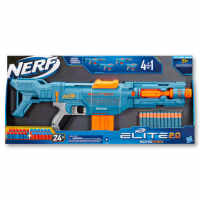
Nerf Elite 2.0 Echo CS-10 4-in-1 OT (US Version)
₱2,580.00
Buy on Lazada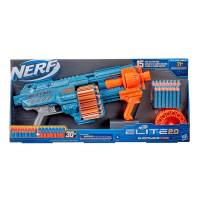
Nerf Elite 2.0 Shockwave RD-15
₱2,180.00₱2,680.00
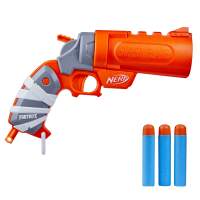
Nerf Fortnite Flare OT (US Version)
₱2,480.00
Buy on Lazada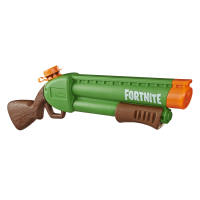
Nerf Super Soaker F0rtnite SG (ORIGINAL)
₱1,380.00₱1,880.00
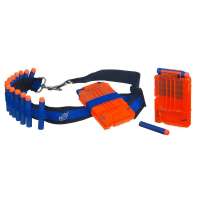
Nerf N-Strike Elite Bandolier Kit (ORIGINAL)
₱1,200.00₱1,500.00
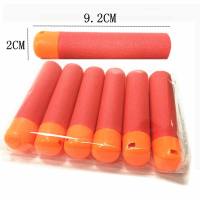
Nerf N-Strike Elite MEGA Darts Refill Pack
₱180.00
Buy on Lazada
Nerf Zombie Strike Inflatable Target (RARE)
₱995.00
Buy on Lazada
Nerf Melee FOAM TOY Weapons
₱980.00
Buy on LazadaAbout Nerf
Overview
NERF is an American toy and entertainment brand owned by Hasbro, widely recognised for its foam dart blasters, foam balls, and other products centred on active, competitive play. Launched in 1969 with a simple indoor-safe foam ball, the brand has grown into a major global franchise that now includes blasters, sports toys, water blasters, licensed merchandise, video games, entertainment experiences, and organised competitive play.1
The brand’s slogan is “It’s NERF or Nothin’!”2
- Official owner: Hasbro, Inc.
- Original creator/company: Parker Brothers
- Founded/launched: 1969
- Country of origin: United States
- Industry: Toys, games, sports and entertainment
- Main products: Foam dart blasters, foam ammunition, sports toys, water blasters and accessories
- Target audience: Primarily children and teenagers, with significant appeal among adult hobbyists and collectors
- Current parent company: Hasbro
Although NERF is now most strongly associated with dart-firing toy blasters, its origins lie in indoor sports equipment. The original product was a four-inch polyurethane foam ball introduced in 1969, designed to allow safe indoor play without damaging furniture or windows. Its unexpected success established the NERF name long before the company produced its famous blasters.2 Over subsequent decades, the brand evolved into a broader active-play portfolio encompassing foam darts, water blasters, melee toys, car-launching sets, laser-tag products, licensed toys, digital experiences, and location-based entertainment.
History
1960s: The original NERF Ball
NERF originated with American toy designer Reyn Guyer, who was developing an indoor game in the late 1960s. He presented his concepts to Parker Brothers, the toy and game company famous for titles such as Monopoly. During development, Parker Brothers became particularly interested in a simple foam ball suitable for indoor use and decided to commercialise it rather than the larger game concept.
The first NERF Ball was introduced in 1969. Approximately four inches in diameter and made from soft polyurethane foam, it was marketed as a ball that could be thrown indoors with considerably less risk of damage or injury than conventional hard balls.3 It became a major success, with historical accounts indicating that more than four million units were sold in its first year, instantly establishing NERF as a viable toy brand. This success led to additional indoor sports products, including larger foam balls.
From foam balls to blasters
The transition from sports products to blasters marked a pivotal development in the brand’s history. NERF blasters began appearing in the late 1980s with products such as the Blast-a-Ball. The Sharpshooter, introduced in 1992, further expanded the dart-blaster concept.3 These products established the defining modern NERF formula: a plastic toy blaster firing lightweight foam ammunition. By developing specialised foam darts, arrows, discs and balls instead of conventional projectiles, and combining them with bright colours and toy-oriented designs, NERF distinguished itself from traditional projectile toys.
Corporate ownership: Parker Brothers to Hasbro
NERF’s corporate history reflects the consolidation of the American toy industry. The brand began under Parker Brothers in 1969. Parker Brothers subsequently became part of Kenner, which was eventually acquired by Hasbro. Today, NERF sits alongside major Hasbro properties such as Transformers, Play-Doh, Monopoly, My Little Pony, Magic: The Gathering and Dungeons & Dragons within the company’s portfolio.4
The rise of the modern blaster
The 1990s and 2000s transformed NERF from a foam-ball brand into a blaster phenomenon. Early models used simple mechanisms and single-shot designs, but as technology and consumer interest evolved, NERF introduced larger magazines, rotating drums, multiple firing modes, motorised mechanisms, tactical accessories, stocks, barrel extensions, sights, specialised ammunition and electronic components. This development culminated in increasingly elaborate product families.
Major product families
N-Strike and N-Strike Elite
Introduced in the early 2000s, N-Strike helped establish the modern NERF design philosophy. Beginning in 2003, the series emphasised a tactical appearance and popularised features such as accessory rails, detachable stocks, barrel extensions, magazine-fed systems and modular customisation.8 It transformed NERF blasters from simple toys into a system of interconnected products that consumers could combine in various configurations.
Its successor, N-Strike Elite, focused on performance improvements in power, speed, distance and accuracy. Elite became one of the brand’s most recognisable lines, and its ammunition format became an industry standard, with numerous NERF and third-party blasters designed around the same dart dimensions.5
Modulus
N-Strike Modulus was a customisation-focused family designed around the idea that players could modify their equipment with interchangeable stocks, barrels, grips and other accessories.4
Mega
Mega blasters use significantly larger foam darts than the standard format. Their oversized ammunition serves as a recognisable alternative to traditional darts.
Zombie Strike
Introduced in 2013, Zombie Strike adopted a zombie-survival theme, giving many products a deliberately improvised or post-apocalyptic visual style.13
Rebelle
Also introduced in 2013, Rebelle was marketed primarily towards girls, featuring a distinct visual identity that included bows and fashion-oriented colours.14
Rival
Launched in 2015, NERF Rival represented a technological departure by firing small spherical foam rounds instead of darts. Designed for teenagers and young adults, it emphasised higher-performance competitive play.10
Nitro
Introduced in 2017, NERF Nitro moved away from projectiles entirely, launching small foam cars onto ramps and obstacles to create a stunt-play system.11
Ultra
Launched in 2019, NERF Ultra used a proprietary dart design intended to improve aerodynamic performance and range. Ultra ammunition is not interchangeable with traditional NERF darts.12
N Series
In 2024, NERF introduced the N Series, featuring the new N1 foam dart. Hasbro marketed N1 ammunition around improvements in accuracy, speed and distance, with blasters specifically designed for this format.12
Rebel Ops
By 2026, NERF had introduced Rebel Ops, using the Elite dart format and emphasising character-like roles and specialised blaster designs. Product material from 2026 includes the Rebel Ops Doom Cannon, which uses 60 NERF Elite darts and fires three darts at a time from reloadable supershells.18
Super Soaker and product diversification
NERF’s expansion extends beyond foam darts. Hasbro has incorporated Super Soaker water-blaster products into the broader NERF portfolio, describing a combined line as early as 2010.15 The wider NERF family has also included sports balls, basketball and football products, foam swords, discs, toy cars, laser-tag sets, pet toys, apparel and licensed merchandise. This diversification reflects Hasbro’s effort to position NERF as an active-play lifestyle brand rather than merely a toy-gun manufacturer.16
NERF sports
Sports have remained integral to NERF’s identity since the original foam ball. The brand has produced foam versions of traditional sports equipment and organised competitive activities such as Dart Tag tournaments. In 2022, Hasbro announced NERFBALL, described as the brand’s first officially organised team sport, combining elements of paintball and airsoft with basketball-style movement and scoring.6 The first official exhibition tournament was held in September 2023, where players scored by shooting the NERFBALL through a goal or hitting opponents with darts.7 This represents a strategic shift towards creating organised social play experiences around NERF products.
Video games and digital entertainment
NERF has crossed into the video-game industry with titles including:
- Nerf Arena Blast (1999)
- Nerf N-Strike (2008)
- Nerf N-Strike Elite (2009)
- Nerf Arcade
- Nerf Legends (2021)
- Nerf Strike on Roblox
The 2008 Nerf N-Strike game for Nintendo Wii was particularly notable for its compatibility with a physical NERF blaster accessory, effectively bridging physical and digital play.8
Licensed products
Licensed blasters based on popular entertainment franchises form a significant part of the business. NERF has produced products inspired by Star Wars, Marvel, Fortnite, Halo, Minecraft, Transformers, Roblox, Overwatch and G.I. Joe. For example, Hasbro partnered with 343 Industries to produce blasters based on Halo Infinite, including the NERF Halo MA40.9 These collaborations allow NERF to integrate its physical-play system with established fictional universes.
Ammunition systems
A defining characteristic of NERF is its specialised foam ammunition. Depending on the product family, formats include standard foam darts, Mega darts, N1 darts, Ultra darts, foam balls, Rival rounds, foam arrows, discs, missiles and specialised variants such as suction or whistling darts. Different ammunition formats create distinct product ecosystems; for instance, Rival rounds cannot substitute for Elite darts, N Series blasters require N1 darts, and Ultra blasters use proprietary ammunition.16 This compatibility system is central to NERF’s product strategy, as ammunition constitutes a recurring element of the play experience.
Design philosophy
NERF products generally adhere to several core design principles:
- Safety-oriented ammunition: Lightweight foam projectiles are central to the brand, though products remain subject to age recommendations and safety instructions.
- Bright visual identity: Orange is historically associated with NERF, complemented by blue, red, green, black, white and yellow depending on the series.
- Customisation: Many blasters are designed to be modified with accessories.
- Competitive play: Products are frequently designed for multiplayer games rather than solitary collection.
- Fantasy and role-play: Different series enable players to adopt personas such as soldiers, spies, zombie survivors, superheroes or characters from licensed universes.
Target audience and enthusiast community
While traditionally marketed towards children and young teenagers, NERF’s audience has expanded substantially. Current demographics include children (simple blasters and sports products), teenagers (advanced lines and competitive games), families (group activities), hobbyists (collectors and customisers), and adult communities that modify blasters, organise events and collect discontinued models. This broad appeal has helped NERF remain relevant across generations.
The enthusiast culture extends beyond ordinary collecting. Enthusiasts may modify internal mechanisms, paint and customise blasters, build scratch-made devices, test performance, design custom ammunition, produce reviews and tutorials, and participate in competitive events. Consequently, NERF functions simultaneously as a mass-market children’s toy brand and a hobbyist platform.
Brand identity and cultural impact
The classic NERF identity revolves around energy, action, competition and fun. Its most famous slogan, “It’s NERF or Nothin’!”, became a defining marketing phrase by the late 2000s.2 Hasbro has increasingly presented NERF as a brand centred on social active play, explicitly describing it in 2022 as having transformed into an “active play lifestyle brand.”12 During its expansion, Hasbro also introduced Murph, the brand’s first official mascot, to provide a more recognisable character presence.11
NERF has significantly influenced the toy industry by popularising foam projectile toys as a mainstream category. The basic concept of a plastic launcher with lightweight foam ammunition has inspired countless products from Hasbro and competitors. The brand has shaped toy blaster design, ammunition standards, hobbyist modification, organised foam-dart games, children’s party activities, YouTube content and licensed merchandise. Colloquially, “NERF” is often used to describe foam-dart blasters generally, although it remains a trademarked brand.17
Major milestones
| Year | Event |
|---|---|
| 1969 | Original NERF Ball introduced by Parker Brothers |
| 1970 | Larger Super NERF Ball introduced |
| 1980s | NERF expands beyond its original foam-ball concept |
| 1989 | Blast-a-Ball becomes one of the early NERF blasters |
| 1992 | Sharpshooter expands the dart-blaster concept |
| 1999 | Nerf Arena Blast video game released |
| 2003 | N-Strike system introduced |
| 2008 | Nerf N-Strike released for Wii |
| 2009 | NERF celebrates its 40th anniversary |
| 2012 | N-Strike Elite era begins |
| 2013 | Zombie Strike and Rebelle introduced |
| 2015 | NERF Rival introduced |
| 2017 | NERF Nitro introduced |
| 2019 | NERF celebrates its 50th anniversary; Ultra introduced |
| 2021 | Nerf Legends released |
| 2022 | Hasbro announces NERFBALL |
| 2023 | First official NERFBALL exhibition/tournament |
| 2024 | N Series and N1 darts introduced |
| 2026 | Hasbro’s NERF lineup includes Rebel Ops products using Elite darts |
NERF today
As of 2026, NERF remains a major Hasbro brand operating across multiple categories beyond traditional dart guns. Current product lines continue to develop foam-dart blasters, new play systems and character-oriented ranges such as Rebel Ops.18 The broader strategy encompasses sports, experiences, licensed products and digital entertainment, with Hasbro describing the brand’s direction as focused on social active play.19
NERF’s evolution can be understood as a progression from a soft indoor foam ball in 1969 to a global action-toy brand best known for foam dart blasters and competitive play. Its trajectory—from foam ball to indoor sports, foam projectiles, dart blasters, modular systems, competitive play, licensed entertainment and active-play lifestyle brand—connects a product from 1969 with modern blasters, sports experiences and digital entertainment. For over five decades, its defining principle has remained consistent: making action-oriented play exciting while replacing conventional hard projectiles with foam-based toys.
References
- Nerf
- It’s NERF or Nothin’! Hasbro’s Iconic NERF Brand Celebrates Its 40th Anniversary | Hasbro, Inc.
- Nerf Blaster
- Modulus Editor – Choose your blaster
- Hasbro’s NERF Brand Dominates Teen Sports in 2010 with Introduction of Advanced N-STRIKE Blasters and More | Hasbro
- HASBRO ANNOUNCES THE NERF BRAND’S FIRST OFFICIAL SPORT “NERFBALL” WITH DONALD DRIVER | Hasbro, Inc.
- Hasbro Launches the NERF Brand’s First-Ever Official Sport “NERFBALL” With Exhibition Game Featuring New Gear & Technology | Hasbro, Inc.
- Nerf N-Strike
- Hasbro Partners With 343 Industries to Launch Halo Infinite NERF Blasters | Hasbro, Inc.
- Hasbro Launches the NERF Brand’s First-Ever Official Sport “NERFBALL” With Exhibition Game Featuring New Gear & Technology | Hasbro
- Nerf – Wikidata
- Hasbro Launches the NERF Brand’s First-Ever Official Sport “NERFBALL” With Exhibition Game Featuring New Gear & Technology | Hasbro, Inc.
- POW! is pleased to announce the December 2013 release of NERF: The Ultimate Blaster Book | Hasbro
- POW! is pleased to announce the December 2013 release of NERF: The Ultimate Blaster Book | Hasbro, Inc.
- Hasbro’s Popular SUPER SOAKER Brand Joins the Company’s NERF Portfolio | Hasbro
- Hasbro’s NERF Brand Dominates Teen Sports in 2010 with Introduction of Advanced N-STRIKE Blasters and More | Hasbro
- It’s NERF or Nothin’! Hasbro’s Iconic NERF Brand Celebrates Its 40th Anniversary | Hasbro
- hasbro.com
- Nerf Blasters, Toys & Games – Hasbro