Shop on Lazada
Nescafe Dolce Gusto products
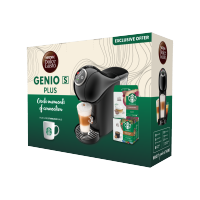
Nescafé Dolce Gusto Genio S Plus Bundle Coffee Machine GS1003 BUNDLE
₱9,687.00
Buy on Lazada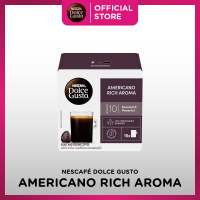
Nescafé Dolce Gusto Americano Coffee Capsules 128g NDG35
₱499.00
Buy on Lazada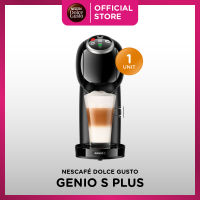
Nescafé Dolce Gusto Genio S Plus Coffee Machine GS1003
₱8,699.00
Buy on Lazada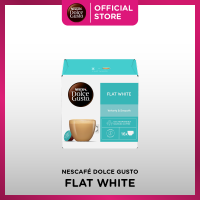
Nescafé Dolce Gusto Flat White Coffee Capsules 187.2g NDG36
₱499.00
Buy on Lazada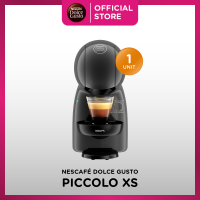
Nescafe Dolce Gusto Piccolo XS Black Anthracite
₱5,199.00
Buy on Lazada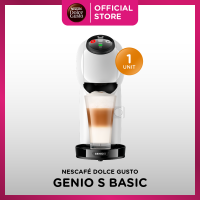
Nescafé Dolce Gusto Genio S Basic Coffee Machine
₱7,199.00
Buy on Lazada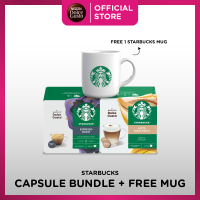
Nescafe Dolce Gusto Starbucks Capsule Bundle 4 (2 boxes + 1 Mug)
₱988.00
Buy on Lazada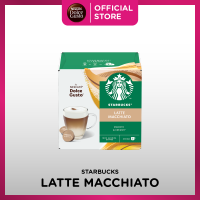
Starbucks by Nescafé Dolce Gusto Latte Macchiato Coffee Pods 129g SBNDG07
₱529.00
Buy on LazadaAbout Nescafe Dolce Gusto
Nescafe Dolce Gusto is a single-serve beverage system owned by Nestlé that pairs specially designed coffee capsules with dedicated pressure-based machines. Introduced in 2006 across Switzerland, the United Kingdom, and Germany, it was developed to bring café-style beverages into the home through a convenient and relatively simple format.4
The brand operates as part of the broader NESCAFÉ portfolio rather than as an independent coffee company. NESCAFÉ itself traces its origins to 1938, when Nestlé launched its soluble coffee following extensive research into preserving coffee flavour.
Basic information
| Category | Information |
|---|---|
| Brand | Nescafe Dolce Gusto |
| Owner | Nestlé |
| Parent brand | NESCAFÉ |
| Company headquarters | Vevey, Switzerland |
| Introduced | 2006 |
| Original markets | Switzerland, United Kingdom, Germany |
| Category | Single-serve coffee & beverage system |
| Main products | Coffee capsules/pods and coffee machines |
| Positioning | Café-style beverages at home |
| Technology | Pressure-based capsule extraction |
| Typical beverages | Espresso, Americano/Lungo, Cappuccino, Latte Macchiato, café au lait, chocolate and other specialty drinks |
Nestlé describes Nescafe Dolce Gusto as a multi-beverage system that combines smart capsules with stylish, high-pressure machines.2
The name: “Nescafe Dolce Gusto”
The brand name merges two distinct concepts:
- NESCAFÉ — Nestlé’s long-established coffee brand.
- Dolce Gusto — Italian-inspired wording meaning roughly “sweet taste.”
This naming convention is intended to communicate both the credibility of the NESCAFÉ heritage and an Italian-influenced café experience. It also clarifies the brand’s positioning: Nescafe Dolce Gusto is not simply instant coffee in a different package but is marketed as a complete coffee-and-beverage system comprising a machine, a capsule, and a specific preparation process.
History
Before Nescafe Dolce Gusto: the NESCAFÉ story
The lineage of Nescafe Dolce Gusto begins with NESCAFÉ. In 1929, Nestlé was approached to assist with a surplus of Brazilian coffee beans. Nestlé scientist Max Morgenthaler and his team subsequently worked on a method to produce convenient coffee while retaining its flavour. After years of development, NESCAFÉ was launched in Switzerland in 1938, eventually becoming one of Nestlé’s major global brands.
Over subsequent decades, NESCAFÉ expanded beyond traditional instant coffee as Nestlé explored methods to provide consumers with more sophisticated at-home coffee experiences. These efforts contributed to the eventual development of capsule systems such as Nespresso and, later, Nescafe Dolce Gusto.
2006: Launch of Nescafe Dolce Gusto
2006 marked the introduction of Nescafe Dolce Gusto in Switzerland, the UK, and Germany. Nestlé positioned the new system as a convenient solution capable of producing specialty beverages at home.4 The original concept combined coffee-shop-style drinks, a home appliance, portioned capsules, and simple preparation. Rather than requiring consumers to master espresso-machine techniques, Nescafe Dolce Gusto aimed to make specialty coffee accessible to ordinary households.
Expansion
Following its initial launch, the system expanded into additional territories. By the end of 2011, Nestlé reported that Nescafe Dolce Gusto was being sold in approximately 50 countries. The brand became notable for combining distinctive machine designs, relatively simple operation, individually portioned capsules, and a broad beverage range.
How Nescafe Dolce Gusto works
The operating principle of the system is straightforward:
Step 1 — Fill the machine
The user adds water to the machine’s reservoir.
Step 2 — Insert a capsule
A Nescafe Dolce Gusto capsule containing the beverage ingredients is placed into the capsule holder.
Step 3 — Start extraction
The machine forces heated water through the capsule under pressure.
Step 4 — Beverage preparation
The capsule is engineered specifically for the intended beverage. Different drinks may require varying pressures, water volumes, and extraction characteristics.
Step 5 — Consumption
The result is designed to resemble a café beverage without requiring the user to grind beans, tamp coffee, or manually steam milk.
Nestlé states that the capsule incorporates technology regulating pressure according to the beverage type, with current models such as the Genio S Plus reaching up to 15-bar pressure.3
Capsule technology
The capsule serves as the core component of the Nescafe Dolce Gusto business model. It functions as part of an integrated system involving the capsule, machine, water, pressure, extraction, and final beverage. According to Nestlé, this technology is designed to protect aroma freshness and ensure consistent preparation.1
The system utilises “Smart Capsule Technology,” which automatically regulates internal pressure based on the beverage being prepared. Consequently, an espresso and a milk-based drink are processed differently within the same machine ecosystem.
Beverage range
A key differentiator of Nescafe Dolce Gusto from traditional single-purpose coffee systems is its multi-beverage positioning. Depending on the market, the available range may include:
Coffee
- Espresso
- Espresso Intenso
- Americano
- Lungo
- Café au Lait
- Grande-style coffees
Milk-based coffee
- Cappuccino
- Latte Macchiato
- Flat White
- Café Latte
- Caramel Latte and other flavoured variations
Non-coffee beverages
- Hot chocolate
- Chocolate drinks
- Other specialty beverages
The specific product lineup varies significantly by country. Nestlé explicitly categorises Nescafe Dolce Gusto as a multi-beverage system rather than solely an espresso capsule system.2
Two-capsule drinks
Consumers often associate Nescafe Dolce Gusto with the use of multiple capsules for certain milk-based beverages. For example, preparing a cappuccino-style drink may involve inserting a coffee capsule followed by a milk capsule. The machine processes these sequentially to create the finished beverage.
This mechanism allows users to prepare layered or milk-based drinks without owning separate espresso and milk-steaming equipment, resulting in a product architecture distinct from conventional ground coffee.
Machines
Nescafe Dolce Gusto machines have historically been designed to combine appliance functionality with visual aesthetics. Nestlé describes the machines as merging technology with artistic design, offering multiple machine families over the years.5 Examples include:
- Genio
- Genio S
- Genio S Plus
- Esperta
- Drop
- Movenza
Model availability varies by country. While some machines are compact and manually controlled, advanced models feature digital controls for adjusting water volume, temperature, or beverage size. For instance, the Genio S Plus is described as having an LED control ring, adjustable temperature and water volume settings, and up to 15-bar pressure.3
Brand positioning
Nescafe Dolce Gusto occupies a distinct segment within the coffee market. Its position can be visualised relative to other categories:
- Instant coffee: NESCAFÉ Classic / Gold
- Pod convenience: NESCAFÉ Dolce Gusto
- Premium capsule coffee: Nespresso
- Traditional espresso: Ground coffee + espresso machine
This hierarchy reflects differences in consumer experience, price point, preparation effort, and control rather than strict quality rankings. The fundamental consumer proposition of Nescafe Dolce Gusto is the ability to prepare a wide variety of café-style drinks quickly at home without barista training.
Comparison with NESCAFÉ instant coffee
Although both carry the NESCAFÉ name, they represent different consumption experiences:
- NESCAFÉ instant coffee: Involves mixing pre-extracted and processed coffee with hot water.
- Nescafe Dolce Gusto: Involves a preparation and extraction process where the machine forces heated water through a capsule under pressure.
Comparison with Nespresso
While both are Nestlé-related coffee systems, Nescafe Dolce Gusto and Nespresso target different experiences. Nespresso originated in 1986, twenty years prior to Nescafe Dolce Gusto.
| Feature | Nescafe Dolce Gusto | Nespresso |
|---|---|---|
| Main concept | Multi-beverage system | Premium coffee/capsule system |
| Beverage range | Broad | Primarily coffee/espresso |
| Milk drinks | Major part of portfolio | Often separate milk preparation depending on system |
| Target experience | Convenient café-style drinks | More coffee-focused/premium |
| Machine style | Lifestyle-oriented | Coffee/premium-oriented |
| Consumer proposition | Variety + convenience | Coffee quality + premium experience |
Nestlé operates these multiple systems to address distinct consumer needs rather than treating them as identical products.
Business model
Nescafe Dolce Gusto follows the classic “razor-and-blades” or installed-base model common in capsule systems. The logic involves selling the machine to bring the consumer into the ecosystem, followed by recurring capsule purchases. This creates an ongoing relationship between the consumer and the brand.
The system comprises two major product categories:
- Hardware: Coffee machines.
- Consumables: Capsules/pods.
The consumable segment is particularly significant as coffee is consumed repeatedly, generating recurring demand.
Convenience factors
Compared to traditional espresso preparation, Nescafe Dolce Gusto reduces the number of required steps. Traditional methods may involve selecting beans, grinding, measuring, tamping, extracting, steaming milk, and cleaning equipment. Nescafe Dolce Gusto simplifies this process to inserting a capsule, starting the machine, collecting the drink, and removing the used capsule.
This simplicity is a central selling point, with Nestlé’s original 2006 description emphasising convenience and the ability to prepare specialty drinks quickly at home.4
Coffee sourcing
Nescafe Dolce Gusto states that it selects Arabica beans together with handpicked Robusta beans from quality sources globally, using roasting profiles to develop signature flavours. The wider NESCAFÉ organisation also emphasises farmer support programmes and responsible sourcing initiatives.
Sustainability
Capsule-based systems face sustainability challenges regarding waste management. Nestlé has addressed this through alternative technologies, most notably NESCAFÉ Dolce Gusto Neo, introduced in 2022. Neo was designed around a paper-based pod system that Nestlé describes as home compostable, using 70% less packaging by weight compared to existing capsules.2
This development signals a strategic direction towards balancing convenience and beverage quality with lower environmental impact. However, the availability of Neo and specific recycling or composting infrastructure depends on the local market.
Brand identity
The branding of Nescafe Dolce Gusto is associated with several core concepts:
- Coffee-shop experience: Reproducing the feeling of ordering specialty coffee at home.
- Design: Machines are styled as visible lifestyle appliances rather than purely utilitarian equipment.
- Convenience: Preparation is significantly simpler than traditional espresso methods.
- Variety: The system supports a broad menu beyond a single coffee style.
- At-home consumption: The primary setting is the domestic kitchen functioning as a miniature café.
Nestlé describes the proposition as bringing the “barista experience” into the home.
Global expansion and localisation
Following its 2006 launch, Nescafe Dolce Gusto expanded rapidly, reaching approximately 50 countries by 2011.4 Due to its international presence, the capsule lineup is not identical worldwide. Local preferences influence flavours, milk beverages, coffee intensity, package sizes, machine models, and seasonal products. A drink available in one market may not necessarily be sold in another.
Strengths and limitations
Strengths
From a consumer perspective, key strengths include:
- Convenience: Minimal preparation is required.
- Consistency: Pre-portioned capsules reduce variation between servings.
- Variety: The system extends beyond espresso to include milk drinks, chocolate, and other beverages.
- Ease of use: Extensive barista knowledge is unnecessary.
- Machine design: Many models are aesthetically suited to modern kitchens.
- Brand recognition: The NESCAFÉ name provides established category credibility.
Limitations
The system also presents certain trade-offs:
- Capsule waste: Single-use capsules generate packaging waste, though alternatives like Neo are emerging.5
- Ongoing cost: Regular consumption requires continuous capsule purchases.
- Less control: Users have limited control over grind size, dose, extraction time, recipes, and milk texture compared to using whole beans and traditional equipment.
- Ecosystem dependence: Consumers are tied to compatible capsule formats and available products.
- Freshness perception: While capsules protect contents effectively, they do not replicate the experience of grinding freshly roasted beans immediately before extraction.
Target consumers
Nescafe Dolce Gusto is particularly suited to individuals seeking at-home coffee, café-style drinks without complex preparation, beverage variety, fast operation, and stylish appliances. It is less targeted at specialty coffee enthusiasts who prioritise maximum extraction control. Fundamentally, the brand sells convenience and variety rather than absolute brewing precision.
Overall brand strategy
Nescafe Dolce Gusto functions as an ecosystem rather than merely a coffee product. Consumers purchase a combination of machine, capsules, recipes, and brand experience. The machine establishes the platform, the capsule drives recurring consumption, and the diverse beverage menu maintains relevance for different household members.
This multi-beverage household proposition allows a single machine to serve espresso in the morning, cappuccino in the afternoon, and hot chocolate in the evening. Nestlé explicitly categorises the brand as a multi-beverage system to reflect this versatility.2
Timeline
| Year | Event |
|---|---|
| 1929 | Nestlé begins work on a solution to Brazil’s coffee surplus |
| 1938 | NESCAFÉ launches in Switzerland |
| 1986 | Nespresso system is introduced |
| 2006 | NESCAFÉ Dolce Gusto launches in Switzerland, UK and Germany |
| 2011 | Dolce Gusto reaches about 50 countries |
| 2022 | NESCAFÉ Dolce Gusto Neo is introduced as a new-generation system |
| Today | Dolce Gusto operates as Nestlé’s international multi-beverage capsule system |
References
- About NESCAFÉ Dolce Gusto Thailand | Nescafe dolce gusto
- Nescafé Dolce Gusto launches Neo, its next generation ‘Coffee Shop at Home’ experience | Nestlé Global
- Coffee superstar: Nescafé Dolce Gusto expands in Brazil | Nestlé Global
- Nescafé Dolce Gusto | Nestlé Coffee | Nestlé Global
- Explore Dolce Gusto coffee machines | Nestle Family