Shop on Lazada
NITTO products
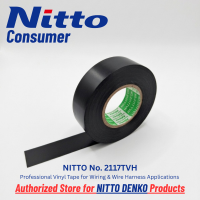
NITTO Vinyl Electrical Tape
₱56.00
Buy on Lazada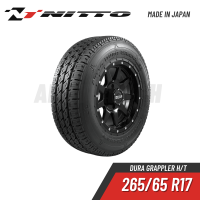
Nitto Tires 265/65 R17 HT - Dura Grappler H/T ( Made in Japan ) Tire B2
₱7,800.00₱8,000.00
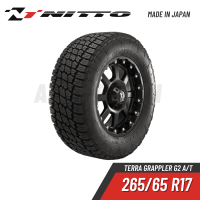
Nitto Tires 265/65 R17 AT - Terra Grappler G2 ( Made in Japan ) B2
₱9,480.00₱12,500.00
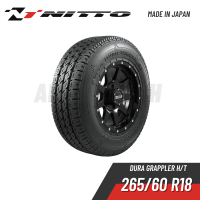
Nitto Tires 265/60 R18 HT - Dura Grappler H/T ( Made in Japan ) Tire B2
₱9,380.00₱13,000.00
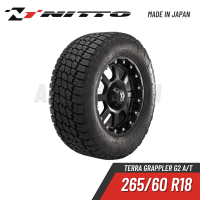
Nitto Tires 265/60 R18 AT - Terra Grappler G2 A/T ( Made in Japan ) Tire B2
₱10,880.00₱12,000.00
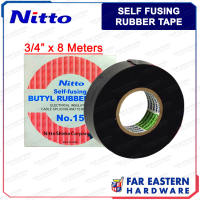
NITTO Self-Fusing Rubber Tape Electrical Insulation 3/4″ x 8m Made in Japan
₱419.00
Buy on Lazada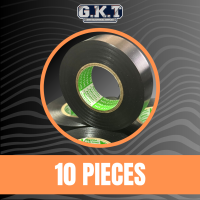
Nitto Electrical Tape 100% Genuine Original Heavy Duty Auto Motorcycle Tape
₱640.00
Buy on Lazada
265/65/17 Nitto Dura grappler Highway terrain Dot 2023 Made in japan - Brandnew (Per pc )
₱8,500.00
Buy on LazadaAbout NITTO
Note: The name “NITTO” may refer to multiple Japanese entities. This article concerns NITTO (Nitto Denko Corporation), the multinational manufacturer of advanced materials and chemical products. It is distinct from Nitto Tire, a separate automotive tyre brand.1
Overview
NITTO serves as the primary global brand for Nitto Denko Corporation, a Japanese multinational manufacturer specialising in high-performance materials, adhesive technologies, films, membranes, electronic components, automotive solutions, and healthcare products.
Established in Tokyo in 1918 as Nitto Electric Industrial Co., Ltd., the company originally focused on electrical insulating materials. Over the past century, it has evolved from a specialised electrical materials producer into a diversified technology group serving the electronics, automotive, healthcare, infrastructure, and energy sectors.2
While the legal corporate name remains Nitto Denko Corporation, the organisation adopted NITTO as its unified global brand identity in 2013. This rebranding was intended to move beyond the historical association of “Denko” (electric industries) and reflect the company’s expanded scope across diverse technological fields.3
Corporate profile
| Category | Information |
|---|---|
| Brand | NITTO |
| Japanese name | 日東電工 |
| Legal company name | Nitto Denko Corporation |
| Founded | October 25, 1918 |
| Origin | Osaki, Tokyo, Japan |
| Headquarters | Osaka, Japan |
| Industry | Advanced materials / Chemicals / Manufacturing |
| Stock exchange | Tokyo Stock Exchange, Prime Market |
| Ticker | 6988 |
| CEO | Tatsuya Akagi |
| Chairman & CEO | Hideo Takasaki |
| Employees | 28,006 (consolidated) |
| Global companies | 88 |
| FY2025 net sales | ¥1.028 trillion |
| Brand slogan | Innovation for Customers |
| Brand colours | Nitto Blue + Nitto Red |
As of March 31, 2026, Nitto Denko Corporation reported 28,006 consolidated employees and a global network comprising 88 affiliated companies. Consolidated net sales for the 2025 fiscal year totalled ¥1,028.2 billion.4
History
Foundation and early years
The company was founded on October 25, 1918, in Osaki, Tokyo, under the name Nitto Electric Industrial Co., Ltd. Its initial focus was the production of electrical insulating materials. This business direction addressed a critical domestic need at the time, as imported industrial materials were difficult to obtain, thereby encouraging local development.5
Throughout the 1920s to 1940s, the company expanded its portfolio to include electrical insulating varnishes, black insulating tape, vinyl tape, and other electrical products. Following the destruction of its Tokyo headquarters during World War II, the company relocated its head office to Ibaraki, Osaka, to resume production.6
Post-war expansion and diversification
In the 1950s, the company strengthened its adhesive and tape technologies, producing black tape and, in 1951, what it describes as Japan’s first plastic tape. This era established adhesive technology as a core competency.7
International expansion began in the 1960s with the opening of a New York office in 1961 and the establishment of Nitto Denko Taiwan as its first overseas manufacturing base.8 During this period, the product range grew to include fluoropolymer products, surface-protection films, semiconductor materials, medical adhesive sheets, double-sided adhesive tape, and flexible printed circuits.
The 1970s marked a significant transformation into a diversified materials manufacturer. Key developments included entry into flexible printed circuits, sealing materials, LCD polarising films, separation membranes, reverse-osmosis technology, and ultrafiltration membranes.9
Advanced materials and global growth
During the 1980s, the company developed athletic taping, transdermal drug-delivery patches, reinforcement materials, vibration-damping materials, and LCD optical films. In 1987, it acquired US-based Hydranautics, bolstering its membrane and water-treatment capabilities. To mark its 70th anniversary in 1988, the corporate name was changed to Nitto Denko Corporation.10
The 1990s saw substantial growth in international manufacturing and sales networks, with new operations established in China, Thailand, Indonesia, Vietnam, Korea, and the Philippines. Concurrently, the company developed materials for automotive paint protection, hard disk drives (HDDs), and optical displays.11
In the 2000s, the company positioned itself as a supplier of specialised internal components for flat-panel displays, semiconductors, HDDs, water purification systems, and automotive applications, expanding further through acquisitions and overseas R&D facilities.12
Modern branding and centenary
On October 1, 2013, the company adopted NITTO as its sole global brand identity. Although the legal name remained Nitto Denko Corporation, the change was strategic; removing “Denko” signalled a shift away from being perceived solely as an electrical-industry firm towards a multi-sector technology provider.13
The following year, the brand slogan “Innovation for Customers” was established to articulate a philosophy of solving client challenges through materials science rather than merely selling commodities.14 In 2018, the company celebrated its 100th anniversary, marking a century of evolution from electrical insulation to advanced global materials.15
Products and technologies
NITTO operates primarily as a business-to-business (B2B) supplier. Its materials frequently function as invisible components within finished products manufactured by other companies.
Adhesive tapes
Adhesive technology remains a historical strength. The company manufactures specialised tapes for electronics assembly, automotive manufacturing, construction, packaging, medical applications, surface protection, and semiconductor fabrication. These are engineered materials designed for specific performance characteristics, including adhesion, heat resistance, chemical stability, flexibility, insulation, and removability.
Electronics and display materials
The company is deeply integrated into the electronics supply chain, providing semiconductor materials, flexible printed circuits, optical films, polarising films, display materials, HDD-related materials, and protective films. Its development of LCD polarising films, which began in the 1970s, has been particularly significant, evolving into sophisticated optical films that enable thinner and more flexible displays.16
Semiconductor materials
NITTO supplies specialised materials for semiconductor manufacturing, having begun production of semiconductor encapsulation materials in 1966.17 This segment exemplifies the company’s role in enabling the production of final technologies by other manufacturers.
Automotive materials
Materials for the transportation sector include automotive adhesive tapes, protective films, vibration-damping materials, reinforcement materials, sealing solutions, and electronic components. Production of protective films for automobile painted surfaces commenced in 1992.18 As vehicles become increasingly electrified and lightweight, the company provides solutions for batteries, sensors, and vehicular electronics.
Healthcare and medical technology
Healthcare technologies leverage the company’s adhesive and polymer expertise. Products include medical adhesive sheets (introduced in the 1960s), athletic and rehabilitation tapes, transdermal drug-delivery patches (introduced in the 1980s), and pharmaceutical-related materials.19
Water and membrane technology
The company entered the high-polymer separation membrane market in the 1970s, developing reverse osmosis (RO), ultrafiltration, and desalination technologies. The 1987 acquisition of Hydranautics significantly strengthened this division, which serves drinking water, industrial treatment, and seawater desalination applications.20
Industrial materials
Specialised industrial offerings include surface-protection films, sealing materials, reinforcement materials, vibration-damping materials, fluoropolymer products, and insulating materials. Branded product lines such as NITOFON/NITOFLON and NITOHARD address specific industrial requirements.
Business philosophy and innovation
The corporate mission is defined as contributing to customers’ value creation through innovative ideas.21 The brand slogan, “Innovation for Customers,” reinforces this commitment.22
Rather than developing materials in isolation, the company employs a problem-solving approach: identifying customer challenges, innovating material or technological solutions, creating new applications, and establishing new markets. This methodology facilitates the transfer of technologies across different industries.
Sanshin Activities
For over five decades, the company has utilised a framework known as Sanshin Activities to generate demand. This involves three types of innovation:
1. Finding new applications for existing products
2. Adding new technologies to existing products
3. Developing new products using new technologies
This systematic approach has enabled the transition from electrical insulation to diverse fields such as displays, semiconductors, healthcare, and water treatment.
Core technological capabilities
The company’s portfolio is built upon several foundational material-science technologies:
- Adhesion: Engineering materials that bond, release, or protect surfaces under specific conditions.
- Polymer science: Designing polymers with precise mechanical, thermal, chemical, and electrical properties.
- Film technology: Manufacturing ultra-thin, high-precision functional films.
- Surface modification: Controlling surface interactions with other materials.
- Optical technology: Developing films and components that manipulate light.
- Membrane technology: Separating molecules and contaminants for water treatment.
- Electronics materials: Creating materials for miniaturised and sophisticated devices.
- Medical materials: Adapting adhesive and polymer technologies for healthcare applications.
Brand identity
The current visual identity was introduced during the 2013 global branding reform. The logo consists simply of the word NITTO, with a distinctive “N” symbolising dynamic change and innovation.23
The brand utilises two primary colours:
* Nitto Blue: Represents advanced technology, trust, quality, and intelligence.
* Nitto Red: Represents passion, energy, creativity, and warmth.24
Global operations
As of March 31, 2026, the group comprises 88 companies worldwide with 28,006 employees. Financial results for FY2025 include consolidated net sales of ¥1.028 trillion, operating profit of ¥183.6 billion, net income of ¥133.5 billion, and R&D expenditure of ¥48.0 billion.
Reflecting its international orientation, 86% of revenue is derived from customers outside Japan.25
Market position
NITTO is best understood as a diversified advanced-materials technology company whose products often serve as critical, unseen components in other manufacturers’ goods. Its competitive advantage lies in engineering materials to meet exacting specifications regarding thinness, transparency, heat resistance, chemical stability, precision, and durability. This makes the company integral to industries where material performance directly dictates end-product functionality.
Distinction from Nitto Tire
It is important to distinguish Nitto Denko Corporation from Nitto Tire, a separate entity founded in 1949 that manufactures performance automotive tyres.26
| Feature | NITTO (Nitto Denko) | Nitto Tire |
|---|---|---|
| Primary identity | Advanced-materials technology company | Automotive tyre brand |
| Origin | Japan | Japan |
| Founded | 1918 | 1949 |
| Key industries | Electronics, industrial materials, healthcare, membranes | Automotive tyres |
| Target customer | Industrial manufacturers and technology firms | Drivers and automotive enthusiasts |
| Slogan | Innovation for Customers | Fueled By Enthusiasts® |
Strategic direction
As of 2026, the company aims to become an “Essential ESG Niche Top Company,” combining specialised market leadership with solutions to environmental and social challenges. Current strategic priorities are organised around three domains: Green Tech, Digital Interface, and Human Life. This approach emphasises co-creation with customers, sustainability, and high-value specialised materials.28
References
- About Us | Nitto Tire
- Corporate Data | Nitto
- History | Nitto
- Message from the President | Nitto in Southeast Asia
- Nitto Denko Group Branding Reform | Nitto
- 日東電工グループ ブランド刷新のお知らせ | Nitto 日東電工株式会社
- Financial Highlights | Nitto
- 연혁 | Nitto in 한국
- Relaunch of Our Global Website | Nitto
- Nitto 100th Anniversary Special Web Site | Nitto
- About Us | Nitto
- About the Nitto Brand | Nitto in Southeast Asia
- Discover Nitto | Nitto
- Organizational Chart | Nitto
- Organizational Chart | Nitto
- History | About Us | NITTO OPTICAL CO., LTD.
- Our History & Innovations|Leveraging Jig Machining Expertise|NITTO MFG.,LTD.
- Nitto 100th Anniversary Special Web Site | Nitto
- Relaunch of Our Global Website | Nitto in 한국
- Relaunch of Our Global Website | Nitto in Japan (English)
- Nitto Denko Group Branding Reform | Nitto in 한국
- Nitto Denko Group Branding Reform | Nitto in Europe (Español)
- About the Nitto Brand | Nitto
- Discover Nitto | Nitto
- Corporate Profile | Nitto
- Corporate Profile | Nitto
- Financial Highlights | Nitto
- About Us | Nitto