Shop on Lazada
Okamoto products
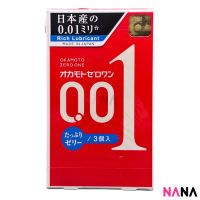
Okamoto 0.01 Zero One Condom 3pcs - Extra Moist (Plenty of Jelly - Blue)
₱490.00₱700.00
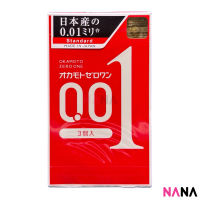
Okamoto 0.01 Zero One Condom 3pcs
₱500.00₱590.00
100% AUTHENTIC!!! JAPAN OKAMOTO 0.01 Ultra Thin PU Condom 3s Pack (Japan Edition)
₱499.00₱899.00
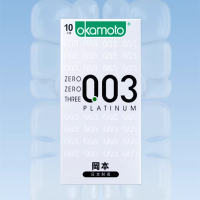
OKAMOTO ZERO ZERO THREE PLATINUM (52±2mm) 3pcs 冈本003避孕套
₱1,299.00₱1,599.00
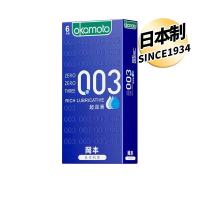
OKAMOTO 0.03 RICH LUBRICATIVE Condoms (52±2mm) 冈本0.03超润滑避孕套
₱999.00₱1,230.00
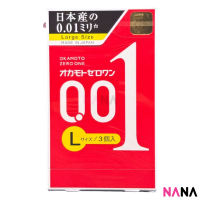
Okamoto 001 Large Zero One - L Size (Japan Original) Yellow Label
₱590.00₱780.00
![[Japan No.1] OKAMOTO 001 Standard CONDOM 3Pcs / Large Size 冈本避孕套安全套3只超薄](https://ph-live.slatic.net/p/80fc2ab6fc2094fe4d0209d36b2e0dc8.jpg_200x200q80.jpg)
[Japan No.1] OKAMOTO 001 Standard CONDOM 3Pcs / Large Size 冈本避孕套安全套3只超薄
₱749.00₱899.00
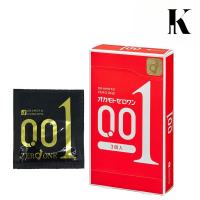
【24 Hours Shipped】Okamoto 0.01 with Zero One Condom 3pcs
₱559.00₱1,079.00
About Okamoto
Okamoto is a Japanese brand widely recognised in the Philippines and internationally for its condoms, particularly the ultra-thin 0.01, 0.02, and 0.03 series. The brand belongs to OKAMOTO INDUSTRIES, INC., a Japanese rubber-and-plastics manufacturer with origins dating back to 1934. While condoms are its most visible consumer product, the parent company operates on a significantly broader scale, producing industrial films, automotive materials, adhesive products, footwear, medical devices, food-sanitation items, and various other goods.12
Quick facts
| Details | |
|---|---|
| Brand | Okamoto / オカモト |
| Country of origin | Japan |
| Parent company | OKAMOTO INDUSTRIES, INC. |
| Founded | 1934 |
| Headquarters | Bunkyo, Tokyo, Japan |
| Main reputation | Condoms and ultra-thin condom technology |
| Famous products | 0.01, 0.02, 0.03 series |
| Key materials | Natural rubber latex and polyurethane, depending on product |
| Corporate philosophy | “Science Delivers Better Living” |
| Current president | Kunihiko Okamoto |
| FY2025 group sales | ¥108.04 billion |
The corporate figures above are derived from Okamoto Industries’ current company information, with sales reported for the fiscal year ended March 2026.2
Corporate identity and distinction
Several unrelated Japanese companies use the name Okamoto, making it necessary to distinguish between them. The subject of this article is OKAMOTO INDUSTRIES, INC. (オカモト株式会社), the rubber-and-plastics manufacturer famous for its condom brand. It should not be confused with entities such as Okamoto Corporation, which manufactures socks, or Okamoto Machine Tool Works.1
Okamoto Industries began in the rubber sector and developed a strong specialisation in latex and polymer technology. Although condoms remain a significant consumer-facing segment, the company describes itself today as a “comprehensive rubber and plastic manufacturer.”3 This distinction is relevant because Okamoto is not merely a condom company; rather, the condom business is simply the division that has achieved the greatest global recognition.
History
Origins: 1932–1934
The roots of the Okamoto condom business trace back to 1932, when Minosuke Okamoto, alongside his older sister and younger brother, began researching products made from natural rubber latex.1
In January 1934, Nippon Gum Industries, Ltd. was established in Tokyo, followed by the establishment of the Okamoto Rubber Plant in February of the same year. A factory in Hirai was subsequently opened in 1935.1 Consequently, 1934 is generally treated as the company’s founding year, even though the modern corporate structure evolved considerably thereafter.
From its inception, the company focused on condom manufacturing. Okamoto describes its original business purpose as developing condoms with high quality and durability during an era when manufacturing technology, raw materials, and machinery were difficult to obtain.3
Corporate consolidation
The modern Okamoto organisation emerged through a series of mergers and integrations. According to official corporate history, Okamoto was formed around Okamoto Rubber Co., Ltd., together with Nippon Gum Industries and Riken Rubber. It later expanded by absorbing other businesses, including Zebra-Kenko Bicycles.1 This history of consolidation explains the diverse product portfolio maintained by the company today.
Diversified manufacturing portfolio
Over the decades, Okamoto expanded well beyond condoms and traditional rubber products. Its current business divisions include:
Industrial products
- Plastic films
- Automotive materials
- Wallpaper
- Flexible container bags
- Adhesive tape
- Rubber bands
- Food-wrapping films
- Dehydrating/absorbing sheets
- Food-grade gloves
Consumer products
- Condoms
- Personal-care products
- Heating pads
- Dehumidifiers
- Gloves
- Boots
- Safety shoes
- Medical equipment
- Leather shoes
- Sneakers
Other businesses
- Solar power generation2
This diversification is often less visible to consumers who know Okamoto primarily as a condom brand, yet the parent company remains a large-scale materials manufacturer.
Condom technology and material engineering
Okamoto’s prominence in the condom market is largely attributed to material engineering. While condoms have traditionally been associated with natural rubber latex, Okamoto has invested heavily in developing thinner and distinct polymer materials, allowing it to compete based on thinness, flexibility, texture, and fit. This focus on material science eventually became the foundation of the brand’s famous 0.01 series.
International branding emphasises the development of specialised thin condom materials, while Japanese product information identifies the 0.01 as approximately 0.01 mm thick.3
The 0.01 condom
The OKAMOTO 0.01 is arguably the product that defines the modern brand. The Japanese ZERO ONE product is described as approximately 0.01 mm thick, utilising aqueous polyurethane rather than conventional latex. It is marketed as a premium ultra-thin condom and is manufactured in Japan.4
The international product line specifies the 0.01 product as:5
- Approximately 0.01–0.019 mm thick
- Made from hydro polyurethane
- Non-latex
- Transparent
- Approximately 52 ± 2 mm wide
- Approximately 175 ± 10 mm long
- Made in Japan
Polyurethane vs. Latex
Polyurethane enables the manufacture of extremely thin condoms without relying on natural rubber latex. This offers a practical alternative for individuals who need to avoid latex, although users should always consult package instructions for specific guidance. Okamoto explicitly describes its 0.01 polyurethane product as suitable for people with latex sensitivity.5
It is important to note that “Okamoto” is not synonymous with “polyurethane”; the material used depends entirely on the specific product. Conventional latex condoms offer high elasticity and a familiar feel, and Okamoto continues to produce many latex-based variants alongside its polyurethane lines.
Thickness categories: 0.01 vs 0.02 vs 0.03
Okamoto structures its ultra-thin range around specific thickness categories rather than a simple quality ranking:
| Series | General positioning |
|---|---|
| 0.01 | Extremely thin / premium flagship |
| 0.02 | Ultra-thin alternative |
| 0.03 | Thin, with a broader range of variants |
The current catalogue lists separate families for each tier. The 0.03 range includes variants such as Platinum, Cool, Hyaluronic Acid, Rich Lubricative, Aloe, and Real Fit.5 Thinner dimensions do not automatically equate to better performance for every user; factors such as material, fit, lubrication, comfort, and personal preference are equally significant.
The designation 0.01 communicates an ultra-thin thickness class rather than a guarantee that every microscopic point of the condom measures exactly 0.010 mm. Product documentation typically describes the thickness as 0.01 mm / 0.01–0.019 mm or “around 0.01 mm.”45
SHEERLON technology
Another key element of Okamoto’s technology is SHEERLON, a proprietary material developed to reduce thickness while retaining durability. This material has been used across various products, including classic lines.3 The use of SHEERLON illustrates that the brand’s competitive identity is built around materials science rather than packaging or marketing alone, aiming to translate polymer engineering into tangible consumer experiences such as reduced rubber sensation and greater comfort.
Product families
Okamoto’s condom catalogue extends beyond the 0.01 series. The international lineup includes:
Ultra Thin
- 0.01
- 0.02
- 0.03
Classic
- Crown
- Roman
- Harmony
- Other traditional designs
Functional and specialty products
- Different lubrication levels
- Aloe variants
- Cooling variants
- Hyaluronic-acid variants
- Fit-oriented products
- Other specialized formulations
The international catalogue also lists sexual-wellness products beyond condoms.5 Availability varies significantly by country, so lineups in the Philippines, Japan, Hong Kong, and Southeast Asia may differ.
Manufacturing philosophy and quality control
Okamoto’s corporate identity is closely tied to science, materials, manufacturing technology, and quality control, encapsulated in its slogan: “Science Delivers Better Living.” The company maintains a long-term focus on developing materials, production technologies, and quality improvements.3
For condoms specifically, polyurethane products undergo electronic pinhole testing as part of quality assurance protocols.5 While no condom provides 100% protection, this emphasis on manufacturing precision is central to the brand’s positioning. Correct usage remains more critical than brand prestige, and Okamoto instructs users to strictly follow product directions.5
Brand positioning and reputation
Okamoto occupies a distinct position in the market by competing primarily through Japanese engineering, thinness, and quality rather than celebrity endorsements, lifestyle branding, novelty, or low pricing. The 0.01 name effectively transforms a product specification into a brand identity, immediately communicating the product’s central proposition to consumers seeking premium options.
Okamoto describes itself as a major Japanese condom brand and claims in international materials to be the number-one-selling condom in Japan.3 This is a corporate claim rather than an independently verified global statistic. Outside Japan, the brand has developed a strong reputation in East and Southeast Asia, with the 0.01 product becoming almost synonymous with the Okamoto name internationally.
Corporate scale and sustainability
As of the fiscal year ending March 31, 2026, OKAMOTO INDUSTRIES reported:2
- ¥108.04 billion in consolidated sales
- ¥79.688 billion in parent-company sales
- 17,699,367 issued shares
- ¥13.04763 billion in capital
- Headquarters in Hongo, Bunkyo-ku, Tokyo
- Kunihiko Okamoto as president and representative director
These figures confirm that the parent company is a substantial Japanese manufacturer rather than a niche sexual-wellness firm. Beyond manufacturing, Okamoto has expanded its corporate agenda to include energy conservation, renewable-energy investment, environmentally friendly products, waste reduction, supply-chain compliance, human-rights considerations, and workplace safety and diversity.2
Timeline
- 1932: Okamoto family begins researching natural-rubber latex products.1
- 1934: Nippon Gum Industries established; Okamoto Rubber Plant established.1
- 1935–1936: Factory expansion and incorporation of Okamoto Rubber.1
- Later decades: Expansion from rubber products into plastics and other industrial and consumer goods.
- Corporate consolidation: Nippon Gum Industries, Riken Rubber, and Okamoto Rubber merge into the lineage that became today’s Okamoto.1
- Modern era: Development of increasingly thin and specialised condom materials.
- 0.01 era: Ultra-thin polyurethane condom becomes the company’s most recognisable international product.
- 2026: OKAMOTO INDUSTRIES remains a diversified manufacturer with over ¥108 billion in group annual sales.2