Shop on Lazada
OMO products
![[BUY 3 TAKE 3] Cheese Roll Indulge in the Perfect Balance of Soft Fluffy Bread and Rich Creamy Cheese](https://ph-live.slatic.net/p/55f2a8cb7835667dc8e8551bcae47ab6.png_200x200q80.jpg)
[BUY 3 TAKE 3] Cheese Roll Indulge in the Perfect Balance of Soft Fluffy Bread and Rich Creamy Cheese
₱155.00₱299.00
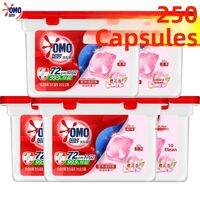
OMO | Concentrated Germ and Mite Removal Laundry Pods 150pc
₱1,858.68₱2,611.87
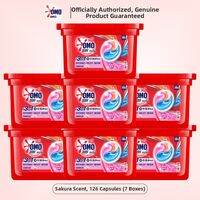
OMO | 3-in-1 Scent Long-lasting Detergent Pods Antibacterial and Mite Removal
₱2,227.42₱3,107.07
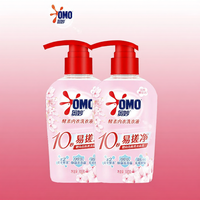
OMO | Sakura Scented Antibacterial Stain Removal Detergent For Underwear
₱565.14₱930.46
OMO | Blood Stain Removal & Antibacterial Handwash Detergent
₱523.53₱877.18
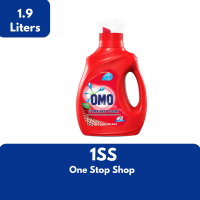
OMO Liquid Laundry Detergent Deep Clean 1.9 Liters
₱795.00₱899.00
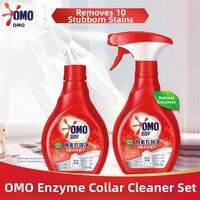
OMO | White Clothing Stain Remover Strong Cleaning Power
₱533.34₱1,107.97
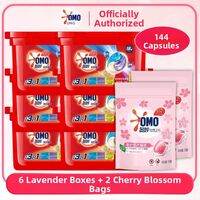
OMO | 3-in-1 Antibacterial Stain Removal Long Lasting Fragrance Cherry Blossom & Lavender Laundry Pods
₱1,640.17₱4,008.20
About OMO
OMO is a global laundry care brand owned by Unilever. It is primarily recognized for its range of laundry detergents and stain-removal products, which include powders, liquids, capsules, and other formats. In various international markets, the brand operates under alternative names such as Persil, Surf Excel, Skip, Breeze, Rinso, and Ala, forming part of Unilever’s broader global laundry portfolio.
The brand is distinguished by its combination of functional cleaning efficacy with a purpose-led philosophy centered on the belief that children should be free to play, explore, and get dirty. This approach is globally associated with the slogan and platform “Dirt Is Good.”
Brand overview
| Attribute | Information |
|---|---|
| Brand name | OMO |
| Industry | Consumer goods / Home Care |
| Category | Laundry care |
| Main products | Laundry detergent, stain removers and related laundry products |
| Owner | Unilever |
| Origin | United Kingdom |
| First registered | 1908 |
| First detergent product | 1909 |
| Major brand philosophy | “Dirt Is Good” |
| Global presence | Multiple markets worldwide |
| Vietnam launch | 1995 |
| Vietnam parent company | Unilever Vietnam |
Unilever’s archives identify OMO as one of the company’s historic laundry brands, tracing its origins to the early 20th century.
History
Origins: 1908–1909
OMO has a history spanning more than a century. In 1908, Lever Brothers registered the Omo brand under its subsidiary R. S. Hudson Ltd. The initial Omo product was a household bleach, which was withdrawn from the UK market after approximately one year.
In 1909, Omo was relaunched as a soap-based washing powder, marking the beginning of its development as a laundry detergent brand. The brand was subsequently registered in several markets, including the UK, Canada, Austria, and France.
Over the following decades, OMO evolved alongside the development of modern synthetic detergents. By the 1960s, Unilever’s archive described it as one of the world’s leading washing powder brands.
Expansion during the 20th century
OMO gradually transitioned from a British laundry product to an international brand. Unilever’s historical reports document the development and marketing of OMO across numerous European and international markets. For instance, Unilever’s 1980 report highlighted OMO’s strong position in Germany and the introduction of detergent technologies designed to improve washing performance at medium and low temperatures.
By 1995, Unilever reported that OMO was being sold in 50 countries, demonstrating extensive international expansion. The company also emphasized that OMO formulations could be adapted to suit different consumer habits and local market conditions.
OMO and Unilever
OMO is not an independent entity but a brand within Unilever’s Home Care business. Unilever owns and operates a large portfolio of laundry brands worldwide. Because consumer preferences vary by country, the same underlying global laundry strategy often appears under different names.
Brands such as OMO, Persil, Surf Excel, Surf, Skip, Rinso, Breeze, and Ala are used for Unilever’s laundry products in different markets. Unilever describes OMO as part of this international “Dirt Is Good” brand family.4
Consequently, OMO functions as a global brand platform rather than a single identical product sold everywhere. Product formulations, packaging, pricing, and brand names may vary by country.
The “Dirt Is Good” philosophy
A pivotal development in OMO’s modern history was its shift from selling detergent to promoting a broader brand purpose. In 2004, research conducted in Europe indicated that children were becoming less physically active and spending more time on screen-based activities. In response, OMO launched the “Dirt Is Good” (DIG) platform.1
The central premise is that children need opportunities to play, explore, experiment, and get dirty. From a marketing perspective, this reframed the traditional narrative. While conventional detergent advertising typically presents dirt as a problem to be solved, OMO’s philosophy positions dirt as evidence of activity and experience:
Play → dirt → learning/experience → detergent → clean clothes
This concept became one of OMO’s most recognizable elements of brand positioning.
Brand positioning
OMO’s positioning is built upon two interconnected promises.
Functional promise
OMO performs fundamental laundry tasks, including removing stains, cleaning clothes, handling everyday dirt and grime, maintaining fabric cleanliness, and providing convenient laundry solutions. Unilever describes OMO as a leading laundry brand associated with stain-removal technology and cleaning performance.
Emotional and purpose-driven promise
Simultaneously, OMO communicates that people, particularly children, should not fear getting dirty. This provides an emotional proposition beyond mere cleaning:
OMO doesn’t just clean clothes; it gives people the freedom to make them dirty in the first place.
This distinction differentiates OMO in a category where most brands compete solely on cleaning performance, connecting the product instead with play, exploration, childhood development, and active living.
Marketing strategy
OMO’s marketing has historically been strongly associated with purpose-led advertising. Campaigns under the Dirt Is Good platform frequently depict children playing outdoors, experimenting, participating in sports, exploring nature, and learning through physical experiences, rather than focusing exclusively on stain removal demonstrations.
The underlying message suggests that parents should not prevent children from getting dirty simply because clothes will require washing. This establishes a psychological relationship where OMO reassures parents that it will handle the laundry consequences of active play. The Dirt Is Good platform has become a major long-running brand initiative, celebrating its 20th anniversary in 2024 according to Unilever’s archives.
Product portfolio
While specific offerings differ by country, OMO has expanded well beyond traditional washing powder. Typical product formats include:
Powder detergents
The traditional format associated with OMO’s long history.
Liquid detergents
Designed for convenient dosing and increasingly significant in many markets.
Capsules and pods
Pre-measured detergent formats aimed at convenience.
Stain-removal products
Specialized products designed to address difficult stains.
Concentrated products
OMO has experimented with concentrated and refill-oriented formats. For example, Unilever reported the launch of OMO Concentrate in Brazil in 2019, allowing consumers to dilute detergent at home.
Short-cycle and cold-wash products
Unilever continues to develop OMO products for changing laundry habits. In 2024, it announced Wonder Wash, designed specifically for short and cold washing cycles. The product uses Pro-S technology and was developed at Unilever’s Port Sunlight R&D centre in the UK. This illustrates the evolution of OMO’s product strategy toward a broader laundry-care technology platform.
OMO in Vietnam
OMO holds a significant position in the Vietnamese laundry market. According to Unilever Vietnam’s 30-year history, OMO was launched in Vietnam in 1995. It is described as one of the brands that became familiar to Vietnamese consumers during the company’s early development in the country.2
The Vietnam launch was part of a broader expansion of Unilever’s consumer brands, which included OMO, Lifebuoy, Clear, Sunsilk, and Lux.2 OMO subsequently became one of the most recognizable household laundry brands in the country. Unilever Vietnam has identified its Củ Chi manufacturing complex in Ho Chi Minh City as a key facility and listed OMO among its major household care brands.
Local adaptation
OMO’s success in Vietnam is attributed to adapting communication to local families, parenting culture, and consumer behavior, rather than relying solely on a global identity. This aligns with Unilever’s international strategy, where core brand identity remains recognizable while products and advertising are tailored to individual markets. Unilever explicitly noted in its 1995 annual report that OMO adapted itself to local consumer needs and habits. In Vietnam, this helped associate OMO with family life, children’s activities, cleanliness, and modern household care.
Sustainability
Sustainability has become integral to OMO’s brand and product strategy. Unilever has focused on areas such as concentrated detergents, lower-temperature washing, packaging reduction, refill systems, efficient formulations, and encouraging sustainable laundry habits.
Historically, Unilever’s Cleaner Planet Plan involved OMO and other laundry brands, encouraging consumers to use full loads, appropriate detergent quantities, and lower washing temperatures.3 The company has also experimented with refill systems; its 2020 reporting described OMO Concentrate in Brazil as a dilute-at-home format and discussed refill initiatives intended to reduce packaging.
More recently, Unilever has framed OMO’s development around “unmissable superiority,” combining product performance with improvements in ingredients, packaging, and consumer experience.
Innovation
Innovation is central to OMO’s competitive strategy in a mature industry where consumers expect faster washing, effective cleaning at lower temperatures, convenient formats, and environmentally improved packaging.
A recent example is Wonder Wash, developed specifically for short wash cycles. Unilever states the formulation tackles everyday grease, grime, and odor in cycles as short as 15 minutes.
Brand architecture
OMO’s identity is not identical worldwide. A consumer in one country may purchase a detergent under the OMO name, while a consumer elsewhere buys a related Unilever laundry product under a different name. Unilever’s description of the Dirt Is Good family explicitly lists OMO alongside Persil, Surf Excel, Breeze, Rinso, Ala, and Skip.4
This structure allows Unilever to combine global scale in research, technology, and manufacturing with local relevance through established names, local formulations, and market-specific positioning. This duality has enabled OMO to operate as a global laundry brand for over a century.
Brand identity
OMO’s identity encompasses several key themes:
- Cleanliness: The fundamental function of the product.
- Science and technology: Modern formulations, enzymes, stain-removal technology, and new formats.
- Activity: Encouraging people, particularly children, to be active.
- Sustainability: Reducing the environmental impact of laundry and packaging.
- Family: Emotional communication centered on parents and children.
- Exploration: The idea that life should be experienced rather than protected from dirt.
Strategic significance of “Dirt Is Good”
From a marketing perspective, OMO’s central idea changes the meaning of the problem it addresses. Instead of framing stains solely as difficulties to be removed, OMO positions them as evidence of life happening. The product becomes an enabler of behavior rather than just a solution to a chore.
This creates a stronger emotional association: without OMO, getting dirty is something to prevent; with OMO, it is evidence of playing and learning. OMO’s role is to enable these experiences without worry about clothing. This logic underpins the Dirt Is Good platform.
Corporate and social impact
OMO’s purpose-led positioning connects to broader social initiatives. Unilever has historically classified OMO/Persil among its Sustainable Living Brands, describing them as having strong environmental or social purposes. In 2018, OMO/Persil was one of Unilever’s top Sustainable Living Brands.
The Dirt Is Good platform operates on multiple levels: commercially selling laundry products, differentiating the brand, encouraging active play, and promoting sustainable laundry practices. This combination characterizes modern purpose-driven consumer branding.
Competitive advantage
OMO’s competitive strength derives from several factors:
- Long brand history: Origins dating back to 1908–1909.
- Global scale: Part of Unilever’s international laundry portfolio.
- Strong brand recognition: Particularly in markets such as Vietnam and Brazil.
- Product innovation: Range includes powder, liquid, concentrated, and short-cycle formats.
- Emotional positioning: Distinctive “Dirt Is Good” narrative.
- Local adaptation: Tailored products and communication for different markets.
- Distribution strength: Supported by Unilever’s international supply network.
- Sustainability positioning: Integrated into product development and communication.
Timeline
| Year | Milestone |
|---|---|
| 1908 | Omo brand name registered by Lever Brothers/R. S. Hudson |
| 1909 | Omo relaunched as a soap-based washing powder |
| 1960s | OMO becomes one of the world’s leading washing-powder brands |
| 1980s | Continued international expansion and detergent-performance innovation |
| 1995 | OMO sold in 50 countries according to Unilever’s annual report |
| 1995 | OMO launched in Vietnam |
| 2004 | “Dirt Is Good” platform launched |
| 2010s | Expansion into new detergent formats and purpose-led campaigns |
| 2019 | OMO Concentrate launched in Brazil |
| 2024 | Dirt Is Good celebrates 20 years |
| 2024 | Unilever announces Wonder Wash for short/cold wash cycles |
Historical milestones are based primarily on Unilever’s archival material, annual reports, and corporate publications.
OMO today
Today, OMO is understood as a global laundry-care brand platform rather than merely a washing powder brand. Its evolution spans from a household cleaning product in 1908–1909 to an international washing powder brand in the 20th century, a global-scale laundry brand in the 1990s, and a purpose-driven “Dirt Is Good” brand from 2004 onward. Currently, it represents a laundry-care ecosystem combining cleaning technology, convenience, sustainability, and lifestyle positioning. Unilever continues to develop OMO across different product formats and markets, including premium liquids, concentrated products, and technologies for evolving washing behaviors.