Shop on Lazada
Pelican Soap products
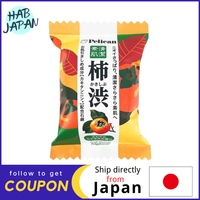
Pelican Family Soap Medicated Persimmon 80g|Body Odor Care|Japan
₱311.00₱389.00
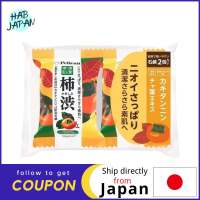
Pelican persimmon soap Persimmon tannin with a refreshing smell Refreshing citrus scent 80g x 2 pieces Ship directly from Japan
₱533.00₱666.00
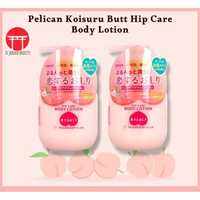
Japan 🇯🇵 Pelican Love Hip Care Body Lotion 200ml
₱575.00₱700.00
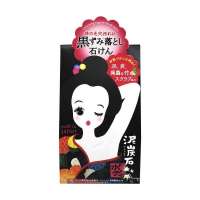
Pelican Soap Peat Stone Body Scrub Soap 100g
₱659.00₱1,151.00
About Pelican Soap
Pelican Soap (Japanese: ペリカン石鹸, Pelican Sekken) is a Japanese soap and personal-care manufacturer headquartered in Minato, Tokyo. Founded in 1947, the company produces bar soaps, body-care products, facial cleansers, specialty “parts-care” soaps, and hotel amenities.1 Rather than positioning itself solely as a traditional soap maker, Pelican Soap has built its identity around developing soaps for specific lifestyles, skin concerns, and everyday bathing experiences.1
The brand philosophy is expressed by the Japanese phrase “泡の先に、笑顔はじける”, roughly translated as “Smiles burst beyond the bubbles.” The company describes its mission as bringing small moments of happiness through the act of washing.1
Overview
| Field | Information |
|---|---|
| Brand / company name | Pelican Soap / 株式会社ペリカン石鹸 |
| Japanese name | ペリカン石鹸 |
| Industry | Cosmetics, personal care, soap and toiletries |
| Founded | April 1947 |
| Established as a company | July 1949 |
| Headquarters | Minato, Tokyo, Japan |
| Factory | Fukaya, Saitama, Japan |
| Capital | ¥40 million |
| Current president | Nobukazu Shibui (渋井 伸和) |
| Main products | Bar soaps, facial soaps, body-care products, specialty soaps, hotel amenities |
| Business model | Original-product development/manufacturing, OEM manufacturing, hotel amenities |
| Brand philosophy | “Smiles burst beyond the bubbles” |
| Official website | pelicansoap.co.jp |
The corporate information above is based primarily on Pelican Soap’s own company records.1
History
Origins: postwar Japan
Pelican Soap traces its origins to 1947, in the difficult years following World War II. According to the company’s history, its founder, Go Hanpo, and his wife operated an inn in Shinbashi, Tokyo. Soap was still considered a relatively valuable commodity at the time, and there was a shortage of domestically available soap in Tokyo. The couple began importing soap from Osaka and selling it alongside their inn business.1
Demand encouraged the family to move into manufacturing. Soap craftsmen were brought from Osaka and a factory was established. The company’s predecessor was originally known as Toka Co., Ltd. (株式会社東花), before the business adopted the Pelican Soap name.1
The company’s historical materials describe 1947 as its founding year and 1949 as the year the company was established, although some accounts place the transition to the current Pelican Soap name around the early 1950s.1
The Pelican symbol
The pelican became the company’s defining symbol. Pelican Soap explains that the bird was associated with caring for children and family, making it an appropriate symbol for a family-run soap company. The company also notes that pelican imagery had associations with family love in Japanese cultural contexts, including imagery used in old maternal and child health records.1 The logo is intended to communicate family, care, and trust.
Growth through gift soap
During the mid-Shōwa period, Pelican Soap’s business was heavily connected to department-store wholesale and Japan’s gift-giving market, particularly seasonal gifts such as ochūgen and oseibo.1 Later, the company’s Royal Jade soap became popular in the gift market and helped drive an important period of growth.1
Factory fire and rebuilding
A major setback occurred in January 1997 when a fire completely destroyed the company’s factory. The founder died the following month.1 Pelican Soap subsequently constructed its present factory in Saitama in 1999 and began taking on OEM manufacturing work.1 This period marked an important transition from being primarily a traditional soap manufacturer toward becoming a broader product-development and manufacturing company.
Product philosophy
A defining characteristic of Pelican Soap is its willingness to develop unusual or highly specific soap products. The company describes its strength as a broad product lineup designed around changing consumer needs, including:1
- Everyday family soaps
- Natural-oriented soaps
- Facial-cleansing soaps
- Body soaps
- Skin-care products
- Specialty soaps targeting particular body areas
- Relaxation and fragrance-oriented products
- Hotel amenities
- OEM/private-label products
This approach distinguishes Pelican Soap from manufacturers that focus on a small number of conventional household soaps.
The “parts care” concept
Perhaps Pelican Soap’s most distinctive modern innovation is its “parts care” concept. Instead of treating the body as one homogeneous area, the company developed products intended for particular areas and concerns—for example, the back, buttocks, arms, or legs. Pelican Soap states this approach emerged as Japanese lifestyles and consumer preferences became increasingly individualized around the 2000s.2
Notable products include:
- For Back — a medicated soap positioned around preventing acne on the back.
- Dot Washy. — a facial soap marketed toward cleansing concerns associated with the appearance of “strawberry nose.”
- Ninosho Zarazara wo Arau Jūsō Sekken — a baking-soda soap aimed at rough-feeling upper arms.
- Koishiteru Oshiri / Koisuru Oshiri — a specialty soap developed for the buttocks/body-care category.1
The names themselves are part of the strategy: they are often playful, memorable, and directly communicate the consumer concern the product addresses.
Notable product development
Daitanseki / Deitanseki
Around 2000, Pelican Soap introduced Daitanseki (泥炭石), a distinctive dark-colored soap. The product became a notable success and is frequently cited by the company as an example of its willingness to experiment with soap formulation and presentation.1
For Back
In 2012, Pelican Soap expanded further into specialty body care with For Back, a medicated soap designed around back-acne concerns. This was an important step in the development of its “parts care” strategy.1
Dot Washy and baking-soda soap
In 2015, the company introduced Dot Washy. and its baking-soda soap for rough upper arms, further establishing its specialty-care positioning.1
Koisuru Oshiri
In 2016, Pelican Soap released Koisuru Oshiri, another highly targeted body-care product. The item became associated with the company’s increasingly recognizable specialty-soap approach.1
Major product families
Pelican Soap’s portfolio can broadly be divided into several categories.
Family soaps
The Pelican Family Soap line represents the company’s more traditional everyday-use positioning. Products have included variants such as persimmon, medicinal persimmon, horse oil, honey, and olive.1
Natural-oriented soaps
The Pelican Natural Soap range includes variants using ingredients such as rice bran, coix seed, and mugwort. The company has emphasized moisturizing ingredients and plant-derived materials in this category.1
Specialty / parts-care products
This category is closely associated with modern Pelican Soap. These products target particular areas or specific consumer concerns rather than simply promising generic cleansing.2
Hotel amenities
Pelican Soap develops and manufactures bath amenities for hotels. Corporate materials list relationships with numerous hotel and hospitality companies, making hospitality products an important part of its business beyond consumer retail.1
OEM manufacturing
Since establishing its current Saitama factory in 1999, the company has undertaken OEM manufacturing, allowing other businesses to have soap and related products manufactured through Pelican Soap’s production capabilities.1
Manufacturing
Pelican Soap maintains its own factory in Fukaya, Saitama Prefecture. The facility has obtained ISO 22716, an international standard associated with good manufacturing practices for cosmetic products.1 The company describes itself as being involved in product planning, development, manufacturing, and sales, including its own original products and OEM work, rather than simply attaching a brand name to externally manufactured goods.1
Brand identity
Pelican Soap’s identity revolves around three major ideas.
Soap as an everyday source of happiness
The company views washing as more than simply removing dirt. It emphasizes scent, feel, and the experience of washing as small but meaningful parts of everyday life.1
Turning embarrassing concerns into approachable products
Rather than avoiding sensitive body or skin concerns, Pelican Soap often gives them direct and sometimes humorous treatment. This is particularly apparent in its parts-care products, making them easier to understand while giving them a distinctive personality.
“Laboratory” approach to soap
Pelican Soap describes its identity as a kind of “soap laboratory”—continually identifying different needs and developing products around them. Its stated promises include communicating with consumers about difficult-to-discuss concerns, developing unique soaps, and providing accessible, functional products.1
Corporate philosophy
The company’s current brand promise can be summarized in three commitments:
- Understand different skin concerns through communication with consumers.
- Develop unique and positive solutions for those concerns.
- Offer functional, reasonably accessible products that consumers can trust.1
The broader philosophy is captured by its slogan:
“泡の先に、笑顔はじける” — “Smiles burst beyond the bubbles.”
The phrase reflects the idea that the value of soap extends beyond cleansing to comfort, relaxation, self-care, and human connection.1
Leadership
The company’s current president is Nobukazu Shibui (渋井 伸和). Shibui joined Pelican Soap in 2010, subsequently served as vice president, and became president in 2016. He has been particularly associated with the company’s development of the parts-care concept and the growth of the Koisuru Oshiri product line.2
Timeline
- 1947 — Pelican Soap’s origins; soap production begins in Tokyo after the founders recognize strong postwar demand.1
- 1949 — Company established as the successor to the original business.1
- Shōwa period — Growth through department-store wholesale and the gift-soap market.1
- 1997 — Factory destroyed by fire; founder dies shortly afterward.1
- 1999 — Current Saitama factory constructed; OEM production begins.1
- 2000 — Daitanseki launches and becomes a major hit.1
- 2012 — For Back medicated soap launches.1
- 2015 — Dot Washy. and baking-soda body soap launch.1
- 2016 — Koisuru Oshiri launches; Nobukazu Shibui becomes president.1
- 2021 — Aisareru Oppai soap introduced; Provinsia begins single-item sales.1
- 2023 — Pelican Family Soap and Pelican Natural Soap ranges receive a 17-product renewal.1
- 2026 — The company continues expanding beyond conventional bar soap into new categories including hotel amenities and body scrubs.2
Market position
Pelican Soap is a traditional Japanese soap manufacturer that reinvented itself through niche product development. Its significance lies in its repeated use of the bar soap format as a platform for specialized, highly recognizable products. Its evolution can be summarized as: postwar soap manufacturer → gift-soap company → innovative bar-soap maker → specialty “parts-care” brand → broader personal-care and hotel-amenities manufacturer. This combination of long manufacturing history, in-house production, playful product concepts, and highly specific consumer targeting defines its position in the Japanese personal-care market.2
Official resources
- Pelican Soap — Official Website (pelicansoap.co.jp)
- Company History (pelicansoap.co.jp)
- Company Overview (pelicansoap.co.jp)
- Product / Business Information (pelicansoap.co.jp)
- Official Online Shop (pelicansoap.net)
Note: “Pelican Soap” here refers to the Japanese company 株式会社ペリカン石鹸 (Pelican Soap Co., Ltd.), not an unrelated soap product or business using the Pelican name.