Shop on Lazada
Persil products
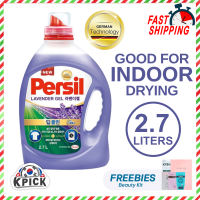
Persil Detergent Liquid Lavender & Power Gel 2.7L | Deep Clean & Long-Lasting Freshness
₱1,190.00
Buy on Lazada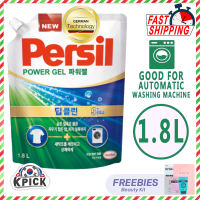
Persil Lavender Gel 1.8L – Concentrated Liquid Detergent for Deep Cleaning & Long-Lasting Freshness
₱699.00
Buy on Lazada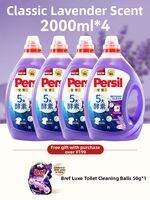
Persil | Anti-bacterial Gentle Care Fabric Softener Laundry Detergent
₱5,646.00₱6,161.00
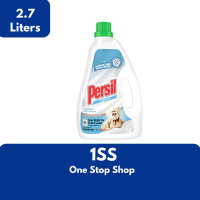
Persil Sensitive Liquid Laundry Detergent 2.7 Liters
₱1,395.00
Buy on Lazada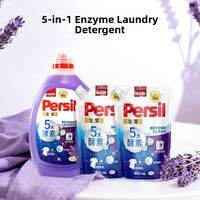
Persil | Multiple Enzymes Gentle Baby Machine Washable Antibacterial Laundry Detergent
₱2,174.00₱2,416.00
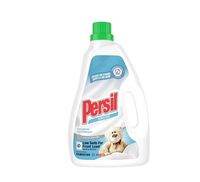
Persil Sensitive Liquid Detergent 2.7L
₱1,399.00₱1,499.00
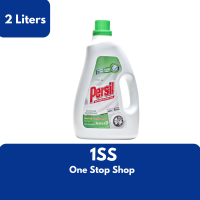
Persil Superior Clothes Care Liquid Detergent 2 Liters
₱945.00
Buy on Lazada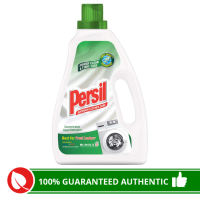
Persil Liquid Detergent Original 2L
₱1,299.00₱1,500.00
About Persil
Overview
Persil is a German-origin laundry detergent brand owned by Henkel and stands as one of the most recognised names in the global laundry-care industry. Introduced in 1907, it holds historical significance as what Henkel describes as the world’s first self-acting laundry detergent, a formulation designed to reduce the intensive manual scrubbing traditionally required for washing clothes.1 Today, Persil is sold in more than 50 countries and is available in various formats, including powders, liquids, gels, and pre-dosed capsules or discs, with specific product ranges and branding varying by market.1
| Field | Information |
|---|---|
| Brand | Persil |
| Industry | Consumer goods / laundry care |
| Product category | Laundry detergents and related laundry-care products |
| Founded / launched | 1907 |
| Country of origin | Germany |
| Owner | Henkel |
| Parent company | Henkel AG & Co. KGaA |
| Original inventors/developers | Henkel chemists |
| Original product | Self-acting laundry detergent |
| Original form | Powder |
| Current formats | Powders, liquids, gels, capsules/discs and other laundry products |
| Geographic reach | More than 50 countries |
| U.S. launch | 2015 |
| Historic advertising icon | The “Lady in White” |
| Name origin | Perborate + silicate |
Origins and early history
The history of Persil is intrinsically linked to Henkel, the German company founded by Fritz Henkel in 1876. Prior to the introduction of Persil, Henkel had already established itself in the laundry and household cleaning sector. In 1907, Henkel chemists developed a new detergent based on a combination of sodium silicate and sodium perborate. When used during the boiling process, this formulation released oxygen to provide a bleaching effect, thereby reducing the need for the vigorous rubbing and mechanical treatment previously necessary to clean clothes.1
The name Persil was derived directly from its two principal chemical components: Perborate and silicate. This combination defined the product’s original identity.1 The first advertisement for Persil appeared in the Düsseldorfer Zeitung on June 6, 1907, and the earliest products were sold in manually prepared packages made from straw cardboard with printed wrapping.1
Revolutionary impact on laundry
In the early 20th century, laundry was significantly more labour-intensive than modern standards, often involving soaking, boiling, scrubbing, rubbing, kneading, bleaching, and extensive rinsing. Persil’s innovation lay in combining detergent and bleaching action into a single product. Its oxygen-releasing chemistry allowed laundry to be cleaned during boiling without relying on the chlorine bleaching methods previously in use.1
Henkel marketed Persil not merely as another soap or cleaning powder, but as a solution to the physical labour of washing clothes. From its inception, the brand was associated with the concept that technology could simplify everyday domestic work.
Early commercial growth
Persil quickly became a major product for Henkel. By 1908, the company produced approximately 4,700 metric tons of Persil, and by 1915, production had tripled. The brand helped establish the modern concept of branded consumer detergent; rather than purchasing generic washing substances, consumers bought Persil in standardised packaging with a recognisable name and a consistent promise of quality. This was particularly significant as consumer packaged goods were still emerging as a major commercial category at the beginning of the 20th century.
Marketing and advertising heritage
The Lady in White
One of Persil’s most enduring contributions to advertising history is the “Lady in White” (Die Weiße Dame). Created in 1922 by Berlin caricaturist Kurt Heiligenstaedt, the character depicted a woman dressed entirely in white, usually appearing alongside the Persil package.1 She became one of Germany’s best-known advertising images, appearing on posters, billboards, enamel signs, magazine advertisements, building façades, Persil clocks, and other outdoor media. The figure remained a central part of the brand’s identity well into the 1960s, providing Persil with a visual brand character that communicated cleanliness independently of the product packaging.
Advertising innovations
Beyond product innovation, Persil was a pioneer in advertising. Henkel employed highly visible promotional techniques, including teams dressed in white, large white advertising screens, illuminated signs, and eventually skywriting. The brand also entered radio advertising in the 1920s.1 On November 3, 1956, Persil achieved another milestone when its first television commercial aired on German television.1 Consequently, the brand’s history is intertwined with the development of modern German consumer advertising.
Product innovation and portfolio
Persil has repeatedly adapted its formulation and packaging in response to evolving washing technologies and consumer expectations. Notable milestones include:
- 1907: Launch as a self-acting detergent using oxygen-releasing chemistry to reduce manual washing effort.
- 1986: Introduction of a phosphate-free detergent, marking an early step in the brand’s sustainability history.1
- 1987: Launch of the first liquid detergent, adapting to changing consumer preferences.
- 1994: Introduction of Megaperls, a concentrated powder format that reduced the standard dosing amount by 65% per wash cycle.
- 2010s: Expansion into pre-dosed products such as Duo-Caps, utilising water-soluble film and separate chambers for concentrated components.2
- 2020s: Continued development of concentrated formats, including Persil Power Bars, reflecting trends toward convenient dosing and reduced packaging requirements.
Current product range
Today, the Persil portfolio extends far beyond the original washing powder. Depending on the market, the brand encompasses powder, liquid, and gel detergents; laundry capsules and discs; concentrated formats; and specialised products targeting stain removal, freshness, colour protection, or fibre care.1 Formulations, packaging, and naming conventions vary by region; for example, products associated with the Persil heritage are sold as Le Chat in France and Dixan in Italy.
Global presence
Although originating in Germany, Persil has become an international brand sold in more than 50 countries.1 Market entry strategies have varied significantly by region.
United States market
Persil entered the North American market in 2015, considerably later than its European introduction. In the United States, it is marketed as Persil ProClean and operated by Henkel Corporation.3 Despite the brand’s century-long global history, its modern American presence is comparatively young. According to the U.S. consumer FAQ, Persil laundry products in this market are manufactured domestically, including at Henkel’s production centre in Bowling Green, Kentucky.3
Brand positioning
Persil traditionally occupies a premium, high-performance position in the laundry-detergent market. Its brand promise integrates cleaning performance, stain removal, brightness, freshness, fabric care, and convenience. Henkel describes the modern positioning as focusing on a “fiber-deep clean” and bright-looking laundry. While the original proposition centred on making washing easier, the contemporary promise emphasises helping consumers keep clothes clean, fresh, and presentable, maintaining the underlying theme of using technology to improve everyday life.
Sustainability initiatives
Sustainability has become an integral aspect of Persil’s development. Henkel identifies the 1986 introduction of phosphate-free detergent as an early environmental milestone.1 Subsequent efforts have focused on packaging optimisation, concentrated formulations, improved dosing efficiency, and energy use. Examples include concentrated powders, liquid and capsule formats, and newer innovations like Power Bars designed to reduce resource consumption. However, distinctions are drawn between brand claims and independently measured environmental performance, as concentration or phosphate-free status does not automatically guarantee a lower total environmental footprint in every circumstance.
Ownership and corporate relationship
Persil is not an independent entity but a brand within Henkel’s consumer-brands portfolio. Henkel is a German multinational with businesses spanning consumer brands and industrial technologies; Persil falls under its laundry-care division. The relationship is historically close, as Persil was created by Henkel itself, and its launch is considered a defining event in the company’s corporate history.1
Competition
Persil operates in a highly competitive global laundry-detergent market. Major competitors vary by country and may include Tide, Ariel, OMO, Skip, Surf, Aldo, All, Purex, and various private-label supermarket detergents. For instance, Tide is particularly prominent in the United States, while Ariel holds a significant share in many European and international markets. Persil’s primary differentiation has historically rested on its German engineering heritage, cleaning performance, premium positioning, and established brand trust.
Key milestones
| Year | Milestone |
|---|---|
| 1876 | Fritz Henkel establishes the company that becomes Henkel |
| 1907 | Persil launched in Germany |
| 1907 | First Persil advertisement published |
| 1908 | Production reaches 4,700 metric tons |
| 1922 | “Lady in White” advertising character introduced |
| 1920s | Persil expands innovative outdoor and radio advertising |
| 1956 | First Persil television commercial in Germany |
| 1986 | Phosphate-free Persil introduced |
| 1987 | First Persil liquid detergent |
| 1994 | Persil Megaperls concentrated powder introduced |
| 2013 | Duo-Caps technology highlighted by Henkel |
| 2015 | Persil launches in the U.S. |
| 2020s | Continued development of concentrated formats, including Power Bars |
| 2026 | Henkel celebrates its 150th anniversary while continuing Persil’s nearly 120-year brand history |
Historical significance and legacy
Persil’s historical importance stems from several concurrent factors. Firstly, it fundamentally changed laundry chemistry by combining cleaning and oxygen-based bleaching to reduce manual labour. Secondly, it helped create the modern branded detergent category by selling a standardised, recognisable consumer product rather than an undifferentiated substance. Thirdly, it pioneered consumer advertising through iconic imagery like the Lady in White and early adoption of radio and television media.1 Finally, the brand has survived for nearly 120 years by continuously adapting its technology—from powder to phosphate-free formulas, liquids, concentrated powders, and capsules—while retaining its core identity centred on effective laundry care.
At its core, the Persil brand identity is built upon five concepts: cleanliness, whiteness/brightness, performance, innovation, and trust. This combination has allowed the brand to remain relevant as it evolved from addressing laundry as a labour problem in 1907 to treating it as a product-and-technology challenge throughout the 20th and 21st centuries. Today, Persil remains one of Henkel’s flagship consumer brands, positioned around high-performance cleaning, freshness, brightness, fabric care, and convenience.1