Shop on Lazada
Playmobil products
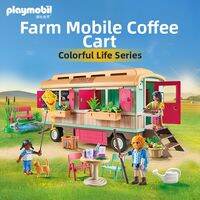
Playmobil | Educational Farmhouse Playset with Café Car and Animals
₱8,725.38₱9,405.23
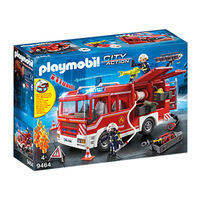
Playmobil | Educational Firetruck Toy Assembly Boy Ladder Firefighter Simulation
₱7,282.49₱8,704.28
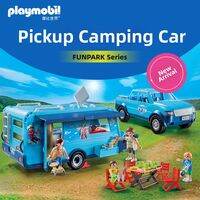
Playmobil | Pickup Camper FunPark Series Toy
₱8,903.52₱9,066.36
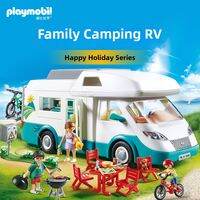
Playmobil | Camping Caravan For Kids
₱7,550.81₱8,762.30
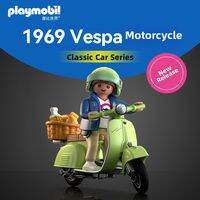
Playmobil | Motorcycle Model Figure
₱2,558.38
Buy on Lazada
Playmobil | Play at Home Waterside Fun Toys
₱1,943.93₱2,551.43
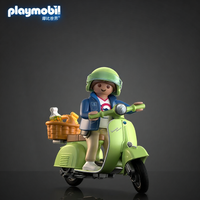
Playmobil | Vespa Motorcycle Assembly Model Toy
₱1,750.00₱2,751.00

Playmobil | Educational Assembly Farmhouse Playset
₱2,836.00₱3,578.00
About Playmobil
Playmobil is a German toy brand best known for its distinctive 7.5 cm plastic human figures, themed playsets, vehicles, buildings, animals, and accessories. Created by the manufacturer geobra Brandstätter and officially introduced in 1974, the brand is built around a flexible system of play that encourages children to invent stories by combining figures, objects, and environments rather than providing single-use toys.1 As of its 50th anniversary in 2024, more than 3.8 billion Playmobil figures had been produced, with approximately 40 play themes distributed in around 100 countries.1 In the Philippines, the brand marked this milestone with the “Playmobil 50th Anniversary at ICONSIAM” event, which featured the global debut of a Thai costume figure set and showcased cultural themes from four regions of Thailand.4
Basic information
| Category | Information |
|---|---|
| Brand | Playmobil |
| Country of origin | Germany |
| Introduced | 1974 |
| Creator / principal designer | Hans Beck |
| Company behind the brand | geobra Brandstätter |
| Parent group | Horst Brandstätter Group |
| Headquarters | Zirndorf, Bavaria, Germany |
| Main product | Plastic figures and system-based playsets |
| Original figure size | Approximately 7.5 cm |
| Main concept | Imaginative role-play and storytelling |
| International reach | Around 100 countries |
| 50th anniversary | 2024 |
Origins
The corporate history behind Playmobil predates the 1974 launch by nearly a century. The company was originally founded by Andreas Brandstätter in 1876, initially producing metal fittings and locks before gradually transitioning to metal goods and toys during the 20th century.2 The business eventually became associated with the name geobra Brandstätter, derived from Georg Brandstätter, and its transformation into a major toy manufacturer was driven significantly by entrepreneur Horst Brandstätter.
By the 1960s, geobra had expanded its plastics production to include toys, sporting goods, plastic boats, and other large-scale items. This expansion included establishing production facilities outside Germany, such as a factory in Malta opened in 1971.3 The development of Playmobil was partly a strategic response to the oil crisis of the early 1970s; as plastic prices rose substantially, the company sought to create products that offered high play value while requiring relatively little raw material.2
Hans Beck and the creation of Playmobil
The design of the iconic Playmobil figure is credited to Hans Beck (1929–2009), a German toy designer and model maker. In the early 1970s, Horst Brandstätter commissioned Beck to develop a new type of toy. Rather than creating a complex mechanical device, Beck designed a simple human figure intended to serve as the central character in children’s imaginative worlds.4
The prototype incorporated several defining characteristics:
- A large, rounded head with a simple smiling face
- Compact body proportions with movable arms and legs
- Hands specifically designed to grip accessories
- A size comfortable for small hands
- An open-ended design supporting diverse narratives
Beck’s philosophy emphasized stimulating imagination over dictating specific play patterns. Depending on the accompanying accessories, the same figure could represent a knight, construction worker, cowboy, pirate, firefighter, farmer, or astronaut.4 Intellectual property protection for the figure was secured beginning in 1972, with subsequent patent activity in other countries following in 1973.5
The 1974 launch
Playmobil was publicly unveiled at the Nuremberg International Toy Fair in February 1974.19 The initial release comprised three distinct themes:
- Knights
- Native Americans / Wild West
- Construction workers
These themes were deliberately varied to demonstrate that the same basic figure could represent entirely different characters through changes in clothing, accessories, hairstyles, equipment, and setting.6 Although historical accounts from the Horst Brandstätter Group indicate that retailers were initially hesitant to place orders, demand grew dramatically after the company proceeded with the launch.7 This trajectory established a defining pattern in the brand’s history: a product that appeared unusually simple at first glance evolved into a major international toy system.
System-based play
The core innovation of Playmobil is its system-based play concept. Unlike conventional toys representing a single object, Playmobil centres on a figure that combines with a vast range of components to generate narrative context:
Figure + clothing + accessory + vehicle + building + environment = character and story
This modular approach allows collectors and players to start with a single figure and progressively expand their world. Because the figures remain relatively standardized, characters from disparate historical periods or fictional universes can interact; a medieval knight may theoretically encounter a modern police officer, an astronaut may meet a pirate, or a farmer may coexist with dinosaurs. This cross-thematic flexibility remains central to the brand’s identity.6
The Playmobil figure
The classic Playmobil figure stands approximately 7.5 cm tall and possesses a highly recognizable silhouette.8 Key design elements include:
- Oversized head with a simple facial expression
- Compact torso and relatively short limbs
- Hands engineered to grip objects securely
- Bright, easily identifiable clothing
- Interchangeable accessories
The stylized form is intentional; rather than pursuing anatomical realism, the figure functions as a blank canvas for storytelling. Over five decades, the basic design has evolved to include additional articulation, diverse hairstyles, varied clothing styles, and specialized body types, all while maintaining the original aesthetic.9
Expansion of the character system
While early sets focused primarily on adult male characters, the system gradually expanded to reflect broader social environments. Female figures were introduced in 1976, followed by child figures in 1981 and baby figures in 1983.10 These additions enabled the depiction of families, schools, workplaces, communities, historical societies, fantasy worlds, emergency services, and transportation systems, transforming Playmobil from a collection of figures into a comprehensive miniature world-building platform.
Major themes
Playmobil has produced sets across an extensive range of subjects throughout its history:
Historical
- Knights and medieval castles
- Pirates and Vikings
- Ancient civilizations
- Western / Wild West
- Historical cities and buildings
Modern life
- Police and firefighters
- Hospitals and schools
- Families and construction
- Farms, shops, and airports
Adventure
- Exploration and treasure hunting
- Jungle expeditions and dinosaurs
- Space missions and rescue operations
Fantasy
- Fairies, princesses, and dragons
- Magic worlds and fantasy castles
Licensed entertainment
The brand has also released sets based on recognized entertainment properties, integrating its core system with established fictional universes to appeal to both storytelling-focused children and theme-specific collectors.6
Importance of accessories
A distinguishing feature of Playmobil is the critical role of small accessories in establishing character identity. The base figure is intentionally generic; narrative meaning emerges through surrounding objects. For example, a knight is defined by a helmet, sword, shield, horse, castle, and fellow knights, while a police officer is characterized by a uniform, radio, handcuffs, patrol car, station, and suspects. Accessories thus function not merely as decoration but as essential storytelling tools.16
Storytelling system
The fundamental Playmobil experience is role-playing. Sets provide physical ingredients for self-directed narratives rather than fixed storylines. A pirate ship set may suggest maritime adventure, but players might reimagine the crew as explorers, introduce a knight as a new crew member, or have the vessel land on a dinosaur island. There is no requirement to keep themes separate, and this openness has helped maintain the brand’s relevance despite shifts in children’s entertainment preferences.7
Manufacturing and company structure
Playmobil operates under geobra Brandstätter, part of the Horst Brandstätter Group. Headquarters are located in Zirndorf, Bavaria, near Nuremberg, which serves as the central hub for development, marketing, and sales.11 Manufacturing has historically combined German facilities with international production; the Malta plant established in 1971 remains a significant component of the global manufacturing network.12
International expansion
Following its domestic success, Playmobil expanded globally. During the 1980s, dedicated sales organizations were established in France, Belgium, the Netherlands, Luxembourg, the United Kingdom, Italy, Canada, and the United States.13 By the 50th anniversary in 2024, distribution had reached approximately 100 countries.1
Playmobil FunPark
In 2000, the company diversified into experiential entertainment with the opening of PLAYMOBIL-FunPark adjacent to its Zirndorf headquarters.14 Distinct from traditional amusement parks, the FunPark features large-scale immersive environments based on castles, pirate adventures, farms, water play, and exploration. The park embodies the same philosophy as the toys: encouraging active play, movement, discovery, and imagination.
Collecting and adult fans
Although designed as a children’s toy, Playmobil has cultivated a significant adult collector community. Enthusiasts seek vintage figures, discontinued sets, rare accessories, historical themes, limited editions, special releases, and promotional products. Some collectors modify figures or create custom scenes, photography, stop-motion films, miniature displays, and original narratives.15 This dual identity—as both a children’s creative toy and a collectible miniature system—has broadened the brand’s demographic reach.
Comparison with LEGO
Playmobil is frequently compared with LEGO, though the two systems employ fundamentally different design philosophies:
| Playmobil | LEGO |
|---|---|
| Primarily character/story focused | Primarily construction focused |
| Figures are central | Bricks are central |
| Large pre-designed environments | Highly modular construction |
| Strong emphasis on role-play | Strong emphasis on building + play |
| Accessories create stories | Bricks allow construction of objects |
| Relatively standardized character form | Highly customizable building system |
In essence, LEGO asks “What can you build?” while Playmobil asks “What story can you play?” Contemporary products from both brands increasingly incorporate elements of construction, storytelling, vehicles, characters, and licensed franchises, creating some overlap between the systems.
Sustainability and materials
As a predominantly plastic toy system, Playmobil has addressed growing concerns regarding materials and environmental impact. The Brandstätter Group reported that by 2024, six product ranges had been implemented using more sustainable materials, including recycled content derived from discarded refrigerators.16 This initiative aims to reduce the environmental footprint of plastic toy production while preserving the durability and compatibility expected of the Playmobil system.
50th anniversary
2024 marked 50 years of Playmobil, celebrated with new products, special editions, brand experiences, and events worldwide. Key statistics announced during the anniversary year included:
- More than 3.8 billion figures produced since 1974
- Approximately 40 active play themes
- Distribution in roughly 100 countries1
The anniversary underscored the brand’s evolution far beyond its original trio of knights, Wild West characters, and construction workers. Regional celebrations highlighted local cultural connections; in Southeast Asia, for instance, the milestone was marked with events featuring culturally specific releases and regional thematic displays.4
Evolution timeline
- 1876 – Andreas Brandstätter establishes the company that becomes geobra Brandstätter.2
- 1960s – Company expands heavily into plastics production.3
- 1971 – Production begins in Malta; Horst Brandstätter commissions new product concept.17
- 1972 – Playmobil figure protected via German patent application.18
- 1974 – Playmobil introduced at Nuremberg Toy Fair.19
- 1976 – Female figures introduced.10
- 1981 – Child figures enter the range.10
- 1983 – Baby figures introduced.10
- 1980s – International sales organizations expand across Europe and North America.13
- 2000 – PLAYMOBIL-FunPark opens in Zirndorf.14
- 2024 – 50th anniversary celebrated; cumulative production exceeds 3.8 billion figures.1
Brand identity
Playmobil’s visual identity rests on several instantly recognizable elements:
- The smiling face: The classic figure’s simple smile remains one of the brand’s strongest visual signatures.
- The blue logo: The distinctive blue wordmark is strongly associated with the brand.
- The figure silhouette: Even without logotype, the outline of a Playmobil figure functions as a de facto brand mascot.
- Colorful miniature worlds: Bright colours, detailed accessories, and highly themed environments define the characteristic aesthetic.
Factors in longevity
Several factors explain the brand’s sustained success over five decades:
- Simplicity: The basic figure is immediately comprehensible to children.
- Expandability: Individual figures integrate into larger collections.
- Storytelling focus: Toys encourage scenario creation over mechanical operation.
- Thematic variety: Ranges span medieval history, modern professions, fantasy, space exploration, and contemporary life.
- System compatibility: Characters and accessories from different sets interact seamlessly.
- Design consistency: The core figure has changed remarkably little since 1974.
- Collectibility: Discontinued products and limited editions sustain interest among older enthusiasts.
Cultural significance
Playmobil occupies a significant place in toy history for popularizing the system toy centred on miniature characters and role-play. Its achievement was conceptual rather than technological: demonstrating that a small number of standardized characters, combined with accessories, environments, and imagination, could generate virtually unlimited narratives. This architecture has proven resilient across shifting trends in technology, entertainment, and children’s culture.7
Legacy
More than five decades after its introduction, Playmobil remains recognizable because its foundational concept has stayed remarkably consistent. Hans Beck’s original vision was not to prescribe play but to provide characters, objects, and worlds from which children could construct their own narratives. From the 1974 knight, Native American, and construction worker figures to today’s expansive range of historical, contemporary, fantasy, adventure, and licensed themes, the central principle endures: give the player a character, give the character a world, and let the player decide what happens next.
References
- Playmobil
- Playmobil
- Geobra Brandstätter
- ‘Playmobil’ จัดใหญ่ฉลอง 50 ปี ชวนตื่นตากับอาณาจักร Playmobil สุดอลังการ เปิดตัวฟิกเกอร์ชุดไทยครั้งแรกในโลก พร้อมสัมผัสวัฒนธรรมไทย 4 ภาค ในงาน “Playmobil 50th Anniversary at ICONSIAM” – Playstorethailand
- Horst Brandstätter Group mit den Marken PLAYMOBIL und LECHUZA erwartet 2024/2025 … | Presseportal
- WILDBRAIN CPLG EXPANDS GLOBAL LICENSING PROGRAMME FOR PLAYMOBIL®
- 50 Years of Playmobil – The Hero’s Journey from 3 to 3 Billion
- PLAYMOBIL: Erfolgreicher Start ins Jubiläumsjahr | PLAYMOBIL Deutschland
- Playmobil: Erfolgreicher Start ins Jubiläumsjahr | Presseportal
- Playmobil wird 50 Jahre alt: 3,8 Milliarden Helmfrisuren | tagesschau.de
- Join the Party: Playmobil feiert 50. Geburtstag | PLAYMOBIL Deutschland
- Join the Party: Playmobil feiert 50. Geburtstag | Presseportal
- Revolutionäres Spielzeug: Vor 49 Jahren wird Playmobil vorgestellt
- Playmobil & Brandstätter: Als Playmobil laufen lernte | Mittelfranken | BR24 | BR.de
- 30 Jahre Playmobil – SpielzeugGeschichte(n) aus Zirndorf | Museum Zirndorf
- Stichtag 02. Februar1974: Playmobil erstmals öffentlich vorgestellt
- Markenlexikon | Playmobil
- Von Rittern, Indianern und Bauarbeitern – Bundesverband Deutscher Patentanwälte
- Spielwarenmesse – Branchennews | Playmobil: play – das Buch zum Jubiläumsjahr