Shop on Lazada
PreSonus products
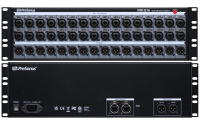
PreSonus NSB 32.16 Networked Stage Box
₱75,600.00₱122,999.00
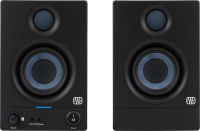
PreSonus Eris 3.5 2nd Gen (Pair) Active Studio / Media Reference Monitors
₱9,630.00₱11,999.00
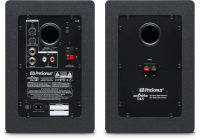
PreSonus Eris E4.5 4.5 inch Powered Studio Monitors Powered 25W Studio Monitors with 4.5″ (pair)
₱10,150.00₱15,999.00
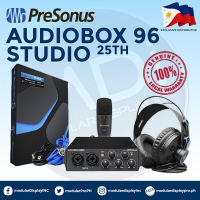
PreSonus AudioBox 96 Studio Hardware and Software Recording Bundle USB 2.0 Audio Interface
₱10,499.00₱17,499.00
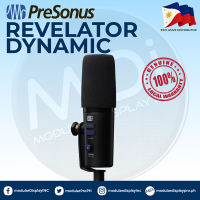
PreSonus Revelator Dynamic USB Microphone with Onboard DSP USB Dynamic Microphone with 6-in/6-out Audio Interface Cardioid Polar Pattern Onboard DSP 3 Stereo Loopback Channels Headphone Output and Accessories
₱8,749.00₱17,499.00
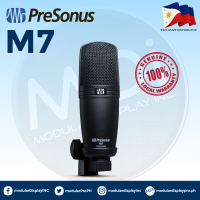
PreSonus M7 Large-diaphragm Condenser Microphone
₱3,600.00₱6,499.00
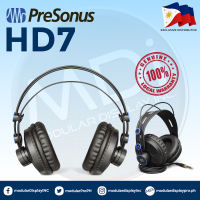
PreSonus HD7 Professional Over-Ear Monitoring Headphones
₱3,849.00₱5,499.00
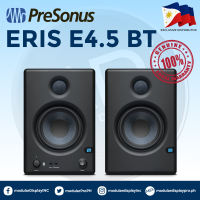
PreSonus Eris E4.5 BT: Active Media Reference Monitors with Bluetooth (Pair Left and Right Speaker) (Black)
₱10,150.00₱15,999.00
About PreSonus
PreSonus Audio Electronics, Inc., commonly known as PreSonus, is an American professional-audio and music-technology company established in 1995 in Baton Rouge, Louisiana. The company develops hardware and software for music recording, production, mixing, live sound, monitoring, content creation, and audio engineering. Its products have historically served a wide range of users, from home-recording musicians and hobbyists to professional producers, engineers, studios, venues, educators, and live-sound operators.1
PreSonus is particularly recognised for product lines such as the StudioLive digital mixers, AudioBox and Studio audio interfaces, Eris studio monitors, FaderPort controllers, Quantum interfaces, Revelator recording and streaming products, and the Studio One digital audio workstation (DAW). In 2021, PreSonus became part of Fender Musical Instruments Corporation (FMIC).17
A significant change occurred in 2026, when Fender began integrating several major PreSonus products into the Fender ecosystem. Studio One Pro was renamed Fender Studio Pro, while some interface families were also brought under Fender branding. PreSonus hardware and support infrastructure nevertheless remain an important part of Fender’s recording and pro-audio portfolio.6
Company overview
| Item | Information |
|---|---|
| Company name | PreSonus Audio Electronics, Inc. |
| Brand name | PreSonus |
| Founded | 1995 |
| Founders | Jim Odom and Brian Smith |
| Origin | Baton Rouge, Louisiana, United States |
| Industry | Professional audio, music technology, music software |
| Parent company | Fender Musical Instruments Corporation (FMIC) |
| Main markets | Music production, recording, live sound, content creation, education |
| Known for | Audio interfaces, digital mixers, studio monitors, controllers, DAW/software |
| Major software legacy | Studio One, Capture, Notion |
| Major hardware families | StudioLive, AudioBox, Quantum, Eris, FaderPort, Revelator |
| Official website | presonus.com |
PreSonus describes its philosophy as delivering professional-quality audio products and features without sacrificing affordability, a principle that has remained central to the company since its founding.3
History
Founding
PreSonus was established in 1995 by Jim Odom and Brian Smith, two Louisiana State University engineering graduates. Odom was also a musician, producer, and engineer. The founders aimed to create professional music-production equipment that could deliver sophisticated capabilities without the extremely high prices associated with large professional studios.4
The company began operations in a garage in Baton Rouge. Its first product was the DCP-8, an eight-channel digitally controlled analog dynamics processor incorporating compression, limiting, gating, and automation. This product was notable because it allowed analog audio processing to be controlled digitally, addressing capabilities previously associated with considerably more expensive studio equipment.4
The early PreSonus philosophy was straightforward: build professional tools, make them practical, and make them affordable enough for working musicians and engineers. This approach became one of the defining characteristics of the brand.8
Early product development
During its early years, PreSonus concentrated primarily on signal processors and recording hardware. Among its early products were:
- DCP-8 — digitally controlled multi-channel dynamics processor
- ACP8 — analog multi-channel compressor/limiter
- BlueMAX — tube compressor
- ACP22 — dual-channel compressor/limiter/gate
- DigiMax — multi-channel microphone preamplifier
- FireStation — FireWire audio interface
- FirePod — multi-channel FireWire recording interface
- FireStudio — FireWire recording-interface family
- Central Station — monitor-management and control system
The DigiMax and FireWire interface products were especially important in PreSonus’s transition toward computer-based recording.4 This period helped establish PreSonus as a company capable of combining traditional analog audio engineering with emerging computer-based digital recording technology.
Expansion into computer recording
As computer-based music production became increasingly important during the 2000s, PreSonus expanded beyond individual hardware processors into complete recording workflows. The company developed and acquired technology covering microphone preamps, audio interfaces, digital mixers, monitor controllers, studio monitors, recording software, DAW software, control surfaces, and live recording systems.
This strategy became increasingly important because a musician could potentially build an entire recording environment around PreSonus equipment. For example, a typical PreSonus-oriented studio could combine a microphone, a PreSonus interface, a computer running Studio One, PreSonus monitors, and a FaderPort controller. This hardware and software integration became one of the company’s major competitive advantages.
Studio One
One of PreSonus’s most influential products was Studio One, its digital audio workstation. Studio One originated through collaboration with KristalLabs, a software-development company founded in Hamburg by former Steinberg developers. Development began in the mid-2000s, with PreSonus subsequently bringing the software into its broader product ecosystem.1
Studio One evolved into a full production environment supporting audio recording, MIDI sequencing, virtual instruments, mixing, mastering, songwriting, live-performance workflows, plug-ins, sample libraries, video-related production functions, and integrated hardware control. It became particularly well regarded for its drag-and-drop workflow and close integration with PreSonus hardware. For many users, Studio One eventually became arguably the most recognizable piece of PreSonus software.
The Fender transition
In January 2026, Fender announced a major reorganization of its digital ecosystem. Studio One Pro became Fender Studio Pro, built on the same PreSonus-developed Studio One platform but expanded with Fender’s instruments, amplifiers, effects, and broader creative ecosystem.6
Fender Studio Pro 8.1, released in June 2026, added features including Studio Assistant, Vocal Tune, Moises Studio integration, improved stem separation, Audio-to-Note conversion, Chord Assistant, Studio Verb, and Show Page video support.6 Consequently, when discussing PreSonus today, it is important to distinguish between Studio One as the historic PreSonus DAW and Fender Studio Pro as its current evolution.
StudioLive
Another cornerstone of PreSonus is the StudioLive family. StudioLive is a range of digital mixing consoles and live-sound systems designed for applications such as concerts, houses of worship, theaters, rehearsal spaces, schools, studios, livestreaming, broadcast, and event production. StudioLive helped PreSonus establish a strong position in the live-sound market.
The concept was particularly attractive because digital mixing allowed a single console to combine functions traditionally requiring several pieces of equipment. Depending on the model and generation, StudioLive systems can provide functions such as digital mixing, recording, effects processing, remote control, scene recall, monitor mixing, networking, and computer integration. This distinguishes PreSonus from companies that concentrate exclusively on studio recording.
Audio interfaces
PreSonus has produced a large range of USB and Thunderbolt audio interfaces. Important families include:
AudioBox
The AudioBox line has traditionally targeted musicians, podcasters, producers, educators, and home studios looking for relatively straightforward recording interfaces.
Studio Series
The Studio interfaces provide more advanced input/output configurations for home studios and professional users. Models such as the Studio 24c and Studio 26c feature XMAX preamps, high-resolution conversion, MIDI connectivity, and USB-C connectivity.2
Quantum
The Quantum family represents PreSonus’s higher-performance interface technology, with models covering USB-C and Thunderbolt-based recording applications. Current support documentation includes products such as Quantum ES2, ES4, HD2, HD8, 2626 and 4848.5 In 2026, Fender began bringing parts of this product ecosystem under its own naming structure, including the Fender Quantum family.6
Studio monitors
PreSonus is also well known for studio monitor speakers, particularly its Eris range. The Eris series became popular among home producers, musicians, recording studios, podcasters, video creators, and educational facilities. The basic philosophy was similar to that of the company’s interfaces: provide studio-oriented performance at accessible prices. PreSonus currently lists multiple Eris monitor families, including Eris Studio and Eris Pro models.2
FaderPort
FaderPort is PreSonus’s line of physical DAW control surfaces. Instead of controlling a DAW entirely with a mouse and keyboard, FaderPort provides physical controls such as motorized faders, transport controls, mute/solo, channel navigation, automation controls, and mixing controls. The concept is particularly useful for engineers who prefer the tactile experience of a traditional mixing console. The FaderPort family has included models ranging from compact single-fader controllers to larger multi-fader surfaces such as the FaderPort 8 and FaderPort 16.6
Revelator
PreSonus also expanded into the rapidly growing content-creation and streaming market through its Revelator products. The Revelator family has included USB microphones, audio interfaces, streaming-oriented interfaces, and routing and mixing software. Products such as the Revelator io24 and Revelator io44 were designed to make professional audio routing accessible to streamers, podcasters, musicians, and online creators.6
This represented an important expansion of PreSonus’s traditional identity. Rather than focusing exclusively on musicians recording albums, the company increasingly addressed anyone producing audio or video content.
Software ecosystem
PreSonus has historically attempted to build an ecosystem rather than simply sell individual hardware products. Its software portfolio has included:
Studio One
The company’s flagship DAW, now evolved into Fender Studio Pro.
Capture
Recording software designed particularly around StudioLive systems.
Notion
Music-notation software for composers, arrangers, students, and educators.
Universal Control
Software used to configure and control compatible PreSonus hardware.
Studio Magic
A collection of software and educational resources bundled with selected PreSonus products.
This ecosystem allows PreSonus hardware to interact closely with software rather than functioning merely as generic audio equipment.
Acquisition by Fender
One of the most important events in PreSonus’s corporate history occurred in 2021. On November 1, 2021, Fender Musical Instruments Corporation announced a definitive agreement to acquire PreSonus Audio Electronics.7
The strategic logic was significant. Fender traditionally had enormous strength in guitars, basses, amplifiers, effects, musical instruments, and musician-oriented digital services. PreSonus brought expertise in recording, DAWs, audio interfaces, live sound, digital mixing, studio monitors, and music-production software. Together, the companies could address a much larger portion of a musician’s workflow, from instrument and amplifier/effects through recording interface, DAW, mixing, mastering, and performance/content creation. Fender described the combination as an opportunity to build a more integrated hardware-and-software ecosystem for musicians and creators.7
The 2026 Fender integration
The relationship between Fender and PreSonus became even more visible in 2026. On January 13, 2026, Fender announced the introduction of Fender Studio and the consolidation of several PreSonus products under Fender branding. The announcement stated that Studio One Pro would become Fender Studio Pro, while the Quantum and AudioBox Go lines would transition to Fender-branded product families.6
This means the PreSonus brand is now best understood as having two dimensions:
- PreSonus as a long-established professional-audio brand, with a large installed base and extensive hardware portfolio.
- PreSonus technology as part of Fender’s broader music-creation ecosystem, particularly in recording software and connected music products.
The PreSonus support ecosystem continues to document numerous established product families, including StudioLive, AudioBox, FaderPort, Revelator, Quantum, studio monitors, and legacy Studio One versions.6
Product categories
A simplified overview of PreSonus’s product ecosystem includes:
| Category | Representative products/families |
|---|---|
| Digital mixers | StudioLive |
| Audio interfaces | AudioBox, Studio, Quantum |
| Studio monitors | Eris, Ceres, Sceptre |
| DAW/software | Studio One → Fender Studio Pro |
| Recording software | Capture |
| Music notation | Notion |
| Control surfaces | FaderPort |
| Streaming/content creation | Revelator |
| MIDI controllers | ATOM |
| Live sound | StudioLive, stageboxes, speakers |
| Monitor/control hardware | Central Station and related products |
| Networking | AVB/Dante-related solutions |
| Accessories | Cables, stands, bundles and related studio equipment |
PreSonus’s current catalog continues to span audio interfaces, StudioLive products, Eris monitors, ATOM controllers, bundles, and other recording equipment.2
Target users
PreSonus has historically positioned itself across a very broad range of users.
Beginners and home producers
Affordable interfaces and monitors make PreSonus products common in home studios and beginner recording setups.
Musicians
Guitarists, bassists, keyboard players, singers, and other musicians can use PreSonus interfaces and software to record instruments and vocals.
Producers
Producers can build complete production environments around interfaces, controllers, monitors, and DAW software.
Audio engineers
More advanced products such as StudioLive and Quantum address professional recording and live-sound requirements.
Content creators
Revelator products and related software target podcasters, livestreamers, YouTubers, and other online creators.
Educational institutions
PreSonus products are also used in schools, universities, music programs, and recording-technology courses.
Brand philosophy
The central idea behind PreSonus can be summarized as professional audio technology made accessible to a broad range of creators. This philosophy originated with the company’s founders, who wanted professional capabilities without the enormous costs associated with high-end studio equipment.8 Consequently, PreSonus has historically occupied an interesting position between consumer music equipment and high-end professional audio equipment. Its products frequently attempt to offer professional workflows while remaining relatively approachable for smaller studios and individual creators.
Distinctive characteristics
Several characteristics have historically defined the company.
Hardware and software integration
Rather than treating hardware and software as completely separate products, PreSonus has attempted to make interfaces, mixers, controllers, and software work together.
Strong value proposition
Affordability has been part of the company’s identity since its founding.
Studio and live-sound presence
Unlike some recording-focused companies, PreSonus has substantial experience in both studio recording and live sound.
Broad product ecosystem
The company has products covering much of the signal chain, from microphones and inputs through recording, mixing, monitoring, and live performance.
Accessibility
PreSonus products have generally been designed to make relatively sophisticated professional techniques accessible to musicians and creators who may not work in large commercial studios.
Comparison with other audio brands
PreSonus competes or overlaps with companies such as:
- Focusrite — audio interfaces and studio equipment
- Universal Audio — interfaces, DSP, plugins and recording technology
- Mackie — mixers, interfaces, monitors and live sound
- Behringer — broad range of affordable audio equipment
- Allen & Heath — professional mixing and live sound
- RØDE — microphones and content-creation audio
- Yamaha — professional audio, mixers, instruments and studio equipment
- Steinberg — DAWs and music-production software
- Ableton — DAW and music-production ecosystem
- Native Instruments — music-production software and hardware
PreSonus’s particular strength has traditionally been its combination of interfaces, mixers, monitors, control surfaces, and DAW/software rather than specializing in only one category.
Legacy brands and technologies
Over its history, PreSonus has developed or acquired a wide range of technologies and product names. Notable names associated with the company include:
- Studio One: The company’s best-known DAW, now evolved into Fender Studio Pro.
- StudioLive: Digital mixers and live-production systems.
- AudioBox: Accessible recording-interface family.
- Quantum: Higher-performance audio interfaces.
- Eris: Studio-monitor family.
- FaderPort: Physical DAW control surfaces.
- Revelator: Content-creation and streaming audio products.
- ATOM: MIDI pad/controller products.
- Notion: Music notation software.
- Capture: Recording software associated with StudioLive workflows.
- Sceptre: Studio-monitor technology.
- WorxAudio: Professional loudspeaker technology associated with PreSonus’s broader live-sound portfolio.
PreSonus today
As of 2026, PreSonus remains an important professional-audio brand within Fender Musical Instruments Corporation. However, the brand is undergoing a transition. Fender is increasingly integrating PreSonus technologies and products into a larger Fender Studio ecosystem. The clearest example is the transformation of Studio One into Fender Studio Pro.6
At the same time, PreSonus continues to have a substantial legacy hardware portfolio and support ecosystem. Current support documentation still covers StudioLive, FaderPort, Revelator, AudioBox, Quantum, Studio interfaces, monitors, legacy Studio One versions, Capture, and other products.6 This makes 2026 a particularly interesting point in the company’s history: PreSonus is simultaneously an established pro-audio brand and a technological foundation for Fender’s expanding digital-production ecosystem.
Timeline
| Year | Event |
|---|---|
| 1995 | PreSonus founded in Baton Rouge, Louisiana by Jim Odom and Brian Smith. |
| 1995 | DCP-8 becomes the company’s first major product. |
| Late 1990s | PreSonus expands its analog signal-processing portfolio. |
| 2000 | DigiMax multi-channel microphone preamp introduced. |
| 2002 | FireStation expands PreSonus into computer recording. |
| 2004 | FirePod and Central Station strengthen the recording ecosystem. |
| 2006 | FireStudio family expands PreSonus’s computer-interface range. |
| Mid-2000s | Collaboration with KristalLabs leads toward Studio One development. |
| Late 2000s–2010s | Studio One becomes a major DAW platform. |
| 2010s | StudioLive becomes a major digital live-sound platform. |
| 2010s | Eris, FaderPort, AudioBox and Quantum families expand the ecosystem. |
| 2021 | Fender announces agreement to acquire PreSonus. |
| 2021 | PreSonus becomes part of Fender’s corporate portfolio. |
| 2025 | Fender launches the Fender Studio recording/jamming ecosystem. |
| January 2026 | Studio One Pro begins transition to Fender Studio Pro; selected PreSonus hardware families also receive Fender branding. |
| June 2026 | Fender Studio Pro 8.1 launches with Studio Assistant, Vocal Tune and Moises Studio integration. |
The historical milestones are supported by PreSonus/Fender materials and contemporary reporting on the company’s development.4
References
- PreSonus
- Products – PreSonus
- Company | PreSonus Software
- Company:PreSonus – HandWiki
- macOS 26 – Tahoe / iOS 26 / iPadOS 26 Compatibility with PreSonus products – Knowledge Base | PreSonus
- Knowledge Base | PreSonus
- Fender Musical Instruments Corporation Signs Definitive Agreement To Acquire Presonus Audio Electronics, Inc.
- PreSonus Marks Two Decades On The Bayou – ProSoundWeb