Shop on Lazada
QIMA products
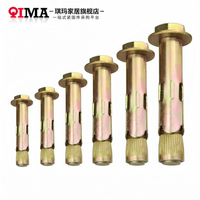
QIMA | Hex Head Floor Expansion Bolts Internal Tube
₱969.15₱1,169.62
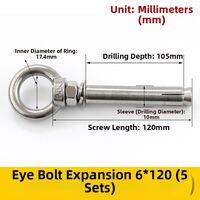
QIMA | 304 Stainless Steel Expansion Screws
₱452.18
Buy on Lazada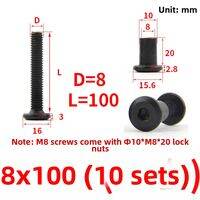
QIMA | Interlocking Nut and Screw M6 M8
₱300.27
Buy on Lazada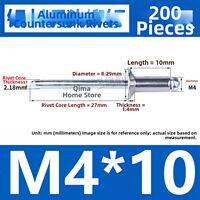
QIMA | Aluminum Countersunk Rivet Flathead Pull Pin Core Drawn Blind Pop Open
₱253.98
Buy on Lazada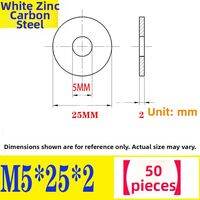
QIMA | Galvanized Extra Wide Thick Flat Washer M
₱433.23
Buy on Lazada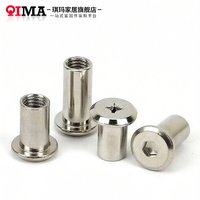
QIMA | Nickel Plated Hex Flange Nut Furniture Screws
₱471.63
Buy on Lazada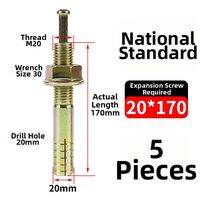
QIMA | Dedicated Fixing Expansion Bolts
₱1,102.15
Buy on Lazada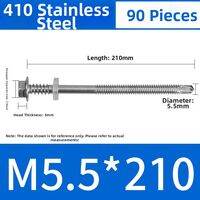
QIMA | Galvanized 410 Stainless Steel Hex Head Self-Tapping Self-Drilling Wafer Screws M4.8/5.5
₱1,625.35
Buy on LazadaAbout QIMA
QIMA is a global Testing, Inspection and Certification (TIC) company that assists brands, retailers, manufacturers, importers, and other businesses in verifying the quality, safety, compliance, sustainability, and performance of products and supply chains. 1
Founded in Hong Kong in 2005 under the name AsiaInspection, the organization has evolved from a product-inspection business into a diversified global quality and compliance entity serving the consumer products, food & agriculture, and life sciences sectors. In December 2018, AsiaInspection was rebranded as QIMA to reflect its broader international presence and expanded range of services. 1
Quick facts
| Field | Information |
|---|---|
| Company | QIMA |
| Former name | AsiaInspection |
| Founded | 2005 |
| Founded in | Hong Kong |
| Industry | Testing, Inspection & Certification (TIC) |
| CEO | Sébastien Breteau |
| Employees | 6,000+ |
| Offices & laboratories | 90+ |
| Geographic reach | 100+ countries |
| Customers | 30,000+ businesses |
| Main sectors | Consumer products, food & agriculture, life sciences |
| Core services | Testing, inspection, audits, certification, professional services, software and innovation |
| Former brand | AsiaInspection |
| Current brand | QIMA |
QIMA reports more than 6,000 employees, 90 offices and laboratories, operations in more than 100 countries, and more than 30,000 business customers.
Overview
QIMA is an independent organization that helps companies determine whether their products, suppliers, and production processes meet required standards. For retailers ordering large volumes of toys, garments, electronics, furniture, or food products from overseas factories, maintaining direct oversight at every facility is often impractical.
QIMA acts as an independent quality and compliance partner by:
- Inspecting products at factories
- Auditing suppliers and manufacturing facilities
- Testing products in laboratories
- Checking compliance with regulations and standards
- Certifying products, facilities, or processes where applicable
- Assessing ethical and environmental practices
- Helping companies manage quality and compliance data digitally
- Providing technical consulting, training, and R&D services
The company’s overall proposition is essentially “making products consumers can trust.” 1
History
2005 — Foundation as AsiaInspection
QIMA began in Hong Kong in 2005 as AsiaInspection. The original business focused primarily on providing quality-control and inspection services for companies sourcing products internationally. This model was particularly relevant to global brands and importers purchasing from Asian manufacturing markets, allowing them to use independent inspectors to verify production without deploying their own staff to factories. 1
2007 — Early recognition
In 2007, AsiaInspection received recognition including Alibaba’s E-Business of the Year Award and the SME of the Year Award from the French Chamber of Commerce in China.
2011 — Food industry expansion
The company expanded into the food industry, beginning its transformation from a predominantly consumer-product inspection business into a broader quality and compliance organization.
2012 — International expansion
AsiaInspection expanded its service footprint into Africa and Latin America, moving further away from its original Asia-focused identity.
2015 — Testing laboratories
The acquisition of ANSECO Group expanded laboratory-testing capabilities, including additional locations in the United States and Hong Kong.
2016–2022 — Expansion into food safety
QIMA progressively expanded its food-safety and certification capabilities through acquisitions including:
- Produce Inspectors of America (PIA)
- WQS
- IBD
- Certis
These acquisitions helped build capabilities in food inspection, certification, and sustainability-related services.
2018 — Rebranding to QIMA
A significant milestone occurred in December 2018, when AsiaInspection officially became QIMA. The company stated that the original name had become too narrow because the business had expanded beyond Asia and beyond inspection services. 1 QIMA explains that the name relates to “Quality Inspection MAnagement”, while also having meanings or associations in several languages.
2019 — Life sciences
QIMA entered the life sciences sector through acquisitions including BioAlternatives and Synelvia, subsequently adding businesses such as Newtone and Monasterium Lab. This significantly broadened the company’s scope beyond conventional factory inspection.
2020 — Latin America and Europe
QIMA acquired NYCE, strengthening its Latin American testing and certification capabilities, and Hansecontrol in Germany, establishing a major testing-laboratory presence in Europe.
2021 — QIMAone launch
QIMA launched QIMAone, a SaaS platform designed to allow brands and retailers to collect and manage quality information across their supply networks. This marked an evolution from being primarily a physical inspection and testing provider toward becoming a technology-enabled supply-chain intelligence company.
2026 — Digital development
QIMA states that its myQIMA platform was named Supply Chain Visibility Solution of the Year by the SupplyTech Breakthrough Awards in 2026, recognizing its work in digitizing visibility around food-safety certification.
Services
QIMA’s business is broadly divided into several key areas.
Product inspection
Product inspection is one of QIMA’s foundational services. Inspectors physically visit factories to examine products during manufacturing or before shipment. Typical inspection stages include:
- Initial Production Check (IPC) — checking raw materials and production setup
- During Production (DUPRO) — inspecting products while manufacturing is underway
- In-Line Inspection (ILI) — monitoring production during the manufacturing process
- Pre-Shipment Inspection (PSI) — checking finished goods before shipment
- Container Loading Check (CLC) — verifying goods and loading before a shipment leaves
- Production Monitoring (PM) — ongoing or intensive monitoring for certain production programs
These services enable buyers to identify quality problems before products leave the supplier’s factory. 1
Supplier audits
Supplier auditing addresses broader questions regarding whether a supplier is capable, responsible, compliant, and suitable to work with. QIMA provides several categories of supplier audits, including:
- Manufacturing audits
- Ethical/social-compliance audits
- Environmental audits
- Structural audits
- CTPAT audits
- Food supplier audits
These audits evaluate manufacturing capabilities, quality-management systems, working conditions, environmental practices, and other supplier risks. QIMA also works with established programs and standards such as SMETA, amfori BSCI, amfori BEPI and WRAP.
Laboratory testing
QIMA operates testing laboratories that assess the physical, chemical, safety, performance, and other characteristics of products and materials. Testing capabilities cover areas such as:
- Textiles and apparel
- Toys and children’s products
- Electronics
- Hardlines
- Eyewear
- Consumer products
- Chemicals and materials
- Food
- Cosmetics
- Other specialized products
The company states that its laboratories provide more than 6,000 tests across various product categories and operate under accreditations and regulatory frameworks including ISO 17025, CPSC, ANAB, CNAS, CMA and HOKLAS, depending on the laboratory and service.
Certification
QIMA provides certification and conformity-assessment services, offering formal evidence that a product, organization, site, process, or person meets specified requirements. In the food sector, for example, QIMA works with certification schemes involving:
- HACCP
- SQF
- BRC Global Standards
- IFS
- PrimusGFS
- Animal-welfare schemes
- Various agricultural and sustainability programs
Food and agriculture
Food is one of QIMA’s major business areas, with services covering the entire chain from farm to processing facility to finished product, certification, and retailer. Services include:
- Food inspections
- Food-safety audits
- Supplier audits
- Hygiene audits
- GMP audits
- Food certification
- Agricultural inspections
- Sustainability verification
- Product testing
For processed food, QIMA works with products ranging from bakery products and dairy to seafood, meat, frozen foods, sauces, beverages, and pet food.
Life sciences
Expansion into life sciences includes specialist capabilities associated with:
- Pharmaceuticals
- Biotechnology
- Cosmetics
- Dermatology
- Medical and life-science research
- Preclinical research
- Analytical testing
- Product efficacy and development
The company operates as a group of specialist businesses under the wider QIMA Global Group, allowing technical companies to retain their expertise while benefiting from the global organization.
Sustainability and ESG
QIMA works in sustainability, ESG, and responsible sourcing, including assessing whether sustainability claims made about products can be substantiated. Examples include testing or verification involving:
- Recycled materials
- Organic materials
- Chemical composition
- Sustainable textiles
- Ethical sourcing
- Carbon footprint
- Environmental performance
- Supply-chain practices
This includes testing designed to verify claims involving organic cotton and recycled polyester, providing evidence behind environmental and sustainability claims.
Technology and software
Technology is a major differentiator in QIMA’s modern business model. While quality control historically depended on people visiting factories with paper checklists, QIMA has moved toward integrating people, laboratories, data, software, and AI to generate supply-chain intelligence. Its digital platforms help companies collect, organize, and analyze quality, safety, and compliance information across supplier networks.
QIMAone
QIMAone is QIMA’s SaaS platform for quality and compliance management. Launched in 2021, it is intended to help brands and retailers manage quality information across their supply networks, creating a centralized view of supplier and product performance rather than simply generating individual inspection reports.
Artificial intelligence and digital intelligence
QIMA describes its approach as combining human intelligence with artificial intelligence. The company sits at the intersection of physical inspections, laboratory science, regulatory knowledge, supplier information, data analytics, software, and artificial intelligence. The goal is to move toward predictive and risk-based quality management, using accumulated supply-chain data to identify potentially risky suppliers, products, factories, or processes earlier.
Clients and geographic footprint
Client base
QIMA’s customers are primarily businesses rather than individual consumers. Typical customer groups include:
- Global brands
- Retailers
- Importers
- E-commerce companies
- Manufacturers
- Consumer-product companies
- Food companies
- Agricultural businesses
- Pharmaceutical and biotech companies
- Cosmetics companies
- Product developers
A typical engagement involves a brand in Europe or the US engaging a supplier in Asia; QIMA auditors visit the factory, inspectors check production, laboratories test samples, and a digital report is produced to inform the brand’s decision on approving the shipment or supplier.
Global presence
According to current company information, QIMA operates in more than 100 countries, with 90 offices and laboratories and more than 6,000 employees. Its footprint spans major manufacturing, sourcing, and consumer markets across Asia, Europe, North America, Latin America, Africa, and the Middle East. This geographic model is essential because quality control often requires personnel to be physically close to factories, farms, laboratories, and suppliers.
Operations in the Philippines
QIMA operates quality-control services in the Philippines. Its Philippine offering includes:
- Product inspections
- Supplier audits
- Ethical audits
- Environmental audits
- Manufacturing audits
- Structural audits
- Laboratory testing
- Regulatory compliance support
QIMA states that its Philippine laboratories provide ISO 17025-accredited testing for areas including garments, consumer goods, and electronics. This makes QIMA relevant to companies sourcing from Philippine manufacturers as well as Philippine suppliers selling into international markets.
Business model and industry positioning
Differentiation
QIMA’s positioning is based on combining several traditionally separate functions. Rather than specializing solely in inspection, laboratory testing, certification, or supplier auditing, QIMA brings many of these capabilities together. Its portfolio includes testing, inspection, auditing, certification, professional services, software, and innovation, enabling the management of quality and compliance across an entire supply chain.
Revenue model
QIMA operates as a B2B professional and technical services company. Customers pay for specialized services such as factory inspections, supplier audits, laboratory tests, certification, technical consulting, research, software, and compliance programs. Revenue is generated from both individual services and larger, recurring quality and compliance programs. The company has also expanded into new technical areas and geographic markets through acquisitions rather than building every capability from scratch. 1
TIC industry context
QIMA belongs to the broader TIC (Testing, Inspection and Certification) industry, which exists because companies and governments need independent verification that products, facilities, processes, and systems comply with specific requirements. QIMA is notable in that its activities extend beyond traditional TIC into digital supply-chain management, professional services, R&D, and life sciences.
Major competitors
QIMA operates in a highly competitive global market. Well-known companies in the broader TIC sector include:
- SGS
- Bureau Veritas
- Intertek
- TÜV SÜD
- TÜV Rheinland
- UL Solutions
QIMA’s positioning focuses specifically on combining global field services, testing, compliance, supply-chain expertise, and technology.
Corporate identity
Name origin
The name QIMA was introduced during the 2018 rebranding. According to the company, it is derived from “Quality Inspection MAnagement.” It also carries meanings in other languages, including the Chinese 启迈 (qǐ mài), associated with starting, inspiring, and moving forward. The rebrand communicated a shift from an “Asia + Inspection” focus toward a global, quality, technology, and compliance orientation.
Philosophy
QIMA describes its mission as helping clients make products consumers can trust. 1 Its positioning emphasizes customer care, technology, human expertise, supply-chain visibility, quality, safety, compliance, sustainability, and innovation. The company describes its culture as centered on “relentless care” for clients, emphasizing the combination of technology with human expertise.
Timeline of milestones
| Year | Milestone |
|---|---|
| 2005 | Founded in Hong Kong as AsiaInspection |
| 2007 | Early business/industry recognition |
| 2011 | Entered food industry |
| 2012 | Expanded into Africa and Latin America |
| 2015 | Acquired ANSECO Group |
| 2016 | Expanded food capabilities through PIA |
| 2017 | Obtained SASO accreditation |
| 2018 | AsiaInspection rebranded as QIMA |
| 2019 | Expanded into life sciences; acquired WQS in food |
| 2020 | Acquired NYCE and Hansecontrol |
| 2021 | Launched QIMAone; expanded life-science capabilities |
| 2022 | Added Certis and Monasterium Lab |
| 2026 | Continued expansion of digital/supply-chain visibility capabilities |
Current status
As of 2026, QIMA is best described as a global technology-enabled Testing, Inspection and Certification company providing quality, safety, sustainability, compliance, and supply-chain intelligence services. It serves 30,000+ businesses, has 6,000+ employees, operates across 100+ countries, and combines field operations, laboratories, certification, specialist technical expertise, and digital platforms.
Its three major verticals are:
Consumer Products
Product quality, safety, testing, inspections, supplier audits, cybersecurity, sustainability, and compliance.
Food & Agriculture
Food safety, inspections, certification, agricultural assurance, supplier audits, and sustainability.
Life Sciences
Testing, analytical services, research, imaging, and specialist support for pharmaceuticals, biotechnology, cosmetics, and related industries. 1