Shop on Lazada
Ralliart products
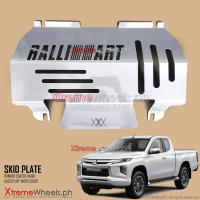
Mitsubishi Montero / Strada 2016-2023 Hard Steel Engine Under Cover skid plate / skidplate Ralliart New Designed Thailand Made ( strada accessories )
₱3,730.86₱5,500.00
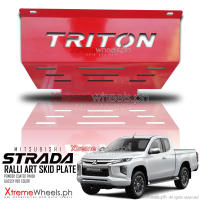
Mitsubishi Strada 2019-2023 Triton Logo Hard Steel Engine Under Cover skid plate / skidplate Thailand Made ( strada accessories )
₱2,256.66₱3,500.00
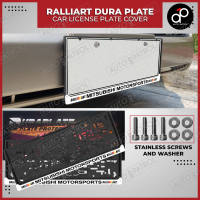
Ralliart Duraplate Car License Plate Cover
₱680.00₱900.00
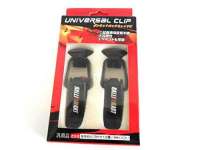
UNIVERSAL BUMPER CLIP RALLIART
₱103.40₱450.00

Mitsubishi Ralliart Universal 1 set 4pcs Door Edge Protector
₱137.50₱450.00
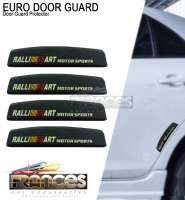
Mitsubishi Ralliart All Unit Universal 1 set 4pcs Door Edge Protector ( ralliart accessories )
₱108.90₱450.00
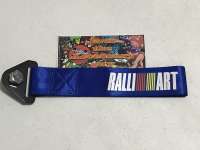
Ralliart racing tow strap(blue)
₱250.00₱349.00
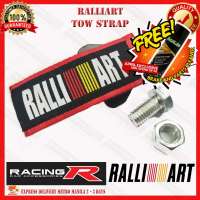
Ralliart Tow Strap (Red)
₱149.00₱321.00
About Ralliart
Overview
Mitsubishi Motors Corporation Ralliart (stylised as RALLIART) is a motorsport and performance heritage brand associated with Mitsubishi Motors. It gained prominence through the development, preparation, and campaigning of Mitsubishi vehicles in international rallying and off-road competition, alongside the production of performance parts, accessories, and road-going performance models.
Today, Ralliart operates beyond its original function as a factory racing division. Mitsubishi describes it as a heritage brand intended to carry the company’s motorsport identity, engineering philosophy, and rugged performance image into modern vehicles and competition programmes.1
| Details | |
|---|---|
| Name | RALLIART |
| Parent company | Mitsubishi Motors Corporation |
| Origin | Japan / international Mitsubishi motorsport operations |
| Established | 1984 |
| Industry | Motorsport, automotive engineering, performance vehicles, accessories |
| Specialty | Rallying, cross-country rally, performance development |
| Famous competitions | World Rally Championship, Dakar Rally, Asia Cross Country Rally |
| Most famous cars | Mitsubishi Lancer Evolution, Galant VR-4, Pajero/Montero |
| Best-known driver | Tommi Mäkinen |
| Modern role | Heritage/performance brand and motorsport identity |
The modern Ralliart identity is officially described by Mitsubishi as having been forged in the World Rally Championship (WRC) and Paris-Dakar Rally, with an emphasis on driving performance, robustness, authenticity, and Mitsubishi’s engineering heritage.1
History
Before Ralliart: Mitsubishi’s motorsport roots
Ralliart did not emerge without precedent; Mitsubishi had been involved in motorsport for many years before the name became widely recognised.
A pivotal moment occurred at the 1972 Southern Cross Rally, where Scottish driver Andrew Cowan piloted a Mitsubishi Galant 16L GS to Mitsubishi’s first overall victory in the event. Mitsubishi states that this win helped establish the foundations of its international rally programme.1
In 1973, Mitsubishi entered the newly created World Rally Championship with the Galant 16L GS. The company subsequently developed increasingly sophisticated rally cars and four-wheel-drive technology.1
By the early 1980s, Mitsubishi was preparing for a more serious return to international rallying. In 1981, the manufacturer returned to the international rally scene with the Lancer EX2000 Turbo, competing under the Team RALLIART banner.1
Founding of Ralliart
The formal Ralliart organisation dates to 1984. Key figures in its establishment included Andrew Cowan, the Scottish rally driver closely associated with Mitsubishi, and Doug Stewart, who was involved in Mitsubishi’s Australian motorsport operations.
Ralliart subsequently developed into Mitsubishi’s specialist motorsport organisation, handling competition-car development, preparation, engineering, driver support, and motorsport-related parts and technology.2
Rather than functioning merely as a racing team, Ralliart became an important bridge between Mitsubishi’s factory engineering, competition cars, motorsport technology, and production vehicles. This relationship became one of the defining characteristics of the brand.
Ralliart and the World Rally Championship
The World Rally Championship served as the primary stage for Ralliart’s reputation. Mitsubishi’s rally programme evolved through several generations of cars, eventually culminating in the Lancer Evolution.
Significant Mitsubishi rally cars included:
- Lancer EX2000 Turbo
- Starion 4WD
- Galant VR-4
- Lancer Evolution I
- Lancer Evolution II
- Lancer Evolution III
- Lancer Evolution IV
- Lancer Evolution V
- Lancer Evolution VI
- Lancer Evolution VII
- Lancer Evolution WRC
The Galant VR-4 was particularly significant as it demonstrated Mitsubishi’s increasingly sophisticated approach to turbocharged engines and four-wheel drive before these technologies were transferred to the Lancer Evolution programme.
The Lancer Evolution era
The Mitsubishi Lancer Evolution remains the vehicle most strongly associated with Ralliart. The original model was born from Mitsubishi’s desire to create a competitive rally machine based on the Lancer platform.
The formula combined a turbocharged engine, four-wheel drive, a sophisticated chassis, a relatively compact body, and direct rally development. The result became one of the defining performance cars of the 1990s and 2000s.
Ralliart’s competition success created a feedback loop wherein rally competition drove engineering development, which influenced the production Evolution, fostered enthusiast culture, and strengthened the Ralliart identity. Technology developed through Mitsubishi’s motorsport programme also influenced ordinary production vehicles. Mitsubishi emphasises that motorsport provided a testing ground for performance, durability, four-wheel-drive systems, handling, and safety technologies that eventually made their way into production cars.1
Tommi Mäkinen and Ralliart’s golden age
The most celebrated period in Ralliart’s history occurred during the 1990s, particularly through its partnership with Finnish driver Tommi Mäkinen.
Mäkinen drove Mitsubishi Lancer Evolutions in the WRC and won the World Rally Championship Drivers’ Championship four consecutive times from 1996 through 1999.2 This achievement transformed the Lancer Evolution from a Japanese performance car into a global motorsport icon.
| Year | Champion |
|---|---|
| 1996 | Tommi Mäkinen — Mitsubishi |
| 1997 | Tommi Mäkinen — Mitsubishi |
| 1998 | Tommi Mäkinen — Mitsubishi |
| 1999 | Tommi Mäkinen — Mitsubishi |
Mitsubishi also secured the 1998 WRC Manufacturers’ Championship, marking the peak of the Ralliart and Lancer Evolution combination.2 The trio of Mäkinen, the Lancer Evolution, and Ralliart became one of the defining images of 1990s rallying.
Ralliart and the Dakar Rally
Ralliart’s activities extended beyond conventional stage rallying. Mitsubishi became one of the dominant manufacturers in the Dakar Rally, particularly with the Mitsubishi Pajero/Montero.
The Dakar programme differed fundamentally from WRC competition. Instead of short, high-speed stages on roads and gravel tracks, Dakar demanded extreme endurance over enormous distances and difficult terrain. This made the Pajero an ideal showcase for four-wheel drive, engine and suspension durability, chassis strength, navigation, thermal management, reliability, and driver endurance.
Mitsubishi participated in Dakar 26 times between 1983 and 2009, recording 12 overall victories, including seven consecutive victories according to Mitsubishi’s motorsport archive.1
During the 2000s, Mitsubishi’s Dakar dominance became especially pronounced. The factory team won the Dakar every year from 2004 through 2007 with the Pajero.2
Hiroshi Masuoka
Japanese driver Hiroshi Masuoka is another major figure in the Ralliart story. Masuoka joined Ralliart in 1990 after beginning his Mitsubishi rally career earlier in the decade and became one of the team’s most successful cross-country drivers.
He won the Dakar Rally overall in 2002 and 2003, becoming the first Japanese driver to win the event in consecutive years.1 His success reinforced Ralliart’s association with both rally cars and Mitsubishi’s rugged four-wheel-drive vehicles.
Ralliart road cars
Ralliart was not exclusively focused on racing; the brand was also applied to production Mitsubishi vehicles, performance variants, accessories, and aftermarket parts.
This created a hierarchy within Mitsubishi’s performance identity:
- Factory Mitsubishi
- Ralliart performance models and accessories
- Full Ralliart competition cars
Road-going Ralliart models were intended to provide ordinary customers with a connection to Mitsubishi’s motorsport identity.
One notable example was the Mitsubishi Colt Ralliart. The Colt received a 1.5-litre MIVEC turbocharged Ralliart version, which later evolved into the Colt Ralliart Version-R. Mitsubishi’s historical records describe the Version-R as receiving a dedicated engine, body, suspension tuning, and a Getrag five-speed manual transmission.1
Another significant model was the Lancer Ralliart. The 2008 Lancer Ralliart featured:
- 2.0-litre MIVEC turbocharged engine
- Full-time four-wheel drive
- Active Center Differential
- Twin Clutch SST transmission
This positioned the Ralliart model below the Lancer Evolution while still offering customers much of the Evolution’s performance philosophy.1
Ralliart vs. Mitsubishi Evolution
It is important to distinguish between the two entities, as Ralliart and Evolution are not the same thing.
Mitsubishi Evolution
The Evolution was a specific Mitsubishi performance-car lineage, most famously represented by the Lancer Evolution.
Ralliart
Ralliart was the motorsport and performance organisation responsible for developing and supporting Mitsubishi’s competition activities. It was later used to designate performance-oriented road cars and accessories.
Essentially, the Evolution represents the car, while Ralliart represents the motorsport and performance identity behind it. There is naturally some overlap, particularly because the Lancer Evolution was deeply connected to Ralliart’s rally programme.
Regional operations
Ralliart developed an international structure rather than operating solely from Japan. For example, Ralliart Europe originated from Andrew Cowan’s Andrew Cowan Motorsports (ACMS), while Ralliart Australia was established by Doug Stewart as Mitsubishi’s regional licensee. These organisations played important roles in Mitsubishi’s international rally and off-road programmes.2
This international structure was particularly useful because rallying and cross-country racing required teams capable of building, maintaining, and campaigning cars in proximity to competition venues.
Peak and decline in the 2000s
The early-to-mid 2000s remained an extremely successful period for Mitsubishi in motorsport. The Dakar programme stayed dominant, and the Lancer Evolution continued to be a major force in rallying.
However, Mitsubishi’s financial difficulties and changing corporate strategy eventually affected its motorsport activities. In 2009, Mitsubishi withdrew from factory cross-country competition following the Dakar era. In 2010, Ralliart substantially scaled down its business activities as Mitsubishi ended its official factory rally involvement.12
For many enthusiasts, this effectively marked the end of the original Ralliart era.
Hiatus and revival
The Ralliart hiatus
After 2010, the Ralliart name did not disappear entirely. The brand continued to exist in various forms, including regional licensing, parts, merchandise, and accessories. However, it no longer represented the massive factory-backed motorsport operation that had produced the Lancer Evolution WRC and dominated Dakar.
This created a gap of roughly a decade in which Ralliart functioned primarily as a heritage and enthusiast name rather than an active factory motorsport powerhouse.
The 2021 revival
In 2021, Mitsubishi announced the return of Ralliart. The revived brand was deliberately positioned differently from the original.
Rather than immediately returning to the full-scale factory WRC programme of the 1990s, Mitsubishi initially focused on:
- Ralliart accessories
- Special-edition vehicles
- Motorsport activities
- Brand merchandise
- Styling
- Mitsubishi’s rugged and performance image
Mitsubishi states that the modern Ralliart is intended to preserve its motorsport heritage while expressing what it calls “Mitsubishi Motors-ness” and its manufacturing spirit.1
First modern Ralliart models
The first production vehicles of the revived Ralliart era appeared in Thailand in 2021. Mitsubishi introduced the Triton Ralliart and Pajero Sport Ralliart as special editions featuring Ralliart-themed styling and equipment, with sales beginning in December 2021.1
These vehicles were not equivalent to the old Lancer Evolution in terms of being completely transformed factory race-derived machines. Instead, they represented a more accessible interpretation of Ralliart’s identity, emphasising ruggedness, motorsport heritage, visual identity, and Mitsubishi’s 4WD, SUV, and pickup character.
Modern motorsport activities
Ralliart’s modern motorsport revival has centred heavily on cross-country rallying, particularly the Asia Cross Country Rally (AXCR). This focus is relevant to Philippine readers given the region’s geographic proximity and the popularity of similar off-road disciplines locally.
Mitsubishi created Team Mitsubishi Ralliart, using the Triton pickup as its competition vehicle. The modern programme provides a direct connection to the original Ralliart philosophy: taking a production Mitsubishi, pushing it through extreme competition, learning from the experience, and transferring knowledge back into production vehicles.
Mitsubishi’s official Ralliart archive records an overall AXCR victory in 2022, followed by third place in 2023 and fifth in 2024. The team returned to overall victory in 2025.1 Mitsubishi subsequently announced its participation in AXCR 2026.1
Philosophy
The modern Ralliart brand is built around several core ideas.
Performance
Ralliart was born from competition, making performance central to its identity. However, performance in this context extends beyond horsepower. Mitsubishi’s motorsport philosophy emphasises durability, handling, four-wheel-drive capability, and the ability to perform in difficult environments.1
Durability
Dakar and cross-country rallying are brutally demanding. A vehicle that is fast for only ten minutes is insufficient; it must survive hundreds or thousands of kilometres of punishment. Consequently, Ralliart’s heritage is strongly connected with reliability and durability.
Four-wheel-drive technology
Four-wheel drive is arguably the technical thread connecting many of Mitsubishi’s greatest motorsport achievements. The company’s rally and Dakar programmes helped develop expertise that eventually appeared in road cars. Mitsubishi specifically describes motorsport as a method to test and develop technologies such as its advanced four-wheel-drive systems.1
Ruggedness
Unlike some performance brands that emphasise luxury or track performance, Ralliart’s image is strongly associated with rough terrain. Its visual language tends to emphasise red accents, black trim, aggressive graphics, off-road styling, mechanical-looking details, and motorsport-inspired decals.
Authenticity
The Ralliart name carries considerable historical weight because it was attached to genuine factory competition programmes. Mitsubishi’s modern strategy therefore emphasises preserving the brand’s heritage rather than simply using Ralliart as a cosmetic trim level.1
Visual identity
One of Ralliart’s most recognisable visual elements is its red-and-white logo, traditionally incorporating a stylised red graphic associated with speed and competition.
The logo became strongly associated with Mitsubishi rally cars, the Lancer Evolution, Pajero Dakar vehicles, racing apparel, performance parts, and motorsport team equipment. The visual identity is deliberately simple and aggressive, ensuring recognisability even when displayed as a small decal on a vehicle.
Notable vehicles
Vehicles closely associated with the Ralliart legacy include:
| Vehicle | Importance |
|---|---|
| Lancer EX2000 Turbo | Early Mitsubishi Group 4/WRC-era rally car |
| Galant VR-4 | Major pre-Evolution rally platform |
| Lancer Evolution I–VI | Core of Ralliart’s WRC golden era |
| Lancer Evolution VII–X | Continued performance legacy |
| Pajero/Montero | Dakar-winning off-road platform |
| Colt Ralliart | Compact road-going performance model |
| Colt Ralliart Version-R | More serious enthusiast-oriented variant |
| Lancer Ralliart | Road car positioned beneath Evolution |
| Triton Ralliart | Modern Ralliart pickup |
| Pajero Sport Ralliart | Modern Ralliart SUV |
| Triton competition car | Basis of modern Team Mitsubishi Ralliart AXCR programme |
Major achievements
World Rally Championship
- 4 consecutive Drivers’ Championships with Tommi Mäkinen, 1996–1999.2
- 1998 Manufacturers’ Championship for Mitsubishi.2
Dakar Rally
- 12 overall victories for Mitsubishi.
- 7 consecutive victories during its dominant period.
- Factory participation 26 times from 1983–2009.
- Four consecutive victories from 2004–2007.1
Asia Cross Country Rally
- Overall victory in 2022.
- Overall victory again in 2025.
- Continued factory-backed participation into 2026.1
Engineering significance
Ralliart was more than a racing department; it became an integral part of Mitsubishi’s engineering identity. The company utilised motorsport as a laboratory for technologies required to function under extreme conditions, including high temperatures, rough terrain, jumps, mud, snow, gravel, high-speed cornering, and extreme mechanical loads.
This environment facilitated engineering development in engines, transmissions, suspension, four-wheel drive, chassis, cooling, and durability. These advancements were subsequently transferred to production Mitsubishi vehicles such as the Lancer Evolution, Pajero, Lancer Ralliart, and other 4WD and performance models.
Mitsubishi describes this transfer of motorsport technology and know-how into production vehicles as a fundamental reason for its long-term involvement in motorsport.1
Current status
As of 2026, Ralliart is best understood as a Mitsubishi Motors heritage and performance brand with an active motorsport presence, rather than simply the factory racing department it was during the Lancer Evolution era.
Mitsubishi currently uses the Ralliart identity for:
- Motorsport
- Special-edition vehicles
- Genuine accessories
- Lifestyle merchandise
- Performance-oriented styling
- Brand heritage
- Cross-country rally programmes
The company explicitly describes modern Ralliart as a brand that preserves its heritage while pursuing Mitsubishi’s engineering and manufacturing identity.1
The modern motorsport programme is particularly significant because it demonstrates that Ralliart has not been reduced entirely to stickers and cosmetic accessories. Team Mitsubishi Ralliart continues to compete in the Asia Cross Country Rally with the Triton.1
Comparison with other Japanese performance brands
Ralliart occupies a distinct position in Japanese automotive culture.
| Brand | Manufacturer | Core identity |
|---|---|---|
| Ralliart | Mitsubishi | Rally, 4WD, rugged performance |
| NISMO | Nissan | Circuit/racing + performance |
| TRD | Toyota | Racing + performance |
| STI | Subaru | Rally + AWD performance |
| Mazdaspeed | Mazda | Motorsport + performance |
| Mugen | Honda | Motorsport + performance |
Ralliart’s closest historical comparison is likely Subaru Tecnica International (STI), as both brands became deeply associated with rallying, turbocharged engines, four-wheel drive, and iconic Japanese performance cars. However, Ralliart possesses a particularly strong off-road and Dakar identity due to Mitsubishi’s extraordinary Pajero record.
Cultural significance
Among automotive enthusiasts, Ralliart is strongly associated with the golden age of Japanese rallying. The combination of Ralliart, the Lancer Evolution, and Tommi Mäkinen became almost synonymous with Mitsubishi’s dominance of 1990s rallying.
Simultaneously, the association of Ralliart, the Pajero, and Dakar created an equally powerful off-road identity. This dual heritage—representing both high-speed rally cars and extreme long-distance off-road vehicles—is a primary reason the name remains valuable to Mitsubishi today.
Timeline
- 1972: Andrew Cowan gives Mitsubishi its first overall Southern Cross Rally victory.1
- 1973: Mitsubishi enters the newly established WRC.1
- 1981: Mitsubishi returns to international rallying with the Lancer EX2000 Turbo under Team RALLIART.1
- 1984: Ralliart is formally established.2
- 1990s: Lancer Evolution becomes Ralliart’s defining rally car.
- 1996–1999: Tommi Mäkinen wins four consecutive WRC Drivers’ Championships.2
- 1998: Mitsubishi/Ralliart wins the WRC Manufacturers’ Championship.2
- 2002–2003: Hiroshi Masuoka wins Dakar twice consecutively.1
- 2004–2007: Mitsubishi wins four consecutive Dakars.2
- 2010: Ralliart’s original factory-backed business is substantially scaled down.1
- 2021: Mitsubishi revives Ralliart.1
- 2021: Triton Ralliart and Pajero Sport Ralliart special editions launch in Thailand.1
- 2022: Team Mitsubishi Ralliart wins the Asia Cross Country Rally.1
- 2025: Team Mitsubishi Ralliart wins AXCR again.1
- 2026: Mitsubishi continues its Ralliart AXCR programme.1