Shop on Lazada
Raybeen products
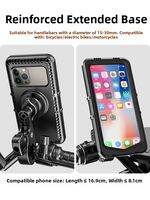
Raybeen | Waterproof Shockproof Motorcycle E-Bike Phone Holder
₱578.38₱946.94
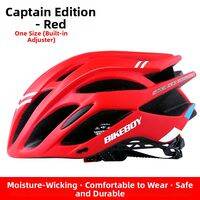
Raybeen | Bicycle Safety Helmet Summer
₱956.41₱1,284.57
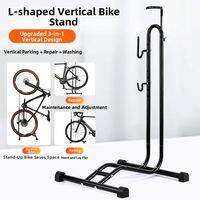
Raybeen | Bike Repair Stand Support
₱1,012.64₱1,394.41
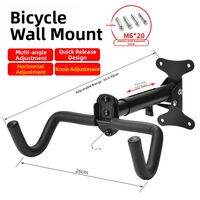
Raybeen | Wall Mounted Bike Parking Storage Rack
₱821.77₱1,126.05
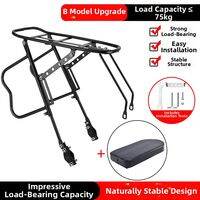
Raybeen | Person Cargo Carrying Rear Rack
₱739.50₱942.35
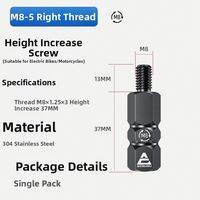
Raybeen | Adjustable Height Stainless Steel Phone Mount For Motorcycle Mirror
₱197.82₱280.99
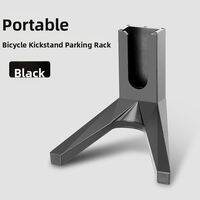
Raybeen | Bicycle Parking Stand
₱226.38₱297.44
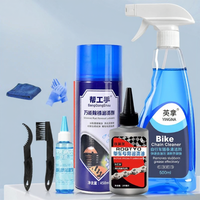
Raybeen | Lubricating Chain Cleaner for Bicycle Maintenance
₱583.16₱676.20
About Raybeen
Raybeen (stylized as RAYBEEN or raybeen) is a Chinese cycling accessories brand associated with Yiwu Jianxing E-Commerce Co., Ltd. (义乌市健行电子商务有限公司) in Yiwu, Zhejiang. Available public sources describe the company as operating across the research, development, manufacturing, sales, and service of bicycle-related products, with the brand dating to 2011 1.
Note on sources: Raybeen does not appear to have a large, well-documented English-language corporate history online. Much of the available information comes from Chinese e-commerce and brand directory sources, so claims such as market ranking and exact corporate positioning should be treated as directory claims rather than independently verified facts.
Overview
| Field | Information |
|---|---|
| Brand | Raybeen / RAYBEEN |
| Industry | Cycling, bicycle accessories & riding equipment |
| Country of origin | China |
| Associated company | Yiwu Jianxing E-Commerce Co., Ltd. |
| Chinese company name | 义乌市健行电子商务有限公司 |
| Founded / established | 2011 |
| Corporate location | Yiwu, Zhejiang, China |
| Primary market | Bicycle and cycling accessories |
| Business model | Primarily e-commerce-oriented |
| Known sales channels | Chinese online marketplaces, including Tmall/JD; products also appear internationally |
Chinese brand directories consistently identify Raybeen with Yiwu Jianxing E-Commerce Co., Ltd. and give November 23, 2011, as the company’s establishment date 1.
History
Raybeen emerged in Yiwu, one of China’s major commercial and e-commerce centres. The brand is generally dated to 2011, when its associated company, Yiwu Jianxing E-Commerce Co., Ltd., was established. Public descriptions characterise the company as a specialised bicycle enterprise covering product development, manufacturing, sales, and service 1.
Rather than being primarily known as a manufacturer producing complete bicycles, Raybeen’s visible product portfolio is much more strongly associated with accessories and equipment for bicycles and electric bicycles. This distinction is significant: Raybeen is better understood as an accessories and equipment brand than as a traditional full-bicycle manufacturer.
Products
Raybeen’s catalogue covers a broad range of cycling accessories. Examples found across marketplace listings include:
- Bicycle bags and storage
- Handlebar and frame bags
- Bicycle and e-bike phone holders
- Bicycle locks
- Bicycle pumps
- Kickstands
- Bicycle lights
- Valve lights
- Child bicycle seats
- Handlebar extension mounts
- Protective and riding accessories
- Cycling face coverings
- Accessories for electric bicycles and scooters
Marketplace records show Raybeen-branded bicycle locks in multiple cable and combination-lock configurations, while other listings identify Raybeen as a brand specialising in cycling equipment. A listing also shows a bicycle and e-bike storage bag sold through the Raybeen flagship store in Zhejiang’s Jinhua area.
Products are also sold outside China. Walmart Canada, for example, has carried a Raybeen bicycle frame bag 2, while Philippine marketplace listings have included Raybeen motorcycle and e-bike phone holders. In Eurasian markets, Raybeen-branded bicycle pumps and accessories appear on platforms serving European consumers 4.
Product positioning
Raybeen’s apparent positioning is practical, affordable cycling equipment rather than premium performance hardware. Its catalogue emphasises products that solve everyday cycling problems: carrying belongings, mounting phones, locking bicycles, inflating tyres, supporting the bicycle when parked, improving visibility, and protecting the rider. This makes it distinct from brands whose identities are built primarily around high-performance components.
In broad terms, the brand aligns with utility, affordability, and variety in cycling accessories, rather than professional racing bicycles or components.
E-commerce model
A distinctive aspect of Raybeen is its connection with the Chinese e-commerce ecosystem. Listings identify a “raybeen旗舰店” (Raybeen flagship store) and associate it with Zhejiang, Jinhua, and Tmall. This fits the company’s reported origin in Yiwu, a city particularly well known for manufacturing, wholesale commerce, and online retail.
Raybeen products have also appeared on international marketplace platforms. This suggests that the brand’s distribution is not limited to the Chinese domestic market, although publicly available sources do not provide reliable figures for its international sales, revenue, or geographic market share.
Brand identity
Raybeen’s identity centres on cycling as an everyday activity rather than exclusively competitive cycling. Its catalogue spans conventional bicycles, mountain bikes, electric bicycles, and, in some markets, related two-wheeled vehicles. Marketplace listings demonstrate products designed for both conventional bicycle use and e-bike applications. The brand therefore occupies a relatively broad segment of the cycling accessories market.
Market presence
Raybeen is repeatedly included in Chinese online cycling equipment and bicycle accessory directories. For example, Chinese Brand Network lists Raybeen among bicycle pump brands and identifies Yiwu Jianxing E-Commerce Co., Ltd. as its associated company 1. It has also appeared in rankings or directory listings covering bicycle pumps, lights, tail lights, computers, valve lights, cycling masks, and motorcycle or e-bike locks.
These listings indicate broad product visibility, although they should not be interpreted as proof that Raybeen is the market leader in each category.
“China’s No. 1 bicycle brand” claim
Several Chinese brand directories state that the company has become “China’s No. 1 independent bicycle brand” 1. However, this statement should not be treated as an established fact. The wording appears repeatedly in commercial brand-ranking directories, but no authoritative independent source establishes Raybeen as China’s largest or number one bicycle brand. Moreover, Raybeen’s publicly visible product portfolio consists primarily of accessories rather than complete bicycles. Some Chinese commercial brand directories describe Raybeen as a leading Chinese independent cycling brand, although these rankings are not independently verified.
Relationship with Ray-Ban
Despite the similarity between “Raybeen” and “Ray-Ban”, they are unrelated brands based on reviewed sources. United States trademark records show RAYBEEN as a mark associated with Yiwu Prudential Network Technology Co., Ltd., while RAY-BAN is associated with Luxottica 3. Therefore, Raybeen should not be described as a subsidiary, product line, or affiliated brand of Ray-Ban.
Geographic origin
The brand is strongly associated with Yiwu, Zhejiang Province, China. Brand directories identify Yiwu as Raybeen’s source and location, while marketplace records place its flagship store operations in the broader Jinhua, Zhejiang area 1. This places Raybeen within one of China’s major manufacturing and e-commerce clusters.
International availability
Although Raybeen appears to have originated as a Chinese e-commerce brand, its products can be found internationally. Examples include:
- Canada: Raybeen-branded bicycle bags have appeared on Walmart Canada 2.
- Philippines: Raybeen bicycle and e-bike accessories appear in Philippine marketplace listings.
- Europe/Eurasia: Raybeen-branded bicycle pumps and accessories appear on marketplace platforms serving European markets 4.
This suggests an international e-commerce footprint, although available sources are insufficient to determine the size of that business.
Trademark history
There is evidence of the Raybeen name being used in US trademark proceedings. The USPTO Trademark Trial and Appeal Board database records RAYBEEN in connection with Yiwu Prudential Network Technology Co., Ltd., with an application dating to 2016. The same record distinguishes it from Luxottica’s separate RAY-BAN trademark 3. This provides evidence that the Raybeen name has been used internationally, but it does not by itself establish the current ownership structure of every Raybeen trademark worldwide.
Reputation and positioning
Raybeen occupies the mass-market value segment of cycling accessories. Compared with premium specialist brands such as Lezyne, Topeak, or Garmin, Raybeen’s catalogue tends to emphasise inexpensive, practical accessories and a wide assortment. Its strengths appear to be a broad product range, affordable pricing, high availability through online marketplaces, products aimed at everyday cyclists and e-bike users, and a strong e-commerce orientation.
Limitations, from the perspective of publicly available information, include a relatively limited documented corporate history, little independent English-language coverage, limited information about R&D facilities and manufacturing plants, limited independent testing or review coverage compared with major cycling brands, and unclear global revenue, market share, and distribution figures.
Comparison with major cycling brands
| Brand | Main identity | Typical positioning |
|---|---|---|
| Raybeen | Cycling accessories | Value / mass market |
| Lezyne | Pumps, tools, lights, accessories | Premium |
| Topeak | Tools, pumps, bags, accessories | Mid–premium |
| Garmin | Cycling computers/electronics | Premium/high-tech |
| RockBros | Cycling accessories | Value to mid-market |
| Decathlon | Broad sporting goods | Mass market |
| Specialized | Complete bikes & performance equipment | Premium/performance |
Raybeen is best characterised as an accessories-focused consumer brand rather than a direct equivalent to manufacturers of complete performance bicycles.
Name and branding
The brand is commonly written in lowercase as raybeen, but marketplace and directory listings also use Raybeen and RAYBEEN. There is no strong public evidence that the capitalisation represents different companies; it appears to be stylistic variation. The name should be written carefully because Raybeen, Ray-Ban, and other similarly spelled marks are separate brands. The USPTO record provides particularly clear evidence of this distinction 3.