Shop on Lazada
ResMed products
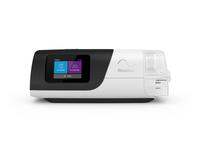
Resmed Airsense 11 CPAP machine
₱83,000.00₱105,000.00
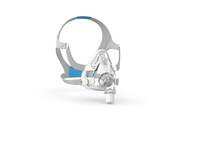
Resmed Airfit F20 full face
₱8,965.00₱12,000.00
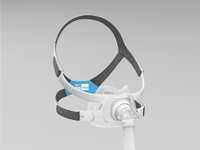
ResMed Airfit F40 full face mask
₱8,895.00₱12,000.00
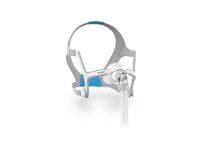
Resmed Airfit N20 (Large)
₱8,695.00₱10,000.00
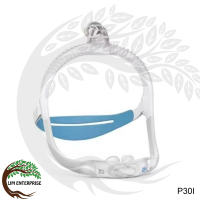
Resmed Airfit P30i and N30i Cpap Mask all sizes included for Obstructive sleep Apnea. BMC P2h Mask S11 tubing for resmed airsense 11 and ordinary tubing no return
₱6,599.00₱8,999.00
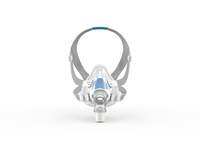
Resmed Airfit F20 Full Face Mask (check variation for sizes available)
₱8,695.00₱10,000.00
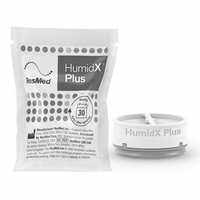
ResMed HumidX Waterless Humidification For ResMed AirMini
₱1,000.00₱3,000.00
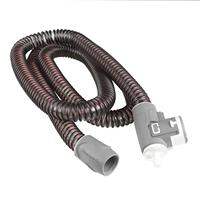
ResMed ClimateLineAir Heated Tubing for Airsense 10 Machines
₱5,995.00₱10,000.00
About ResMed
ResMed Inc. is a global medical technology and digital health company primarily recognized for its products addressing sleep apnea, respiratory disorders, and home-based healthcare. The firm develops medical devices including CPAP machines, masks, and ventilators, alongside cloud-connected software that enables patients, clinicians, and healthcare providers to monitor and manage therapy remotely 1.
Originally focused on CPAP equipment, ResMed has evolved into a broader technology company serving the sleep, breathing, and home care sectors. Its products are distributed in more than 140 countries, and as of June 30, 2025, the company employed approximately 10,600 people 2.
Corporate Profile
| Item | Information |
|---|---|
| Full name | ResMed Inc. |
| Industry | Medical technology / Digital health / Healthcare software |
| Founded | 1989 |
| Founder | Dr. Peter C. Farrell |
| Headquarters | San Diego, California, United States |
| Original focus | Sleep-disordered breathing and CPAP therapy |
| Major fields | Sleep apnea, respiratory care, ventilation, connected health, residential-care software |
| Employees | ~10,600 (FY2025) |
| Countries served | 140+ |
| Stock ticker | RMD |
| Primary exchange | New York Stock Exchange |
| Secondary listing | Australian Securities Exchange |
| Current CEO & Chairman | Michael “Mick” Farrell |
| Website | ResMed.com |
ResMed maintains its corporate headquarters in San Diego, California. The company’s common stock is listed on the NYSE under the ticker symbol RMD, with a secondary listing on the ASX also using the code RMD 3.
Business Overview
ResMed operates as a health technology company centered on breathing and sleep. Its foundational business involves treating obstructive sleep apnea (OSA) using continuous positive airway pressure (CPAP). This therapy delivers pressurized air through a mask during sleep to prevent upper airway collapse 4.
Over time, the company expanded its portfolio beyond basic CPAP units to include:
- CPAP and APAP machines
- Sleep apnea masks
- Ventilators
- Respiratory diagnostic equipment
- Cloud-connected medical devices
- Patient monitoring software
- Digital sleep health applications
- Home and residential healthcare software
- Dental devices related to sleep apnea
- Healthcare provider workflow and management software
Consequently, ResMed functions as more than a device manufacturer; its current strategy emphasizes connected healthcare delivered outside hospital settings, particularly within the patient’s home 5.
History
Origins of CPAP Technology
The history of ResMed predates the company’s incorporation. In 1981, Professor Colin Sullivan and colleagues at the University of Sydney developed nasal CPAP, marking the first successful non-invasive treatment for obstructive sleep apnea. Sullivan patented this technology and subsequently sought a commercial partner 6.
In 1987, Peter Farrell, then working with Baxter, became involved in developing and commercializing the technology. When Baxter elected not to enter the sleep apnea market, Farrell founded ResMed in 1989 to acquire the relevant technology and bring CPAP equipment to market. The name ResMed is derived from “Respiratory Medicine” 7.
Key Milestones
| Year | Milestone |
|---|---|
| 1981 | Colin Sullivan and colleagues develop nasal CPAP |
| 1987 | Peter Farrell/Baxter become involved with the technology |
| 1989 | Peter Farrell establishes ResMed |
| 1990 | ResMed patents/licenses the nasal “Bubble Cushion” mask technology |
| 1994 | ResMed Inc. is incorporated in Delaware as the group’s holding company |
| 1995 | ResMed goes public |
| 1999 | Primary stock listing moves to the NYSE |
| Late 1990s | ResMed expands into humidification and automatic PAP |
| 2010s | Major expansion of connected medical devices and digital health |
| 2021 | AirSense 11 platform launches |
| 2025 | ResMed announces a unified global brand strategy |
Leadership and Founding
Dr. Peter C. Farrell is a central figure in the company’s history. Recognizing the commercial potential of CPAP when sleep apnea was still poorly understood, he aimed to transform a medical invention into scalable healthcare technology. Farrell founded ResMed in 1989, served as CEO for over two decades, and later became Chairman Emeritus 9.
The company’s early growth resulted from combining medical research, CPAP commercialization, product engineering, mask innovation, global expansion, and increasing clinical awareness of sleep apnea.
As of the current period, the CEO and Chairman is Michael “Mick” Farrell. He assumed the role of CEO in March 2013 and was appointed Chairman of the Board in January 2023. With over 25 years at the company, his tenure has coincided with ResMed’s transformation from a medical device manufacturer to a digital health and home care technology firm.
Global Operations
While headquartered in the United States, ResMed retains strong historical ties to Australia, where the underlying CPAP technology originated. The company has established a global network for manufacturing, sales, research, and distribution.
As of FY2025, operational highlights include:
- Approximately 10,600 employees
- Products sold in over 140 countries
- Manufacturing facilities in Australia, Singapore, Malaysia, France, China, and the United States
- Sales and distribution operations across North America, Europe, Asia, and Australia 10
Products and Services
ResMed’s offerings are categorized into five primary areas.
CPAP, APAP, and Bilevel Devices
This segment represents the core of ResMed’s consumer recognition.
AirSense
The AirSense family serves as the primary CPAP/APAP platform. Models include:
- AirSense 11 AutoSet
- AirSense 11 AutoSet for Her
- AirSense 11 CPAP
- AirSense 11 Elite
- AirSense 10 AutoSet
- AirSense 10 CPAP
- AirSense 10 Elite
The AirSense 11 generation introduced touchscreen interfaces and enhanced digital connectivity features 11.
AirMini
AirMini is a compact, portable CPAP system designed to provide PAP therapy in a significantly smaller form factor than standard machines, utilizing waterless humidification technology 12.
Masks
Mask comfort, seal quality, leakage control, noise reduction, and ease of use are critical for therapy adherence. ResMed’s mask portfolio includes the AirFit and AirTouch families, with models such as:
- AirFit F20, F40, F30, F30i
- AirFit N20, N30, N30i
- AirFit P10, P30i
- AirTouch F20, N20, N30i
These products encompass various design philosophies, including minimalist structures, top-of-head tubing, soft materials, and universal-fit designs 13.
Ventilation
For patients requiring advanced respiratory support beyond conventional CPAP, ResMed offers:
- Astral: Portable ventilators (Astral 100 and 150) for invasive and non-invasive ventilation in home or clinical settings 14.
- Stellar: Ventilators (Stellar 100 and 150) intended for home or healthcare facility use.
- AirCurve: Bilevel and advanced respiratory support systems, including the AirCurve 10 ST-A for conditions involving impaired breathing 15.
This segment extends the company’s reach into chronic respiratory disease and long-term ventilation.
Sleep Diagnostics
ResMed participates in the diagnosis of sleep apnea through products like ApneaLink Air, NightOwl, and EasyCare Tx. These systems capture data on respiratory effort, oxygen saturation, airflow, pulse, and snoring to assist clinicians in evaluating sleep-disordered breathing 16. This allows ResMed to engage across the patient journey: Diagnosis → Prescription → Device → Mask → Monitoring → Long-term therapy.
Digital Health and Connected Care
ResMed has transitioned toward connected healthcare, linking devices to the cloud to facilitate remote data transmission and analysis.
- AirView: A cloud-based platform for healthcare professionals to monitor patients, review therapy data, manage devices, troubleshoot issues, adjust settings remotely, and oversee large patient populations 17.
- myAir: A patient-facing application providing sleep/therapy data, personalized feedback, scores, education, troubleshooting, and coaching to improve engagement and adherence 18.
Residential Care Software
ResMed provides software platforms for residential and out-of-hospital care providers, helping organizations manage care outside traditional hospital settings. According to its FY2025 filing, these platforms supported providers serving more than 160 million individual patient accounts 19.
Business Structure and Model
For financial reporting, ResMed operates two major segments 20:
- Sleep and Breathing Health: Includes CPAP/APAP, masks, ventilation, diagnostics, respiratory devices, connected health, and related accessories/services.
- Residential Care Software: Includes software platforms supporting home healthcare, residential care, provider operations, patient management, and workflows.
The business model combines hardware sales (PAP machines, ventilators, diagnostics) with recurring revenue from replacement consumables (masks, cushions, tubing, filters), software subscriptions for providers, and connected healthcare services that maintain ongoing information flow between stakeholders.
Technology Strategy
Connectivity is central to ResMed’s evolution. Rather than viewing devices solely as physical products, the company treats them as part of a broader platform integrating hardware, sensors, connectivity, cloud infrastructure, software, patient engagement tools, and clinical data. This approach defines ResMed as a digital health and cloud-connected medical device company 21.
Market Position and Competition
ResMed competes in multiple markets with varying landscapes. Historically, its most prominent competitor in sleep apnea equipment has been Philips Respironics. Other competitors specialize in CPAP/PAP equipment, sleep diagnostics, masks, home ventilation, respiratory equipment, digital health, and healthcare software.
ResMed’s competitive position relies not only on hardware but also on its mask portfolio, proprietary algorithms, cloud infrastructure, patient software, clinical ecosystem, and brand recognition.
Significance in CPAP Therapy
ResMed has contributed significantly to making sleep apnea therapy more accessible and user-friendly. While the basic CPAP concept is straightforward, real-world success depends on addressing barriers such as mask discomfort, air leakage, dryness, noise, claustrophobia, and adaptation difficulties. The company invests heavily in mask design, automatic pressure algorithms, humidification, portability, connectivity, and patient coaching to support long-term adherence.
Financial and Corporate Information
ResMed is a publicly traded company with its primary listing on the New York Stock Exchange (NYSE: RMD). It also maintains a secondary listing on the Australian Securities Exchange (ASX) under the ticker RMD, where ten ASX CHESS Depositary Interests represent one NYSE share 22.
Formed as a Delaware corporation in 1994, ResMed went public in 1995 and moved its principal listing to the NYSE in 1999 23.
Research and Development
Continuous advancement in algorithms, sensors, ergonomics, airflow, battery technology, connectivity, and diagnostics is essential in the medical device sector. ResMed dedicates approximately 7–8% of annual revenue to R&D 24. In FY2025, approximately 1,990 employees were engaged in research and development activities 25.
Manufacturing
ResMed operates a globally distributed manufacturing network with facilities in Australia, Singapore, Malaysia, France, China, and the United States. Operations cover component production, assembly, testing, and quality control for devices, masks, and accessories, adhering to strict regulatory standards 26.
Strategic Context in Healthcare
ResMed aligns with several major healthcare trends:
- Aging Populations: Higher prevalence of chronic respiratory and sleep-related conditions among older demographics.
- Chronic Disease Management: Shift toward long-term management for conditions like COPD.
- Hospital-at-Home: Movement of appropriate care from hospitals to home environments.
- Digital Health: Remote monitoring via connected devices.
- Consumerization of Healthcare: Patient expectation for convenient, understandable health technology.
Evolution of Healthcare Technology
ResMed’s trajectory reflects three generations of healthcare technology:
- Medical Device: Standalone CPAP machine.
- Integrated Therapy: Machine combined with mask, humidifier, and algorithms.
- Connected Healthcare: Integration of device, sensors, cloud, clinician software, patient apps, and data.
- Emerging Model: Connected sleep/breathing technology within a broader home care ecosystem.
Brand Identity and Mission
In March 2025, ResMed announced a move toward a unified global brand identity, consolidating its brands, products, and services. This shift reflects its evolution from a CPAP manufacturer to a broader health technology company emphasizing “Sleep + Breathing + Health + Care at Home” 9.
The company’s stated mission is: “We create life-changing health technologies that people love.” Its vision focuses on enabling people to reach their potential through better sleep and breathing, with care delivered at home 10.
Key brand pillars include:
- Health: Framing sleep and breathing as fundamental to overall well-being.
- Technology: Centrality of connectivity, software, sensors, and data.
- Trust: Clinical credibility and regulatory compliance.
- Comfort: Essential for long-term therapy adherence.
- Home: Shifting appropriate healthcare from clinical settings to the home.
Unlike traditional medical device manufacturers that follow a “design-manufacture-sell” model, ResMed increasingly operates an ecosystem model: Device → Data → Cloud → Software → Patient → Clinician → Ongoing Care.
References
- [August 8, 2025 – 10-K: Annual report [Section 13 and 15(d), not S-K Item 405] | ResMed Inc. (RMD)](https://investor.resmed.com/sec-filings/content/0000943819-25-000035/rmd-20250630.htm)
- About Resmed | The World Leader in Sleep Health | Resmed
- RMD-2025.06.30-10K
- Our story | ResMed
- Discover Resmed’s 35 years of history | Resmed
- ResMed Founder Dr. Peter Farrell Inducted into the CONNECT Entrepreneur Hall of Fame | Resmed Inc
- Table of Contents
- Resmed Executive Team Bios | Resmed
- Resmed Unveils Unified Brand to Lead the Global Sleep and Health Technology Revolution | Resmed Inc
- Our mission | ResMed
- rmd-20260331
- amn-20251231
- rmd-20251231
- October 2, 2025 – DEF 14A: Definitive proxy statements | ResMed Inc. (RMD)
- rmd-20251001
- EDGAR Filing Documents for 0000943819-25-000035
- rmd-20250630
- sec.gov
- Resmed Unveils Unified Brand to Lead the Global Sleep and Health Technology Revolution :: ResMed Inc. (RMD)
- October 3, 2024 – DEF 14A: Definitive proxy statements | ResMed Inc. (RMD)
- October 3, 2024 – DEF 14A: Definitive proxy statements | ResMed Inc. (RMD)
- August 11, 2023 – 10-K: Annual report pursuant to Section 13 and 15(d) | ResMed Inc. (RMD)
- ResMed to Celebrate 30th Anniversary and 20 Years Listed on the New York Stock Exchange by Ringing The Opening Bell® on September 30, 2019 :: ResMed Inc. (RMD)
- sec.gov
- sec.gov
- About ResMed | ResMed