Shop on Lazada
Robotime products
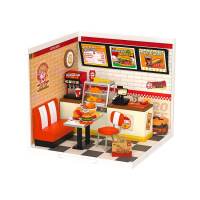
Robotime Rolife Super Creator Plastic DIY Mini Dollhouse 1:24 House LED House Kit Roof Dust Cover Decorative Toy Xmas Gift
₱2,440.93₱4,230.99
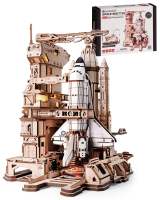
Robotime ROKR Space Shuttle 3D Wooden Puzzle 1:420 Scale Mechanical Building Kits with Lights & Moving Parts for Boys Xmas Gift
₱2,938.72₱5,095.99
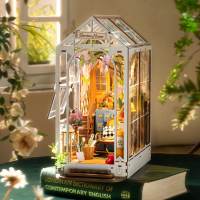
Robotime Rolife Garden House Book Nook Kit DIY Dollhouse Bookend Model Kit with LED Decor Kids Girls Gift
₱2,113.23₱3,779.00
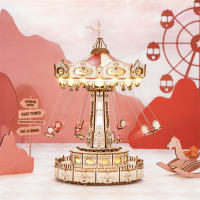
Robotime Rokr Swing Ride DIY Music Box Building Block Amusement Park Series for Kids Adults Easy Assembly 3D Wooden Puzzle -EA02
₱1,960.01₱3,339.00
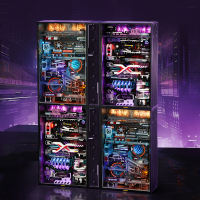
ROKR Parallel World DIY Building Toy Sets LED Marble Run 3D Puzzle Model Kits Adults Teens Man Toy Gift
₱5,378.70₱9,329.99
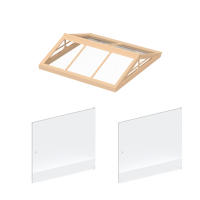
Robotime Rolife Nanci Super Creators Roof and Dust Cover Accessories for Daily Inspiration Cafe Plastic DIY Miniature House Kit
₱636.34₱1,079.00
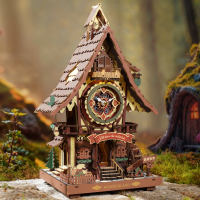
Robotime ROKR 3D Wooden Puzzle Cuckoo Clock Model Kit DIY Watch Making Kit Functional Mechanical Building Toys Birthday Christmas Day Gift
₱2,800.00₱5,288.99
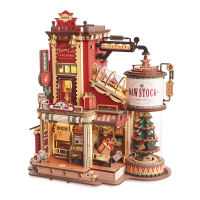
ROBOTIME 3D Wooden Puzzle Toy Dream gift factory DIY Music Box Building Toys Children Kids Birthday Gift
₱3,326.97₱5,769.99
About Robotime
Robotime (Chinese: 若来 / Robotime) is a Chinese-founded global creative-toy and cultural-creative company best known for DIY miniature houses, wooden mechanical models, 3D puzzles, decorative wooden models, and creative toys. Founded in 2007, the company has evolved from a wooden-model maker into a multi-brand creative lifestyle group with products sold internationally.1
Its primary consumer brands include Rolife, ROKR, ROWOOD, and robud, each targeting distinct audiences and types of creative experiences.2
Overview
| Category | Information |
|---|---|
| Name | Robotime |
| Founded | 2007 |
| Origin | China |
| Industry | Creative toys, DIY crafts, cultural & creative products |
| Main products | Miniature houses, wooden mechanical models, 3D puzzles, wooden toys, decorative models |
| Major brands | Rolife, ROKR, ROWOOD, robud |
| Design philosophy | Original design, creativity, hands-on building |
| Slogan / philosophy | “Building Things to Life” |
| Global reach | 140+ countries and regions |
| Creative team | 500+ designers |
| Production footprint | Approximately 200,000 m² production base |
| Patents | 1,000+ claimed by the company |
| Global fans | 100 million+ claimed by the company |
The figures above are Robotime’s own reported data and may change as the company expands.3
Company profile
Robotime operates as a creative-design and manufacturing company centred on transforming ordinary objects and everyday experiences into physically buildable items. Rather than selling conventional toys intended solely for play, Robotime products generally require customers to assemble, decorate, operate, or display the finished object.
This positioning places the company at the intersection of several markets:
- Puzzles
- Miniature models
- Mechanical models
- Wooden crafts
- DIY handicrafts
- Toys
- Home decoration
- Collectibles
- Educational and STEAM products
- Pop-culture and IP merchandise
The company’s current positioning is summarised by the phrase “Building Things to Life,” reflecting an objective to combine original design with the satisfaction of handmade creation.4
Founding and early history
Robotime’s origins are closely linked to robotics and mechanical engineering. According to company history, founder Andy studied mechanical engineering and maintained a strong interest in robots. He and his friends initially established a robotics-oriented laboratory with the ambition of creating functional robots, later exploring how static models could be made dynamic.5
A significant early milestone occurred when Andy won first prize in an entrepreneurship competition associated with the Chinese Academy of Sciences. This success helped secure initial investment and led to the establishment of Robotime in 2007. Corporate historical records also note 2004 as the founding of its predecessor, the Noah Robot Research Center, followed by a 2006 business-plan competition victory and the formal establishment of Robotime in 2007.6
The company’s evolution followed this trajectory:
Robotics → mechanical models → wooden DIY products → miniature worlds → creative lifestyle brands
This progression explains why Robotime products combine craftsmanship, engineering, and aesthetics rather than functioning as conventional toys.
Early product development
One of Robotime’s earliest signature products was a wooden electric T-Rex model. In 2008, the company developed a DIY electric T-Rex incorporating wooden components and electronics that could walk, roar, and bite, with functions controlled through sound, light, and remote-control mechanisms. The company describes it as the world’s first DIY electric mechanical dinosaur of this type.7
This product established a core concept: a model should be interesting to build and operate, not merely visually appealing. During this period, Robotime also began developing international relationships, including partnerships with American and Swiss companies.8
Manufacturing expansion and compliance
Between approximately 2009 and 2015, Robotime expanded its manufacturing capabilities and international business. The company focused heavily on product safety, international compliance, sustainable wood sourcing, manufacturing capacity, global distribution, and original product design.
During this development phase, Robotime obtained certifications and management-system qualifications including ISO 9001, FSC-related certification, BSCI, and Disney’s Integrated Management System certification.9 Regional corporate histories also record BSCI certification in 2015.10 This period transformed Robotime from a domestic wooden-model producer into a supplier capable of serving international markets.
Entry into DIY miniature houses
A pivotal shift in Robotime’s history occurred in 2016 with its entry into the DIY miniature-house category. Company accounts state that designer Sam was inspired after his cat knocked over a bookshelf while he was reading; the resulting scene of scattered books led him to reproduce an everyday moment as a miniature environment. This idea evolved into the company’s first generation of miniature-house products, including Cathy’s Flower House.
This marked a major strategic transition. Previously associated primarily with wood, mechanisms, and engineering, Robotime increasingly incorporated miniature worlds, interior design, storytelling, and lifestyle elements. This transition laid the foundation for Rolife, which would become the company’s most recognisable consumer-facing brand.
Brand portfolio
Robotime functions as a brand group rather than a single product label. Its major brands are:
Rolife
Focused on DIY miniature worlds and creative lifestyle products.
ROKR
Centred on mechanical wooden models and STEM/STEAM-oriented building kits.
ROWOOD
Specialises in decorative and artistic wooden models.
robud
Offers wooden toys designed for children.
Robotime describes these as distinct brands designed around specific product categories and target audiences.
Rolife
Established in 2017, Rolife is the brand most closely associated with the modern DIY miniature-house phenomenon. Its product range includes miniature houses, shops, rooms, DIY scenes, miniature furniture, handicrafts, decorative products, trendy toys, and collectible IP items.
Rolife promotes DIY as a lifestyle emphasising mindfulness, creativity, and personal meaning, rather than simply model construction.11 Consequently, Rolife products often resemble miniature interior-design sets more than traditional model kits.
Nanci
In 2019, Rolife introduced Nanci, its first original IP character. Characterised by two buns, closed eyes, and a distinctive relaxed pose, Nanci helped Rolife expand beyond DIY kits into IP toys, collectibles, and trend culture. This development marked Rolife’s evolution from a DIY craft brand into an IP and lifestyle brand.
ROKR
ROKR focuses on mechanical wooden models and 3D assembly kits under the philosophy “To Assemble, To Explore.” Products commonly feature gears, mechanical transmissions, vehicles, clocks, music boxes, instruments, architectural models, animals, engineering machines, and mechanical insects.
The brand emphasises the combination of mechanics, craftsmanship, and exploration.12 A characteristic feature of many ROKR kits is the use of interlocking structures rather than conventional glue, reflecting traditional mortise-and-tenon joinery principles.13
While Rolife focuses on creating miniature worlds, ROKR centres on understanding and constructing mechanisms.
ROWOOD
Developed from ROKR, ROWOOD focuses on decorative wooden models and artistic objects. Compared with ROKR’s mechanical emphasis, ROWOOD prioritises aesthetics, colour, decoration, artistic display, flora, fauna, home décor, and visually appealing wooden puzzles.
Robotime describes ROWOOD as combining wooden assembly with art and display, effectively turning completed puzzles into decorative objects.14
| Brand | Core Concept |
|---|---|
| Rolife | Build a miniature world |
| ROKR | Build a machine |
| ROWOOD | Build a piece of wooden art |
| robud | Build/play with children’s toys |
robud
robud is Robotime’s children’s toy brand, designed around kid-centric wooden toys with an emphasis on creativity, safety, and developmental play. The brand’s stated philosophy is “Free the Nature, Develop the Intelligence.”15
Unlike Rolife and ROKR, which cater largely to adult hobbyists and collectors, robud targets children and families directly.
Product philosophy
Robotime differentiates itself through an emphasis on the making experience rather than solely the finished product. A typical product involves three stages:
Build
Customers cut, assemble, connect, or decorate components.
Discover
The construction process reveals mechanisms, miniature environments, or design details.
Display
The finished product becomes a shelf, desk, or room display piece.
This creates a hybrid of toy, hobby, craft, and décor. For example, a miniature café kit requires hours of constructing floors, furniture, lighting, and tiny objects; the process itself is integral to the product.
Target market
Robotime has moved beyond the traditional children’s toy market. Its customer base includes:
- Children: Primarily through robud and simpler ROKR products.
- Teenagers: Via DIY kits, puzzles, STEM-oriented models, and collectibles.
- Adults: Particularly for miniature houses, mechanical models, and home décor.
- Hobbyists: Individuals interested in model building, woodworking, miniature scenes, and mechanisms.
- Collectors: Consumers attracted to Rolife characters and IP products.
- Families and couples: Collaborative building is actively promoted.
- Gift buyers: Products serve as birthday, Christmas, hobby, and lifestyle gifts.
The company states its products serve individuals, families, schools, and institutions internationally.16
Design approach
Robotime places significant emphasis on original design. The company reports employing over 500 creative designers and holding more than 1,000 patents, with products inspired by everyday life.17
Designers transform familiar subjects into buildable objects, including cafés, bookstores, flower shops, bedrooms, music boxes, bicycles, cars, clocks, cameras, animals, flowers, amusement rides, and architectural structures. The underlying philosophy involves reinterpreting ordinary items creatively and converting them into buildable experiences.
Manufacturing capabilities
Robotime maintains substantial manufacturing infrastructure alongside its design operations. The company currently describes a production base covering approximately 200,000 square metres, supported by a large design and manufacturing organisation.18
This vertical integration is critical because Robotime products require specialised production techniques, including precision wood cutting, laser cutting, plywood processing, printing, painting, plastic moulding, small mechanical component fabrication, packaging, and assembly engineering. The ability to combine design, tooling, manufacturing, and international distribution constitutes a key competitive advantage.
Materials and sustainability
Wood is central to Robotime’s identity. The company states it uses FSC-certified sustainable wood and has incorporated sustainability into its sourcing and manufacturing approach.
Additionally, Robotime reports that a portion of proceeds from each product purchased supports One Tree Planted for tree-planting and environmental restoration projects. This distinguishes the brand from conventional plastic-heavy toy manufacturers.
Global presence
Robotime operates as an international business. According to current corporate information, products are sold in over 140 countries and regions through more than 1,000 stores globally, with a reported community exceeding 100 million fans.
International expansion is supported by overseas e-commerce, distributors, retail stores, licensing and IP collaborations, localised websites, social media communities, international exhibitions, and hobby and toy retailers.
Business model
Robotime operates a multi-layered creative ecosystem:
- Product layer: DIY kits, puzzles, toys, and models.
- Brand layer: Rolife, ROKR, ROWOOD, and robud.
- IP layer: Original characters such as Nanci and external IP collaborations.
- Community layer: Customer sharing of completed models, photos, and building experiences.
- Retail layer: Online stores, distributors, and physical retail.
This structure allows Robotime to create a comprehensive creative-lifestyle ecosystem rather than relying on a single product category.
Factors in commercial success
Several factors contribute to Robotime’s growth:
- Visual appeal: The company made DIY hobbies visually attractive for social media platforms by emphasising aesthetically pleasing finished objects.
- Emotional connection: Customers invest hours in creation, fostering emotional attachment to the finished product.
- Gift suitability: Kits function simultaneously as gifts, hobbies, entertainment, home decoration, and collectibles.
- Adult appeal: Model building and DIY crafts are positioned as relaxation and mindfulness activities for adults, not solely children’s hobbies.
- Visual identity: Rolife developed a recognisable aesthetic featuring pastel colours, miniature interiors, cosy environments, cute characters, and lifestyle imagery, enhancing online shareability.
Comparison with traditional toy companies
Robotime occupies a distinct position in the toy industry:
| Traditional Toy Company | Robotime |
|---|---|
| Buy → play | Buy → build → display |
| Often plastic-heavy | Strong emphasis on wood |
| Mostly children | Children + teens + adults |
| Character/play focused | Craft/design/experience focused |
| Finished toy is the product | Building process is part of the product |
| Shorter play cycles | Often hours of construction |
| Toy room | Toy + hobby + décor |
Describing Robotime simply as a “toy company” does not fully capture its identity; it is more accurately characterised as a global creative-hobby and cultural-products company centred on DIY building experiences.
Industry influence
Robotime is particularly influential in the modern DIY miniature-house market. Its kits helped popularise formats in which consumers construct highly detailed miniature environments containing dozens or hundreds of tiny elements.
The appeal spans overlapping interests: miniatures, interior design, crafting, collecting, photography, and storytelling. This combination attracts consumers who may not identify as traditional model builders.
Timeline
| Year | Milestone |
|---|---|
| 2004 | Predecessor/Noah Robot Research Center established |
| 2006 | Entrepreneurship/business-plan competition success |
| 2007 | Robotime established |
| 2008 | Wooden electric T-Rex becomes an important early product |
| 2009–2015 | International expansion, certifications, and manufacturing development |
| 2016 | DIY miniature-house line begins |
| 2017 | Rolife and ROKR established |
| 2019 | Rolife introduces original IP character Nanci |
| 2020 | robud introduced |
| 2020s | ROWOOD expands the decorative wooden-model category |
| 2021–present | Continued global expansion across retail, e-commerce, and creative communities |
Chronology varies slightly between corporate pages and regional historical records, particularly regarding ROWOOD’s formal introduction. The timeline above follows current company descriptions while noting predecessor history separately.
Summary
Robotime is a Chinese-founded global creative-toy company established in 2007 that specialises in transforming everyday objects, mechanical concepts, and miniature environments into DIY experiences. Originally rooted in wooden mechanical models, the company expanded into miniature houses and lifestyle products before developing a portfolio of specialised brands including Rolife, ROKR, ROWOOD, and robud. Its products combine model building, handicrafts, engineering, decoration, and collectible culture, with particular emphasis on original design and the premise that the building process can be as meaningful as the finished object.
The company’s evolution represents the transformation of model building into a modern lifestyle and creative experience—from the mechanical T-Rex of 2008 to miniature cafés, bookstores, homes, gear-driven models, wooden art, and collectible IP. Its primary competitive asset remains the ability to integrate original design, manufacturing, storytelling, and DIY participation into products that customers actively create rather than merely own.
References
- About Us | Robotime
- Robotime® Official | Inspiring DIY Creativity Worldwide
- About Us | Robotime
- 企業情報 | Robotime
- About Us – Rokr
- ROKR: 3D Wooden Puzzles& Models, Family Building Toys, Brain Games
- ROKR Homepage – Rokr
- About Us | Robotime
- Haitian & ROBOTIME: Behind Designer Toys – Haitian Newsroom
- ABOUT ROBOTIME – Robotime US
- About Us | Robotime
- About Robotime – Robotime Store
- ROKR: 3D Wooden Puzzles& Models, Family Building Toys, Brain Games
- Know Rolife better | Why rolife are trustworthy
- About Robotime – 若态官网
- 若来介绍 – Rolife
- 沿革 | Robotime
- Contact – ROBOTIME