Shop on Lazada
Ruffles products
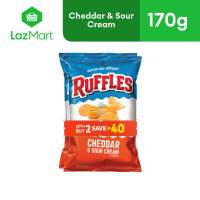
Ruffles Cheddar & Sour Cream 170g Buy 2 Save 40
₱266.00₱274.00
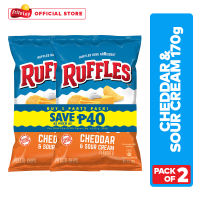
Ruffles Cheddar & Sour Cream Potato Chips 170g (Buy 2 Save PHP 40)
₱300.00
Buy on Lazada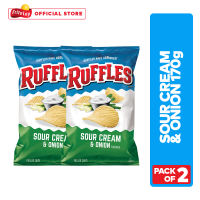
Ruffles Sour Cream & Onion Potato Chips 170g - Pack of 2
₱340.00
Buy on Lazada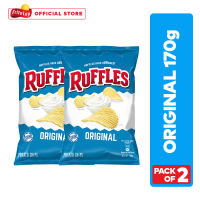
Ruffles Original Potato Chips 170g - Pack of 2
₱340.00
Buy on Lazada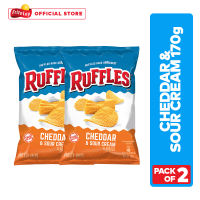
Ruffles Cheddar & Sour Cream Potato Chips 170g - Pack of 2
₱340.00
Buy on Lazada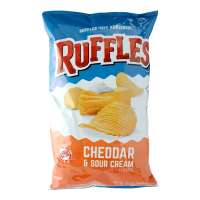
Ruffles Cheddar & Sour Cream Potato Chips 6.5oz
₱158.00₱163.00
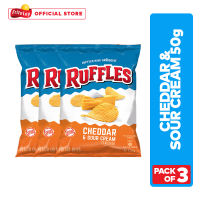
Ruffles Cheddar & Sour Cream Potato Chips 50g - Bundle of 3
₱171.00
Buy on Lazada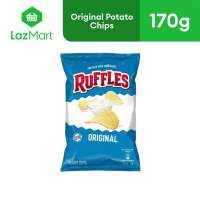
Ruffles Original Potato Chips170g
₱158.00₱163.00
About Ruffles
Brand overview
Ruffles is an American brand of ridged potato chips owned by PepsiCo and produced primarily by Frito-Lay. The brand is distinguished by its deep, corrugated—or “ruffled”—chip design, which provides a notably crunchy texture and allows the product to hold seasoning and dips effectively. PepsiCo currently positions the brand around these distinctive ridges and bold flavours.1
| Category | Details |
|---|---|
| Brand name | Ruffles |
| Product category | Potato chips / snack food |
| Origin | United States |
| Introduced | 1948 |
| Founder / inventor | Bernhardt Stahmer |
| Current owner | PepsiCo |
| Producer | Frito-Lay |
| Parent company | PepsiCo |
| Signature feature | Deep ridges / crinkle-cut texture |
| Major market | United States and Canada, with international variants |
| Official positioning | Bold flavours and iconic ridges |
| Current tagline/theme | “Ruffles bring people together one bold ridge at a time.” |
PepsiCo identifies Ruffles as a key component of its snack portfolio, alongside brands such as Lay’s, Doritos, Cheetos, Tostitos and Fritos.1
History
Origins: Bernhardt Stahmer
The history of Ruffles begins with Bernhardt Stahmer, who developed a corrugated form of potato chip in the United States. Rather than cutting potatoes into conventional flat slices, Stahmer created a process that produced a ridged or corrugated slice. This unique shape offered a different eating texture and was eventually marketed under the Ruffles name.
Stahmer adopted the Ruffles trademark in 1948. A subsequent U.S. patent, issued in 1956, describes the invention as “sliced corrugated potato products” and specifically notes that the product was sold under the Ruffles trademark.1 The name Ruffles was chosen to evoke the rippled or folded appearance of fabric, mirroring the visual waves running across each chip.2
Acquisition by Frito
A significant turning point occurred in 1958, when the Frito Company acquired the Ruffles trademark from Stahmer. As a major American snack-food company already responsible for products like Fritos and Cheetos, Frito integrated Ruffles into a much larger portfolio, transforming it from an inventor-associated product into a mass-market brand.1
Formation of Frito-Lay
In 1961, the Frito Company merged with H.W. Lay & Company, another leading American snack manufacturer. The resulting entity became Frito-Lay, and Ruffles subsequently became part of the combined brand portfolio.1
PepsiCo era
In 1965, Frito-Lay merged with Pepsi-Cola Company to create PepsiCo. This merger placed Ruffles within one of the world’s largest food-and-beverage corporations, providing the brand with access to extensive global distribution and marketing networks.1
The ownership lineage can be summarised as:
Bernhardt Stahmer → Frito Company → Frito-Lay → PepsiCo
The Ruffles chip
The defining characteristic of Ruffles is its ridged structure. Unlike conventional potato chips, which generally have a relatively flat surface, Ruffles feature pronounced waves running across the entire chip. This design serves several functional purposes:
- Texture: The ridges create a thicker, crunchier eating experience.
- Strength: The corrugated structure provides additional structural rigidity.
- Seasoning: The ridges offer greater surface variation for holding seasonings.
- Dipping: The thicker, ridged construction makes the chips particularly suitable for dipping.
- Brand identity: The ridges are immediately recognisable and serve as the brand’s primary visual signature.
Stahmer’s original patent specifically focused on the relationship between the corrugated slicing process and the resulting characteristics of the potato product.
Product range
Ruffles has expanded significantly beyond its original plain ridged potato chip. PepsiCo’s current lineup includes products such as:
- Ruffles Original
- Ruffles Sour Cream & Onion
- Ruffles Smokehouse BBQ
- Ruffles Queso
- Ruffles Jalapeño Ranch
- Simply Ruffles Sea Salt
- Ruffles Flamin’ Hot
- Ruffles Flamin’ Hot Cheddar
- Ruffles Flamin’ Hot BBQ
Availability varies by country and market, with PepsiCo maintaining different flavours and product variants tailored to specific regions.1
Brand identity
Ruffles has built its identity around three central characteristics:
Ridges
The most critical element is the Ruffle ridge. Unlike many snack brands that rely primarily on a logo or mascot, Ruffles possesses a physical product characteristic that immediately distinguishes it from competitors. These ridges function as the brand’s visual signature.
Bold flavour
The brand has increasingly positioned itself around stronger, more indulgent flavours. This strategy is reflected in varieties such as Sour Cream & Onion, BBQ, Queso, Jalapeño Ranch and Flamin’ Hot. PepsiCo currently describes the lineup as combining “iconic ridges” with bold flavour.1
Social and sharing occasions
Marketing efforts connect Ruffles with social occasions, particularly gatherings, parties, sports viewing and consuming food with dips. The brand’s current messaging explicitly emphasises bringing people together.1
Packaging and visual design
Historically, Ruffles packaging has relied heavily on strong colour contrast, large typography and imagery of the ridged chips. Notably, a U.S. court case concerning the brand’s trademark and trade dress observed that Frito-Lay had sold Ruffles in essentially the same blue-and-white trade dress since 1964.3
While modern packaging has evolved, the brand continues to emphasise a consistent visual formula:
Ruffles logo + recognisable ridges + strong flavour imagery + bold colours.
International presence
Although Ruffles is primarily associated with the United States and North America, similar ridged-chip products are marketed under different names in various international markets. For example, products related to the Ruffles concept have appeared under names including Lay’s Maxx/Lay’s Max and Walkers Max in certain countries. Product names and flavour portfolios differ according to local preferences.4
This approach reflects a broader PepsiCo strategy wherein global snack brands are adapted to suit local markets.
Ruffles in the PepsiCo portfolio
Ruffles operates as a brand within PepsiCo’s broader food-and-beverage portfolio rather than as an independent company. PepsiCo’s snack business includes major brands such as:
- Lay’s
- Ruffles
- Doritos
- Cheetos
- Fritos
- Tostitos
- SunChips
- Smartfood
Frito-Lay is central to this business segment. PepsiCo describes Frito-Lay North America as the producer and marketer of Ruffles and several other major snack brands.1
Ruffles vs. Lay’s
Although both brands are owned by PepsiCo and produced by Frito-Lay, they occupy distinct market positions.
Lay’s is primarily associated with the classic, thin, relatively smooth potato chip. In contrast, Ruffles is differentiated by its pronounced ridges and heavier crunch.
Lay’s = classic smooth potato chip
Ruffles = ridged, crunchy potato chip
This physical distinction allows Ruffles to maintain a separate identity despite belonging to the same corporate portfolio.
Marketing
Ruffles’ marketing has historically emphasised the physical uniqueness of the product, particularly its ridges. One of its most recognisable advertising concepts has been the phrase “Ruffles have RRRidges.”5
The brand has also utilised sports and entertainment partnerships as part of its strategy. In recent years, Ruffles has maintained high visibility around basketball and other social or sporting events, helping to position the product as a snack associated with watching games and sharing food.
Significance of the ridges
From a branding perspective, Ruffles exemplifies a product where the physical design constitutes the brand’s competitive advantage. While many potato chips compete primarily through flavour, price, ingredients, packaging, advertising or brand reputation, Ruffles adds the dimension of shape.
The ridged structure renders the product recognisable even without visible branding. It also creates a sensory difference, allowing consumers to identify the product through both sight and texture. Consequently, the Ruffles ridge is not merely decorative; it is a fundamental component of the product’s identity.
Timeline
- 1948 — Bernhardt Stahmer introduces the Ruffles trademark and develops his corrugated potato-chip product.1
- 1956 — Stahmer receives a U.S. patent for his sliced corrugated potato product.
- 1958 — The Frito Company acquires the Ruffles trademark and product rights from Stahmer.3
- 1961 — Frito merges with H.W. Lay & Company to form Frito-Lay.1
- 1964 — Court records later note that Ruffles had been sold in essentially the same blue-and-white trade dress since this period.3
- 1965 — Frito-Lay merges with Pepsi-Cola Company to form PepsiCo.1
- Later decades — Ruffles expands its flavour range and international presence.
- Today — Ruffles remains a major Frito-Lay/PepsiCo potato-chip brand with numerous flavours and regional variants.1
Ownership and corporate structure
The modern corporate structure for the brand is as follows:
PepsiCo
↓
Frito-Lay
↓
Ruffles
↓
Ridged potato chips and related snack products
PepsiCo currently lists Ruffles among its brands and directs consumers to the official Ruffles brand website for product details, nutrition information and other content.1