Shop on Lazada
SANNENG products
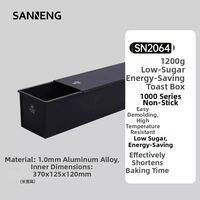
SANNENG | Low Sugar Non-stick Toast Mold
₱1,767.41
Buy on Lazada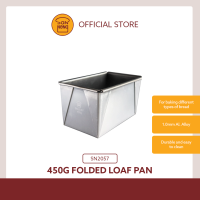
Sanneng 450g Folded Loaf Pan (Nonstick) - without Lid (SN2057)
₱920.00
Buy on Lazada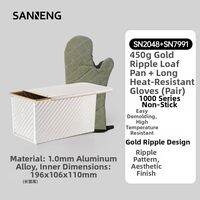
SANNENG | Rectangular Non-stick Toast Mold 450g
₱1,353.29
Buy on Lazada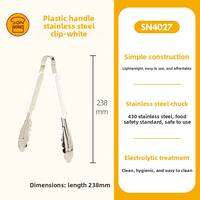
SANNENG | Commercial Food Tongs 304 Stainless Steel
₱462.55
Buy on Lazada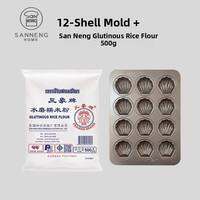
SANNENG | Non-stick Chestnut Madeleine and Mochi Baking Mold 12-cup
₱943.99₱1,019.50
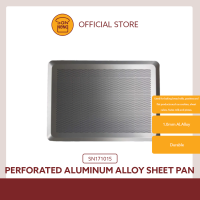
Sanneng Perforated Flat Tray (Local Sized) - Anodized (SN171015)
₱1,230.00
Buy on Lazada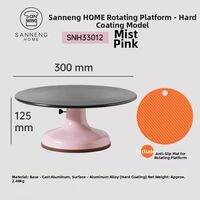
SANNENG | Home And Commercial Metal Turntable
₱3,727.45₱3,903.06
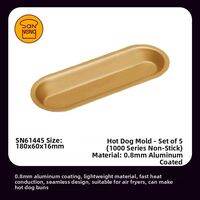
SANNENG | Non-stick Easy-release Baking Mold
₱764.93
Buy on LazadaAbout SANNENG
SANNENG (Chinese: 三能) is a Taiwanese professional bakeware and food-utensil brand founded in 1982 in Taichung, Taiwan. The company specialises in the research, development, manufacturing, and distribution of professional baking moulds, baking tools, kitchen utensils, and related food-service equipment. Originally a small local manufacturer, it has grown into a major Asian supplier serving professional bakeries, central kitchens, food manufacturers, pastry businesses, retailers, and home bakers.1
The brand operates under Sanneng Group Holdings Co., Ltd., with principal operating businesses including Sanneng Taiwan, Sanneng Wuxi in China, Sanneng Japan, and Sanneng Indonesia. The group’s headquarters are located in Dali District, Taichung City, Taiwan.1
Quick facts
| Category | Information |
|---|---|
| Brand | SANNENG / 三能 |
| Origin | Taiwan |
| Founded | 1982 |
| Founder/company | Sanneng Bakeware Co., Ltd. |
| Headquarters | Dali District, Taichung City, Taiwan |
| Industry | Bakeware, baking tools, food utensils, kitchen equipment |
| Primary market | Professional / commercial baking |
| Major secondary market | Home baking |
| Parent group | Sanneng Group Holdings Co., Ltd. |
| Home-baking brand | UNOPAN / 屋諾 |
| Premium line | SANNENG Premium |
| Taiwan stock code | 6671 |
| Core philosophy | Professionalism, integrity, innovation |
| Quality policy | Customer first, quality first, product innovation |
| Established international operations | China, Japan, Indonesia and other markets |
SANNENG states that its product portfolio comprises more than 1,000 types of products, spanning moulds, baking tools, customised products, household items, ingredients, and other related categories.1
History
1982 — The beginning
SANNENG was founded in 1982 in Wuri District, Taichung, Taiwan, initially operating from a facility of approximately 165 m². At the time, many baking moulds were still manufactured manually. Its early product range consisted of only around 20 items, including handmade baking trays, toast moulds, bomb-shaped moulds, and wheel moulds.1 The company’s original focus was to produce better and more durable equipment for professional bakers.
1983–1987 — Moving toward industrial manufacturing
In 1983, SANNENG purchased its first hydraulic press to improve manufacturing quality. In 1984, it began developing aluminium-plated bakeware to address rust issues associated with traditional black-iron baking pans. By 1987, the company was producing aluminium-alloy bakeware with anodised treatment to enhance hygiene and durability.1 This period marked SANNENG’s transition from a small mould maker to a more technologically oriented manufacturer.
1988 — Non-stick bakeware
In 1988, SANNENG developed its non-stick product series, including non-stick baking trays and bread moulds. The objective extended beyond convenience; non-stick surfaces reduced the amount of oil required and decreased the labour involved in releasing baked goods from moulds.1 This development became a significant component of the company’s technological progression.
Expansion during the 1990s
Throughout the 1990s, SANNENG increasingly focused on product standardisation, international quality standards, food hygiene, computerised management, international sales, export markets, and product diversification. In 1994, the company began participating more aggressively in domestic and international baking exhibitions while expanding exports. By 1997, SANNENG had developed products intended to comply with international quality and hygiene standards.1 The company subsequently expanded its international business by establishing relationships with baking industries outside Taiwan.
China expansion
A major milestone occurred in 2000 when Sanneng Bakeware (Wuxi) Co., Ltd. was established in Wuxi, Jiangsu, China. This allowed SANNENG to establish manufacturing and distribution capabilities closer to the rapidly developing Chinese bakery market.1 In 2002, SANNENG established an R&D centre and an international trade centre to strengthen technical development and exports. The company also obtained ISO 9001 quality certification, reinforcing its transition toward internationally standardised manufacturing.1
Japan expansion
SANNENG entered the Japanese market as part of its broader Northeast Asian expansion strategy. A Japanese office was established in Tokyo in 2006. After several years of product testing and market development, the company established its Japanese corporate operation in 2010. SANNENG states that its bakeware underwent stringent testing in the Japanese market, with approximately 300,000 baking trays sold during this development period.1
Japan was particularly significant because its food and manufacturing markets are known for demanding standards regarding dimensional precision, durability, food safety, finishing quality, and consistency.
UNOPAN: entering the home-baking market
For much of its early history, SANNENG was primarily a B2B professional-baking brand. Its customers included commercial bakeries, bakery chains, central kitchens and factories, ingredient stores, supermarkets, and food manufacturers. As home baking gained popularity, SANNENG launched UNOPAN / 屋諾 in 2013 as a dedicated home-baking brand.1
The distinction between the two brands is functional:
SANNENG = professional/commercial baking heritage
UNOPAN = home-baking-oriented brand
UNOPAN products were designed to be more approachable for baking enthusiasts while retaining the group’s emphasis on food safety and product quality.
SANNENG Premium
In 2018, SANNENG introduced SANNENG Premium. This line was created to combine the company’s professional experience with contemporary industrial design, modern manufacturing technology, refined aesthetics, and premium positioning.1 With this launch, SANNENG expanded its identity beyond practical bakery equipment manufacturer to include visually refined and design-oriented professional food utensils.
Public listing
Another major corporate milestone occurred in 2018 when Sanneng Group Holdings was officially listed on the Taiwan Stock Exchange on December 11, 2018, under stock code 6671. The company describes itself as the first bakeware company to be listed on Taiwan’s capital market.1 This marked SANNENG’s transition from a privately held manufacturing business into a publicly listed corporate group.
Product portfolio
SANNENG’s catalogue extends significantly beyond cake moulds. Its products are broadly divided into several groups.
Baking moulds
This category is most strongly associated with SANNENG. Examples include loaf pans, toast moulds, cake pans, pie plates, tart moulds, mousse rings, baking trays, speciality moulds, and customised baking moulds. These are used for products ranging from bread and cakes to pastries and desserts.1
Baking tools
SANNENG manufactures tools supporting the baking process, including whisks, mixing bowls, pastry bags, piping tips, knives, decorating tools, turntables, measuring tools, shop supplies, and bakery accessories. This positions the company as a complete baking-utensil supplier rather than solely a mould manufacturer.1
Customised products
Customisation is a significant component of SANNENG’s professional business. Large bakeries and food factories often require equipment designed around specific product dimensions, production lines, oven configurations, manufacturing processes, and output requirements. SANNENG develops customised utensils and moulds for these applications.1
Household products
Through its broader product portfolio and the UNOPAN brand, SANNENG also serves individual consumers and home bakers.
Kitchen and food-service products
The company has gradually expanded beyond traditional bakery equipment into broader kitchen and food-service utensils.
Customer base
SANNENG’s customer base covers the entire spectrum of the baking industry.
Professional bakeries
Bakeries producing high volumes daily require equipment that is repeatable, durable, dimensionally consistent, easy to clean, and suitable for commercial production. This remains one of SANNENG’s traditional target markets.
Central factories
Large bakery groups and food manufacturers utilise customised moulds and production equipment.
Pastry chefs
Professional pastry kitchens use SANNENG moulds, rings, piping equipment, trays, and other tools.
Hotels and restaurants
The company’s equipment is utilised in hotel and restaurant pastry operations.
Baking schools
Because SANNENG manufactures a broad range of professional equipment, its products are suitable for culinary and baking education.
Home bakers
The rise of home baking created an additional consumer market, served particularly through the UNOPAN brand.1
Significance in Asian baking
SANNENG’s importance derives less from being a fashionable consumer brand and more from its role as baking-industry infrastructure. Professional bakeries require hundreds of standardised tools and utensils beyond ovens and ingredients. Every stage of production—mixing, shaping, proofing, baking, cooling, decorating, and packaging—can require specialised equipment.
SANNENG’s strategy has been to build a broad ecosystem of products around the baking process rather than relying on a single famous product. The company describes its broader purpose as enhancing baking technology in Asia and creating a baking ecosystem.1
Manufacturing philosophy
SANNENG places considerable emphasis on manufacturing technology. Its historical development illustrates a clear progression:
- Handmade moulds
- Hydraulic pressing
- Aluminium-plated bakeware
- Anodised aluminium products
- Non-stick technology
- Nano-related surface technology
- Advanced surface treatments and diversified materials
For example, the company reported successfully developing its first nano baking pan in 2001 following its adoption of new technology to improve product quality.1
Food safety and hygiene
Food-contact safety is critical for SANNENG as its products interact directly with food. The company has historically emphasised food hygiene, durable materials, surface treatment, product quality, international standards, and quality management. Its Taiwan operations obtained ISO 9001 certification, and its product development has repeatedly prioritised food hygiene and durability.1
This distinguishes professional bakeware from generic household products: commercial users require equipment that withstands repeated production cycles while maintaining predictable performance.
Sustainability and ESG
SANNENG has increasingly incorporated environmental and ESG considerations into its corporate strategy. The company established a dedicated ESG unit in March 2021. Its stated mission includes promoting food-utensil safety, environmental protection, energy conservation, and carbon reduction.1
The company has also discussed initiatives involving reducing plastic use, antibacterial products, longer-lasting products, non-stick treatments, and energy-saving and carbon-reduction projects. This represents an evolution from simply assessing manufacturability toward considering environmental and lifecycle impacts.
International presence
SANNENG has developed a substantial international footprint. Its major operating entities include Taiwan, China, Japan, and Indonesia. The group also sells into international markets, with company materials identifying markets including Europe, the United States, Japan, Singapore, Malaysia, Indonesia, Thailand, Australia, and the Philippines.1
The company’s international expansion has followed a pattern progressing from Taiwan to China, then Japan, Southeast Asia, and broader international markets.
Corporate structure and brands
SANNENG is best understood as a group of related businesses and brands rather than a single product line.
SANNENG
The core professional brand positioned for professional and commercial baking and food utensils.
SANNENG Premium
A design-oriented and premium extension combining professional products with modern design and premium presentation.
UNOPAN
The group’s home-baking brand positioned for DIY and consumer-oriented bakeware.
This creates a three-level structure:
- Professional: SANNENG
- Premium professional: SANNENG Premium
- Home baking: UNOPAN
Major milestones
| Year | Milestone |
|---|---|
| 1982 | SANNENG founded in Taichung, Taiwan |
| 1983 | First hydraulic press acquired |
| 1984 | Development of aluminium-plated bakeware |
| 1987 | Aluminium-alloy/anodised products introduced |
| 1988 | Non-stick product series developed |
| 1994 | Expanded international exhibitions and exports |
| 2000 | Sanneng Wuxi established in China |
| 2001 | First nano baking pan successfully developed |
| 2002 | R&D and international trade centres established |
| 2002 | ISO 9001 certification obtained |
| 2006 | Tokyo office established |
| 2010 | Japanese corporate operation established |
| 2013 | UNOPAN launched |
| 2015–16 | Indonesia operations established/developed |
| 2018 | SANNENG Premium launched |
| 2018 | Sanneng Group Holdings listed in Taiwan, stock code 6671 |
| 2021 | Dedicated ESG unit established |
| 2025 | Wuxi Sanneng received high-tech enterprise certification; company continued product/design development |
| 2026 | Indonesia SANNENG operation obtained HALAL certification |
The latest milestones reported by the company also include a 2025 MUSE Design Awards Silver Award for its Baking Instant Divider and continued expansion of technical and market capabilities.1
Brand philosophy
SANNENG summarises its quality policy as “Customer First · Quality First · Product Innovation”. Its broader business philosophy is “Professionalism · Integrity · Innovation”.1
- Professionalism: SANNENG’s roots lie in professional bakeries rather than lifestyle products.
- Integrity: Food-contact equipment requires reliability because failure can affect entire production processes.
- Innovation: The company’s history demonstrates continual investment in new materials, surface treatments, manufacturing processes, and product designs.
Competitive identity
SANNENG is essentially a Taiwanese professional bakeware and food-utensil manufacturer that has grown into an Asian baking-equipment ecosystem. It occupies a position between a specialised industrial manufacturer and a consumer-facing baking brand.
Its primary strength lies in the combination of long manufacturing history, broad product range, professional bakery expertise, customisation capabilities, Asian distribution networks, and quality systems. This combination makes the brand particularly relevant to professional baking.
Comparison with consumer baking brands
| Aspect | Typical consumer bakeware brand | SANNENG |
|---|---|---|
| Main audience | Home cooks | Professionals + home users |
| Historical focus | Consumer products | Commercial baking |
| Product range | Usually relatively narrow | Very broad |
| Custom manufacturing | Limited | Important B2B capability |
| Bakery factories | Usually not a major customer | Major target |
| Baking moulds | Yes | Core business |
| Baking tools | Some | Extensive |
| Industrial applications | Limited | Significant |
| Home baking | Often primary | Secondary/newer market |
| Asian bakery industry | Limited role | Major focus |
| Product development | Consumer-oriented | Professional + technical |
This comparison explains why SANNENG products can sometimes appear unusually industrial compared with consumer bakeware.
Reputation and positioning
SANNENG has built its reputation primarily through professional use and long-term industry relationships rather than celebrity chefs or lifestyle marketing. The brand’s credibility stems from its use in environments where hundreds of products are baked daily, moulds require consistent dimensions, equipment must withstand repeated washing and baking, food-contact safety is paramount, production efficiency matters, and replacement costs are significant.
Taiwanese manufacturing heritage
SANNENG exemplifies Taiwan’s manufacturing-oriented business culture. It began as a relatively small specialised manufacturer and gradually developed manufacturing expertise, technology, quality systems, exports, overseas factories, brand development, public listing, and ESG initiatives. Rather than immediately becoming a global consumer brand, SANNENG followed a traditional Taiwanese OEM-to-brand development path. Its Taichung origins are significant as Taichung is one of Taiwan’s major manufacturing centres.
Current status
As of 2026, SANNENG has evolved from a small Taiwanese bakeware company founded in 1982 into a group encompassing professional bakeware manufacturing, international operations, R&D capabilities, customised products, professional and consumer brands, multiple overseas subsidiaries, ESG initiatives, and publicly listed corporate status.1
Its core identity remains consistent with its original business: making the tools that allow people and companies to produce baked goods. This continuity—from handmade moulds in 1982 to a large international food-utensil group—is central to the SANNENG story.