Shop on Lazada
Sanpellegrino products
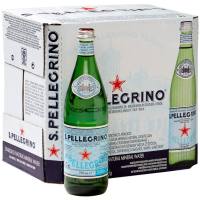
San Pellegrino Sparkling Natural Mineral Water 750mL (Pack of 12)
₱2,499.00₱3,599.00
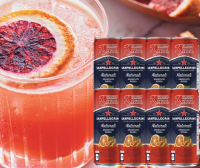
San Pellegrino Aranciata Rossa Naturali Sparkling Blood Orange & Orange Juice Drink 330 ml (8 cans)
₱920.00₱1,000.00
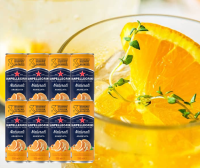
San Pellegrino Naturali Aranciata Sparkling Orange Juice Drink 330 ml (8 cans)
₱920.00₱1,000.00
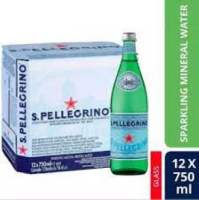
San Pellegrino Sparkling Natural Mineral Water 12X 750mL
₱2,499.00₱2,799.00
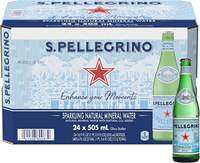
San Pellegrino Sparkling Mineral Water 500ml x 24 Bottles
₱3,299.00₱3,999.00
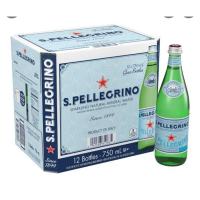
San Pellegrino Sparkling Natural Mineral Water 12x750mL
₱2,199.00₱2,399.00
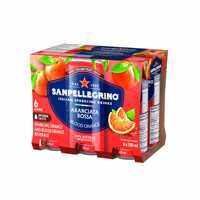
San Pellegrino Blood Orange Sparkling Juice 6 x 330ml
₱1,349.00₱1,599.00
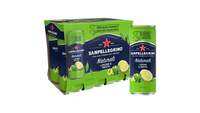
San Pellegrino Limone & Menta Sparkling Flavored Drink 6 x 330ml
₱1,349.00₱1,599.00
About Sanpellegrino
Sanpellegrino (stylized as S.Pellegrino for its mineral water line) is an Italian beverage brand best known for its sparkling natural mineral water and range of Italian sparkling fruit beverages. Originating in San Pellegrino Terme, Lombardy, Italy, the brand traces its commercial history to 1899 when the Sanpellegrino company was established to bottle water from the local spring.1 Over more than a century, it evolved from a regional business linked to an Alpine spa resort into an internationally recognized symbol of Italian taste, dining culture, design, and lifestyle.1 Today, S.Pellegrino mineral water is positioned primarily as a premium accompaniment to food in restaurants and fine dining establishments.1
Quick facts
| Category | Information |
|---|---|
| Brand | Sanpellegrino / S.Pellegrino |
| Origin | San Pellegrino Terme, Bergamo, Lombardy, Italy |
| Founded | 1899 |
| Industry | Beverages |
| Main categories | Natural mineral water, sparkling fruit beverages, mixers and related drinks |
| Best known for | S.Pellegrino sparkling natural mineral water |
| Signature soft drink | Sanpellegrino Aranciata |
| Parent group | Nestlé |
| Brand heritage | Italian / Alpine |
| Core positioning | Premium Italian taste, dining and lifestyle |
| Global presence | International; available in more than 120 countries |
History
Origins in San Pellegrino Terme
The history of Sanpellegrino is rooted in the natural spring at San Pellegrino Terme, a spa town located in the Brembana Valley at the foot of the Italian Alps. Although the spring had attracted visitors for centuries, San Pellegrino became increasingly associated with European spa culture during the 19th century. Wealthy travelers visited to experience the mineral waters, often taking bottles home, which laid the foundation for a commercial bottled-water business.1
Founding and early expansion
The Sanpellegrino company was established in 1899. In its inaugural year, it produced 35,343 bottles of S.Pellegrino mineral water, with 5,562 bottles shipped overseas, signaling early ambitions beyond the domestic market.1 This founding coincided with the development of San Pellegrino Terme as a fashionable European resort.
In 1901, the town’s bathing facilities and Refreshment Hall opened, further establishing it as an upscale holiday destination. The Art Nouveau Grand Hotel and Casino followed in 1906, attracting aristocrats, politicians, and royalty during the Belle Époque.2 By 1908, distribution had expanded well beyond Europe to include Egypt, India, China, the United States, Brazil, Peru, and Australia.2 This era cemented the brand’s identity as an Italian mineral water connected with sophistication, hospitality, and international travel.
Development of the soft drink portfolio
While mineral water remained the core business, Sanpellegrino diversified significantly in the 20th century. A pivotal moment occurred in 1932 when entrepreneur and industrial chemist Ezio Granelli introduced Sanpellegrino Aranciata.2 Combining sparkling water with juice from southern Italian oranges, it became a major commercial success and defined the brand’s entry into Italian-style sparkling soft drinks.
The fruit drink range expanded in 1949 with the introduction of Aranciata Amara, Chinotto, and Limonata.2 These products helped create a distinctive category of sophisticated, Italian-inspired sparkling beverages rather than conventional mass-market sodas. By the end of the 1950s, global sales exceeded 100 million bottles annually.2 In 1957, the company incorporated Acqua Panna, a Tuscan natural mineral water brand that would become another key name in the premium water sector.1 Subsequent decades saw the development of non-alcoholic aperitifs such as Bitter Sanpellegrino, later known as Sanbittèr.2
Ownership and Nestlé
Sanpellegrino became associated with Perrier during the 1970s. Following the acquisition of Perrier-Exor by Nestlé in 1992, Sanpellegrino’s corporate structure evolved toward integration with the Nestlé group. According to corporate records, Sanpellegrino officially became part of the Nestlé Group in 1998.2 While it remains an Italian-origin brand, it now operates within Nestlé’s global infrastructure, combining Italian cultural identity with international distribution capabilities.
Products
S.Pellegrino Mineral Water
S.Pellegrino Natural Mineral Water is the product most closely identified with the brand. Sourced from the San Pellegrino spring in the Italian Alps, the water travels through geological formations for approximately 30 years before reaching the surface, acquiring its characteristic mineral composition.2 Nestlé describes the water as having delicate, persistent bubbles and a balanced, distinctive taste. Rather than marketing it solely for hydration, the brand positions S.Pellegrino as a table water intended to accompany meals.
Sparkling Fruit Beverages
The second pillar of the brand is its range of Italian sparkling fruit drinks. Key varieties include:
- Aranciata — orange
- Aranciata Rossa — blood orange
- Aranciata Amara — bitter orange
- Limonata — lemon
- Chinotto — a distinctive bitter citrus-based Italian soft drink
- Pompelmo — grapefruit
- Clementina
- Melograno e Arancia — pomegranate and orange
- Limone e Menta — lemon and mint
- Arancia e Fico D’India — orange and prickly pear
This range has evolved over decades, occupying a niche between traditional Italian refreshments and premium contemporary soft drinks.2
S.Pellegrino Essenza
Introduced in 2018, S.Pellegrino Essenza combines the brand’s sparkling mineral water with flavor profiles inspired by Mediterranean fruit. Designed as a zero-calorie option, it extended the brand into the premium flavored water category.2
Brand Identity and Design
Italian Heritage and Fine Dining
Sanpellegrino’s identity emphasizes its Italian origin through imagery drawn from food, Mediterranean ingredients, architecture, fashion, art, and hospitality. The brand describes this positioning as a “Tasteful Italian Story.”2 Crucially, S.Pellegrino has cultivated an identity as a premium restaurant and table-water brand. Its bottle is frequently placed directly on dining tables alongside wine and food, making it an integral part of the restaurant experience rather than merely a thirst-quenching product.
Visual Assets
The traditional glass bottle, red star, and label design are strongly associated with Italian hospitality. While the bottle has been periodically redesigned—including a premium update in 2019—recognizable heritage elements remain.2 The red star serves as a heritage symbol; historical versions used it to denote quality, and it allows consumers to recognize the product even when the brand name is not the primary visual focus.3
Gastronomy Initiatives
Sanpellegrino has built strategic relationships with the global culinary community to position itself as a participant in gastronomy rather than just a beverage seller. Major initiatives include:
- Fine Dining Lovers: A food and gastronomy publication launched in 2011 focusing on chefs, restaurants, and culinary trends.2
- S.Pellegrino Young Chef Academy: Launched in 2015 as a competition to identify emerging talent, it evolved into an academy with awards recognizing social responsibility and cultural connection.2
Global Expansion
Internationalization began early for Sanpellegrino, with exports starting in its first year and multi-continental distribution by 1908.2 Today, Nestlé states that Sanpellegrino beverages are available in more than 120 countries. This extensive reach allows the brand to sell not only a beverage but also an idea of Italian lifestyle and dining culture, combining Italian origin with global availability and premium positioning.
Major Milestones
| Year | Event |
|---|---|
| 1800s | San Pellegrino’s mineral spring becomes associated with European spa culture |
| 1899 | Sanpellegrino company founded and mineral water bottling begins |
| 1901 | Bath facilities and Refreshment Hall open |
| 1906 | Grand Hotel and Casino opens during the Belle Époque |
| 1908 | S.Pellegrino distribution expands across multiple continents |
| 1932 | Sanpellegrino Aranciata launched |
| 1949 | Aranciata Amara, Chinotto and Limonata become part of the expanding range |
| 1950s | Global sales exceed 100 million bottles annually by the end of the decade |
| 1957 | Acqua Panna becomes part of the Sanpellegrino business |
| 1998 | Sanpellegrino enters the Nestlé Group |
| 1999 | 100th anniversary celebrated |
| 2001 | Aranciata Rossa introduced |
| 2010 | One billion bottles sold across water and beverage portfolio in one year |
| 2011 | Fine Dining Lovers launched |
| 2015 | S.Pellegrino Young Chef launched |
| 2018 | S.Pellegrino Essenza introduced |
| 2019 | 120th anniversary and new bottle design |
| 2021 | S.Pellegrino and Acqua Panna launch Dual Immersive Collection1 |
Brand Positioning and Nomenclature
From a marketing perspective, Sanpellegrino exemplifies premiumization. It differentiates itself from commodity sparkling water through a combination of origin, heritage, design, gastronomy, and lifestyle. Consumers purchase a product that communicates Italian sophistication, culinary awareness, and restaurant culture.
The naming convention distinguishes between the broader company identity and the specific water brand:
* Sanpellegrino: The umbrella brand for the portfolio of Italian beverages (e.g., Sanpellegrino Aranciata, Sanpellegrino Chinotto).
* S.Pellegrino: The name used principally for the natural mineral water (e.g., S.Pellegrino Natural Mineral Water, S.Pellegrino Essenza).
Significance
Sanpellegrino demonstrates how a regional Italian product can transform into a global lifestyle brand. Its evolution involved three key stages: transitioning from a local spring to a commercial product; developing a distinctive visual identity and international recognition; and connecting the brand to restaurants, chefs, design, and the broader concept of Italian living. Today, it remains one of the most recognized Italian beverage names internationally, continuing to link its products to the Alps, the San Pellegrino spring, and over 125 years of history.12