Shop on Lazada
Yopokki products
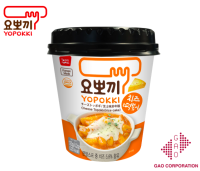
Yopokki Cheese Cup (120g)
₱128.00
Buy on Lazada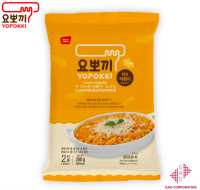
Yopokki Cheese Flavor Rapokki 260g
₱199.00
Buy on Lazada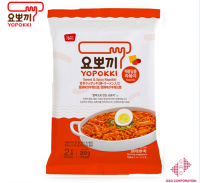
Yopokki Sweet & Spicy Flavor Rapokki 260g
₱199.00
Buy on Lazada
Yopokki Rice Cake topokki CHEESE 120g
₱83.00₱129.00
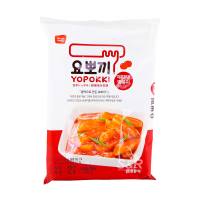
Yopokki Sweet & Spicy Topokki 280g
₱159.00
Buy on Lazada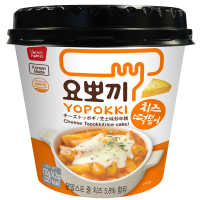
YOPOKKI RICE CAKE CUP ASSORTED 120-140G
₱95.00
Buy on Lazada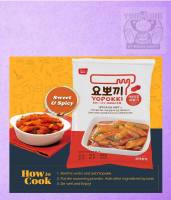
YOPOKKI KOREAN RICE CAKE POUCH ASSORTED 120-280G
₱169.00
Buy on Lazada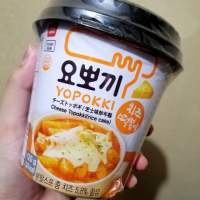
Yopokki Cup tteokbokki Cheese 120g
₱97.00₱129.00
About Yopokki
Overview
Yopokki (often stylized as YOPOKKI) is a South Korean food brand primarily known for its instant, ready-to-cook tteokbokki—the popular spicy Korean rice-cake dish. The brand is produced by Young Poong Co., Ltd., a Korean food manufacturer specializing in the development and international export of rice-based foods.
The core concept behind Yopokki is to transform traditionally prepared Korean street food into a convenient packaged meal that can be prepared in minutes, particularly using a microwave. Sold in cup and pouch formats, Yopokki products are marketed globally, including in Southeast Asian markets like the Philippines, as an accessible introduction to Korean cuisine.
Quick Facts
| Category | Information |
|---|---|
| Brand | Yopokki / YOPOKKI |
| Korean Name | 요뽀끼 |
| Industry | Food & beverages |
| Main Product | Instant tteokbokki |
| Country of Origin | South Korea |
| Parent Company | Young Poong Co., Ltd. |
| Formats | Cups, pouches, snacks, and other rice-cake products |
| Preparation | Primarily microwave or pan |
| Key Selling Point | Convenient Korean tteokbokki with quick preparation time |
| International Market | Exported widely across Asia, Europe, North America, South America, and Africa |
| Certifications | HACCP, ISO 22000, FSSC 22000, U.S. FDA, Halal, Gluten-free (varies by product/market) |
Young Poong Co., Ltd.
The history of Yopokki is closely tied to its parent company, Young Poong Co., Ltd. Established in 1993, the company initially focused on traditional Korean foods such as topokki/tteokbokki, rice cakes, and Korean pancakes.
Over time, Young Poong shifted its focus toward developing Korean foods suitable for international distribution. A key factor in this expansion was the development of technology allowing certain rice-cake products to remain stable at room temperature for extended periods.
Company Milestones:
- 1993: Young Poong established.
- 2007: Recognized as a promising small and medium-sized enterprise.
- 2016: Achieved ISO 22000 certification and expanded production facilities.
- 2017: Achieved FSSC 22000 certification and received a US$3 million export award.
- 2018: Received a US$5 million export award.
- 2019: Received a US$10 million export award and KMF Halal certification.
The number of countries receiving Young Poong’s exports has grown significantly over the years, with reports indicating expansion from around 50 countries to approximately 120 countries in recent trade profiles.
Emergence of Yopokki
Yopokki emerged as Young Poong’s consumer-facing brand for packaged tteokbokki. Instead of requiring consumers to prepare the dish from scratch, Yopokki packages the rice cakes together with the sauce/seasoning, simplifying the cooking process.
By 2019, industry profiles described Yopokki as a Korean rice-pasta/topokki product available in cup and pouch formats, featuring multiple flavors and a preparation time of approximately two minutes via microwave or pan.
As of 2023, brand profiles listed around 11 distinct Yopokki flavors, including sweet & spicy, cheese, hot & spicy, jjajang, onion butter, kimchi, dakgalbi, chocolate, rose, and garlic teriyaki.
What is Tteokbokki?
To understand Yopokki, one must understand its central product: tteokbokki (떡볶이). This is a Korean dish based on tteok, or rice cakes. Modern Korean tteokbokki is typically associated with chewy cylindrical rice cakes cooked in a spicy, sweet-savory sauce, often based on gochujang (red chili paste).
Yopokki essentially adapts this recognizable Korean food into an instant convenience meal/snack format.
Product Concept and Formats
The basic Yopokki experience follows a simple formula:
Rice cakes + sauce/seasoning + water + heat → tteokbokki
This differentiates it from traditional preparation, which involves making sauces, measuring seasonings, and cooking multiple ingredients separately. Yopokki reduces this to a highly simplified process.
Cup Tteokbokki
The cup format is arguably the most iconic Yopokki product. Designed for individual servings, it allows consumers to add water and microwave the contents. Typical preparation times range from 2–3 minutes, depending on the specific product and microwave power.2
Common cup flavors include:
- Sweet & Spicy
- Cheese
- Hot & Spicy
- Jjajang
- Rose
- Carbonara
- Onion Butter
- Kimchi
- Dakgalbi
- Garlic Teriyaki
Note: The exact lineup may vary by country and time period.
Pouch Tteokbokki
Yopokki also sells pouch-style products, generally intended for pan preparation. This format is suitable for larger servings or when consumers wish to add additional ingredients.
Halal Products
Young Poong has developed specific Halal-certified tteokbokki products. The brand’s U.S. site provides material describing these certified items.3 However, Halal status is product- and market-specific. Not every Yopokki product carries the same certification, so consumers should check the packaging for the specific certification mark relevant to their region.4
Tteokbokki Snacks
The brand extends beyond meals into snack foods inspired by tteokbokki flavors. These are crunchy snacks rather than the traditional chewy rice-cake dish. Examples include:5
- Sweet & Spicy Topokki Snack
- Cheese Topokki Snack
- Hot & Spicy Topokki Snack
- Wasabi Topokki Snack
Other Rice-Cake Products
The broader Young Poong/Yopokki portfolio includes rabokki (ramen + tteokbokki), frozen tteokbokki, and various rice-cake snacks.6
Flavors
A major strategy for Yopokki is offering diverse flavors rather than relying solely on the traditional spicy profile.
Classic Korean-Inspired Flavors
- Sweet & Spicy: Represents the familiar red tteokbokki flavor.
- Hot & Spicy: Targets consumers seeking stronger heat levels.
- Cheese: Combines spicy/savory sauce with a creamy cheese profile.
- Jjajang: Draws from Korean jjajangmyeon-style black-bean sauce.
- Kimchi: Incorporates fermented, spicy-sour notes.
- Dakgalbi: Inspired by Korea’s spicy stir-fried chicken.
Fusion Flavors
Yopokki experiments with flavors that appeal to international tastes, moving further from traditional street-food profiles:
- Rose
- Carbonara
- Onion Butter
- Garlic Teriyaki
- Chocolate
Technology and Shelf Life
A significant technical aspect of Yopokki is its room-temperature storage technology. Young Poong describes patented technology that allows its rice-cake products to be stored at room temperature for up to one year under specified conditions.
This shelf-stability is crucial for international business models because:
- It facilitates easier global transport.
- It allows storage in ordinary supermarket warehouses without refrigeration.
- It enables sales in convenience stores.
- It reduces dependence on frozen supply chains.
Global Distribution
Yopokki is positioned as a global brand rather than just a domestic Korean snack. Young Poong reports exports across Asia, Europe, North America, South America, and Africa. Specific destinations mentioned in company profiles include Japan, Vietnam, Thailand, the Philippines, the United States, and various European markets.
Manufacturing Company: Young Poong
It is important to distinguish between Yopokki (the consumer brand) and Young Poong Co., Ltd. (the manufacturer). Based in Daegu, South Korea (specifically at 64 Seongseogongdanbuk-ro, Dalseo-gu), Young Poong produces a wider range of Korean foods, including kimchi, Korean pancakes, and other rice-based convenience foods.
Certifications
Young Poong’s export materials list multiple food-safety and market certifications, including:
- HACCP
- ISO 22000
- FSSC 22000
- U.S. FDA compliance/registration
- Halal
- Gluten-free
Note: The precise certification applicable to a particular SKU depends on the product and destination market.
Cultural Significance and Positioning
Yopokki represents the globalization of Korean popular culture, transforming a dish associated with Korean street-food culture into a globally distributable packaged product. The brand sits at the intersection of traditional Korean food and modern convenience retail.
From a branding perspective, Yopokki is characterized as a mass-market Korean convenience-food brand. Its competitive advantages include:
- Recognizable Korean identity
- Low preparation effort
- Portable packaging
- Long shelf life
- Large flavor variety
- Strong visual identity
The registered trademark features a graphic with a fork and rice cake, along with Korean characters and the YOPOKKI wordmark, covering categories such as rice cakes, topokki, snacks, and noodles.7
Target Consumers
Yopokki appeals to several groups:
- Korean-food fans wanting tteokbokki at home.
- K-pop and K-drama audiences interested in Korean culture.
- Students and young consumers looking for quick snacks.
- International consumers new to Korean cooking.
- Convenience-food shoppers seeking alternatives to instant noodles.
- Dietary-conscious consumers (where specific products are Halal or gluten-free certified).
Comparison: Traditional vs. Yopokki
| Feature | Traditional Tteokbokki | Yopokki |
|---|---|---|
| Preparation | Cooked fresh from scratch | Packaged, ready to cook |
| Sauce | Made during cooking | Included in package |
| Cooking Method | Pan/stove | Microwave (cups) or Pan (pouches) |
| Storage | Requires careful handling/freshness | Shelf-stable (room temp) |
| Flavor Consistency | Varies by restaurant/cook | Standardized |
| Format | Prepared dish | Snack/convenience food |
Yopokki does not aim to replace Korean street-food restaurants but rather makes Korean tteokbokki accessible anywhere with minimal effort.
References
- トッポギの歴史 of ヨッポギ®YOPOKKI®
- Yopokki Sweet&Spicy Topokki Cup 140g-Young Poong Co., Ltd.
- Product Introduction – tagged “HALAL” – Yopokki US
- Is Yopokki Halal? Halal Status Checked
- YOPOKKI 常温, Room temp 매콤달콤 떡볶이 스낵 — Sweet&spicy
- 제품소개 요뽀끼 YOPOKKI YOUNG POONG <visual_element i
- YOPOKKI Trademark of Young Poong Co., Ltd. – Registration Number 5548000 – Serial Number 79225962 :: Justia Trademarks