Shop on Lazada
SATA products
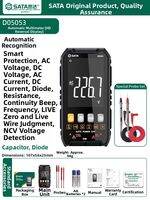
SATA | High Precision Smart Multifunctional Digital Multimeter
₱1,612.90₱3,745.51
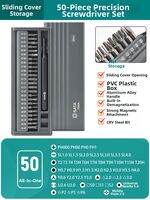
SATA | Precision Multifunction Screwdriver Kit For Mobile Computers
₱584.74₱757.41
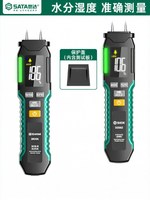
SATA | High Precision Wood and Concrete Moisture Meter Water Leakage Detector
₱1,702.40₱3,929.45
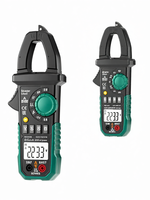
SATA | Intelligent Digital Clamp Multimeter
₱3,942.77₱8,302.72

SATA | Noise Reduction Ear Muffs Headband
₱1,705.86₱2,119.51
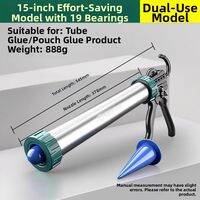
SATA | Auto Cut-off Easy-use Adjustable Dual-purpose Caulk Gun
₱2,309.70
Buy on Lazada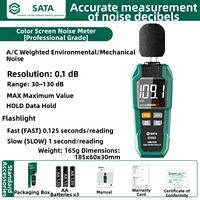
SATA | High Precision AC Weighting Alarm Decibel Meter
₱2,439.78₱5,715.96
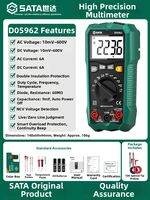
SATA | High Precision Electrician Dedicated Digital Multimeter
₱2,121.46₱4,585.06
About SATA
SATA GmbH & Co. KG, commonly referred to as SATA, is a German manufacturer specialising in professional paint spray guns, wet-painting equipment, respiratory protection systems, air-filtration units, and related coating accessories. The company is widely recognised in the automotive refinishing and professional painting sectors, where its spray guns are considered premium tools for achieving precise paint application and superior finish quality. Headquartered in Kornwestheim, Baden-Württemberg, Germany, SATA operates as a family-owned enterprise.1
Beyond automobile refinishing, SATA products are utilised in industrial coating, woodworking and furniture finishing, aircraft painting, yacht and boat construction, and decorative applications. The company supplies distribution partners in more than 100 export markets and reports approximately 315 employees with an annual turnover of around €110 million on its global website.2
Company profile
| Attribute | Information |
|---|---|
| Company name | SATA GmbH & Co. KG |
| Brand | SATA |
| Founded | 1907 |
| Origin | Germany |
| Headquarters | Kornwestheim, Baden-Württemberg, Germany |
| Industry | Surface coating / painting technology |
| Main specialty | Professional paint spray guns |
| Other products | Cup systems, respiratory protection, air filtration, compressed-air technology, accessories |
| Major markets | Automotive, industrial, woodworking, aircraft, marine and decorative painting |
| Business type | Family-owned |
| Production | Spray guns developed and manufactured in Germany |
| Global reach | 100+ export markets |
| Employees | 315 |
| Annual turnover | Approximately €110 million |
SATA positions itself as a leading worldwide supplier in wet-paint technology, categorising its offerings as premium professional equipment rather than general consumer hardware.3
History
The history of SATA spans more than a century, evolving from medical device manufacturing to becoming a specialist in surface coating technology.
1907: Foundation
The company’s origins date back to the founding of Sanitaria GmbH in 1907. Initially, the business focused on medical equipment rather than painting tools.4 This early expertise in precision metal components eventually laid the technical foundation for the development of spray equipment.
1910s: The SATA name
The SATA trademark was registered during the company’s formative years. Over time, the name became synonymous with the firm’s emerging spray-equipment business.5
1920s: Entry into spray guns
SATA entered the paint-spray sector in the 1920s, commencing spray gun production around 1925. This period marked the beginning of the business area that would become the company’s core specialisation.6
1930s: Proprietary product development
By the early 1930s, SATA had transitioned from producing equipment for other manufacturers to marketing its own proprietary ranges of spray guns.7
Post-war development
In the decades following the Second World War, SATA concentrated progressively on surface-coating technology. The company developed increasingly sophisticated spray guns, air-management equipment, and associated painting technologies. Operations were eventually relocated to Kornwestheim, near Stuttgart, where the headquarters remain today.8
1980s: SATAjet series
A significant milestone occurred in 1981 with the introduction of the SATAjet B. The SATAjet family became central to the company’s identity and helped establish SATA as a high-end spray-gun manufacturer.9
1990s: HVLP technology
In 1990, SATA developed its first HVLP (High Volume Low Pressure) spray gun. This technology proved critical as it offered efficient atomisation while reducing overspray, enabling painters to meet increasingly stringent environmental regulations and material-efficiency standards.10
2000s: RP and digital integration
SATA subsequently introduced RP (Reduced Pressure) technology and incorporated digital pressure measurement into select spray gun models. These developments aimed to make paint application more controlled and repeatable.11 In 2006, the company received an Innovation Award at Automechanika for its RPS cup system.12
2010s: SATAjet 4000 and 5000
The SATAjet 4000 was launched around 2010, followed by the SATAjet 5000 in 2014. These generations reinforced SATA’s focus on atomisation quality, ergonomics, transfer efficiency, and consistency.13
2020s: jet X and automation
The current product portfolio centres on newer platforms such as the jet X and SATAjet X 5500, alongside established SATAjet and SATAminijet models.14 Recently, SATA has also expanded into automation-related technology. In June 2026, the company announced an investment in CurveRobot to accelerate the automation of paint-finishing processes in body shops.15
Core products and technology
Paint spray guns
The spray gun remains the core of the SATA brand. The company manufactures several categories, including gravity-feed, pressure-feed, siphon-feed, automatic, and airbrush guns, as well as industrial spray equipment. Current offerings include the jet X, SATAjet X 5500, SATAjet 5000 B, SATAjet 100 B, SATAminijet 4400 B, and SATAjet 1000 B.16
SATAjet family
The SATAjet name is used across multiple generations of professional spray guns optimised for various applications:
- SATAjet 100 B: A professional gravity-feed gun designed for applications including automotive refinishing.
- SATAjet 5000 B: A premium spray gun for high-quality paint application, available with various nozzle and air-cap configurations.
- SATAjet X 5500: A newer-generation premium gun emphasising precision, controlled atomisation, and configurability for specific application requirements.
- jet X: One of SATA’s newest premium platforms and a key component of its current product strategy.17
- SATAminijet: A range of smaller spray guns intended for spot repairs, small components, detailing, and hard-to-reach areas.
Technology philosophy
SATA’s engineering objective is to atomise liquid coating material into a controlled spray that produces a uniform, high-quality finish. Achieving this requires precise control over air pressure, air volume, material flow, droplet size, spray-fan shape, transfer efficiency, overspray, surface wetting, and ergonomics. During development, the company tests hundreds of nozzles with tolerances as tight as 0.02 mm.18
HVLP and RP technologies
Two key technologies define SATA’s approach to modern spraying:
- HVLP (High Volume Low Pressure): Uses high air volume at lower atomising pressure to improve transfer efficiency and reduce overspray, complying with strict environmental standards.
- RP (Reduced Pressure): An alternative approach achieving high-quality atomisation at reduced pressures compared to traditional high-pressure systems.
SATA continues to offer both HVLP and RP air-cap and nozzle technologies depending on specific application requirements.19
Product ecosystem
SATA supports its spray guns with a comprehensive ecosystem of complementary products:
- Cup systems: Includes the RPS disposable cup system designed for integration with SATA spray guns.
- Respiratory protection: Supplied-air and respiratory-protection equipment designed to safeguard professional painters from hazardous particles, vapours, and aerosols.20
- Air filtration: Compressed-air filtration units that remove water, oil, and particulates to ensure clean, dry air, which is essential for preventing finish defects.
- Accessories: Replacement parts and maintenance equipment necessary for operating professional spray systems.21
Key industries
Automotive refinishing
Automotive refinishing is SATA’s most prominent market. Professional body shops utilise SATA equipment for primer application, basecoat, clearcoat, spot repair, blending, custom paint, and detailing.22 The brand is particularly associated with high-end refinishing where colour matching, metallic distribution, gloss, and orange-peel control are critical.
Woodworking and furniture
SATA equipment is employed in furniture and cabinet finishing, wood coatings, lacquers, primers, and decorative finishes. Dedicated models such as the SATAjet 1000 B LIGNUM 3 are available specifically for woodworking applications.
Industrial coating
In industrial settings, SATA spray technology is used for coating machinery, metal components, and manufactured products. The company provides both manual and automatic spray solutions for these environments.
Aircraft and marine
SATA identifies aircraft painting as a key application area, addressing the demands of large surfaces and uniform coating thickness. Similarly, equipment is used in yacht and boat building where large surfaces and high-quality decorative finishes require controlled spraying.
Manufacturing and market position
Made in Germany
SATA states that its spray guns are developed and manufactured in Germany under strict quality controls. Rather than competing on price against low-cost alternatives, SATA emphasises precision, consistency, durability, ergonomics, and finish quality. This positioning places the brand firmly in the premium and professional segments of the market.
Value proposition
Professional SATA spray guns command a higher price point due to precise manufacturing tolerances (down to 0.02 mm) and extensive testing of components like nozzles and needles. For professional users, the investment is justified by consistency, productivity, finish quality, and reduced rework, distinguishing these tools from generic options intended for DIY or occasional use.
Brand reputation
SATA maintains a strong reputation among professionals based on German manufacturing, product history, spray-pattern consistency, and a robust dealer network. Due to its prominence, the company has addressed issues with counterfeit products by providing authentication tools for customers.
Automotive culture
Despite being an industrial technology company, SATA has cultivated a significant presence in car culture and custom painting. The company releases special-edition spray guns featuring custom artwork, including models such as the SATAjet X 5500 Lowrider, Street Art, Universe, Future, True Soul, and Bionic.
Sustainability
SATA frames sustainability around economic, ecological, and social dimensions. The company reports using 100% green electricity and district heating from a nearby biogas plant at its operations. Product development also addresses environmental concerns through improved paint-transfer efficiency, which reduces material waste and overspray.
Current status
As of 2026, SATA remains a family-owned German company focused on professional surface-coating technology. It reports approximately 315 employees, presence in over 100 export markets, a Net Promoter Score of 71, and annual turnover of roughly €110 million. The company’s strategic direction includes automation and digitally supported processes, evidenced by its June 2026 investment in CurveRobot.
Market segmentation
SATA primarily targets the professional-to-premium segment of the spray-gun market:
| Segment | Typical buyer | Main priority |
|---|---|---|
| Entry-level | DIY / hobbyist | Low price |
| Mid-range | Serious hobbyist / small shop | Value |
| Professional | Body shop / painter | Performance + reliability |
| Premium professional | High-end refinishing / specialist | Maximum consistency and finish |
Unlike entry-level brands, SATA focuses on precision equipment for professionals whose livelihood depends on producing excellent coatings consistently.
Distinctive characteristics
- German engineering: Emphasis on domestic development and manufacturing.
- Specialisation: Focused specifically on coating technology rather than general tools.
- Precision: Central focus on nozzle geometry, airflow, and tight tolerances.
- Automotive heritage: Strong association with professional vehicle refinishing.
- Professional orientation: Products designed for daily professional use rather than casual consumers.
- Global reach: Distribution through partners in more than 100 export markets.
- Complete ecosystem: Comprehensive range covering cups, filtration, and respiratory protection alongside spray guns.
References
- The Company | SATA
- SATA ► Leading supplier in the field of wet painting
- SATA History | SATA
- SATA (Unternehmen)
- Spray guns | SATA
- About us – More about the SATA company
- Downloads | SATA
- SATA Spray Guns | SATA LLC
- Spray Guns | SATA
- About Us | SATA
- History – Gruppo Sata – Un mondo di meccanica
- SATA ► Leading supplier in the field of wet painting
- SATA-Historie | SATA
- SATA-Historie | SATA
- SATA ► Leading supplier in the field of wet painting
- Über uns – Mehr zum Unternehmen SATA
- Homepage | SATA
- 深圳市美施联科科技有限公司
- SATA (Unternehmen)
- Über Uns
- SATA
- Home | SATA