Shop on Lazada
Gulf oil products
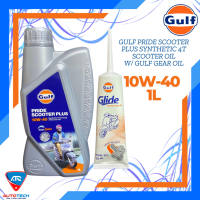
GULF PRIDE SCOOTER PLUS 10W40 1L/800ML W/ FREE GULF GEAR OIL Motor Car - Autotech
₱320.00₱325.00
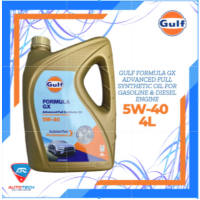
GULF FORMULA GX ADVANCE FULLY SYNTHETIC OIL 5W-40 1L/4L Motor Car - Autotech
₱1,693.00₱1,744.00
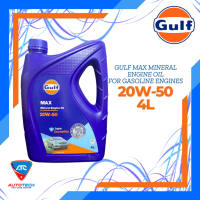
GULF MAX MINERAL ENGINE OIL FOR GASOLINE 20W-50 4L/1L Motor Car - Autotech
₱1,289.00₱1,329.00
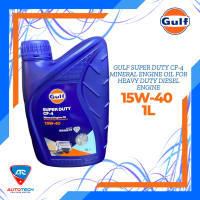
GULF SUPER DUTY CF-4 MINERAL ENGINE OIL FOR HEAVY DUTY DIESEL ENGINE 15W-40 1L/4L Motor Car - Autotech
₱358.00₱369.00
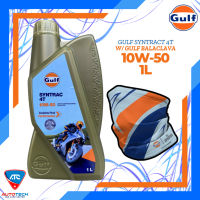
Gulf Syntract 4T 1L 10W-50 Motorcycle Engine Oil w/ Gulf Balaclava or String Bag Pang Motor AUTOTECH
₱481.00₱496.00
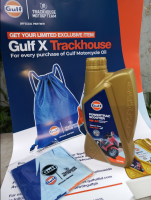
SHOPBYJHANE GULF POWERTRAC SCOOTER 800ml / 1Liter
₱299.00₱379.00
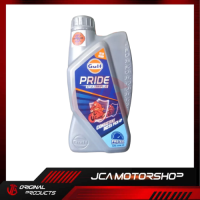
ORIGINAL GULF PRIDE ENGINE OIL 4T ULTRAPLUS 20W-50 1L
₱370.19₱450.00
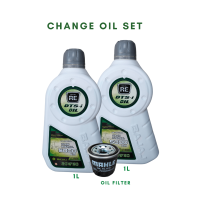
BAJAJ TVS PIAGGIO Change Oil Bundle | Complete Set (2 Liters of Oil + 1 Filter) Engine Oil Package Kit
₱1,299.00
Buy on LazadaAbout Gulf oil
Overview
Gulf oil is a historic international brand in the oil, lubricants, fuels, and mobility sectors with origins tracing back to the early development of the United States petroleum industry. Founded in 1901, Gulf became one of the most recognizable names in the business, distinguished by its orange-disc logo, fuel stations, and long-standing association with motorsport.12
Today, the Gulf brand is owned by the Hinduja Group through Gulf Oil International and operates as a global downstream energy and mobility business. Its modern portfolio focuses on lubricants, fuel retail, marine lubricants, and emerging mobility ventures. Gulf states that its lubricants are distributed in more than 60 countries, while its branded fuel-retail network comprises over 1,250 stations across 18 countries.1
| Category | Details |
|---|---|
| Brand | Gulf |
| Industry | Oil, lubricants, fuels, mobility and energy-related products |
| Origin | United States |
| Founded | 1901 |
| Original company | Gulf Refining Company of Texas |
| Headquarters/modern parent | Gulf Oil International / Hinduja Group |
| Owner | Hinduja Group |
| Key products | Automotive & industrial lubricants, fuels, marine lubricants, specialty fluids |
| Global lubricant reach | 60+ countries |
| Branded fuel stations | 1,250+ across 18 countries |
| Iconic branding | Orange disc; Gulf blue and orange racing colors |
| Major historical association | Motorsport, especially endurance racing |
| Current direction | Lubricants, fuel retail, EV charging, mobility and lifestyle businesses |
The figures above reflect current descriptions of the business provided by Gulf and the Hinduja Group.1
History
Origins
Gulf traces its origins to the Spindletop oil discovery in Beaumont, Texas, a landmark event in the development of the modern U.S. petroleum industry. The Gulf Refining Company of Texas was officially chartered on November 10, 1901, in Pittsburgh, Pennsylvania, and began selling gasoline in containers. Consequently, Gulf’s official historical account dates the brand to 1901.2
This era was significant as the automobile began creating a mass market for gasoline. Gulf subsequently expanded its involvement beyond petroleum production to include refining, distribution, and retailing.
Early innovation
Gulf developed a reputation for experimenting with new methods of selling and distributing petroleum products. In 1913, the company introduced what it describes as the first drive-through fuel station, a development that made refueling more convenient for motorists and influenced the evolution of the modern gasoline station.2
The famous orange-disc logo appeared in 1920 and eventually became one of the most recognizable symbols in the petroleum industry.2
International expansion
During the first half of the twentieth century, Gulf expanded its petroleum activities beyond the United States. This included establishing operations in Venezuelan oil fields and engaging in exploration, production, refining, and distribution. At its historical peak, Gulf was a major integrated oil company with production and processing levels reaching approximately 1.3 million barrels per day.2
Gulf and Motorsport
Motorsport has been a primary contributor to Gulf’s modern brand identity. The brand’s light-blue-and-orange racing colors became famous during the second half of the twentieth century, becoming strongly associated with high-performance racing rather than merely serving as corporate livery.
Le Mans and popular culture
Gulf is particularly associated with the 24 Hours of Le Mans, where sponsored cars achieved major successes. This connection was cemented in popular culture through the 1971 film Le Mans, starring Steve McQueen. Gulf highlights the link between the film, McQueen, and its racing heritage as pivotal in transforming the company from an oil supplier into a lifestyle and performance brand.2
The blue-and-orange livery remains widely recognizable even among those with little connection to the petroleum industry.
The Hinduja Group Era
A major turning point occurred in 1984 when the Hinduja Group acquired Gulf Oil International.3 Under this ownership, the brand evolved into an internationally focused downstream business. Rather than functioning as the integrated American oil company it once was, the modern organization emphasizes lubricants, fuel retail, automotive and industrial products, marine lubricants, specialty fluids, mobility, and brand licensing.
The Hinduja Group describes Gulf as one of its leading downstream oil businesses operating in more than 60 countries.1
Current Business Operations
Modern Gulf is best understood as a global brand and downstream petroleum and mobility business rather than an oil-exploration company. Its principal business areas include:
Lubricants
Lubricants represent one of Gulf’s most important business segments. The company produces lubricants for passenger cars, motorcycles, trucks, commercial vehicles, buses, agricultural machinery, construction equipment, industrial machinery, and marine engines. These products, which include engine oils, transmission fluids, gear oils, hydraulic fluids, and greases, are formulated to meet various OEM and industry specifications and are distributed across more than 60 countries.2
Fuel retail
Gulf operates branded fuel-station networks globally. According to the Hinduja Group, there are more than 1,250 branded retail fuel stations across 18 countries.1 These stations combine the orange-disc identity with gasoline and diesel retailing, often including convenience and automotive services depending on the market.
Gulf Marine
The company maintains a significant marine-lubricant business serving commercial shipping. Historically established as Gulf Oil Marine, this operation serves ports worldwide and provides lubricants for ships and marine machinery, representing Gulf’s expansion beyond traditional automotive products.2
Industrial lubricants
Gulf supplies products for industrial applications, including machinery and manufacturing operations. This portfolio includes hydraulic fluids, gear oils, metalworking fluids, greases, and other specialized fluids.
Presence in the Philippines
Gulf has a long-established presence in the Philippines. Historical records note the establishment of a Gulf Oil Philippines blending plant in Manila, integrating the country into the company’s Asian manufacturing and distribution network.2
The Philippine business focuses primarily on lubricants and related products for both automotive and industrial applications.
Global Manufacturing Network
Gulf’s international footprint includes blending and manufacturing operations in several strategically important markets. The Hinduja Group identifies facilities in India, Brazil, Argentina, the United Arab Emirates, Singapore, and the Philippines. Products are manufactured through both Gulf-owned facilities and licensed partners, allowing the brand to maintain global consistency while adapting to local markets.1
Brand Identity
The orange disc
The orange-disc logo, dating to 1920, was originally intended to help consumers distinguish Gulf products in an era lacking standardized branding.2 Over decades, it has come to represent heritage, reliability, performance, authenticity, motorsport, and American petroleum history. It remains a key factor in Gulf’s continued recognizability despite changes in corporate structure.
Racing colors
The light blue and orange color combination is nearly as recognizable as the logo itself. Originally famous through racing cars, these colors now appear on watches, clothing, die-cast cars, helmets, and lifestyle products. Gulf notes that these racing colors have been trademarked and have become valuable independently of petroleum products.4
Business Transformation and Electric Mobility
Historically, Gulf was an integrated petroleum company involved in exploration, production, refining, and distribution. Following the Hinduja acquisition, it transformed into an international downstream brand. Current strategy extends beyond traditional oil into the future of transportation, including investments in EV charging and home charging technology.2
Specific ventures include Tirex, focusing on rapid EV charging, and Indra, developing intelligent home-charging technology. This reflects an evolution from an oil-and-fuels identity toward a broader mobility brand.
Major Historical Timeline
| Year | Event |
|---|---|
| 1901 | Gulf Refining Company of Texas is established |
| 1913 | Gulf introduces its first drive-through fuel station |
| 1920 | Orange-disc logo introduced |
| 1920s–30s | Gulf expands its petroleum operations |
| 1940s onward | International oil activities expand |
| 1960s–70s | Gulf becomes increasingly prominent in motorsport |
| 1971 | Gulf branding features prominently in Le Mans |
| 1970s | Gulf racing colors become iconic |
| 1984 | Hinduja Group acquires Gulf Oil International |
| 1990s–2000s | Gulf expands international lubricant operations |
| 2000s | Gulf Marine develops international presence |
| 2010s | Gulf expands automotive lubricants and brand partnerships |
| 2020s | Gulf broadens its mobility and lifestyle strategy |
| 2026 | Gulf celebrates 125 years of heritage |
The underlying chronology is derived from Gulf’s official history; the company announced its 125th-anniversary celebration in January 2026.2
Corporate Structure
Distinctions exist between Gulf as a brand and the various companies operating Gulf businesses nationally. Globally, the structure flows from the Hinduja Group to Gulf Oil International, which then oversees global subsidiaries, licensees, and partners such as Gulf Oil Lubricants India Limited.3 Gulf Oil International owns the brand globally, while national businesses may operate under separate corporate structures.
Comparison to Traditional Oil Majors
Modern Gulf should not be equated with integrated energy giants like ExxonMobil, Shell, or BP. While those companies manage upstream oil and gas, refining, chemicals, and trading, Gulf Oil International focuses comparatively on the downstream and brand side of the industry. Its core activities center on lubricants and fuel retail, alongside expanding mobility businesses.
Legacy
Gulf’s legacy spans three distinct periods:
- The American oil-company era (1901–1984): Growth from a petroleum venture into a major integrated oil company.
- The Hinduja international-brand era (1984–present): Evolution into an internationally managed downstream brand focused on lubricants and retail.
- The modern mobility era (2020s onward): Leveraging heritage while expanding into EV charging, mobility technology, and lifestyle businesses.