Shop on Lazada
Schneider Electric products
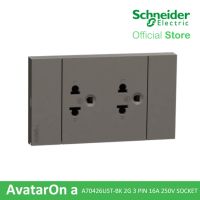
Schneider Socket Outlet Avataron A A70426UST BK Outlet 16A 250V 2G 3Pin Uni Skt BK
₱474.00₱1,497.00
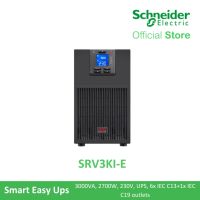
APC SRV Smart UPS Easy UPS On-Line 900W/1800W/2700W | Uninterrupted Power Supply | APC UPS
₱57,340.00₱83,143.00
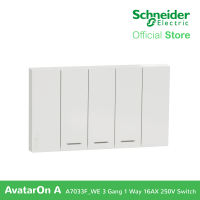
Schneider AvatarOn A 3 Gang 1 Way 16AX 250V with Fluorescent Switch White A7033F-WE
₱265.00₱406.00
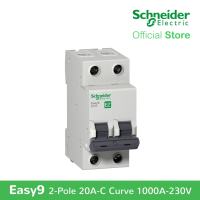
Schneider Easy9 IEC 2P 20A C DIN-Rail Type Miniature Circuit Breaker 230V 10kAIC (EZ9F51220)
₱606.00₱890.00
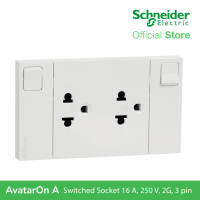
Schneider AvatarOn A Switched Socket Universal 16 A 250 V 2G 3 pin M3T-SIS-WE | Switch Outlet
₱545.00₱832.00
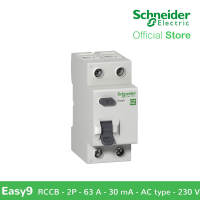
Schneider Easy9 RCCB 2P 63A 30MA AC-type 230V EZ9R36263 Residual Current Circuit Breaker
₱2,966.00₱3,324.00
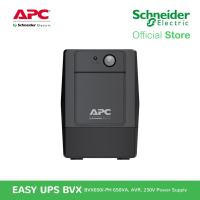
APC BVX650I-PH 650VA / 360 Watts 4 Nema Circuit Breaker | UPS
₱2,618.00₱3,864.00
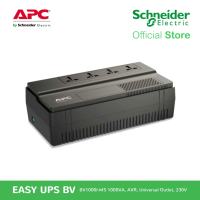
APC UPS BV1000I-MS 1000VA/600Watts Line Interactive | APC UPS
₱5,703.00₱8,269.00
About Schneider Electric
Schneider Electric SE is a French multinational technology company specialising in energy management, electrification, industrial automation, and digitalisation 2. It ranks among the world’s leading suppliers of electrical and automation technologies, serving applications that range from residential and commercial buildings to factories, power grids, and large-scale data centres 1. The company has evolved beyond its origins as a traditional electrical equipment manufacturer to position itself as an ‘energy technology’ provider, integrating electrical hardware with software, automation, artificial intelligence, data analytics, and digital services 4. Its official website is 4.
Company overview
| Item | Information |
|---|---|
| Full legal name | Schneider Electric SE |
| Headquarters | Rueil-Malmaison, France |
| Industry | Energy technology, electrical equipment, industrial automation, software |
| Origins | 1836, Le Creusot, Burgundy, France |
| Corporate foundation | 1871 |
| Current CEO | Olivier Blum |
| Employees | ~160,000 worldwide |
| Global presence | 100+ countries |
| Partners | ~1 million |
| 2025 revenue | Approximately €40 billion |
| Stock exchange | Euronext Paris |
| Ticker | SU.PA |
| ISIN | FR0000121972 |
| Core areas | Electrification, energy management, automation, digitalisation |
| Major platform | EcoStruxure™ |
| Corporate form | European Company (SE) |
Schneider Electric reports approximately €40 billion in revenue for 2025, with a workforce of 160,000 employees and one million partners operating in more than 100 countries 813. Olivier Blum has served as CEO since 1 November 2024 3. The company’s registered headquarters is located at 35 rue Joseph Monier, 92500 Rueil-Malmaison, France 3. Its shares are listed on Euronext Paris under the ticker symbol SU.PA 13.
Business activities
Schneider Electric enables customers to produce, distribute, control, automate, monitor, and optimise electricity and industrial processes 11. Its current strategy integrates three primary technological domains:
Electrification
The company manufactures equipment designed for the safe distribution and control of electricity. Key products include circuit breakers, switchgear, electrical distribution systems, medium-voltage and low-voltage equipment, protection devices, energy meters, power-quality equipment, electrical panels, motor-control equipment, EV-charging technologies, and building electrical systems 12.
Automation
Schneider Electric provides technologies for the automatic control of industrial processes. These include programmable logic controllers (PLCs), industrial controllers, human-machine interfaces, variable-speed drives, motion control systems, industrial networks, process control systems, safety systems, robotics-related automation, and SCADA and industrial control software 7.
Digitalisation
The company connects physical electrical and industrial equipment with software and data through cloud-connected systems, industrial software, energy-management software, digital twins, artificial intelligence, industrial analytics, cybersecurity solutions, asset monitoring, predictive maintenance tools, and data-centre infrastructure software 9. This integration of electrification, automation, and digital intelligence constitutes what Schneider Electric defines as energy technology.
History
Origins in heavy industry
The history of Schneider Electric spans nearly two centuries. In 1836, brothers Adolphe Schneider and Joseph-Eugène Schneider acquired the Le Creusot foundry in Burgundy, France, transforming it into a major industrial enterprise known as Schneider & Cie 5. The business initially focused on iron, steel, heavy machinery, steam technology, railways, and industrial engineering 5. By 1838, the company had built France’s first steam locomotives, and engineer François Bourdon patented a significant steam-hammer design in 1840 5. Schneider later constructed major steel and metal structures, including components associated with the Alexander III Bridge in Paris 5.
Transition to electricity
During the second half of the 19th century, Schneider expanded beyond traditional metallurgy into the emerging electrical industry 6. By the early 20th century, the company was producing electrical equipment alongside its heavy industrial products, establishing a foundation that would eventually supersede steelmaking in strategic importance 6.
Transformation through acquisition
Throughout the 20th century, Schneider transitioned from a heavy-industrial and steel company into an electrical and automation technology firm, a shift accelerated by strategic acquisitions 7. Notable companies integrated into the group include Merlin Gerin, Télémécanique, Square D, and Modicon 7. Merlin Gerin, founded in Grenoble in 1920, became renowned for circuit breakers and electrical-distribution technologies before being acquired by Schneider in 1992 7. These acquisitions provided comprehensive expertise across electrical distribution and industrial automation.
Adoption of the Schneider Electric name
As the group shifted focus from diversified heavy industry to electricity, electrical distribution, automation, and digital technology, the name Schneider Electric became its central corporate identity 14. Historical brands were progressively migrated to this master brand; for example, Merlin Gerin and Telemecanique were transitioned to the Schneider Electric brand in 2009, although their technological heritage remains influential 14.
Expansion into industrial automation
A pivotal strategic development was the expansion into industrial automation, particularly through the acquisition of Modicon, which is historically associated with the invention of the programmable logic controller (PLC) 7. Today, Schneider Electric’s automation portfolio encompasses PLCs, PACs, industrial PCs, drives, motion control, HMIs, SCADA systems, process automation, industrial safety, and industrial networking, enabling the company to supply both factory electrical infrastructure and the control systems that operate production facilities 7.
Major business segments
Buildings
Schneider Electric supplies electrical and automation technologies for office buildings, hotels, hospitals, shopping centres, universities, airports, commercial properties, and smart buildings 12. Technologies include building management systems, lighting and HVAC controls, electrical distribution, energy monitoring, access control integration, building automation, and power quality solutions aimed at making buildings more efficient, connected, resilient, and manageable 12.
Data centres
Data centres represent a strategically important market requiring reliable electricity, cooling, monitoring, automation, and physical infrastructure 12. Schneider Electric’s offerings in this segment include UPS systems, power distribution, cooling solutions, racks, busways, monitoring systems, data-centre management software, physical infrastructure, and power protection 12. The APC brand, now part of Schneider Electric, specialises in backup power, power protection, and IT infrastructure for this sector 12.
Industrial automation
Schneider Electric competes in industrial automation against firms such as Siemens, Rockwell Automation, ABB, Honeywell, and Emerson 9. Its technologies serve manufacturing, food and beverage, chemicals, pharmaceuticals, oil and gas, mining, water treatment, automotive, packaging, and infrastructure sectors 9. The company provides solutions spanning sensors, PLCs, HMI/SCADA systems, industrial networks, production equipment integration, and cloud-based analytics 9.
Power and electrical distribution
Electrical distribution remains a core business area, with equipment deployed between the electrical grid and end consumers 12. Products include medium-voltage switchgear, transformers, low-voltage switchboards, and circuit breakers used in factories, residential and commercial buildings, hospitals, airports, data centres, infrastructure projects, and utility systems 12.
Technology platforms and software
EcoStruxure™
EcoStruxure is Schneider Electric’s architecture and platform for connecting physical equipment, control systems, software, and data 15. Launched in 2016 as part of the company’s move toward IoT-enabled solutions, it operates across four layers: connected devices, control and edge systems, software and applications, and analytics, cloud, and AI 15. This integration of electrical hardware, automation, software, and data is central to the company’s modern business model 15.
AVEVA and industrial software
In 2022, Schneider Electric completed its full takeover of AVEVA, an industrial software company 10. AVEVA’s technologies cover industrial engineering, operations, asset management, process simulation, industrial information management, digital twins, industrial analytics, and cloud software 10. This acquisition reinforced Schneider Electric’s transition toward a combined hardware, software, and services model 10.
Brands and product portfolio
Schneider Electric has accumulated a diverse portfolio of brands through its history and acquisitions 14.
| Brand | Main association |
|---|---|
| Schneider Electric | Electrical management, automation, digital energy |
| APC | UPS, power protection, data-centre infrastructure |
| AVEVA | Industrial software |
| Square D | Electrical distribution and protection |
| Modicon | PLCs and industrial automation |
| ASCO | Critical power / automatic transfer switching |
| ETAP | Electrical power-system software |
| Foxboro | Process automation |
| Triconex | Process safety |
| Clipsal | Electrical accessories |
| RIB Software | Construction software |
Several of these brands continue to appear in the company’s current product catalogue 14. ASCO has provided critical power and automatic transfer switching expertise since 1888 17. Foxboro, founded in 1908, has a legacy in process automation 16. RIB Software, founded in 1961, offers a leading software platform to digitise construction projects 14. ETAP designs and simulates electrical power systems 17.
Products encountered in practical applications range from residential circuit breakers, switches, sockets, and smart-home devices to commercial electrical panels, building-management systems, and industrial PLCs, drives, and process-control systems 12. Data-centre products include UPS units, rack systems, and cooling infrastructure, while utility-scale equipment encompasses medium-voltage switchgear, grid automation, and protection systems 12.
Sustainability and artificial intelligence
Sustainability is integral to Schneider Electric’s corporate strategy rather than a peripheral marketing theme. The company argues that rising global electricity demand must be met through greater efficiency and lower-carbon sources, focusing on the intersection of electrification, efficiency, automation, and digitalisation 9. Digital monitoring and automation are presented as means to improve electrical system efficiency, while electrification can replace less efficient fossil-fuel-based energy uses 9. The company links its sustainability activities to the UN Sustainable Development Goals 9.
Artificial intelligence is increasingly incorporated into the company’s technology strategy to transform energy management, industrial automation, data analysis, predictive maintenance, operational optimisation, and sustainability management 15. This represents an extension of its broader evolution from electrical equipment to connected equipment, software, data, and AI, with AI explicitly identified as part of its energy-technology strategy 15.
Business model and competitive landscape
Schneider Electric’s business can be understood through four layers: hardware (circuit breakers, switchgear, PLCs, drives, UPS, sensors, meters, panels); control systems (PLCs, automation systems, building-management systems, industrial control); software (AVEVA, EcoStruxure applications, analytics, digital twins, energy-management software); and services (consulting, engineering, maintenance, cybersecurity, sustainability services, lifecycle support) 11. This multi-layer approach makes the description of Schneider Electric as merely an ‘electrical equipment company’ increasingly incomplete 11.
Competitors vary by market segment. In electrical and power management, key competitors include ABB, Siemens, Eaton, and Legrand 9. In industrial automation, the company competes with Siemens, Rockwell Automation, ABB, Honeywell, and Emerson 9. Data-centre infrastructure competitors include Vertiv, Eaton, ABB, and Siemens, while industrial software competitors include Siemens, Rockwell, Honeywell, and Emerson 9. Schneider Electric frequently competes with the same companies across multiple layers of customer infrastructure 9.
Unlike Siemens, which is strongly associated with industrial automation and digital industries, or Eaton, which focuses heavily on power management, Schneider Electric distinguishes itself by attempting to combine electrical infrastructure, industrial automation, software, data, and sustainability into a single ecosystem 9. This strategic positioning is embodied in the EcoStruxure platform and software acquisitions such as AVEVA 9.
Corporate leadership and financial scale
Schneider Electric maintains a governance structure that separates the Chairman and CEO roles 3. Olivier Blum became CEO on 1 November 2024 3. Jean-Pascal Tricoire, who previously led the company, is historically associated with its transformation into a global energy-management and automation firm 3.
For 2025, the company reports revenue of approximately €40 billion and employs around 160,000 people, with operations and partnerships spanning more than 100 countries 813. Detailed financial, strategic, and sustainability information is available in the 2025 Integrated Report, published in March 2026 8.
Stock market information
Strategic significance
Schneider Electric occupies a position at the intersection of several major global trends: electrification of transport, heating, and industry; renewable energy integration; growing data-centre demand driven by AI and cloud computing; industrial automation; energy efficiency pressures; digitalisation of electrical infrastructure; and AI-driven optimisation of complex systems 9. The company’s strategy is positioned to address all seven trends simultaneously 9.
This positioning explains why Schneider Electric today is involved in everything from household circuit breakers to factory PLC systems, UPS systems in AI data centres, medium-voltage equipment in electrical infrastructure, and industrial software used to operate major facilities 1. Its self-description as ‘your energy technology partner’ reflects this comprehensive transition from a 19th-century heavy-industrial enterprise to a digital energy-technology company 1.
References
- Schneider Electric – Simple English Wikipedia, the free encyclopedia
- Schneider Electric – Wikipedia
- Schneider Electric – Wikipedia
- Schneider Electric – Wikipedia
- History of our company, brand and innovation | Schneider Electric
- History of our company, brand and innovation | Schneider Electric
- Schneider Electric – Wikipedia
- Schneider Electric – Wikipedia
- Schneider Electric – businessabc
- Schneider Electric – Wikipedia
- Schneider Electric – businessabc
- Schneider Electric – businessabc
- Schneider Electric – Wikipedia
- History of our company, brand and innovation | Schneider Electric
- Schneider Electric – Wikipedia
- History of our company, brand and innovation | Schneider Electric
- History of our company, brand and innovation | Schneider Electric