Shop on Lazada
Schneider products
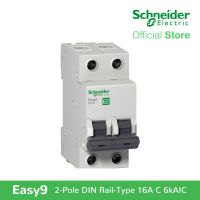
Schneider Easy9 IEC 2P 16A C DIN-Rail Type Miniature Circuit Breaker 230V 6kAIC (EZ9F56216)
₱358.00₱599.00
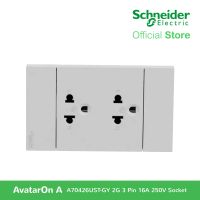
Schneider AvatarOn A 16A 250V 2G 3 Pin Universal Socket-outlet Grey A70426UST-GY
₱481.00₱1,769.00
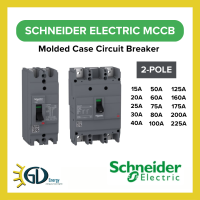
ORIGINAL Schneider MCCB EZCH Series 2Pole 15A upto 250A 80kAIC - 220V/230V/415V/440V/550V/690 AC
₱10,043.00
Buy on Lazada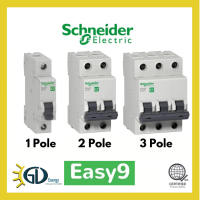
1P 2P 3P Schneider Easy9 10A 16A 20A 25A 32A 40A 50A 63A DIN-Rail Miniature Circuit Breaker 6kAIC
₱1,088.00
Buy on Lazada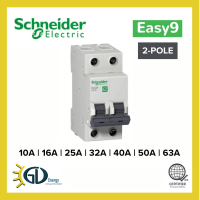
2 Pole Schneider Easy9 6kAIC MCB 10A 16A 20A 25A 32A 40A 50A 63A Miniature Circuit Breaker
₱631.00
Buy on Lazada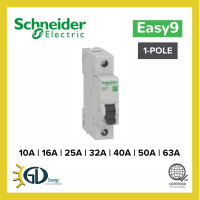
1Pole Schneider Easy9 6kAIC MCB 10A 16A 20A 25A 32A 40A 50A 63A Miniature Circuit Breaker
₱343.00
Buy on Lazada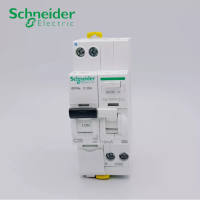
Genuine Schneider RCBO 10MA 30MA Leakage Circuit Breaker iDPNa ViGi+C10A 16A 20A 32A Air Switch 1P+N
₱2,789.00
Buy on Lazada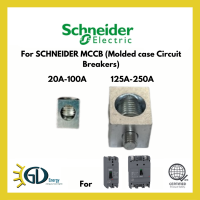
Mechanical Lugs for SCHNEIDER MCCB Molded Case Circuit Breaker 15A-250A Terminal Lugs
₱247.00
Buy on LazadaAbout Schneider
Note: The name “Schneider” may refer to several unrelated entities. This profile concerns Schneider Electric, the French multinational specializing in energy management, electrical equipment, industrial automation, and digital technologies. It is the Schneider brand most widely associated with circuit breakers, switches, UPS systems, automation solutions, and smart building infrastructure.
Overview
Schneider Electric SE is a French multinational corporation focused on energy management, electrification, industrial automation, and digitalization. Its products and software serve residential, commercial, industrial, data center, utility, and infrastructure sectors globally.
Headquartered in Rueil-Malmaison, France, the company is listed on Euronext Paris under the ticker SU. As of 2025, Schneider Electric reported approximately €40 billion in revenue and employed around 160,000 people worldwide.1
Schneider Electric currently positions itself as an “energy technology” company, pursuing a strategy that integrates electrical infrastructure with automation, software, data analytics, and artificial intelligence to enhance energy efficiency and sustainability.2
Quick facts
| Category | Information |
|---|---|
| Full name | Schneider Electric SE |
| Common name | Schneider Electric |
| Founded | 1836 (modern corporate entity incorporates 1871 foundations) |
| Origin | Le Creusot, Burgundy, France |
| Headquarters | Rueil-Malmaison, France |
| Industry | Energy technology, electrical equipment, industrial automation, software |
| CEO | Olivier Blum |
| Employees | ~160,000 worldwide |
| 2025 revenue | ~€40 billion |
| Stock exchange | Euronext Paris |
| Ticker | SU.PA |
| ISIN | FR0000121972 |
| Major platform | EcoStruxure |
| Major brands | APC, AVEVA, Square D, Modicon, ASCO, ETAP, Clipsal, Telemecanique |
The company’s registered head office is located at 35 rue Joseph Monier, Rueil-Malmaison, France, while its industrial origins date back to 1836.3
Business scope
Schneider Electric operates as both an electrical equipment manufacturer and a broader energy technology provider. Its operations are divided into two primary interconnected domains.
Energy Management
This segment encompasses technologies for generating, distributing, protecting, monitoring, controlling, and optimizing electrical power. Key offerings include:
- Circuit breakers
- Switches and sockets
- Electrical panels and switchboards
- Low-voltage and medium-voltage equipment
- Power distribution systems
- Uninterruptible power supply (UPS) systems
- Surge protection devices
- Power meters and energy management systems
- Data center power infrastructure
- Electric vehicle (EV) charging solutions
- Building energy management systems
Industrial Automation
This segment focuses on controlling machines, factories, industrial processes, and infrastructure. Key offerings include:
- Programmable logic controllers (PLCs)
- Industrial controllers and HMIs
- Sensors and control equipment
- Variable-speed drives and motor control
- Industrial software and SCADA systems
- Process and machine automation
- Digital twins and industrial data platforms
The company operates at the intersection of electrical engineering, automation, software, and energy management.
History and evolution
Origins in heavy industry (1836)
Schneider Electric’s history began in 1836 when brothers Adolphe Schneider and Joseph-Eugène Schneider acquired the Le Creusot foundry in Burgundy, France. The enterprise grew into a major industrial force known as Schneider & Cie.4
Originally, the company was not an electrical equipment manufacturer. Its early activities centered on iron, steel, heavy machinery, railways, locomotives, industrial engineering, and military equipment. Notably, Schneider & Cie began building steam locomotives in 1838, and associate François Bourdon patented a significant steam hammer in 1840.4
Transition to electricity
During the late 19th and early 20th centuries, Schneider transitioned from coal and steam toward electricity. The company participated in the 1881 International Exposition of Electricity in Paris, signaling its entry into the emerging electrical industry.4 This strategic shift evolved the business from mechanical engineering to electrical engineering, eventually laying the foundation for modern automation and digital technology.
Post-World War II restructuring
Following World War II, the group shifted its focus away from weapons production. In 1949, Schneider concentrated on European infrastructure and industrial needs, building capabilities in electrical distribution, industrial control, automation, electronics, and energy infrastructure.13
Transformation through acquisition (1970s–1990s)
Between the 1970s and 1990s, Schneider transformed into a specialist in electrical distribution and automation through key acquisitions:
- Merlin Gerin: Initial investment in 1975; full acquisition in 1992. A major French manufacturer of electrical distribution equipment.
- Télémécanique: Acquired in 1988, strengthening industrial automation and control capabilities.
- Square D: Acquired in 1991, significantly expanding presence in North America.
- Modicon: Acquired in 1997, adding pioneering expertise in programmable logic controllers.4
These acquisitions established Schneider’s dual expertise in electrical distribution and industrial automation.
Significance of Modicon
The acquisition of Modicon was pivotal for industrial automation. Modicon developed the Modicon 084 in the late 1960s, one of the first commercially successful PLCs. This technology revolutionized manufacturing by enabling electronic control via programmable logic rather than hard-wired relay systems. Modicon remains a core part of Schneider Electric’s automation portfolio today.4
Modern strategy and technology
Schneider Electric has evolved into an energy and automation technology company guided by three strategic pillars: electrification, automation, and digitalization. This approach aims to replace fossil-fuel processes with electricity, make infrastructure more autonomous, and optimize systems through software, sensors, cloud platforms, AI, and analytics.16
EcoStruxure
Launched in 2016, EcoStruxure is Schneider Electric’s IoT-enabled architecture and platform. It connects devices, control systems, software, data, and analytics to improve energy efficiency, reliability, safety, and operational performance across electrical and industrial systems.14 This platform represents a shift in identity from a traditional equipment manufacturer to a provider of connected energy and automation systems.
Product portfolio
Circuit breakers and electrical protection
Schneider Electric is widely recognized for its electrical protection devices, including miniature, molded-case, and air circuit breakers, as well as residual-current and surge protection devices. These products protect installations against overcurrent, short circuits, and electrical faults. The Acti9 family is extensively used in residential and commercial applications.15
Switches, sockets, and wiring accessories
For consumers, switches and sockets represent the most visible aspect of the brand. Products include light switches, electrical sockets, USB outlets, dimmers, and home control interfaces. In markets like Thailand, the company specifically markets residential switches, sockets, EV chargers, and home security technologies, illustrating its consumer-facing portfolio in Southeast Asia.5
Electrical distribution
The company supplies equipment for safe electricity distribution in homes, offices, hospitals, factories, and infrastructure. Offerings include distribution boards, panelboards, switchboards, load centers, busbar systems, and medium-voltage equipment.
Industrial automation
Schneider Electric’s automation portfolio includes PLCs, HMIs, drives, motor starters, contactors, automation software, and industrial communication systems. Key product families include Modicon and TeSys.
Data centers and critical power
Data centers are a strategically important market for Schneider Electric, driven by the need for reliable power distribution, UPS systems, cooling, monitoring, and energy management. The company strengthened this position through the acquisition of APC (American Power Conversion) in 2007.12 APC is renowned for UPS systems, backup power, and IT power management, and remains one of Schneider’s most recognizable brands.
In 2026, data centers continued to drive growth in the Energy Management segment, particularly due to rising power demands from AI computing infrastructure.6
Software and digital services
AVEVA
AVEVA specializes in industrial software for engineering, manufacturing, process industries, digital twins, asset management, and operations management. Schneider Electric completed its full takeover of AVEVA in 2022, expanding its capabilities beyond physical equipment into industrial software and digital intelligence.13
Major brands
Schneider Electric’s portfolio comprises numerous specialized brands:4
| Brand | Main area |
|---|---|
| Schneider Electric | Electrical and energy technology |
| APC | UPS and critical power |
| AVEVA | Industrial software |
| Modicon | Industrial automation and PLCs |
| Square D | Electrical distribution and protection |
| ASCO | Critical power |
| ETAP | Electrical power-system software |
| Clipsal | Electrical accessories |
| Foxboro | Process automation |
| Telemecanique | Industrial automation |
| Triconex | Industrial safety systems |
| RIB Software | Construction software |
Presence in Southeast Asia
While specific Philippine operational details are not outlined in the available source material, Schneider Electric maintains a significant commercial presence across Southeast Asia. In neighboring Thailand, for example, the company offers a comprehensive portfolio covering circuit breakers, switches, sockets, industrial automation, UPS systems, data center solutions, EV charging, and home automation. Official online sales channels and distributor networks support these markets.7 Filipino consumers and professionals typically encounter the brand through electrical switches, sockets, breakers, distribution boards, and data center infrastructure.
Corporate structure and leadership
Legal entity
The company operates as Schneider Electric SE, a European Company (Societas Europaea) headquartered in Rueil-Malmaison, near Paris.8 It is publicly traded on Euronext Paris (Ticker: SU.PA; ISIN: FR0000121972) and is a component of the CAC 40 index.8
Leadership
As of 2026, the CEO is Olivier Blum, who assumed the role on November 4, 2024. Previously, he led the Energy Management business and served as Chief Strategy & Sustainability Officer.9 Jean-Pascal Tricoire serves as Chairman of the Board, with governance separating the Chairman and CEO roles.17
Financial performance
Schneider Electric is among Europe’s largest industrial technology companies. For 2025, the company reported:
- Revenue of approximately €40 billion
- Adjusted EBITA margin of 18.7%
- Net income attributable to the Group of €4.2 billion
- Global workforce of 160,000 employees10
In Q1 2026, revenue reached approximately €9.8 billion, representing 11.2% organic growth, with data centers contributing significantly.6
Sustainability
Sustainability is central to Schneider Electric’s strategy. The company focuses on technologies that help customers reduce energy consumption, electrify operations, integrate renewable energy, monitor usage, lower emissions, and improve power reliability. Energy efficiency and sustainability are explicitly positioned as core to its corporate identity.19
Competitive landscape
Schneider Electric competes across multiple sectors:
- Electrical equipment: Siemens, ABB, Eaton, Legrand
- Industrial automation: Siemens, Rockwell Automation, ABB, Honeywell, Emerson
- UPS / Critical power: Eaton, Vertiv, ABB, Siemens
- Industrial software: Siemens, Honeywell, Emerson, Rockwell Automation, Dassault Systèmes
Its competitive advantage lies in integrating electrical equipment, automation, software, and energy management into a unified ecosystem.
Distinction from other “Schneider” brands
The name “Schneider” is shared by unrelated companies. Schneider National is a U.S.-based transportation and logistics firm founded in 1935 with no corporate connection to Schneider Electric.18 Similarly, Schneider Consumer is a French consumer electronics and appliance brand originating in 1934.11 When referring to electrical products, energy management, or automation, Schneider Electric is the relevant entity.
Key historical timeline
- 1836: Adolphe and Joseph-Eugène Schneider take over Le Creusot works.4
- 1838: Schneider & Cie builds steam locomotives.
- 1840: François Bourdon patents a major steam hammer.
- 1881: Participation in the International Exposition of Electricity in Paris.
- 1902: Electrical equipment factory opens in Champagne-sur-Seine.
- 1929: Schneider-Westinghouse electrical alliance established.
- 1949: Weapons production abandoned; focus shifts to infrastructure.
- 1975: Initial investment in Merlin Gerin.
- 1988: Acquisition of Télémécanique.
- 1991: Acquisition of Square D.
- 1992: Full acquisition of Merlin Gerin.
- 1997: Acquisition of Modicon.
- 2007: Acquisition of APC.
- 2009: Merlin Gerin and Télémécanique migrate under the Schneider Electric brand.
- 2016: Launch of EcoStruxure.
- 2022: Completion of AVEVA acquisition.
- 2024: Olivier Blum becomes CEO.
- 2025: Revenue reaches ~€40 billion with 160,000 employees.
- 2026: Continued focus on electrification, automation, digitalization, and AI-related energy demand.20
References
- Company profile | Schneider Electric
- Share information | Schneider Electric
- Legal information | Schneider Electric
- History of our company, brand and innovation | Schneider Electric
- Residential and small business products | Schneider Electric Thailand
- Schneider Electric Q1 2026 Revenues
- Online Channels | Schneider Electric Thailand
- Individual shareholders | Schneider Electric
- Olivier Blum| Schneider Electric United States
- Key figures | Schneider Electric
- Schneider, a story of passion, design and technology
- Schneider enhances your daily life – Appliances, TVs and Computers
- Quarterly financial results | Schneider Electric
- 2025 Integrated report | Schneider Electric
- 2025 Integrated report | Schneider Electric
- ‘We can build a future where energy is not just available, it is electrified, automated and intelligent.’ – Schneider Electric CEO unveils his vision for the company| Schneider Electric United States
- SEIL Annual Report_24-25 | Schneider Electric
- Schneider National Inc. – Schneider celebrates 90 years of bold innovation, growth and industry leadership
- Schneider Electric – 150-year legacy in energy management – Schneider Electric Blog
- Terms of use | Schneider Electric