Shop on Lazada
Schwalbe products
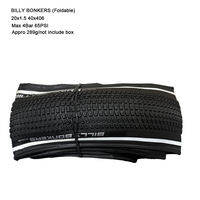
SCHWALBE BILLY BONKERS Tyre Bike 406 20 x 2.0 18in 355 BMX Gravel Folding Bike Bronze Skin Cycle Bike Tire
₱1,888.22₱2,111.18
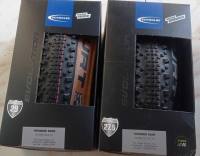
SCHWALBE THUNDER BURT FOLDING TIRES 29 / 27.5 Sports & Outdoors Cycling Tires and Wheels
₱3,999.00
Buy on Lazada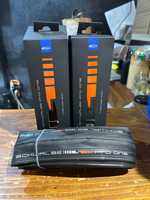
Schwalbe Pro One TLE Super EVO 700x28c pair
₱6,250.00
Buy on Lazada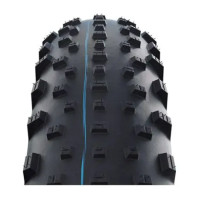
SCHWALBE - JUMBO JIM SS 26X4.40 (BIKE TIRE)
₱6,500.00
Buy on Lazada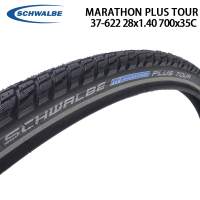
【ready】SCHWALBE MARATHON PLUS TOUR 28Inch 37-622 28x1.40 700x35C Black Reflex Wired Bicycle Tire for Travel Bike Cycling Parts
₱3,500.00₱5,450.00
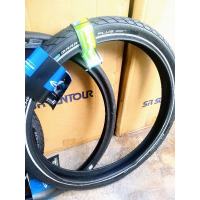
SCHWALBE KOJAK / Road Cruiser and MARATHON PLUS FOLDING BIKE TIRES per piece
₱1,500.00
Buy on Lazada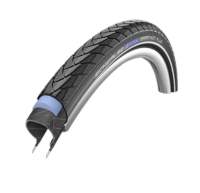
SCHWALBE - MARATHON PLUS TIRES
₱1,950.00
Buy on Lazada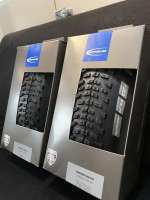
Schwalbe Racing Ralph 27.5 Folding Tires
₱1,850.00
Buy on LazadaAbout Schwalbe
Overview
Schwalbe is a German bicycle-tire and inner-tube brand best known for its focus on cycling-specific tires, puncture protection, durability, racing performance, and increasingly, sustainable/circular manufacturing. The brand is operated by Ralf Bohle GmbH, a family-owned German company whose roots go back to 1922. Today, Schwalbe products are sold in roughly 70 countries, with headquarters in Germany and subsidiaries in several European countries plus North America. 1
Although Schwalbe is strongly associated with Germany, its manufacturing history is international: the company has worked with the Korean family-owned tire manufacturer Hung-A since 1973, and Schwalbe says its bicycle tires and butyl tubes are manufactured in Vietnam through this partnership.
Basic information
| Category | Information |
|---|---|
| Brand | Schwalbe |
| Legal company | Ralf Bohle GmbH |
| Origin | Germany |
| Company founded | 1922 |
| Schwalbe tire brand established | 1973 |
| Founder associated with Schwalbe | Ralf Bohle |
| Headquarters | Reichshof-Wehnrath, Germany |
| Industry | Bicycle components / bicycle tires |
| Main products | Bicycle tires, inner tubes, tire accessories |
| Other applications | Wheelchair tires and tubes |
| Manufacturing partnership | Hung-A, South Korea |
| Current global presence | About 70 countries |
| Ownership | Family-owned |
| Core reputation | Durability, puncture protection, performance, innovation |
Schwalbe describes itself as a specialist in bicycle tires and inner tubes rather than a general automotive tire company.
Name origin
The name Schwalbe is German for “swallow,” the small migratory bird.
The name has a particularly interesting connection with the company’s history.
In 1973, Ralf Bohle began importing bicycle tires from Korea to Germany. Those tires were called “Swallow.” Since Germany was an important market for the company, Bohle translated the name into German: Schwalbe.
The swallow also has cultural significance in Korea, where it is traditionally associated with good luck. Schwalbe adopted the bird as a symbol of cycling: light, free, natural and confident.
So despite the German name, Schwalbe’s relationship with Korea is fundamental to the brand’s history.
1922 — The Bohle company
The story begins well before the Schwalbe brand itself.
In 1922, brothers Eugen and Willy Bohle established a business dealing in bicycle components. The company originally exported bicycle components made in Germany and elsewhere in Europe to international markets. 2
The business remained family-owned.
Ralf Bohle, who later became the key figure behind Schwalbe, joined the family business in 1955 at the age of 20.
1973 — Birth of Schwalbe
The decisive turning point came in 1973.
Ralf Bohle began importing bicycle tires from Korea into Germany. Rather than continuing as a general bicycle-parts trader, he increasingly concentrated the company around bicycle tires.
This was also the beginning of the company’s long-term cooperation with Korean manufacturer Hung-A. Schwalbe describes this relationship as a partnership that has continued for more than 50 years.
This is the real beginning of modern Schwalbe.
Ralf Bohle’s vision
Ralf Bohle’s basic idea was relatively simple:
Bicycle tires should be treated as a high-quality technical product.
According to Schwalbe’s own history, bicycle tires were not generally regarded as particularly high-quality products in the period before Schwalbe’s emergence. Bohle wanted to change that and specialized the company entirely around bicycle tires.
That philosophy explains much of Schwalbe’s later identity.
Rather than trying to sell the cheapest possible tire, Schwalbe built its reputation around:
-
durability
-
puncture resistance
-
riding characteristics
-
specialized compounds
-
tire construction
-
technical innovation
-
application-specific designs
This specialization became one of the brand’s biggest competitive advantages.
Product portfolio
Schwalbe’s main business is bicycle tires and inner tubes. Its product portfolio covers a remarkably broad range of cycling disciplines.
Road cycling
Schwalbe produces high-performance road tires designed around:
-
low rolling resistance
-
weight
-
grip
-
aerodynamic performance
-
puncture protection
-
racing
Examples include the Pro One family and Schwalbe One.
Mountain biking
The MTB range is one of Schwalbe’s most technically sophisticated categories.
Products are designed for different combinations of:
-
downhill
-
enduro
-
trail
-
cross-country
-
all-mountain riding
Schwalbe uses different tread patterns, rubber compounds, carcass constructions and puncture-protection systems according to the intended use.
Gravel
Schwalbe has become increasingly important in the gravel market, with the G-One family being one of its best-known product lines. These tires bridge the gap between road and off-road cycling.
Touring / trekking
This is where Schwalbe’s reputation for durability becomes especially obvious.
The Marathon family is arguably one of the company’s most iconic product families, particularly for:
-
touring
-
commuting
-
trekking
-
long-distance cycling
-
everyday transportation
Schwalbe itself highlights the Marathon series as one of the major innovations in its history.
Urban / commuter
Schwalbe also makes tires optimized for:
-
city bicycles
-
e-bikes
-
commuting
-
everyday transportation
-
puncture resistance
E-bike
E-bikes place different demands on tires because of their greater weight, speed and torque. Schwalbe therefore has dedicated e-bike-oriented products and technologies.
Wheelchairs
An interesting less-obvious part of the company is its wheelchair tire and tube business. So Schwalbe is not exclusively a cycling brand in the strictest sense.
Famous tire families
A useful way to understand Schwalbe is through its major product families.
Marathon
Marathon is probably the most important name in Schwalbe’s touring/commuting history. The family is associated particularly strongly with longevity, puncture protection, touring, commuting, and everyday reliability. It helped establish Schwalbe’s reputation for tires that prioritize getting the rider to the destination rather than simply being lightweight.
Pro One
Pro One represents the opposite end of the spectrum. It is aimed at performance-oriented road cyclists and emphasizes speed, low rolling resistance, grip, racing performance, and tubeless technology.
G-One
G-One is Schwalbe’s major gravel-oriented family. The different versions cover everything from relatively fast hardpack riding to more aggressive gravel and mixed-terrain applications.
Nobby Nic
Nobby Nic is one of Schwalbe’s established MTB tire names, designed as an all-round mountain-bike tire.
Racing Ralph / Racing Ray
These names are particularly associated with cross-country MTB. The emphasis is on reducing rolling resistance while maintaining appropriate off-road traction.
Magic Mary
Magic Mary is associated with aggressive MTB riding, particularly gravity/enduro/downhill applications. It illustrates an important point about Schwalbe: the company doesn’t have a single “Schwalbe riding style.” It produces tires ranging from extremely durable commuter tires to highly specialized competition tires.
Technology
Schwalbe’s brand reputation is heavily connected to tire technology. A bicycle tire isn’t simply a piece of rubber. It consists of multiple components, including the carcass, bead, tread and—in most Schwalbe models—a puncture-protection system.
Puncture protection
This is probably the area in which Schwalbe is most famous among everyday cyclists. Its systems include technologies such as:
-
K-Guard
-
RaceGuard
-
GreenGuard
-
V-Guard
-
SmartGuard
Different systems balance weight, flexibility and puncture resistance differently. 3
For example, Schwalbe’s GreenGuard system used in Marathon tires incorporates a relatively thick puncture-protection layer.
Tubeless technology
Schwalbe has also been an important participant in the development of modern tubeless bicycle tires. Tubeless eliminates the conventional inner tube and allows the tire/rim system to be sealed with sealant.
Potential advantages include:
-
lower pressures
-
improved traction
-
reduced risk of pinch flats
-
lower rolling resistance in some applications
-
performance benefits for MTB and gravel
Schwalbe identifies the further development of tubeless technology as one of the major innovations in its history.
Aerothan
Another major Schwalbe technology is Aerothan. Aerothan is an inner-tube material based on thermoplastic polyurethane (TPU) rather than conventional butyl rubber.
Schwalbe positions Aerothan around:
-
low weight
-
robustness
-
performance
-
resource efficiency
-
recyclability
The company also says pyrolysis oil derived from recycled bicycle tires can be used in Aerothan production, connecting the tube technology to its broader circular-economy strategy.
Sustainability
This is probably the biggest change in Schwalbe’s brand identity in recent years. Historically, Schwalbe was primarily known as a premium bicycle-tire specialist. Today, it increasingly wants to be known as a circular-economy bicycle-tire company as well.
Its sustainability strategy focuses on:
-
recycled materials
-
renewable materials
-
fair-trade natural rubber
-
tire recycling
-
tube recycling
-
lower-carbon manufacturing
-
product circularity
-
supply-chain transparency
Schwalbe’s stated 2040 vision includes net-zero emissions, 100% material circularity, 100% supply-chain transparency and zero waste.
Green Marathon
One of Schwalbe’s most important recent products is the Green Marathon. It represents Schwalbe’s attempt to combine its traditional Marathon philosophy—durability and puncture protection—with a much more circular material strategy.
Schwalbe says the Green Marathon is made primarily from recycled materials, including recovered carbon black (rCB). The company developed it over several years of testing and received the German Sustainability Award for Products 2025 for the product.
This is significant because it demonstrates how Schwalbe is trying to make sustainability part of the actual product engineering, rather than treating it purely as corporate marketing.
Tire recycling system
Schwalbe has developed a system for collecting and recycling used bicycle tires and tubes. Its recycling process can recover materials such as recovered carbon black, which can subsequently be used in new products.
The company says its recycling process can save around 80% of emissions associated with conventional material production for the relevant recycled material pathway. 4
As of its recent reporting, Schwalbe says millions of bicycle tires and inner tubes have entered its recycling programs.
The broader concept is:
old tire → recycling → recovered materials → new tire
rather than:
old tire → waste
That’s the foundation of Schwalbe’s circular-economy strategy.
Manufacturing
This is an important distinction. Schwalbe is a German company/brand, but its bicycle tires are not manufactured in Germany.
Schwalbe states that its bicycle tires and butyl tubes are manufactured in Vietnam, through its production partnership with Korean company Hung-A. 4
The company emphasizes that this Asian production relationship actually dates back to the beginning of the Schwalbe tire business in 1973.
So the simplified picture is:
Germany
→ company management, engineering, brand, product development, distribution
South Korea
→ long-term partner Hung-A
Vietnam
→ tire and butyl-tube manufacturing
This makes Schwalbe an interesting example of a European specialist brand with a deeply integrated Asian manufacturing partnership.
Relationship with Hung-A
The relationship with Hung-A is one of the most distinctive aspects of the company. Rather than treating its Asian manufacturer simply as an anonymous supplier, Schwalbe describes Hung-A as a long-term strategic partner.
The relationship began in 1973 and has developed into a joint-venture/production partnership.
Schwalbe credits the exchange of technical knowledge and experience between the two companies with helping drive product development. This long-term cooperation is unusual in an industry where supply chains can frequently change.
Brand positioning
Schwalbe generally occupies the premium/specialist end of the bicycle-tire market. Its positioning can be summarized as:
Technical specialist + premium quality + cycling expertise + increasingly strong sustainability credentials.
It is not primarily trying to compete with generic low-cost bicycle tires. Instead, Schwalbe emphasizes that tires should be selected according to their intended application.
For example:
Commuter:
maximum puncture protection and longevity
Touring:
reliability + durability + load carrying
Road racing:
low rolling resistance + grip + low weight
MTB:
traction + casing strength + terrain-specific performance
Gravel:
speed + mixed-surface grip + puncture protection
That application-specific approach is fundamental to Schwalbe’s identity.
Reputation among cyclists
There are several reasons why Schwalbe is respected among cyclists:
1. Extremely broad product expertise
Schwalbe has decades of experience focused specifically on bicycle tires.
2. Strong reputation for durability
Especially in the Marathon family, Schwalbe has become synonymous with long service life.
3. Strong puncture protection
This is one of the brand’s defining characteristics.
4. Serious high-performance products
Schwalbe isn’t merely a touring/commuter tire manufacturer. Its road and MTB racing products compete at the highest levels of cycling.
5. Technical variety
Schwalbe offers different casings, compounds, tread designs and protection systems rather than attempting to make one tire fit every situation.
6. Long-term innovation
The company has continuously developed tubeless systems, puncture protection, lightweight materials and sustainable tire technologies.
Comparison with typical brands
A useful mental model is:
| Brand characteristic | Schwalbe |
|---|---|
| Bicycle specialization | Very high |
| Product range | Extremely broad |
| Touring reputation | Excellent |
| Puncture protection | Major strength |
| MTB technology | Very strong |
| Road racing | Strong |
| Gravel | Strong |
| E-bike | Strong |
| Sustainability | Increasingly central |
| Manufacturing | Asia through long-term partnership |
| Company identity | German family business |
| Price positioning | Generally mid-to-premium/premium |
| Main competitors | Continental, Vittoria, Maxxis, Pirelli, Michelin, Specialized, etc. |
Corporate identity
Schwalbe is somewhat unusual among large cycling brands because it remains a family-owned company. The current company describes itself as an independent family business. Its German operation has several hundred employees across the group, with subsidiaries and distribution partners around the world.
Its current leadership includes Frank Bohle, Andreas Grothe, Holger Jahn and Nico Simons in various executive functions.
The company therefore combines:
family ownership + German engineering/management + Korean partnership + Asian manufacturing + global distribution.
Global presence
Schwalbe’s products are sold internationally. The company currently reports brand presence in approximately 70 countries. It has subsidiaries in:
-
Germany
-
France
-
Great Britain
-
Italy
-
the Netherlands
-
USA/Canada
and distribution partners in more than 40 countries.
Europe remains particularly important to Schwalbe, where it has historically been a major bicycle-tire brand.
Modern brand philosophy
The company has increasingly organized its identity around the idea of “Get there.” This has a double meaning.
Literally, a bicycle tire needs to help you get to your destination.
But philosophically, it represents cycling as sustainable mobility—getting people where they need to go without relying on fossil-fuel transportation.
Schwalbe relaunched its brand positioning around the “Get there” claim in 2023.
Timeline
1922 — Eugen and Willy Bohle establish the family bicycle-component business.
1955 — Ralf Bohle joins the family business.
1973 — Ralf Bohle begins importing Korean “Swallow” bicycle tires; the Schwalbe brand is born in Germany.
1973 onward — Long-term cooperation with Korean tire manufacturer Hung-A begins.
1980s–2000s — Schwalbe establishes itself internationally as a specialist bicycle-tire brand.
1990s–2000s — Marathon, MTB and performance tire families become increasingly important.
2010s — Tubeless and advanced puncture-protection technologies become major parts of the product strategy.
2020s — Sustainability and circularity become central to the company’s identity.
2023 — Schwalbe introduces refreshed global brand positioning around “Get there.”
2024 — Schwalbe reports major expansion of tire/tube recycling and environmentally oriented products.
2025 — Green Marathon wins the German Sustainability Award for Products.
2026 — Schwalbe’s stated long-term direction is toward net zero, circular materials and broader supply-chain transparency by 2040.
Summary
Schwalbe is much more than a German bicycle-tire logo. Its history is really the story of four things coming together:
German family business
→ Ralf Bohle’s specialization in bicycle tires
→ a unique 50+ year Korean manufacturing partnership
→ continuous tire technology and sustainability innovation
The brand’s strongest historical reputation is probably durability and puncture protection, particularly through the Marathon family. Its performance side is represented by products such as Pro One, G-One and its MTB ranges. More recently, its most distinctive strategic direction has become circularity—recycling old tires and tubes and incorporating recovered or renewable materials into new products.
In short, if Continental can be thought of as a huge tire company with a major cycling division, Schwalbe is much more narrowly focused: a company whose identity has been built around bicycle tires themselves. That specialization is probably the single most important thing to understand about the brand.