Shop on Lazada
SHI BA ZI ZUO products
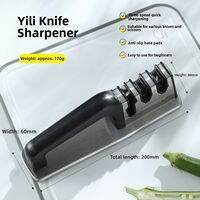
SHI BA ZI ZUO | Quick Sharpening Tool
₱584.34₱995.59
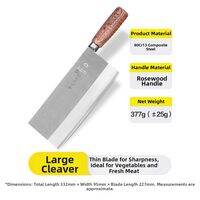
SHI BA ZI ZUO | Chefs Professional Tri-Steel Kitchen Knife
₱2,514.56₱4,262.36
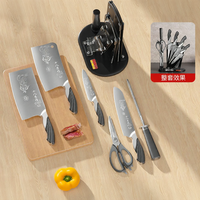
SHI BA ZI ZUO | Household Complete Knife Set
₱6,939.20₱18,767.13
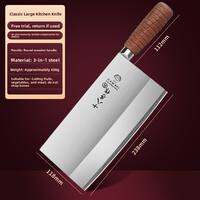
SHI BA ZI ZUO | Professional Chef Forged Stainless Steel Cleaver
₱2,919.46₱3,605.31
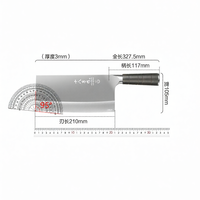
SHI BA ZI ZUO | Sharp Household Chef Knife
₱3,186.66₱7,861.89

SHI BA ZI ZUO(十八子作) | Multi-Purpose Stainless Steel Chefs Knife for Cutting Fruits and Beef
₱924.32₱1,139.81
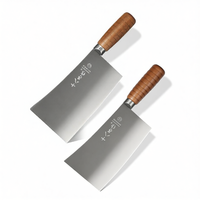
SHI BA ZI ZUO | Slicing and Chopping Kitchen Knife
₱1,101.00₱2,758.00
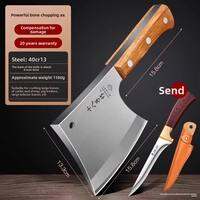
SHI BA ZI ZUO | Sharp Butcher Heavy Duty Bone Cleaver
₱5,196.20
Buy on LazadaAbout SHI BA ZI ZUO
Overview
SHI BA ZI ZUO (十八子作) is a prominent Chinese kitchen knife and cutlery brand originating from Yangjiang, Guangdong, a city widely recognized as China’s capital of knife and scissors manufacturing. Operated by Yangjiang Shibazi Group Co., Ltd. (阳江十八子集团有限公司), the brand is best known for its Chinese-style cleavers, chef knives, and household cutlery 1. In the Philippine market and globally, SHI BA ZI ZUO occupies a distinct position as both a mass-market manufacturer and a representative of traditional Yangjiang craftsmanship. In 2024, it was officially recognized as a “China Time-honored Brand” (中华老字号) by China’s Ministry of Commerce 1.
Basic Information
| Item | Information |
|---|---|
| Chinese name | 十八子作 |
| Romanization | SHI BA ZI ZUO |
| English rendering | Shibazi / Shibazi Zuo |
| Parent company | Yangjiang Shibazi Group Co., Ltd. |
| Industry | Kitchen knives, cutlery, household hardware |
| Origin | Yangjiang, Guangdong, China |
| Founder | Li Lianghui (李良辉) |
| Modern enterprise founded | 1983 |
| Brand registration | 1997 |
| Major identity | Chinese kitchen-knife and cleaver brand |
| China Time-honored Brand | 2024 |
| Core philosophy | “Make a good knife” (做一把好刀) |
Historical records present two significant dates regarding the brand’s origin. Chinese government archives trace the brand tradition to 1950, while the company identifies 1983 as the founding of its modern private enterprise. The trademark “SHI BA ZI ZUO” was subsequently registered in 1997 1.
Etymology and Brand Philosophy
The name SHI BA ZI ZUO carries specific cultural significance derived from Chinese character composition. “Shibazi” (十八子) literally translates to “eighteen children,” but it functions primarily as a character puzzle referencing the founder’s surname, Li (李). The character 李 can be visually decomposed into the components for wood (木) and child (子), linking the brand name directly to the founder’s family identity 2. The suffix “Zuo” (作) denotes workmanship or creation. Consequently, the full name conceptually signifies “Shibazi Craftsmanship” or “Made by Shibazi,” emphasizing the maker rather than merely describing the product.
The brand operates under three core philosophical tenets:
* “Make a good knife” (做一把好刀): The fundamental corporate mission.
* “First be a good person, then make a good knife” (先做好人,再造好刀): A statement linking personal integrity to product quality.
* “Shibazi is the knife; the knife is Shibazi” (十八子就是刀,刀就是十八子): An ambition to make the brand synonymous with Chinese cutlery 1.
History and Development
Origins in Yangjiang
SHI BA ZI ZUO is intrinsically linked to Yangjiang, a coastal city in western Guangdong with a knife-making history spanning over 1,400 years. Historically, production was concentrated in small blacksmith workshops in areas such as Datiexiang (Blacksmith Lane). This heritage provided the foundation upon which modern manufacturers like SHI BA ZI ZUO built their industrial operations 1.
Founder and Early Tradition
The central figure in the brand’s history is Li Lianghui (李良辉). According to Ministry of Commerce profiles, Li entered a Yangjiang blacksmith workshop in 1947 and later studied under master knifemaker Liang Jifu (梁季芙) 1. He represents the transition from traditional artisanal methods to modern industrial manufacturing. Government archives date the brand tradition to 1950, when Li established an “Eighteen Sons” blacksmith workshop after observing that existing small knives did not meet household needs for processing meat and vegetables 1.
Modern Enterprise Establishment
The modern iteration of the company began in 1983 when Li Lianghui and his wife, Lu Rongjuan, established a private knife factory. Initial operations were modest, consisting of a workshop under 200 m², approximately eight workers, and less than RMB 20,000 in capital, focused primarily on carbon-steel cleavers. Over subsequent decades, this family-scale workshop evolved into a large-scale manufacturing group through a progression from traditional craftsman to integrated industrial entity 1.
Trademark and Corporate Expansion
In the 1990s, the company sought a distinctive legal identity beyond the generic “Shibazi” name. The trademark “SHI BA ZI ZUO” was officially registered in 1997, marking a strategic shift from selling unbranded commodities to building a recognizable consumer brand 1. The enterprise expanded rapidly thereafter:
| Year | Development |
|---|---|
| 1950 | Brand/craft tradition associated with Li Lianghui begins |
| 1955 | Li enters the state/collective knife-production system |
| 1983 | Modern SHI BA ZI ZUO enterprise established |
| 1988 | Jiangcheng Xiangyang Household Knife Factory becomes independent |
| 1990s | Rapid expansion of product categories and distribution |
| 1997 | “SHI BA ZI ZUO” trademark registered; Yangjiang Shibazi Kitchen Industry established |
| 1998 | “China Kitchen Knife Center” established at the company |
| 1999 | ISO 9001 quality certification obtained |
| 2000 | “Shibazi” recognized as a Guangdong famous trademark |
| 2002 | Yangjiang Shibazi Group established |
| 2024 | Recognized as a China Time-honored Brand |
Today, the group operates as a vertically integrated organization encompassing steel production, manufacturing, research, sales, and cultural tourism 1.
Products and Manufacturing
While frequently associated with Chinese cleavers, SHI BA ZI ZUO maintains a diverse portfolio comprising over 2,000 varieties across different steels and specifications 1. Major product categories include:
- Kitchen Knives: Chinese cleavers, chopping knives, slicing knives, chef knives, boning knives, utility knives, and fruit/vegetable knives.
- Knife Sets: Household sets, gift sets, multi-function sets, and knife-and-block combinations.
- Other Cutlery: Scissors, household cutting tools, and specialty knives.
- Household Hardware: Various kitchen and home hardware products.
Technological Innovations
The company describes its evolution through five major technological revolutions that distinguish it from purely traditional makers 1:
1. Integrated Construction: Development of “Lian Ti Zhi Chu” (连体直出) construction, integrating blade and handle structures for improved durability.
2. Multi-function Knives: Expansion in the 1990s into knives designed for specific tasks like fish scaling, bottle opening, and frozen-food cutting.
3. Knife Sets: Popularization of knife sets as commercial and gift products, overcoming traditional cultural taboos regarding gifting sharp objects.
4. Advanced Steels: Collaboration in developing specialized steels such as 7Cr17Mo and stainless composite steels for consumer use 1.
5. Vertical Integration: Investment in proprietary steel-production capabilities to integrate steelmaking, heat treatment, and knife manufacturing.
Steel and Materials Research
Unlike many cutlery brands that purchase finished steel, SHI BA ZI ZUO invests heavily in metallurgy. Research efforts cover special alloy steels, stainless steels, composite steels, and electroslag-remelted steel to enhance cleanliness, toughness, and edge performance. This integration of scientific research with manufacturing allows the company to operate as a comprehensive materials and cutlery enterprise 1.
Manufacturing Scale
From its origins as a small workshop, the company has grown into a major industrial entity. Manufacturing facilities span over 250,000 m² and employ thousands of staff. Operations cover knife and scissors manufacturing, stainless-steel processing, material research, surface treatment, and heat treatment. Products are exported to markets including the United States, Canada, Germany, Russia, South Korea, Europe, and Southeast Asia 1.
Industry Role and Standards
SHI BA ZI ZUO plays a significant institutional role in the Chinese cutlery industry. In 1998, the “China Kitchen Knife Center” was established at the company’s Yangjiang facilities, underscoring its status as an industry representative 1. The company was among the first in its sector to adopt ISO 9001 and ISO 14001 management systems. It currently leads the drafting of one national standard for kitchen knives, participates in ten national or industry standards, holds over 60 effective patents, and has received more than 300 honors and awards 1.
Cultural Significance and Tourism
The brand has transformed knife manufacturing into a form of industrial cultural tourism. Assets managed by the group include a national-level Grade III museum, a national industrial-tourism demonstration site, two AAA-level tourist attractions, and a Guangdong intangible-cultural-heritage production-protection base 1. These initiatives position SHI BA ZI ZUO not only as a product manufacturer but also as a custodian of Yangjiang’s culinary and craft heritage.
Market Position and Identity
Domestic Reputation
Within China, SHI BA ZI ZUO is strongly associated with kitchen cleavers and has historically claimed leading sales positions in the domestic market. While specific sales rankings are company-provided claims, the brand is widely recognized alongside Zhang Xiaoquan as one of China’s premier domestic cutlery manufacturers 1. Its success is attributed partly to adapting products to regional Chinese cooking habits and cutting preferences.
International Presence
Although deeply rooted in Chinese identity, SHI BA ZI ZUO maintains an international footprint with exports to North America, Europe, and Asia. Its long-term vision is to establish itself as a global Chinese knife brand. Unlike German brands known for professional durability or Japanese brands noted for precision geometry, SHI BA ZI ZUO is distinguished by its focus on the versatile Chinese cleaver and high-volume household cooking techniques 1.
Relationship with Yangjiang
Yangjiang is known as the “China Knife and Scissors Capital,” possessing a complete industrial ecosystem for forging, grinding, heat treatment, and logistics. SHI BA ZI ZUO leverages this geographic identity as a core value proposition, deliberately associating the brand with Yangjiang’s centuries-old reputation for craftsmanship. Unlike generic factories, the company combines this regional heritage with modern branding and vertical integration 1.
Corporate Structure
The brand is operated by Yangjiang Shibazi Group Co., Ltd., with knife manufacturing conducted by its subsidiary, Yangjiang Shibazi Knife & Scissors Manufacturing Co., Ltd. The group employs a “whole-industry-chain model” that extends beyond manufacturing to include steel production, R&D, logistics, and cultural tourism 1.