Shop on Lazada
Shopkins products
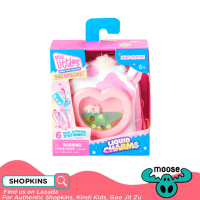
Real Littles Liquid Charms Backpack Single Pack Assortment (Justpurr-Fect Uni-Questyle Moo-Tastic Axolotllove) with 6 Stationery Surprises for Kids Gift for Girls 6 years and Up
₱699.00
Buy on Lazada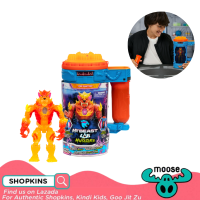
Mr. Beast Lab Mutators S2 Mutation Chamber Fire Panther 5.5 Inches Tall Toy Figure inside and 20 points Articulation for Kids Gift for Boys Age 5 years and above
₱2,199.00
Buy on Lazada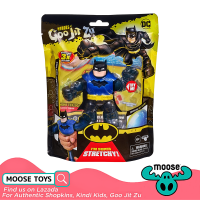
Heroes of Goo Jit Zu S4 DC Hero Pack Action Figure Collectible Toys for Boys Gift for Kids Ages 4 Years and Up
₱600.00
Buy on Lazada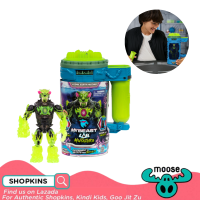
Mr.Beast Lab Mutators S2 Mutation Chamber Earth Panther 5.5 Inches Tall Toy Figure inside and 20 points Articulation for Kids Gift for Boys Age 5 years and above
₱2,199.00
Buy on Lazada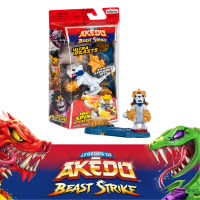
Legends of Akedo Beast Strike Ultra Beast Ripclaw Alphawolf - Supersized with 360 Degree Spin Attack Ripclaw Alphawolf Strike with Claws and Jaws Children Toys Gift for Kids Toys for 6 years and above
₱400.00
Buy on Lazada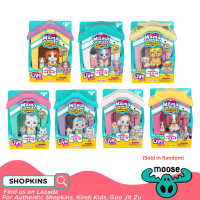
Little Live Pets Mama Surprise Families S1 Mamas House Magically has 4 5 Or 6 Babies and Collect up to 80 Toys for Kids Gift for Girls & Boys ages 5 years and above
₱899.00
Buy on Lazada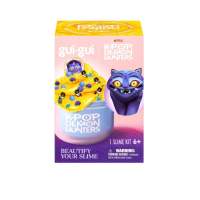
GUI GUI K-POP Demon Hunters Single Pack Collectible Figure Toy for Kids & Collectors Ages 6+
₱899.00
Buy on Lazada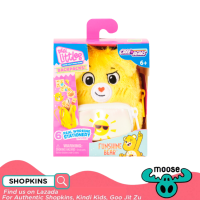
Real Littles Care Bears Backpack Assortment (Togetherness Bear Funshine Bear Share Bear Grumpy Bear Wish Bear Cheer Bear) with 6 Stationery Surprises for Kids Gift for Girls 6 years and Up
₱699.00
Buy on LazadaAbout Shopkins
Shopkins is an Australian-origin collectible toy and entertainment brand created by Moose Toys. The franchise centres on extremely small, stylised characters based primarily on grocery-store products, food, household goods, fashion items, and other everyday objects. Each item is given a face, name, personality, and collectible rarity, transforming ordinary shopping goods into miniature characters. The first Shopkins toys were released in 2014 and quickly became a major global collectible-toy phenomenon.1
The brand’s original slogan was “Once you shop, you can’t stop!”, while later eras used slogans including “Real Brands. Real Cute.” and “Things You Love Made Micro!”1
Overview
| Field | Information |
|---|---|
| Brand | Shopkins |
| Created by | Moose Toys |
| Origin | Australia |
| First released | 2014 |
| Genre | Collectible toys, dolls, children’s entertainment |
| Main concept | Miniature anthropomorphic shopping products |
| Primary audience | Children, particularly elementary-school-age collectors |
| Toy format | Small plastic/rubber figures, playsets, dolls and accessories |
| Notable characters | Apple Blossom, Strawberry Kiss, Kooky Cookie, Lippy Lips, Cheeky Chocolate |
| Major expansions | Shoppies, Happy Places, Real Littles and other themed collections |
| Media | Animated web series, films, apps, music and digital content |
| Original slogan | “Once you shop, you can’t stop!” |
| Parent company | Moose Toys |
History
Creation
Shopkins was developed by Moose Toys in Melbourne, Australia, during 2013, before its commercial launch in 2014. The concept grew out of Moose Toys’ experience with miniature collectible franchises such as Mighty Beanz and The Trash Pack. Moose executive Paul Solomon has credited his mother, Jacqui Tobias, who worked in girls’ products, with the idea that ultimately became Shopkins.1
The basic premise was simple but distinctive: take familiar products that children might see while shopping—such as food, toiletries, and household products—and shrink them into tiny collectible figures. Giving each item a cute face and a name transformed otherwise ordinary objects into characters.
The original line contained more than 140 characters, divided into supermarket-style categories such as Sweet Treats, Frozen Food, and Toiletries. Figures could have different rarity levels and special finishes, encouraging children to collect and trade them.3
Launch in 2014
Shopkins officially entered the market in 2014. Its tiny size, inexpensive individual figures, blind or surprise packaging, and large number of characters made collecting a central part of the experience.
The figures were generally around an inch tall, making them considerably smaller than conventional dolls and action figures. This miniature scale became one of the brand’s defining visual characteristics.2
Although the initial concept was strongly associated with girls’ toys, Shopkins ultimately developed a broader appeal among children and collectors.
The Shopkins Concept
The defining feature of Shopkins is anthropomorphism: everyday objects are turned into living characters.
For example:
- A cupcake becomes Cupcake Queen.
- An apple becomes Apple Blossom.
- A chocolate bar becomes Cheeky Chocolate.
- A cookie becomes Kooky Cookie.
- Lipstick becomes Lippy Lips.
- A strawberry becomes Strawberry Kiss.
This approach allows the brand to create a huge cast without needing traditional human characters as its starting point.
Characters are generally recognisable by their shape. A Shopkin might still look like a cupcake, piece of fruit, cosmetic product, or household item, but it receives large eyes, a mouth, expressive colours, and a personality.
According to the official Shopkins site, the brand has produced more than 1,400 unique characters across multiple seasons and collections, although counts vary depending on whether special editions, variants, and spin-off characters are included.3
Collecting System
Collecting is one of the most important aspects of Shopkins.
Figures were commonly categorised according to rarity, including:
- Common
- Rare
- Ultra Rare
- Special Edition
- Limited Edition
- Exclusive
Some characters were produced with special visual treatments such as glitter, translucent plastic, metallic finishes, or other variants.1
Shopkins were commonly sold in small multipacks, larger collector packs, playsets, and surprise-oriented packaging. This created an element of uncertainty because collectors did not always know exactly which characters they would receive.
The resulting experience combined toy collecting, trading, and imaginative play.
Seasons
Rather than treating Shopkins as one unchanging collection, Moose Toys periodically refreshed the brand through numbered seasons.
Each season generally introduced:
- New characters
- New categories
- New colours and finishes
- New playsets
- New packaging
- New themes
- Special or limited-edition figures
The early seasons concentrated heavily on the supermarket concept. Later seasons expanded into themes such as Fashion Spree, Chef Club, and World Vacation.3
Secondary documentation records a long-running sequence of numbered Shopkins seasons, extending well beyond the original five or six seasons.3
Major Characters
Although Shopkins contains thousands of characters and variants, several became particularly recognisable through the animated media.
Apple Blossom
Apple Blossom is one of the best-known Shopkins characters and appears as one of the central characters in the animated universe. She is portrayed as adventurous, energetic, and determined.3
Strawberry Kiss
Strawberry Kiss is another prominent early character and belongs to the original group of Shopkins associated with the animated series.
Kooky Cookie
Kooky Cookie is a cookie-themed Shopkin and one of the recognisable members of the original cast.
Lippy Lips
Lippy Lips is based on a lipstick and became one of the signature characters of the franchise.
Cheeky Chocolate
Cheeky Chocolate is based on a chocolate product and was part of the original core group used to establish the Shopkins animated universe.
The original animated cast included Apple Blossom, Cheeky Chocolate, Kooky Cookie, Strawberry Kiss, Lippy Lips, Spilt Milk, Chee Zee, and Cupcake Queen.3
Shoppies
One of the brand’s major expansions was Shoppies, a line of larger fashion-doll-style characters designed to interact with Shopkins.
Rather than being objects themselves, Shoppies are human-like characters associated with Shopkins and typically come with miniature Shopkins companions and accessories.
Examples include Jessicake, Peppa-Mint, and Sara Sushi. The official Shopkins site describes Shoppies as the “human friends” of the Shopkins and presents them as an extension of the original toy universe.3
The introduction of Shoppies allowed the franchise to move beyond tiny collectible objects and create a more conventional doll-and-accessory play pattern.
Happy Places
Another major expansion was Happy Places, which focused on miniature environments and pet-like characters.
Rather than simply collecting individual Shopkins, Happy Places emphasised creating small rooms, houses, and themed environments populated by tiny characters and accessories.
This helped Shopkins evolve from a straightforward collectible-figure brand into a broader miniature play-world franchise.
Real Littles
Real Littles represents another important evolution of the Shopkins concept.
Instead of merely creating fictional objects inspired by products, Real Littles focuses on miniature versions of recognisable real-world branded products, paired with tiny Shopkins-style characters.
The concept can therefore be thought of as:
Real product → miniature product → collectible character
The official Shopkins site distinguishes traditional Shopkins from Real Littles in essentially this way: classic Shopkins are inspired by shopping items, whereas Real Littles reproduce miniature versions of actual branded products.3
Playsets
Shopkins also developed a large range of playsets.
These included environments such as:
- Supermarkets
- Bakeries
- Food stands
- Fashion stores
- Beauty shops
- Themed rooms
- Vacation environments
Playsets gave collectors somewhere to display and play with their figures. Some sets could also be connected to create larger Shopkins environments.3
Animation
Shopkins eventually expanded from toys into animated entertainment.
The original Shopkins web series premiered in June 2014 and was produced by Pixel Zoo Animations. The series eventually reached 85 episodes, initially consisting of very short episodes and later expanding into longer instalments.3
The animated universe transformed the toys from collectible objects into characters with relationships, personalities, and stories.
The central setting was associated with a miniature shopping environment, with characters interacting much like a traditional children’s cartoon cast.
Films
The success of the franchise led to animated feature-length projects as well. Moose Toys partnered with Universal Studios on three Shopkins movies, expanding the property beyond short-form web animation.1
This was part of a larger strategy of treating Shopkins not simply as a toy line but as a multimedia children’s entertainment franchise.
Digital Media
Shopkins also entered the digital space through:
- Mobile applications
- Online games
- YouTube content
- Animated shorts
- Music videos
- Interactive content
Digital content became especially important because children could encounter Shopkins characters online even when they were not physically playing with the toys.
The brand’s animated content was distributed through platforms including YouTube and, for a period, Netflix.1
Merchandise and Licensing
The Shopkins brand expanded far beyond collectible figures.
Licensed merchandise has included:
- Clothing
- Shoes
- Backpacks
- Stationery
- Bedding
- Accessories
- Party products
- Home goods
- Trading cards
- Books
- Plush toys
- School supplies
The scale of the licensing programme was considerable. For example, SKECHERS reported that Shopkins finished 2016 with more than $1 billion in retail sales and had more than 210 licensees and 18 agents globally supporting the brand.4
This illustrates how Shopkins evolved from a miniature collectible into a much larger consumer-products property.
Visual Style
Shopkins has a highly recognisable visual identity.
Its characters generally feature:
- Extremely small proportions
- Bright, saturated colours
- Large expressive eyes
- Simple facial expressions
- Rounded or exaggerated forms
- Cute interpretations of familiar objects
- Strong colour-coding
- Highly detailed miniature accessories
The design philosophy is essentially “ordinary object + cute face + personality.”
This gives the brand an enormous potential character pool because practically any consumer product can theoretically become a Shopkin.
Why Shopkins Became Popular
Several elements contributed to the popularity of Shopkins.
1. Miniature scale
The extremely small figures differentiated Shopkins from conventional dolls and action figures.
2. Collectibility
The huge number of characters encouraged children to complete collections.
3. Surprise
Blind or partially concealed packaging created anticipation around opening new packs.
4. Rarity
Rare and limited figures gave collecting an additional goal.
5. Trading
Children could exchange duplicates with friends.
6. Character design
Everyday objects became cute characters with individual identities.
7. Low barrier to entry
Collectors could start with relatively small packs rather than purchasing a large playset.
8. Multimedia expansion
Cartoons, apps, movies, and merchandise allowed children to interact with the brand outside the physical toy.
Cultural Impact
Shopkins became one of the major examples of the 2010s collectible-toy boom, particularly among children.
Its success demonstrated the commercial potential of extremely small, inexpensive collectible figures combined with:
- Surprise packaging
- Large character rosters
- Online videos
- Licensing
- Trading
- Repeated seasonal refreshes
It also became part of the rise of children’s unboxing culture. Shopkins videos showing children opening packages and discovering figures became an important component of the brand’s online visibility. Contemporary accounts specifically noted that consumer videos of unwrapping and playing with Shopkins helped accelerate its popularity.3
Brand Legacy
The broader importance of Shopkins is that it helped establish a successful formula for modern collectible toys:
small figure + large character universe + rarity + surprise packaging + digital content + licensing.
The formula subsequently became common across many children’s collectible franchises.
Shopkins also demonstrated that a character franchise did not necessarily need to originate as a television cartoon. In this case, the toy came first, while animation and storytelling were subsequently built around the characters.
Shopkins Today
The status of the brand is somewhat complicated because Shopkins has gone through multiple generations, collections, and product formats. The current official Shopkins website continues to present the brand, its characters, playsets, and Real Littles products, while older seasons and discontinued products remain popular among collectors.1
Consequently, it is useful to distinguish between the original classic Shopkins era, its numerous numbered seasons and spin-offs, and later forms of the brand rather than treating Shopkins as a single continuous toy range.
In Popular Culture
Shopkins is particularly associated with the mid-to-late 2010s children’s toy boom. Alongside other collectible franchises, it helped make miniature surprise collectibles a major category of children’s toys.
Its distinctive visual formula—turning a cupcake, apple, lipstick, cookie, shoe, or other ordinary shopping item into a tiny character—is arguably the most recognisable feature of the franchise.
See Also
- Moose Toys
- Shoppies
- Happy Places
- Real Littles
- Kindi Kids
- The Trash Pack
- Mighty Beanz
- Shopkins animated series
Official resources
The current official Shopkins website provides information about the brand, characters, collections, and products.3