Shop on Lazada
Siemens products
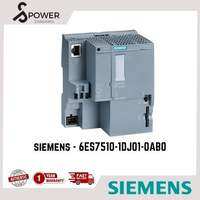
Siemens - 6ES7510-1DJ01-0AB0
₱32,606.75
Buy on Lazada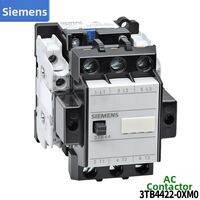
Siemens | AC Contactor
₱2,185.00
Buy on Lazada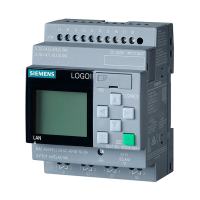
6ED1052‑1MD08‑0BA1/A0 CPU Module For Siemens LOGO 12/24RCE Logic Controller 12‑24V DC 8DI/4DO
₱7,828.90₱8,855.00
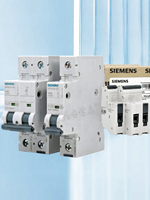
Siemens | DC Circuit Breaker 2P
₱2,442.00
Buy on Lazada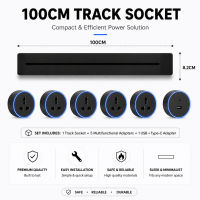
SIEM 8000W Power Track Socket 32A Movable Wall Outlet Universal Adapter for Kitchen. High load capacity 32A high power safe for high power appliances suitable for kitchen use modern design.
₱2,730.00₱5,460.00
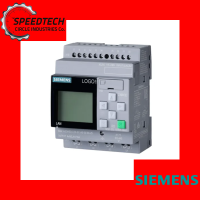
Siemens LOGO! Series Logic Module Relay Output 8-Input Digital Input
₱8,800.00₱9,500.00
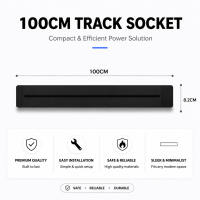
SIEM 8000W High Load Track Socket with USB + Type-C Fast Charging Movable Socket Free Sliding 10 Years Warranty
₱1,189.50₱2,379.00
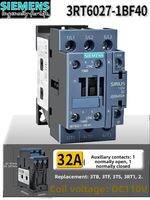
Siemens | 32A AC Contactor 220V
₱5,083.00
Buy on LazadaAbout Siemens
Overview
Siemens AG, commonly referred to as Siemens, is one of Germany’s oldest and most significant international technology enterprises. Established in Berlin in 1847, the company originated as a small electrical-engineering workshop and has since evolved into a global technology conglomerate with operations spanning industry, infrastructure, mobility, and healthcare. Its current strategic direction focuses on integrating the physical world—including factories, buildings, power grids, transport networks, and machinery—with the digital world of software, data analytics, digital twins, and artificial intelligence.1
Corporate Profile
| Item | Information |
|---|---|
| Full legal name | Siemens AG |
| Common name / brand | Siemens |
| Founded | 1 October 1847 |
| Founders | Werner von Siemens and Johann Georg Halske |
| Original name | Telegraphen-Bauanstalt von Siemens & Halske |
| Origin | Berlin, Kingdom of Prussia |
| Headquarters | Munich and Berlin, Germany |
| Industry | Technology, industrial automation, software, infrastructure, mobility, electrification |
| Major markets | Industry, infrastructure, transportation, healthcare |
| Employees | ~318,000 worldwide |
| FY2025 revenue | €78.9 billion |
| Stock market | Publicly listed German company; traded since 1899 |
| Current strategic focus | Digitalization, industrial AI, automation, digital twins, electrification, sustainability |
| Purpose | “We create technology to transform the everyday, for everyone.” |
Employee counts and revenue figures reflect reported FY2025 results as of 30 September 2025.2
Business Nature and Scope
Siemens operates primarily as a business-to-business (B2B) technology provider, distinguishing it from consumer electronics manufacturers. Its client base encompasses manufacturers, energy utilities, railway operators, building owners, infrastructure managers, government agencies, and healthcare institutions. The company’s core function is to link physical machines and infrastructure with digital software, data, and AI capabilities.3
This integration manifests in various applications:
- Factories utilize Siemens automation equipment to manage production machinery.
- Software solutions enable the creation of a digital twin to simulate changes before physical implementation.
- Sensors capture real-time operational data for analysis.
- Artificial intelligence processes this data to recommend or execute optimizations.
- Electrical infrastructure systems manage energy consumption within facilities.
- Technologies facilitate connectivity across broader supply chains.
The convergence of hardware, software, and services defines the contemporary Siemens business model.4
Historical Development
Foundation and Early Years
Siemens traces its origins to 1 October 1847, when Werner von Siemens and precision mechanic Johann Georg Halske established Telegraphen-Bauanstalt von Siemens & Halske in Berlin. Initially employing approximately 10 people, the firm focused on telegraph equipment, achieving early success by combining electrical engineering with practical commercial applications.5 Rather than beginning as a large industrial conglomerate, it operated essentially as a technology startup specializing in communications and electrical engineering.
Expansion into Electrical Engineering
In the latter half of the 19th century, Siemens expanded beyond telegraphy. A pivotal development was Werner von Siemens’ work on the dynamo-electric principle and electrical power generation, which positioned the company as a key player in the emerging electrical industry. Operations grew to include electrical generators, motors, power systems, railway electrification, telecommunications, lighting, and industrial electrical equipment. Large-scale international engineering projects subsequently transformed Siemens from a domestic German firm into a global enterprise.6
Public Listing and Siemensstadt
Responding to the rapidly expanding electrical-engineering market, Siemens & Halske reorganized as a stock corporation in 1897. Shares were listed shortly thereafter, with the company making its stock-market debut in March 1899.3 This milestone provided the substantial capital necessary to finance major infrastructure and industrial projects. Concurrently, the company’s growth led to the development of Siemensstadt, an industrial district in Berlin that became synonymous with its manufacturing, research, and engineering activities.7
20th Century Challenges
The first half of the 20th century was a period of significant turbulence. While Siemens expanded internationally, it faced severe disruptions from World War I, economic instability, the Great Depression, Nazi Germany, and World War II. The company acknowledges that its wartime activities included the use of forced labor.8 World War II caused immense physical and economic damage, resulting in the loss of approximately four-fifths of its assets in Germany and internationally.9 Post-war reconstruction gradually re-established Siemens as a global industrial technology leader.
Formation of Siemens AG
A major organizational restructuring occurred on 1 October 1966, when three predecessor companies—Siemens & Halske AG, Siemens-Schuckertwerke AG, and Siemens-Reiniger-Werke AG—merged to form Siemens AG.10 This consolidation created the corporate structure underlying the modern entity. In subsequent decades, Siemens expanded into industrial automation, telecommunications, computing, electrical power, medical technology, transportation, consumer electronics, and industrial controls. Notably, the introduction of SIMATIC in 1959 helped establish Siemens as a dominant force in industrial automation.11
21st-Century Transformation
Historically associated with electrical engineering and heavy industry, Siemens has undergone a significant strategic shift since the 2000s. The company has pivoted toward industrial technology, software, automation, and digitalization, divesting businesses less central to this vision while strengthening industrial automation, software, electrification, and smart infrastructure. Today, Siemens positions itself as a digital-industrial technology company rather than merely an electrical-equipment manufacturer.
Core Business Areas
Siemens currently organizes its operations around four primary pillars: Digital Industries, Smart Infrastructure, Mobility, and Healthcare (via Siemens Healthineers).12
Digital Industries
Digital Industries supports manufacturers and industrial firms in automating and digitalizing operations. Key technologies include industrial automation, programmable logic controllers, manufacturing software, product lifecycle management, simulation, industrial IoT, digital twins, and industrial AI. The division enables a transition from traditional linear production models to integrated digital-enterprise workflows where design, simulation, automation, and real-time data optimization occur continuously. Consequently, Siemens competes with both traditional industrial firms and specialized engineering-software providers.
Siemens Xcelerator
Siemens Xcelerator serves as an open digital business platform integrating Siemens hardware, software, and digital services with partner technologies. Designed to accelerate industrial digitalization, it encompasses industrial software, automation, simulation, digital twins, IoT, cloud technologies, AI, industrial cybersecurity, and engineering. Xcelerator functions as a primary vehicle for bridging the physical and digital worlds.13
Industrial AI
Siemens emphasizes Industrial AI tailored for environments requiring high reliability, safety, and integration with physical processes. Unlike consumer-focused AI, Industrial AI is designed for factories, grids, buildings, and transportation systems where engineering data and real-world equipment interaction are critical.14 Under its current strategy, Siemens plans to invest more than €1 billion in AI over three years.15
Digital Twins
A digital twin provides a digital representation of physical objects, machines, or processes. Engineers use these models to simulate behavior, test production flows, identify issues, and optimize designs before physical implementation. The 2026 strategy increasingly integrates digital twins with real-time data and AI; for instance, the Digital Twin Composer combines Siemens technology with NVIDIA Omniverse and engineering data.16
Smart Infrastructure
Smart Infrastructure focuses on systems for buildings, cities, and energy networks, including electrical distribution, building automation, energy management, fire safety, security, and grid technologies. The objective is to enhance efficiency, intelligence, connectivity, and sustainability through sensor-driven monitoring and AI-optimized control of electricity, heating, cooling, lighting, and occupancy.
Mobility
Siemens Mobility operates as a separately managed company within the group with over 160 years of transportation experience.17 Its portfolio includes rolling stock (trains, locomotives, high-speed rail), rail automation, rail electrification, intelligent traffic systems, and turnkey transportation projects. The Velaro high-speed train platform is among its best-known products. This business aligns Siemens with long-term trends in urbanization, public transportation, railway electrification, and sustainable mobility.
Healthcare (Siemens Healthineers)
Healthcare is delivered through Siemens Healthineers AG, a separately managed, publicly traded medical-technology company associated with the Siemens group.18 Its technologies span medical imaging (MRI, CT, X-ray), molecular imaging, laboratory diagnostics, cancer treatment, digital health, and clinical services. While historically linked to the Siemens brand in hospitals, Siemens Healthineers is distinct from Siemens AG in the modern corporate structure.
Financial Services
Siemens Financial Services (SFS) provides financing solutions for business customers, including equipment financing, leasing, project financing, and structured financing, facilitating the acquisition of Siemens technology and industrial equipment.19
Business Model and Competitive Advantages
Siemens employs an integrated business model combining hardware, software, services, and financing. This ecosystem allows for comprehensive lifecycle support, from engineering and automation to maintenance and optimization.
Key competitive advantages include:
- Industrial History: Continuous operation since 1847 provides over 175 years of engineering experience.20
- Domain Knowledge: Deep expertise in electrical engineering, manufacturing, automation, transportation, energy, buildings, and healthcare enhances the application of AI to physical systems.
- Installed Base: Decades of deployment across global factories and infrastructure generate extensive operational data and customer ecosystems.
- Hardware-Software Integration: Offering both industrial hardware and engineering software enables holistic product and facility optimization.
- Global Reach: Significant presence across Europe, Asia, the Americas, and other international markets.
Sustainability Strategy
Sustainability is central to Siemens’ strategy, with the company stating that more than 90% of its business enables positive sustainability impact for customers. Focus areas include decarbonization, energy efficiency, resource efficiency, circularity, and societal impact. By 2025, relevant Siemens technologies had cumulatively helped customers avoid approximately 694 million metric tons of CO₂e.21 Sustainability is treated as a commercial growth market rather than solely a philanthropic endeavor.
ONE Tech Company Strategy
The ONE Tech Company program aims to increase integration across businesses through shared data, technology, and sales foundations. Priorities include customer focus, common technology, digitalization, AI, software, faster innovation, and scalable global solutions.22 Strategic growth targets specific sectors such as rail, aerospace and defense, life sciences, semiconductors, data centers, and AI factories.23
Technological Evolution
Siemens’ development mirrors broader technological history:
- 1847: Telegraphy
- Late 19th century: Electrical engineering
- 20th century: Electrification and industrial engineering
- Late 20th century: Automation, electronics, and industrial systems
- 21st century: Digitalization and software
- Today: Industrial software, digital twins, AI, and physical infrastructure24
Role in the Technology Industry
Siemens occupies a unique position spanning multiple sectors:
| Sector | Siemens’ role |
|---|---|
| Manufacturing | Automation, industrial software, digital twins |
| Energy | Electrification, grid and energy infrastructure |
| Buildings | Building automation and energy management |
| Transportation | Trains, signaling, rail infrastructure |
| Healthcare | Medical technology through Siemens Healthineers |
| Software | Industrial engineering, simulation and PLM |
| AI | Industrial AI and AI-enabled engineering |
| Infrastructure | Digital and electrical infrastructure |
| Sustainability | Energy efficiency, decarbonization and resource efficiency |
This cross-sector involvement distinguishes Siemens from conventional consumer electronics brands.
Key Technologies and Products
Prominent Siemens technologies and product families include:
- SIMATIC: Industrial automation and control
- SINAMICS: Industrial drives
- SINUMERIK: CNC control systems
- MindSphere: Industrial IoT technology
- Siemens Xcelerator: Digital business and technology platform
- Teamcenter: Product lifecycle management
- NX: Engineering and product-design software
- Tecnomatix: Digital manufacturing
- Digital Twin technologies
- Building X: Smart-building platform
- Rail automation and signaling systems
- Velaro: High-speed trains
- MAGNETOM: MRI systems (via Siemens Healthineers)
Brand Identity
The Siemens brand is traditionally associated with engineering, reliability, precision, industrial expertise, German technological heritage, innovation, infrastructure, and long-term durability. Unlike lifestyle or consumer electronics brands, Siemens is primarily identified with engineering technology for complex real-world systems.
Corporate Structure Distinctions
It is important to distinguish between the following entities:25
- Siemens AG: The parent company and central technology group.
- Siemens Mobility: A separately managed company focused on transportation.
- Siemens Healthineers: A separately managed, publicly traded medical-technology company.
Not all entities bearing the Siemens name are operating divisions of Siemens AG.
Key Figures and Recent Performance
As of the latest full fiscal-year reporting:
- Founded: 1847
- Employees: Approximately 318,000
- FY2025 revenue: Approximately €78.9 billion
- Primary sectors: Industry, infrastructure, mobility, and healthcare
- Digital positioning: Self-described as a leading technology company and top-10 software company
- Sustainability: More than 90% of business enables positive sustainability impact26
In the first half of FY2026, Siemens reported 19% growth in its digital business alongside continued investment in AI and industrial software.27
Strategic Vision
Siemens aims to serve as a global technology platform for the industrial and physical economy, helping customers digitally represent, operate, and optimize physical assets. The ultimate goal is establishing a continuous digital thread connecting design, engineering, production, operation, maintenance, and optimization.28
Significance
Siemens produces technology that often operates behind the scenes, forming critical infrastructure for manufacturing, electricity distribution, railway transportation, smart buildings, medical diagnosis, and logistics. Its products frequently become foundational elements upon which other companies and societies depend.
References
- History | Siemens
- Company | Siemens
- Siemens celebrates 125 years as a stock-listed company | Press | Company | Siemens
- Strategy | Siemens
- Digital Enterprise | Siemens
- Siemens turns 175 | Press | Company | Siemens
- Founders & Personalities | Siemens
- Siemens celebrates its 170th birthday | Press | Company | Siemens
- History | Siemens
- Company development | Siemens
- Trust unites us
- Businesses | Siemens
- Artificial intelligence solutions | Siemens
- Siemens enters next stage of growth with its ONE Tech Company program | Press | Company | Siemens
- Siemens unveils industrial AI innovations at CES 2026 | Siemens
- Siemens unveils technologies to accelerate the industrial AI revolution at CES 2026 | Press | Company | Siemens
- Press | Company | Siemens
- About us | Siemens
- Siemens ONE Tech – Strategy & Results | Siemens
- CF Infobase
- Siemens Intelligence Center X | Siemens
- Press | Company | Siemens
- Siemens continues path of profitable growth | Press | Company | Siemens
- Industrial AI: Where the Hard Work Begins – Blog | Siemens Xcelerator Community
- cat-20251231
- Annual Shareholder Meeting | Siemens
- Annual Shareholder Meeting | Siemens
- Siemens Annual Shareholders’ Meeting 2026 | Press | Company | Siemens