Shop on Lazada
Simply Organic products
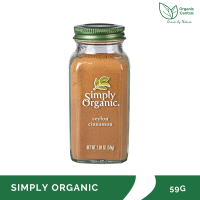
Simply Organic Ceylon Cinnamon 59g
₱1,049.00
Buy on Lazada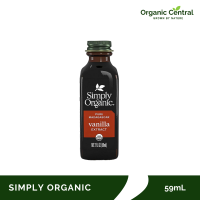
Simply Organic Vanilla Extract 59mL
₱1,225.00
Buy on Lazada
Simply Organic Madagascar Vanilla Non-Alcoholic Flavoring
₱1,950.00
Buy on Lazada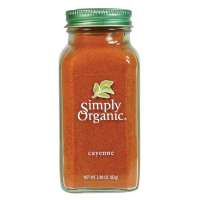
Simply Organic Cayenne Pepper
₱579.00
Buy on Lazada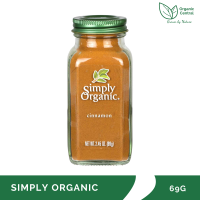
Simply Organic Cinnamon 69g
₱669.00
Buy on Lazada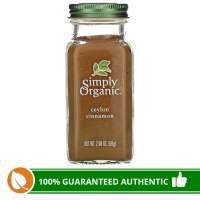
Simply Organic Ceylon Cinnamon 59g
₱1,049.00₱1,500.00
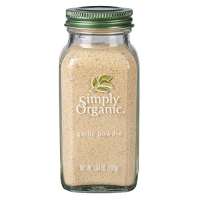
Simply Organic Garlic Powder
₱819.00
Buy on Lazada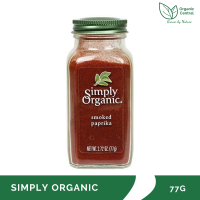
Simply Organic Smoked Paprika 77g
₱819.00
Buy on LazadaAbout Simply Organic
Simply Organic is an American food brand specializing in 100% certified-organic herbs, spices, seasonings, baking ingredients, sauces, and other culinary products. It operates as a dedicated organic line under Frontier Co-op, a member-owned cooperative headquartered in Norway, Iowa. Launched in 2001, the brand focuses on organic agriculture, ingredient quality, responsible sourcing, and broad access to organic food.1
Overview
| Field | Information |
|---|---|
| Brand name | Simply Organic® |
| Founded / launched | 2001 |
| Parent organization | Frontier Co-op |
| Industry | Food & beverages |
| Main category | Organic herbs, spices, seasonings and cooking ingredients |
| Headquarters / parent company | Norway, Iowa, United States |
| Organic status | Products are USDA (QAI) certified organic |
| Ownership | Part of Frontier Co-op, a member-owned cooperative |
| Primary market | United States, with products also distributed more broadly |
| Brand positioning | Organic, natural, responsible, culinary |
| Major social initiative | Simply Organic Giving Fund |
History
Simply Organic originated from Frontier Co-op, which was established in 1976 when two individuals began selling herbs and spices from a small cabin in eastern Iowa. Frontier had engaged with organic products for decades prior to launching the brand, introducing its first organic items in 1978 and becoming a certified organic processor once certification became available.
In 2001, Frontier Co-op formally introduced Simply Organic as a 100% organic line. The initial concept focused on offering organic spices, seasoning mixes, and baking flavours to consumers under a single dedicated brand.
Over the subsequent two decades, Simply Organic expanded beyond basic bottled spices to include a wider array of cooking products, such as spice blends, extracts, seasoning mixes, simmer sauces, finishing salts, and other culinary ingredients.
Products
The core product portfolio of Simply Organic centres on ingredients used for everyday cooking and baking.
Herbs and spices
The brand’s most recognisable offerings are its bottled single herbs and spices, including culinary herbs, peppers, garlic, cinnamon, turmeric, and various other seasonings.
Spice and seasoning blends
Simply Organic retails pre-mixed seasonings formulated for specific dishes and cuisines. These products aim to simplify meal preparation while maintaining the brand’s organic standards.
Baking ingredients
The range includes organic baking flavours and extracts, alongside other ingredients intended for baking applications.
Recipe-ready products
The company has diversified into items such as seasoning-mix packets, simmer sauces, finishing salts, and culinary products, reducing reliance on the traditional bottled-spice category. Consequently, Simply Organic has evolved from primarily an organic spice brand into a broader organic pantry and cooking brand.
Organic certification
Organic certification is fundamental to the identity of Simply Organic rather than merely a product attribute.
Simply Organic states that its products are USDA (QAI) certified organic and are therefore non-GMO under applicable organic standards. The brand also confirms that its products are not exposed to ethylene oxide (ETO) sterilization processes or irradiation. Certain products additionally carry kosher or gluten-free certifications where indicated on their labels.2
This distinction is significant because “organic” in the brand’s marketing refers to a regulated certification standard, not simply a perception of naturalness. Frontier Co-op reports that 100% of Simply Organic’s products are organic, distinguishing it from the parent company’s broader portfolio which also includes conventional products.
Relationship with Frontier Co-op
Simply Organic is not an independent company in the conventional corporate sense; it is a brand within the Frontier Co-op family, alongside Frontier Co-op and Aura Cacia.
Frontier Co-op operates as a member-owned cooperative. Its wholesale customers, including retailers and organisations that resell its products, serve as the cooperative’s member-owners. These members participate economically in the cooperative and elect its board of directors.3
This structure influences Simply Organic’s identity, as the brand’s sustainability and social-impact programmes are integrated with Frontier’s broader cooperative philosophy.
Mission and philosophy
Simply Organic summarises its philosophy around three interconnected concepts:
- Organic agriculture
- Better food and ingredients
- Positive effects on people and the planet
The company describes itself as the “original all-organic spice brand” and emphasises ingredients derived from real botanicals and certified organic production. Its stated philosophy posits that nourishing people and preserving the environment should be complementary rather than competing objectives.
Branding efforts consequently emphasise simplicity, authenticity, and nature. The name “Simply Organic” is intended to communicate a straightforward proposition: organic ingredients without unnecessary complication.
Sustainability and responsible sourcing
Sustainability constitutes a major component of the brand’s operations.
Through its relationship with Frontier Co-op, Simply Organic participates in sourcing programmes designed to foster long-term relationships with growers and enhance the resilience of agricultural communities. Frontier’s Well Earth programme, for example, collaborates with sourcing communities on agricultural, economic, and social-development projects.
Frontier reports that more than 70% of the botanicals it sources globally are grown organically, while Simply Organic’s own portfolio remains 100% organic.
The brand’s approach extends beyond purchasing certified-organic ingredients; its parent cooperative emphasises grower relationships, sustainable agricultural practices, traceability, and community investment.
Simply Organic Giving Fund
One of the brand’s most distinctive initiatives is the Simply Organic Giving Fund.
Established in 2018 with a focus on food insecurity, the programme provides grants to organisations in the United States and Canada working to increase access to healthy, organic food for communities experiencing food insecurity.
This initiative reflects the brand’s positioning of organic food not merely as a premium consumer product, but as something that should be accessible to those with limited access to nutritious food. Frontier Co-op reports that the Giving Fund surpassed $1 million in grants dedicated to fighting food insecurity in 2025.4
Brand identity
Simply Organic’s identity can be characterised as organic, simple, culinary, and responsible.
Unlike some organic brands that market themselves primarily through health or environmental activism, Simply Organic has historically centred its identity on food preparation. Products are designed as practical pantry staples enabling consumers to incorporate organic ingredients into everyday meals.
Visual and verbal branding reinforces this approach through:
- Earth-oriented colours and imagery
- Emphasis on recognisable ingredients
- Straightforward product names
- Prominent display of organic certification
- Recipe and cooking-oriented marketing
- Messaging regarding nature and responsible agriculture
This positions the brand at the intersection of natural-food culture and mainstream grocery cooking.
Position in the organic food market
Simply Organic’s primary competitive advantage lies in its specialisation.
Rather than attempting to cover every category of organic food, the brand has built recognition around spices, seasonings, and cooking ingredients, providing a clear identity within the organic-food sector.
Its parent company possesses extensive experience in herbs, spices, and botanical ingredients, allowing Simply Organic to leverage Frontier Co-op’s sourcing expertise and infrastructure. Frontier traces its origins directly to the wholesale herb-and-spice trade.
Corporate and social responsibility
Frontier Co-op’s broader philosophy is encapsulated in its purpose statement, “Doing Good, Works.” The cooperative aims to create positive outcomes for growers, employees, communities, and the environment while maintaining product quality.
Frontier also states that it contributes 4% of pre-tax profits to causes and organisations worldwide that support wellness in communities where its products are produced.
This affords Simply Organic a distinct corporate narrative: its brand values are intrinsically linked to the ownership and operating philosophy of a cooperative rather than a conventional publicly traded food conglomerate.
Timeline
- 1976 — Frontier Co-op begins as a two-person herb-and-spice operation in an Iowa river cabin.
- 1978 — Frontier introduces its first organic products.
- 1990s — Frontier expands its bottled-spice business and develops additional processing and quality-control capabilities.
- 2001 — Simply Organic launches as a 100% certified-organic product line.
- 2010s — The brand expands its social-impact work, including projects involving organic agriculture and grower communities.
- 2018 — The Simply Organic Giving Fund is established with a focus on food insecurity.
- 2020s — Simply Organic continues expanding its culinary range while Frontier Co-op develops additional sustainability and regenerative-agriculture initiatives.
- 2025 — The Simply Organic Giving Fund surpasses $1 million in grants dedicated to fighting food insecurity, according to Frontier Co-op.4
- 2026 — Frontier Co-op celebrates its 50th anniversary.
Summary
Simply Organic is a specialty organic-food brand created by Frontier Co-op in 2001. It began with the objective of making a wide range of everyday spices and seasonings available as certified-organic products and has since expanded into a broader organic pantry brand.
The brand is distinguished by its combination of 100% organic products, a long-standing herb-and-spice heritage, cooperative ownership, responsible sourcing, and social-impact programmes. Its identity extends beyond the organic label, attempting to connect the food on the consumer’s table with the farmers, communities, and ecosystems involved in its production.