Shop on Lazada
Skullcandy products
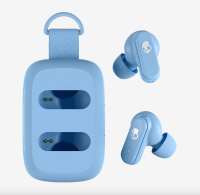
Skullcandy Dime 3 True Wireless Bluetooth Earbuds | Bluetooth 5.3 | Multipoint Pairing | Official Warranty
₱2,290.00
Buy on Lazada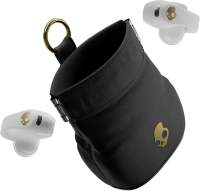
Skullcandy Push 720 Open Ear Bluetooth Earbuds | IP67 Waterproof | Official Warranty
₱8,490.00
Buy on Lazada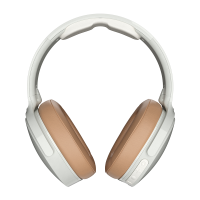
Skullcandy Hesh ANC Bluetooth Headphones | Active Noise Cancelling | Official Warranty
₱6,360.00₱9,790.00
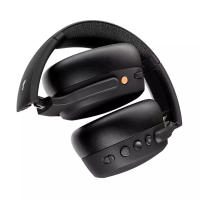
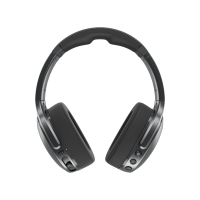
Skullcandy Crusher ANC 2 Bluetooth Headphones | ANC | Crusher Bass | Official Warranty
₱15,490.00
Buy on Lazada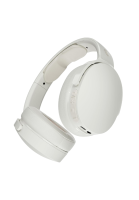
Skullcandy Hesh Evo Wireless Bluetooth Headphones | 36H Battery | Official Warranty
₱5,060.00₱7,790.00
Skullcandy Crusher 540 Active Wireless Headphones | Crusher Bass | Official Warranty
₱14,490.00
Buy on Lazada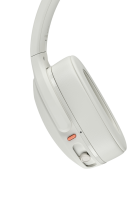
Skullcandy Crusher Evo Wireless Headphones | Sensory Bass | 40 Hours Battery | Official Warranty
₱13,490.00
Buy on Lazada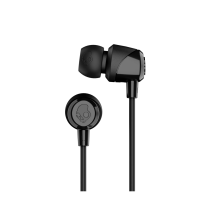
Skullcandy Jib Wired Earphones | 3.5mm AUX | Built-in Mic | Official Warranty
₱840.00
Buy on LazadaAbout Skullcandy
Skullcandy is an American audio equipment brand best known for its headphones, wireless earbuds, speakers, and gaming headsets. Founded in 2003 in Park City, Utah, the company built its identity around the intersection of music, youth culture, action sports, fashion, and bold industrial design. Rather than positioning headphones simply as consumer electronics, Skullcandy has historically marketed them as lifestyle products and fashion accessories.1
Today, Skullcandy remains a privately held company under Mill Road Capital and sells products internationally through its website and retail partners. Its current lineup includes traditional headphones, true-wireless earbuds, noise-cancelling products, gaming audio, and portable Bluetooth speakers.2
Basic information
| Category | Information |
|---|---|
| Company | Skullcandy, Inc. |
| Founded | 2003 |
| Founder | Rick Alden |
| Headquarters | Park City, Utah, United States |
| Industry | Consumer electronics / Audio |
| Main products | Headphones, earbuds, speakers, gaming headsets |
| Ownership | Mill Road Capital |
| Company status | Private |
| Original market focus | Music, action sports and youth lifestyle |
| Known for | Strong bass, distinctive designs, lifestyle branding and accessible pricing |
Historical filings describe Skullcandy as an audio company offering a broad range of styles and price points, initially distributed heavily through specialty retailers associated with action sports and youth culture.3
Origins
Skullcandy was founded in 2003 by Rick Alden, an entrepreneur with a background in the snowboarding and action-sports industry.
The origin story is central to understanding the brand. Alden reportedly conceived the idea for Skullcandy while riding a chairlift in Park City, Utah, listening to a portable music player and considering how inconvenient it was to manage music and phone calls during outdoor activities.4
This insight led to the development of the company’s first product, Skullcandy LINK. LINK combined headphones with hands-free cellular functionality, allowing users to listen to music while handling phone calls. It was introduced at the 2003 Consumer Electronics Show (CES) in Las Vegas.5
This launch signalled Skullcandy’s philosophy: rather than producing another conventional pair of headphones, the company aimed to create products that combined technology, lifestyle, and visual identity.
Early brand identity
From the outset, Skullcandy deliberately avoided the conservative image associated with many traditional audio manufacturers. The brand’s visual language incorporated skull imagery, bright colours, graffiti and street-art influences, action-sports culture, youth-oriented graphics, music culture, and fashion-oriented product designs.
The company’s early distribution strategy was equally significant. Skullcandy initially concentrated on specialty retailers serving snowboarders, skateboarders, and other youth and action-sports consumers, rather than relying exclusively on traditional electronics stores. The company later expanded into consumer electronics, sporting goods, mobile phone, and mass-market retailers.6
This approach helped establish an identity closer to a lifestyle brand than a conventional electronics manufacturer.
The Skullcrusher and the beginning of the bass identity
One of Skullcandy’s most important early products was the Skullcrusher. According to founder Rick Alden, while developing LINK, he encountered gaming headphones that used vibration to make explosions feel more physical. He became interested in adapting this technology for music, essentially creating a headphone with a separately powered bass driver.7
That concept became the Skullcrusher. The product was significant because it helped establish a characteristic that would become central to Skullcandy’s identity: bass that can be physically felt. This concept eventually evolved into the modern Crusher product family, one of the brand’s most recognisable lines.8
Expansion during the 2000s
During the second half of the 2000s, Skullcandy expanded rapidly. Its product portfolio grew beyond original headphone concepts into numerous styles of over-ear headphones, on-ear headphones, wired earbuds, portable speakers, fashion-oriented headphones, and sports-oriented audio products.
The company also developed a strong association with snowboarding, skateboarding, surfing, music, and other action-sports communities. This was a deliberate differentiation strategy; Skullcandy did not compete solely on audiophile specifications but emphasised the overall experience of sound, design, personality, and culture. By the time of its 2011 public offering, Skullcandy stated that its products were sold in the United States and more than 70 other countries.9
Going public
Skullcandy became a publicly traded company in 2011. The company filed for an initial public offering with the U.S. Securities and Exchange Commission in January 2011, with shares intended to trade on the NASDAQ Global Market under the ticker SKUL.10
The IPO represented a major transition from a niche lifestyle and audio company into a publicly traded consumer-electronics business. Around the same period, founder Rick Alden stepped down as CEO in March 2011, with Jeremy Andrus succeeding him. Alden remained involved as a major shareholder and board member.11
Astro Gaming
In 2011, Skullcandy acquired Astro Gaming, a gaming-headset company. This acquisition gave Skullcandy a stronger presence in the gaming-audio market alongside its established music and lifestyle business.12 Astro subsequently became an important gaming brand within the portfolio, creating a strategic combination where Skullcandy focused on music and lifestyle audio while Astro addressed gaming and enthusiast audio.
2016 acquisition and going private
Skullcandy’s period as a public company ended in 2016. Initially, the company agreed to be acquired by Incipio for approximately $177 million, but that transaction ultimately did not proceed. Mill Road Capital subsequently made a competing proposal.13
Mill Road ultimately agreed to acquire Skullcandy for $6.35 per share, and the transaction closed on October 3, 2016. As a result, Skullcandy became a private company, and its NASDAQ shares ceased public trading.14 Mill Road describes Skullcandy as a company founded in 2003 and based in Park City, Utah, focused on true-wireless, wireless, and wired headphones and positioned around affordable, high-quality audio and bold design.15
Business philosophy
A significant factor in Skullcandy’s success has been its understanding that headphones are not merely technical devices. While traditional audio brands often emphasise specifications such as frequency response, driver size, impedance, noise cancellation, distortion, and codec support, Skullcandy has historically balanced these technologies with marketing that emphasises identity and emotion.
The brand effectively asks what wearing its headphones says about the user, making it particularly relevant to younger consumers and those who view consumer electronics as part of their personal style.
Target audience
Skullcandy’s traditional core audience encompasses several distinct groups:
Music listeners
People seeking strong, energetic sound without necessarily entering the expensive audiophile market.
Action-sports enthusiasts
Consumers connected to the company’s roots in snowboarding, skateboarding, and surfing, which remain important to its brand identity.
Gamers
Users engaged through gaming headsets and the Astro/Skullcandy gaming ecosystem.
Youth and lifestyle consumers
Individuals attracted to colourful products, collaborations, streetwear, and music culture.
Everyday wireless-audio users
Mainstream consumers as the company increasingly competes in the wireless-earbud and noise-cancelling markets.
Product categories
Skullcandy’s current product portfolio is considerably broader than its early headphone lineup.
Headphones
The headphone range includes Crusher, Hesh, Aviator, Icon, Riff, and Grom. The Crusher family is arguably the company’s signature product line, built around adjustable bass technology. Current products include the Crusher 1080 ANC, Crusher 720, Crusher 540 Active, and Crusher ANC 2.16
True-wireless earbuds
Skullcandy produces numerous completely wireless earbuds, including product families such as Dime, Indy, Push, Rail, Sesh, Method, and Smokin’ Buds. The current catalogue includes noise-cancelling, sports-oriented, and open-ear products.17
Gaming
Gaming has become another important category. The current gaming lineup includes products such as the Crusher PLYR 720, while Skullcandy also maintains software and support infrastructure for gaming products.18
Portable speakers
Skullcandy has expanded into Bluetooth speakers through its Session and other speaker families. Current products include the Session 360 and Session 540, alongside other portable-speaker products.19
The Crusher technology
The technology most closely associated with Skullcandy is Crusher Bass. Unlike ordinary headphones that reproduce bass through primary audio drivers, Crusher products use additional haptic and bass technology to create a physical sensation. The result is intentionally different from a neutral studio-monitoring experience, following the design philosophy of feeling the bass rather than just hearing it.
Modern Crusher models combine this concept with technologies such as active noise cancellation, Personal Sound, custom EQ, Bluetooth, multipoint connectivity, low-latency audio, and spatial audio on selected models. For example, the current Crusher 720 combines adjustable Crusher Bass with THX Spatial Audio, Personal Sound, and up to 65 hours of battery life.20
Sound philosophy
Skullcandy is generally associated with a fun, energetic, and bass-forward sound philosophy rather than the strictly neutral tuning preferred by some audiophiles. The brand often emphasises impact, bass, energy, immersion, and enjoyment over absolute neutrality. The Crusher line takes this philosophy to an extreme by making bass a physical part of the listening experience.
Design language
Skullcandy’s visual identity is one of its strongest competitive advantages. The name itself combines two contrasting ideas: “Skull,” suggesting rebellious, edgy, and aggressive qualities, and “Candy,” implying colourful, playful, and youthful characteristics. This contrast is reflected in products that have historically appeared in numerous colours and special editions rather than being restricted to the black and silver aesthetic common in consumer electronics. The brand therefore occupies a space between consumer electronics, fashion accessory, and music merchandise.
Marketing
Skullcandy has historically relied heavily on culture-based marketing. Its ecosystem has included connections to musicians, DJs, snowboarders, skateboarders, surfers, athletes, gamers, artists, and streetwear culture. Early SEC filings specifically described the relationship with action-sports and youth-lifestyle consumers as an important source of brand credibility.21 This approach helped establish a recognisable personality when many headphone brands were primarily competing on technical specifications.
Collaborations
Another characteristic of Skullcandy’s strategy is its use of limited editions and collaborations. The company has partnered with brands and cultural properties in fashion, sports, entertainment, outdoor recreation, gaming, and food and lifestyle sectors. Its current website continues to feature “Color Drops + Collabs” alongside limited-edition products.22 These collaborations serve to make the headphones themselves part of a particular cultural identity.
Skullcandy and Bose
A notable development in Skullcandy’s recent product strategy is its relationship with Bose. Skullcandy now markets selected products featuring “Sound by Bose” technology. For example, the current Crusher 1080 ANC combines Skullcandy’s adjustable Crusher Bass with Bose audio technologies and noise-cancellation features.23
This partnership represents a combination of two different brand strengths: Skullcandy’s youth culture, bass, design, and lifestyle focus alongside Bose’s audio engineering, noise cancellation, and premium reputation. The collaboration allows Skullcandy to integrate premium audio technology without abandoning its distinctive brand identity.
Skullcandy today
As of 2026, Skullcandy continues to operate as a private audio company under Mill Road Capital. Its portfolio has evolved considerably from the company’s original wired products to cover a wider range of consumer audio, including wireless headphones, ANC headphones, bass-focused headphones, true-wireless earbuds, open-ear earbuds, gaming headsets, portable Bluetooth speakers, and audio accessories.
The current product catalogue incorporates newer technologies such as THX Spatial Audio, Bose audio technology, Personal Sound, Bluetooth 5.3, Auracast/LE Audio, multipoint pairing, and app-based customisation, depending on the model.24
Major product families
| Product family | Main purpose | Brand significance |
|---|---|---|
| Crusher | Bass-heavy over-ear headphones | Skullcandy’s signature technology |
| Hesh | Everyday over-ear headphones | Long-running mainstream family |
| Aviator | Premium-style headphones | Design and higher-end positioning |
| Dime | Compact wireless earbuds | Small, affordable true wireless |
| Indy | True-wireless earbuds | Established earbud family |
| Push | Sport/active earbuds | Fitness and active lifestyle |
| Rail | Premium true-wireless earbuds | Higher-end wireless category |
| Method | Everyday/sport earbuds | Active lifestyle |
| Session | Portable speakers | Expansion beyond headphones |
| PLYR/Crusher PLYR | Gaming | Gaming-focused ecosystem |
These families are represented across Skullcandy’s current catalogue and support pages.25
Competitive positioning
Skullcandy occupies a distinct position in the headphone market. It is generally more lifestyle-oriented than traditional hi-fi brands while being more audio-focused than fashion-only electronics brands.
| Brand type | Main emphasis |
|---|---|
| Audiophile brands | Sound accuracy |
| Bose | Noise cancellation + premium everyday audio |
| Sony | Technology + audio performance |
| Apple | Ecosystem + convenience |
| Beats | Lifestyle + bass + Apple ecosystem |
| JBL | Mainstream audio + value |
| Skullcandy | Lifestyle + bass + individuality |
| Gaming brands | Gaming performance + features |
Skullcandy’s distinctive territory is the combination of accessible consumer audio, strong bass, expressive design, and youth and lifestyle branding.
Strengths of the brand
Recognisable identity
The skull logo and distinctive name make the brand immediately identifiable.
Association with bass
Crusher technology provides a product characteristic difficult to confuse with generic headphones.
Lifestyle credibility
Roots in action sports and music provide a cultural identity beyond electronics.
Broad price range
Products span from relatively inexpensive earbuds to sophisticated premium headphones.
Large product ecosystem
The portfolio now covers headphones, earbuds, speakers, and gaming.
Visual design
Colour, graphics, and collaborations remain integral to the brand.
Weaknesses and criticisms
Like virtually every major consumer-audio brand, Skullcandy has received criticism. Recurring concerns include sound tuning that may be too bass-heavy for listeners seeking neutrality, build quality varying substantially between product generations and price points, competition from increasingly sophisticated Sony, Bose, Apple, JBL, Beats, and other wireless-audio products, and a brand image that appeals strongly to some consumers but less to traditional audiophiles.
Skullcandy’s greatest strength—its distinctive personality—also functions as a form of segmentation. Those seeking neutral studio-monitoring headphones may prefer other brands, while those wanting powerful bass and a recognisable lifestyle aesthetic may specifically seek out Skullcandy.
Brand significance
Skullcandy’s importance in consumer electronics lies not in inventing headphones or wireless earbuds, but in demonstrating that headphones could function as lifestyle products. In the 2000s, the company helped move headphones further into the worlds of fashion, music, sports, youth culture, and personal identity. Headphones became items worn to communicate personality rather than merely equipment for listening to music, an approach that later became increasingly common throughout the consumer-audio industry.
Timeline
- 2003 — Skullcandy founded by Rick Alden in Park City, Utah.26
- 2003 — Skullcandy LINK introduced at CES.27
- Mid-2000s — Brand expands through action-sports and youth-lifestyle retail.
- Late 2000s — Skullcandy expands its headphone and earbud portfolio and establishes a stronger lifestyle identity.
- 2011 — Skullcandy goes public on NASDAQ under SKUL.28
- 2011 — Skullcandy acquires Astro Gaming.29
- 2011 — Founder Rick Alden steps down as CEO; Jeremy Andrus becomes CEO.30
- 2016 — Skullcandy agrees to be acquired by Mill Road Capital after the proposed Incipio transaction falls through.31
- October 3, 2016 — Mill Road acquisition closes; Skullcandy becomes private.32
- 2020s — Skullcandy expands heavily into true wireless, ANC, gaming, speakers, and app-connected products.
- 2024–2026 — Skullcandy expands technology partnerships, including THX Spatial Audio and Sound by Bose products.33
- 2026 — Skullcandy continues operating as a privately owned consumer-audio brand with headphones, earbuds, gaming products, and speakers.34
References
- Skullcandy | Mill Road Capital
- SEC
- Skullcandy | Headphones, Earbuds, Gaming, and Speakers
- SEC
- SEC
- How Rick Alden founded Skullcandy – Utah Business
- What’s Hot at Skullcandy | Shop Our Most Popular Products
- Skullcandy Announces the Resignation of CEO Rick Alden and the Appointment of New CEO Jeremy Andrus
- Skullcandy
- SEC
- Skullcandy Enters into New Merger Agreement with Mill Road
- Skullcandy Closes Going Private Transaction with Mill Road
- Product Help
- Product Help
- Help Center | Skullcandy
- Who Owns Skullcandy Headphones?
- Company:Skullcandy – HandWiki
- koss-20260331x10q
- Skullcandy relocates headquarters to the Redwood Shopping Center – Utah Business
- July 18, 2025 — County acquires Skullcandy Building, Fire Danger Escalates, and Voting Equipment Tests | Summit in Six
- Summit County finalizes lease of Skullcandy Building • Summit County, UT
- About – Skullcandy
- sec.gov
- sec.gov
- Skullcandy Enters into New Merger Agreement with Mill Road
- Skullcandy Gains An Extra $26.6M In Acquisition Fight | SGB Media Online
- sec.gov
- sec.gov
- sec.gov
- sec.gov
- Skullcandy Announces Receipt of Unsolicited Acquisition
- sec.gov
- sec.gov
- sec.gov