Shop on Lazada
Skyrim products
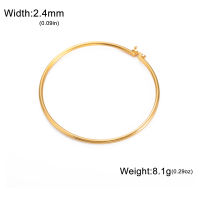
SKYRIM Gold Stainless Steel Polished Bangle 2.4mm - Hypoallergenic Slim Bracelet for Women Tarnish-Resistant Jewelry Gift
₱163.00₱199.00
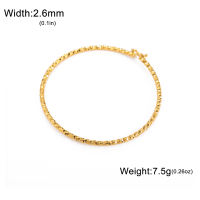
SKYRIM Gold Stainless Steel Shimmering Bangle 2.6mm - Hypoallergenic Minimalist Bracelet Gift for Women Tarnish-Resistant
₱154.00₱199.00

SKYRIM Special Customized Brooch cutting and marking technology supports wholesale VIP link
₱375.00
Buy on Lazada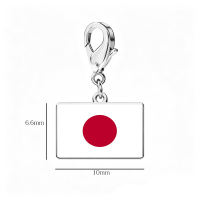
Skyrim Country Flag Lobster Clasp Charms Pendant Bracelet Stainless Steel Italy France Brazil Spain Flags Jewelry Travel Souvenir Gift
₱119.00₱200.00
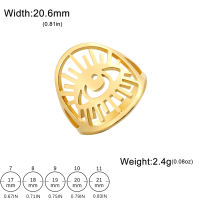
SKYRIM Womens Ring Loop Clover Pattern Ring Couple Ring Fashion Jewelry
₱108.00₱142.00
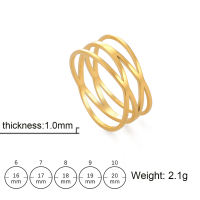
SKYRIM Womens Ring Titanium Stainless Steel Ring Smooth Line Design Fashion Ring Jewelry
₱103.00₱142.00
SKYRIM Womens Necklace Mosaic Dinosaur Pendant Elegant Necklace Fashion Jewelry Necklace
₱143.00₱199.00
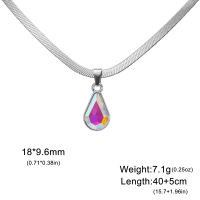
SKYRIM Titanium Stainless Steel Necklace Droplet Green Crystal Pendant Vintage Necklace for Women
₱134.00₱199.00
About Skyrim
Skyrim, formally titled The Elder Scrolls V: Skyrim, is an open-world action role-playing video game developed by Bethesda Game Studios and published by Bethesda Softworks. It serves as the fifth main installment in The Elder Scrolls series and is set within the fictional northern province of Skyrim on the continent of Tamriel 1. The original title was released worldwide on November 11, 2011, for Windows, PlayStation 3, and Xbox 360 1. Over time, Skyrim has evolved from a single release into one of the most recognizable fantasy game brands in popular culture, supported by numerous editions, expansions, community modifications, merchandise, and a dedicated long-term fanbase. Bethesda states that the game has received more than 200 Game of the Year awards 11.
Basic information
| Category | Information |
|---|---|
| Full title | The Elder Scrolls V: Skyrim |
| Common name | Skyrim |
| Series | The Elder Scrolls |
| Genre | Action role-playing |
| Developer | Bethesda Game Studios |
| Publisher | Bethesda Softworks |
| Director | Todd Howard |
| Original release | November 11, 2011 |
| Setting | Skyrim, Tamriel |
| Mode | Single-player |
| Original platforms | Windows, PlayStation 3, Xbox 360 |
| Major later editions | Special Edition, Anniversary Edition |
| Current ecosystem | Game, expansions, Creations/mods, merchandise and fan culture |
Brand overview
While Skyrim primarily refers to the fictional province where The Elder Scrolls V: Skyrim takes place, the term has become strongly associated with the game itself. The identity of the title combines several major themes, including high fantasy, Nordic-inspired mythology and architecture, dragons, ancient ruins, magic, supernatural creatures, open-world exploration, player freedom, character customization, factional conflicts, and modding support 2. Rather than enforcing a strictly linear narrative, Skyrim is designed around exploration and player choice, allowing individuals to pursue the main story, complete hundreds of side quests, join factions, explore dungeons, develop skills, purchase property, interact with NPCs, or simply wander the wilderness 6. Bethesda emphasizes that players can essentially choose their own path through the world 7.
The fictional world
Within the universe of The Elder Scrolls, Skyrim is the northernmost province of Tamriel 2. It is the ancestral homeland of the Nords, a human race characterized by a warrior culture, seafaring traditions, and historical connections to ancient dragon cults 2. The province features diverse environments ranging from snow-covered mountains, frozen tundra, and dense forests to rivers, lakes, medieval-style settlements, Dwemer ruins, fortresses, caves, and dragon burial sites 5. Despite its harsh geography, the game deliberately provides considerable visual and geographic variety, including locations such as the enormous underground realm of Blackreach 5.
The Elder Scrolls universe
Skyrim belongs to the larger The Elder Scrolls franchise, which began with The Elder Scrolls: Arena in 1994 4. Major installments in the series include:
- The Elder Scrolls: Arena — 1994
- The Elder Scrolls II: Daggerfall — 1996
- The Elder Scrolls III: Morrowind — 2002
- The Elder Scrolls IV: Oblivion — 2006
- The Elder Scrolls V: Skyrim — 2011
As the fifth numbered mainline entry, Skyrim continues the franchise’s tradition of extensive fictional history, multiple playable races, divine beings, magical traditions, and competing political factions 9.
Story and premise
The narrative begins with the player character being captured and transported toward execution 7. The prisoner soon becomes entangled in a larger conflict involving the Stormcloak rebellion, the Imperial Legion, and the return of dragons to Skyrim 7. Crucially, the protagonist discovers they are the Dragonborn, a mortal possessing the soul and powers of a dragon 9. The central threat is Alduin, an ancient dragon known as the World-Eater, whose return is prophesied to endanger the world 7. While this main storyline drives the primary quest, players may spend significant time on activities unrelated to the central narrative 7.
The Dragonborn
The Dragonborn, or Dovahkiin, is the player’s avatar and is designed to be highly customizable 3. Players select a race and appearance before developing abilities through gameplay rather than adhering to rigid class structures 3. Characters can evolve into heavily armored warriors, archers, destructive mages, stealth assassins, dual-wielding combatants, thieves, or hybrid archetypes 8. Bethesda describes the progression system as skill-based, where abilities such as Destruction, Archery, and Speech determine how a character develops based on usage 3.
Gameplay
A defining characteristic of Skyrim is freedom of play, allowing users to explore the world at their own pace and prioritize activities as they see fit 6.
Exploration
The game map contains settlements, mountains, dungeons, caves, ruins, temples, and forts 5. Players can traverse the wilderness, discover hidden locations, fight monsters, find treasure, solve puzzles, collect equipment, uncover quests, ride horses, purchase homes, and fast-travel to previously visited areas 6. Bethesda designed the world so that players could select any point on the horizon and travel toward it, often encountering quests or events along the way 6.
Combat
Combat incorporates multiple styles:
The Voice and Dragon Shouts
One of the most recognizable gameplay systems is the Voice, or Thu’um. Dragonborn characters learn Dragon Shouts, supernatural abilities derived from the dragon language 7. The most famous shout, Fus Ro Dah, is associated with Unrelenting Force 7. Other shouts grant abilities such as fire or ice attacks, detecting life, becoming ethereal, rapid movement, calling dragons, and slowing time 7. This system remains a core element of Skyrim’s identity.
Major factions
Skyrim features numerous factions that provide additional role-playing depth independent of the main storyline 10. Key organizations include:
- Imperial Legion: The military force representing the Empire in Skyrim 10.
- Stormcloaks: A nationalist rebellion led by Ulfric Stormcloak seeking independence for Skyrim 10.
- Companions: A prestigious warrior organization based in Whiterun 10.
- College of Winterhold: An institution dedicated to magical study 10.
- Thieves Guild: A criminal organization focused on theft and stealth 10.
- Dark Brotherhood: A secretive guild of assassins 10.
- Dawnguard: A vampire-hunting group introduced in the Dawnguard expansion 10.
Major races
The game includes numerous playable races, each with distinct cultural backgrounds and characteristics 3. These include Nords, Imperials, Bretons, Redguards, High Elves, Wood Elves, Dark Elves, Orcs, Khajiit, and Argonians 3. This racial diversity reflects the broader lore of The Elder Scrolls universe, where different peoples possess unique histories, religions, and political relationships 9.
Dragons
Dragons serve as the central visual symbol of Skyrim and represent the primary supernatural crisis within the game 7. Players encounter dragons throughout the open world, engage them in real-time combat, and absorb their souls upon defeat 7. These souls are required to unlock Dragon Shouts, effectively linking exploration, combat, progression, mythology, and the main storyline 7. Bethesda built the game’s identity around the return of dragons, making them a defining feature 7.
Expansions
The original game received three major official expansions, all of which were later incorporated into Skyrim Special Edition 12.
Dawnguard
Released as the first major expansion, Dawnguard introduced a vampire-centered storyline, new locations, characters, and abilities 12. Players could choose to become a Vampire Lord or fight against the vampire threat 12.
Hearthfire
Hearthfire focused on lifestyle and customization, introducing house construction, property furnishing, adoption, and additional domestic gameplay mechanics 12.
Dragonborn
Dragonborn expanded the playable area to Solstheim, an island previously featured in The Elder Scrolls III: Morrowind 12. It added new quests, locations, enemies, and abilities 12.
Skyrim Special Edition
Skyrim Special Edition was released in 2016, providing an updated version of the game with improved visuals and technical enhancements 12. It includes all three major expansions: Dawnguard, Hearthfire, and Dragonborn 12. This edition subsequently became a foundational platform for modern modding and community content creation 12.
Skyrim Anniversary Edition
In 2021, Bethesda released Skyrim Anniversary Edition, combining Skyrim Special Edition with a substantial collection of Creation Club content. This package includes the core Special Edition content plus Creation Club additions featuring quests, dungeons, bosses, weapons, spells, and other elements. Bethesda describes the Anniversary Edition as containing more than 500 unique pieces of Creation Club content.
Mods and Creations
Modding is widely considered a primary factor in Skyrim’s enduring relevance. PC players can modify the game to add new quests, characters, weapons, armor, locations, graphics improvements, animations, gameplay systems, and entirely new experiences. Bethesda eventually introduced Creations, a unified system for Skyrim Special Edition that integrates existing mods, Creation Club content, and newer community-created material. This effectively transformed Skyrim from a finished product into a platform for user-generated content.
Editions and releases
Since its initial launch, Skyrim has appeared on numerous hardware generations. Original platforms included Windows, PlayStation 3, and Xbox 360 1. Subsequent updated releases have appeared on PlayStation 4, Xbox One, Nintendo Switch, PlayStation 5, and Xbox Series X/S 11. This unusually long lifespan across console generations has contributed significantly to its reputation as one of gaming’s most enduring RPGs.
Music and atmosphere
Music plays a vital role in Skyrim’s identity. The soundtrack was composed by Jeremy Soule and blends orchestral arrangements with a distinctly Nordic-inspired atmosphere. The main theme is particularly recognizable among video game soundtracks. Performances outside the game include Skyrim in Concert, featuring the London Symphony Orchestra and London Voices.
Cultural impact
Skyrim transcended commercial success to enter mainstream internet culture. Characters, dialogue, locations, and mechanics have generated widespread references, including “Fus Ro Dah,” “Hey, you. You’re finally awake,” “I took an arrow in the knee,” the Skyrim theme song, Dragonborn imagery, the opening carriage scene, guard-related memes, and recurring jokes about replaying the game. Bethesda has noted that references to Skyrim have appeared in television programs and other games, while phrases and characters became established internet memes.
Critical and commercial reception
Upon launch, Skyrim received strong critical acclaim, with reviewers praising its open-world design, exploration, character progression, world-building, visual presentation, freedom of choice, atmosphere, and scale. Bethesda states that the game has earned more than 200 Game of the Year awards and sold over 20 million copies 11. Its longevity is notable; unlike typical titles that fade after a standard generation cycle, Skyrim has continued receiving new releases and community content for well over a decade.
Brand identity
From a branding perspective, Skyrim is defined by several recognizable elements. Visually, the aesthetic emphasizes snow, mountains, Nordic architecture, ancient stone, dragons, iron and steel, fire, runes, and Viking/Norse-inspired imagery. Emotionally, the brand communicates adventure, mystery, freedom, danger, and ancient mythology. In terms of gameplay, its central promise is to explore a vast fantasy world and create a unique personal story, resulting in vastly different experiences for individual players despite sharing the same base game.
Why Skyrim remains popular
Several factors explain Skyrim’s extended lifespan:
- Open-world freedom: Players are not required to follow a single path.
- Modding: The community continually creates new content.
- Replayability: Different races, skills, factions, and choices encourage repeated playthroughs.
- Strong atmosphere: Music, landscapes, weather, architecture, and mythology combine to create a distinctive world.
- Accessible RPG design: Traditional mechanics are simplified while retaining deep character development.
- Massive lore: Connections to thousands of years of Elder Scrolls history provide depth.
- Multiple generations of releases: Updated editions repeatedly introduce new players to the game.
Skyrim’s place in gaming history
Skyrim is widely regarded as one of the defining open-world RPGs of the 2010s. Beyond commercial performance, it demonstrated how a single-player RPG could function as a persistent cultural platform. Its influence is evident in modern player expectations regarding large explorable worlds, environmental storytelling, player freedom, character customization, faction systems, open-ended questing, mod support, and replayability. Consequently, “Skyrim” has become nearly synonymous with the concept of an endlessly replayable fantasy open-world RPG.
Relationship to The Elder Scrolls VI
As the fifth numbered main entry in the series, Skyrim precedes the upcoming The Elder Scrolls VI, which remains in development. However, Skyrim continues to serve as a major reference point for the franchise. The brand persists alongside the broader Elder Scrolls universe rather than being replaced by a conventional annual sequel cycle.
In-universe summary
Skyrim is the northern province of Tamriel, homeland of the Nords, and setting of The Elder Scrolls V: Skyrim. During the Fourth Era, the province experiences extraordinary events: a civil war threatens political stability, dragons return after centuries of absence, and the prophesied Dragonborn emerges. Players assume the role of this Dragonborn, ultimately determining their own place in history as warriors, mages, thieves, assassins, heroes, criminals, faction leaders, adventurers, or explorers. This combination of epic mythology and personal freedom constitutes the core concept behind the Skyrim brand.
References
- The Elder Scrolls V: Skyrim – Wikipedia
- The Elder Scrolls V: Skyrim – Wikipedia
- The Elder Scrolls V: Skyrim – Wikipedia
- The Elder Scrolls V: Skyrim – Simple English Wikipedia, the free encyclopedia
- The Elder Scrolls V: Skyrim – Simple English Wikipedia, the free encyclopedia
- The Elder Scrolls V: Skyrim – Wikipedia
- The Elder Scrolls V: Skyrim – Wikipedia
- Skyrim Wiki – Fextralife
- The Elder Scrolls V: Skyrim – Simple English Wikipedia, the free encyclopedia
- Skyrim Wiki – Fextralife
- Skyrim Wiki – Fextralife
- Skyrim Wiki – Fextralife