Shop on Lazada
Spalding products
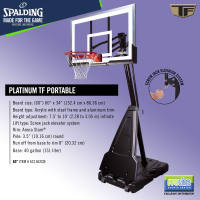
SPALDING Platinum Original Portable Backboard System with 60-inch Board
₱59,960.05₱63,249.00
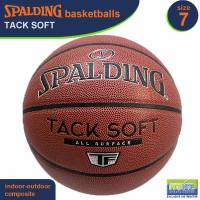
SPALDING Tack Soft Original Indoor-Outdoor Basketball Size 7
₱2,119.20₱2,649.00
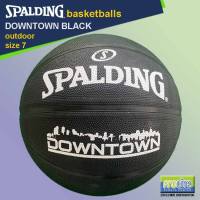
SPALDING Downtown Original Outdoor Basketball Size 7
₱791.10₱879.00
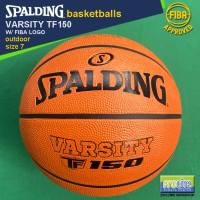
SPALDING Varsity TF150 FIBA-Approved Original Outdoor Basketball Size 7 Size 6 & Size 5
₱929.00
Buy on Lazada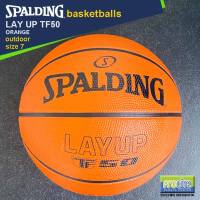
SPALDING Lay Up TF50 Original Outdoor Basketball Size 7 Size 6Size 5 & Size 4
₱833.29₱879.00
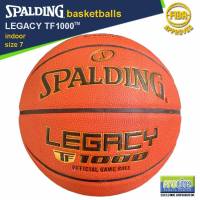
SPALDING Legacy TF1000 FIBA-Approved Original Indoor Basketball Size 7
₱5,023.45₱5,299.00
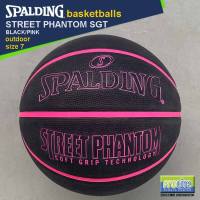
SPALDING Street Phantom Series Original Outdoor Basketball Size 7
₱1,259.10₱1,399.00
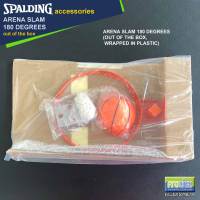
SPALDING NBA Arena Slam 180 Degrees
₱2,947.33₱3,109.00
About Spalding
Spalding is an American sporting goods brand with origins dating back to 1876, when professional baseball player and entrepreneur Albert Goodwill Spalding opened the first A.G. Spalding & Brothers store in Chicago. While the company began as a manufacturer of baseball equipment, it eventually expanded into numerous sports and became globally recognised for its basketballs. Today, Spalding remains one of the most identifiable basketball equipment brands worldwide.1
Overview
| Category | Information |
|---|---|
| Brand | Spalding |
| Founded | 1876 |
| Founder | Albert Goodwill Spalding |
| Place of origin | Chicago, Illinois, United States |
| Industry | Sporting goods |
| Best known for | Basketballs and basketball equipment |
| Original specialty | Baseball equipment |
| Major sports | Basketball, baseball, softball, football, soccer, volleyball, golf, and others |
| Notable former partnership | Official NBA game ball, 1983–2021 |
| Current identity | Global sports brand with a particularly strong association with basketball |
Origins
The history of Spalding is intrinsically linked to Albert Goodwill Spalding, a former professional baseball pitcher and executive. Before entering the sporting goods business, Spalding played professionally for teams including the Boston Red Stockings. He reportedly used baseballs he helped develop himself, merging his athletic experience with a desire to manufacture superior sporting equipment.2
In 1876, A.G. Spalding & Brothers established its first retail outlet in Chicago. Baseball equipment formed the core of the enterprise, and the company soon became a leading manufacturer of balls, gloves, bats, and other gear. The Spalding baseball served as the official ball of the National League for the league’s first century, from 1876 to 1976, and was also adopted by the American League for many years.3
Expansion beyond baseball
Over time, Spalding evolved from a specialist baseball manufacturer into a comprehensive sporting goods producer. Key milestones in this expansion include:
- 1876: Major-league baseball
- 1877: Early major-league baseball glove
- 1878: Publication of an official baseball rules guide
- 1887: Development of an early American football
- 1894: Development of the first basketball
- 1895: Development of an early American volleyball
- 1930: Introduction of the Kros-Flite liquid-centre golf ball4
These developments established Spalding’s reputation not merely as a manufacturer, but as a key contributor to the development and standardisation of sporting equipment.
Spalding and basketball
Basketball is the sport most closely associated with the modern Spalding brand. In 1894, the inventor of basketball, James Naismith, commissioned Spalding to create a ball specifically designed for the new sport, which had previously been played with adapted equipment from other disciplines. Spalding produced what it identifies as the first basketball, and the product became central to the early standardisation of the game.2
This relationship defined a significant portion of the company’s corporate identity.
Basketball innovation
Throughout its history, Spalding has introduced several technological advancements in basketball manufacturing:
- 1972: Synthetic-leather basketball
- 1983: Became official NBA game-ball supplier
- 1992: Introduced composite-leather basketball technology
- 1997: Became official WNBA ball supplier
- 2001: Introduced a basketball with integrated Micro-Pump technology
- 2006: Introduced NEVERFLAT technology designed to retain air substantially longer12
The shift towards composite materials was particularly significant, enabling manufacturers to produce balls that offered distinct combinations of durability, grip, softness, and consistency compared to traditional leather.
Spalding and the NBA
Spalding’s most prominent modern association was with the National Basketball Association (NBA). The company became the league’s official game-ball supplier in 1983, a partnership that endured for 37 seasons through the 2020–21 campaign. During this period, Spalding supplied the basketballs used during some of the NBA’s most culturally influential eras.13
The partnership concluded when the NBA announced a new agreement with Wilson. Wilson’s official ball debuted in the 2021–22 season, ending Spalding’s tenure as the supplier.13 It is important to note that while Spalding remains a major basketball brand, current official NBA game balls are manufactured by Wilson, not Spalding.6
WNBA and other basketball leagues
Spalding’s presence in basketball extends well beyond the NBA. The company became the official ball of the WNBA in 1997, and its products have been utilised in countless professional, collegiate, amateur, and recreational competitions globally.7
Internationally, Spalding maintains significant relationships with various basketball organisations. For instance, its Australian operation serves as the official ball of the National Basketball League (NBL) and Basketball Australia.5 In Europe, the brand has had long-standing associations with top-tier competitions, including the EuroLeague during the 2010s.17
Products
While basketball is currently the most visible category, Spalding’s historical and contemporary product range is extensive.
Basketball
Basketball remains the signature category for Spalding. The product lineup includes:
- Indoor basketballs
- Outdoor basketballs
- Indoor/outdoor basketballs
- Recreational basketballs
- Youth basketballs
- Competition/game basketballs
- Basketball hoops
- Portable basketball systems
- Backboards
- Nets
- Basketball accessories10
Baseball and softball
Baseball was the foundational pillar of the company. Historically, Spalding manufactured baseballs, gloves, bats, protective equipment, and various accessories. This heritage in baseball was instrumental in establishing Spalding as an influential name in American sporting goods.3
Other sports
Over its long history, Spalding has also produced equipment for:
- American football
- Soccer
- Volleyball
- Tennis
- Golf
- Softball
- Netball
The specific product availability varies by country and market.11
Brand identity
Spalding’s brand identity is anchored in sporting heritage, performance, and authenticity. Official communications emphasise being “true to the game,” linking the modern entity to its origins in 1876.16
The brand’s evolution can be categorised into two distinct eras:
- Baseball heritage (1876 onwards): Establishment as a premier American sporting goods company through baseball.
- Basketball specialisation (Modern era): Emergence as the sport most strongly linked to the Spalding name, driven by the NBA partnership and technological innovation.
Consequently, many consumers today immediately associate “Spalding” with basketball, despite the company’s historically broader scope.
Important technologies
Technological development has been a core component of Spalding’s market positioning.
Composite leather
Spalding states it developed the first composite-leather basketball in 1992. These materials allowed for surfaces with characteristics distinct from conventional leather, offering improved durability alongside a softer or more consistent feel.11
Micro-Pump
In 2001, Spalding launched a basketball featuring an integrated Micro-Pump system. This innovation eliminated the need for external pumps for minor inflation adjustments, as the mechanism was built directly into the ball.12
NEVERFLAT
Introduced in the mid-2000s, NEVERFLAT technology was engineered to help basketballs retain their inflation pressure for significantly longer periods than standard balls.12
Historical significance
Spalding’s impact transcends commercial sales. The company was active during the formative years of several American sports and helped transform equipment from basic handmade items into standardised commercial products.
Its influence is evident in four key areas:
- Equipment standardisation: Manufacturing balls and gear to consistent specifications helped organised sports establish recognisable standards.
- Sports commercialisation: Spalding was an early example of a business model integrating professional athletes, sports organisations, and equipment manufacturing.
- Athlete marketing: Associations with prominent athletes helped validate the concept of promoting equipment through elite player credibility.
- Sports publishing: The company produced guides and instructional materials, including the renowned Spalding’s Athletic Library, which covered a wide array of sports and exercises.8
Spalding today
In the contemporary market, Spalding operates as a heritage sporting goods brand with a specialised focus on basketball. Its primary U.S. website highlights basketballs and related equipment, though international operations may offer broader categories depending on the region.15
Corporate structure varies globally. The U.S. site lists Russell Brands, LLC in its copyright information, while international markets operate through different regional entities and licensing agreements. For example, Spalding Japan identifies Spalding Sporting Goods Limited as its sole shareholder.9 Rather than viewing Spalding solely as a former NBA supplier, it is more accurate to characterise it as a nearly 150-year-old sporting brand whose strongest modern identity is basketball.
Timeline
| Year | Event |
|---|---|
| 1871 | Albert Goodwill Spalding begins his professional baseball career |
| 1876 | A.G. Spalding & Brothers opens its sporting-goods store in Chicago |
| 1877 | Spalding develops an early major-league baseball glove |
| 1878 | Spalding publishes an official baseball rules guide |
| 1887 | Spalding develops an early American football |
| 1894 | Spalding develops the first basketball for James Naismith |
| 1895 | Spalding develops an early American volleyball |
| 1930 | Kros-Flite liquid-centre golf ball introduced |
| 1972 | Synthetic-leather basketball introduced |
| 1983 | Spalding becomes official NBA game-ball supplier |
| 1992 | Composite-leather basketball introduced |
| 1997 | Spalding becomes official WNBA ball |
| 2001 | Integrated Micro-Pump basketball introduced |
| 2006 | NEVERFLAT technology introduced |
| 2021 | Wilson replaces Spalding as NBA official game-ball supplier |
| Today | Spalding continues primarily as a global basketball and sporting-goods brand |
References
- Spalding® Official Sporting Goods | Basketballs & Equipment
- History – Spalding EU
- AMERICA’S FIRST BASEBALL COMPANY
- SPALDING OFFICIAL ONLINE SHOP
- About Spalding
- Spalding® Basketballs | Indoor & Outdoor Performance Gear
- Spalding (company)
- Spalding’s Athletic Library
- 〖スポルディング公式〗会社概要
- 150年の軌跡を1枚に。アーカイブを再構築「HERITAGEシリーズ」6月26日発売 | SPALDING JAPAN OFFICIAL
- Spalding – Wikidata
- Category:Spalding (company) – Wikimedia Commons
- Wilson Replaces Spalding as Official Ball of NBA – National Sporting Goods Association
- 〖プレスリリース〗バスケットボール開発「125周年記念ボール」が世界同時発売! | SPALDING JAPAN OFFICIAL
- 斯伯丁官网 _ There’s only one SPALDING
- Spalding — True to the Game
- History – Spalding EU