Shop on Lazada
Starlink products
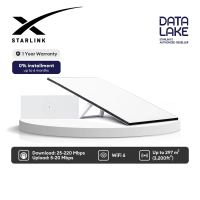
Starlink Residential Standard Satellite Internet with Wi-Fi Router
₱28,000.00
Buy on Lazada
Starlink Mini Compact Portable Kit with Built-In WiFi Router
₱16,390.00₱33,500.00

Starlink Ethernet Adapter 144W High Performance GigE PoE Injector 12V-48V Kit with Surge Protection
₱2,999.00₱6,000.00
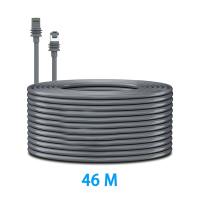
Starlink Gen3/V3 Cable 10m/23m/46m Waterproof High Speed Data Transmission Replacement Extension Cord
₱2,599.00₱4,500.00
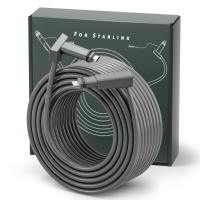
Caitlynd Standard Actuated Starlink Cable 6.6/33/75/150FT for Starlink Rectangular Satellite V2 Replacement Extension Cord
₱2,459.00₱5,000.00
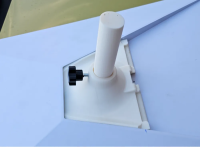
Starlink Gen 3 (V4) Mounting Bracket | Industrial Heavy-Duty Pole Mount Adapter | UV-Resistant Roof Bracket | Permanent Wall Mount for Starlink Standard Kit | 3DMANIA Outdoor Hardware
₱598.00₱799.00

RAIN COVER FOR GEN 2 STARLINK BAG
₱900.00
Buy on LazadaAbout Starlink
Starlink is a satellite internet brand operated by SpaceX. It provides high-speed, low-latency broadband internet through a constellation of thousands of satellites in Low Earth Orbit (LEO). Unlike traditional satellite internet systems that rely on a few satellites in geostationary orbit, Starlink’s LEO architecture significantly reduces latency while enabling global internet coverage, especially in rural, remote, and underserved areas. 1
Overview
| Attribute | Details |
|---|---|
| Brand | Starlink |
| Parent Company | SpaceX |
| Founded | 2015 (project announced), public beta in 2020 |
| Founder | Elon Musk |
| Headquarters | Hawthorne, California, USA |
| Industry | Satellite Internet, Telecommunications |
| Service Type | Broadband Internet via LEO Satellites |
| Coverage | More than 100 countries and territories |
| Target Users | Homes, businesses, governments, aviation, maritime, emergency services, military support |
History
The Starlink project began in 2015 when SpaceX announced plans to build a large constellation of internet satellites. The primary objective was to provide affordable, high-speed internet worldwide while generating revenue to support SpaceX’s long-term ambitions, including missions to Mars. 2
Major Milestones
- 2015 – Project announced.
- 2018 – First prototype satellites (Tintin A & B) launched.
- 2019 – First operational Starlink satellites launched.
- 2020 – Public beta (“Better Than Nothing Beta”) began.
- 2021–2024 – Rapid global expansion with millions of users.
- 2025 onward – Expansion into Direct-to-Cell services, aviation, maritime, and enterprise connectivity. 3
Mission
Starlink’s mission is to:
- Deliver reliable broadband internet globally.
- Bridge the digital divide in remote communities.
- Support education, healthcare, and disaster recovery.
- Enable connectivity in locations where fiber or cellular infrastructure is unavailable or impractical. 4
How Starlink Works
Traditional satellite internet uses satellites about 35,786 km above Earth in geostationary orbit.
Starlink instead operates satellites at roughly 550 km altitude in Low Earth Orbit.
The system consists of:
- Thousands of LEO satellites
- Ground stations
- User terminals (“Starlink Dish”)
- Wi-Fi router
- Space lasers (on many newer satellites) for inter-satellite communication 5
Typical data path:
Internet

     ↓

Ground Gateway

     ↓

LEO Satellite

     ↓

Starlink Dish

     ↓

Wi-Fi Router

     ↓

User Devices
Satellite Constellation
Starlink operates one of the world’s largest satellite constellations.
Key characteristics include:
- Thousands of satellites in orbit, with ongoing launches.
- Continuous replenishment using SpaceX’s reusable rockets.
- Flat-panel satellite design.
- Ion thrusters for orbital adjustments.
- Laser links for satellite-to-satellite communication. 6
Products
Starlink offers several hardware and service options, including:
Residential
- Home internet
- Self-installation kit
- Unlimited broadband
Roam
- Portable internet
- RVs
- Travelers
- Camping
Business
- Priority network access
- Higher performance hardware
- Static IP options (where available)
Maritime
- Ships
- Commercial vessels
- Offshore platforms
Aviation
- Commercial airlines
- Private jets
- Government aircraft
Direct to Cell
A newer service allowing compatible mobile phones to connect directly to Starlink satellites for basic connectivity in areas without terrestrial cellular coverage. 7
Technology
Starlink employs several advanced technologies:
- Low Earth Orbit satellite network
- Electronically steered phased-array antennas
- Laser inter-satellite links
- Autonomous collision avoidance
- Reusable Falcon 9 launches
- Automated manufacturing of satellites and user terminals 8
Performance
Performance varies by location and network conditions, but users commonly experience:
- Download speeds: roughly 50–300+ Mbps
- Upload speeds: roughly 10–40 Mbps
- Latency: often around 20–50 ms
These characteristics make Starlink suitable for:
- Video streaming
- Online gaming
- Video conferencing
- Remote work
- Cloud applications 9
Industries Served
Starlink is used across many sectors:
- Residential broadband
- Enterprise networking
- Maritime shipping
- Aviation
- Oil & gas
- Mining
- Agriculture
- Emergency response
- Scientific research
- Government services
- Defense communications
Advantages
Major benefits include:
- Near-global coverage
- Fast deployment without wired infrastructure
- Lower latency than traditional satellite internet
- High-speed broadband
- Mobility options
- Frequent satellite upgrades via SpaceX launches 10
Limitations
Some challenges include:
- Service quality can vary by region and network congestion.
- Initial hardware costs may be higher than some terrestrial options.
- Weather can temporarily affect signal quality.
- Availability depends on regulatory approval in each country.
- Satellites have finite operational lifetimes and require replacement. 11
Environmental and Scientific Considerations
Starlink has prompted discussion among astronomers and space-policy experts about:
- Increased satellite brightness affecting astronomical observations.
- Orbital congestion and space debris risks.
- The need for coordinated space traffic management.
SpaceX has introduced measures such as satellite orientation changes and other brightness-mitigation efforts to reduce visual impact. 12
Business Model
Starlink generates revenue through:
- Hardware sales
- Monthly internet subscriptions
- Enterprise services
- Maritime and aviation connectivity
- Government contracts
- Direct-to-cell partnerships
Revenue from Starlink supports SpaceX’s broader aerospace initiatives, including reusable launch systems and deep-space exploration. 13
Global Impact
Starlink has been used to:
- Connect rural communities lacking broadband.
- Restore communications after natural disasters.
- Support schools and healthcare facilities in remote areas.
- Provide connectivity for ships and aircraft.
- Expand internet access in regions with limited infrastructure. 14
Future Development
Planned and ongoing developments include:
- Continued expansion of the satellite constellation.
- Greater deployment of laser-connected satellites.
- Growth of Direct-to-Cell services.
- Enhanced enterprise offerings.
- Integration with future SpaceX launch capabilities for larger, more capable satellites. 15
Summary
Starlink is a global satellite broadband service developed and operated by SpaceX that uses a large constellation of Low Earth Orbit satellites to deliver internet access with relatively low latency and broad geographic reach. By combining reusable rocket launches, advanced satellite technology, and user-friendly ground equipment, Starlink has become one of the most prominent satellite internet providers in the world and continues to expand into consumer, enterprise, maritime, aviation, and direct-to-mobile connectivity. 16
References
- Starlink | Technology
- SpaceX
- SpaceX
- SpaceX Falcon 9 rocket sends Starlink satellites to orbit a day after rare launch abort
- SpaceX
- A Multifaceted Look at Starlink Performance
- The Low Earth Orbit Satellite Population and Impacts of the SpaceX Starlink Constellation
- Characterization of Starlink Direct-to-Cell Satellites In Brightness Mitigation Mode
- Starlink : A Solution to the Digital Connectivity Divide in Education in the Global South
- SpaceX
- SpaceX
- SpaceX
- SpaceX
- Starlink | Technology
- Starlink | Availability Map
- Starlink | Technology