Shop on Lazada
Tampax products
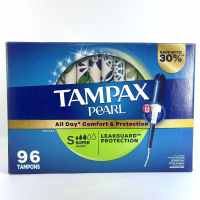
Tampax Pearl Leakguard Protection Regular 96 Tampons Super 96 tampons & Tampax radiant RSS+ 77 tampons
₱1,998.00
Buy on Lazada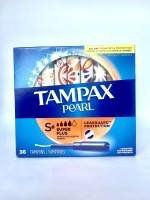
Tampax Pearl (Super Plus ) From USA (36 & 40 tampons)
₱950.00₱955.00
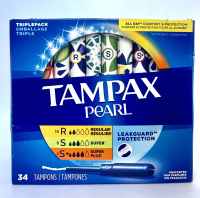
Tampax Pearl ( Regular Super Super Plus ) From USA (34 tampons) PACKAGING MAY VARY & Tampax RS
₱950.00₱955.00
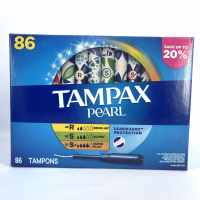
Tampax Pearl Tampons 86 Count Regular Super Plus Leakguard Protection
₱2,140.00₱2,150.00
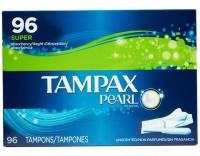
TAMPAX PEARL UNSCENTED SUPER ABSORBENCY TAMPONS 96 PCS
₱2,146.00
Buy on Lazada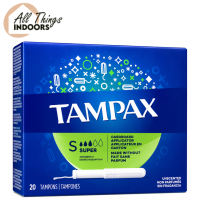
Tampax Super Tampons with Cardboard Applicator – 20 Tampons (Regular Flow Unscented)
₱749.00₱1,000.00
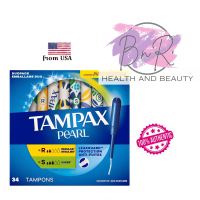
Tampax Pearl Tampons for Women Multipack with LeakGuard Braid Regular/Super Absorbency Unscented 34 Count BOX DAMAGE
₱1,249.00
Buy on Lazada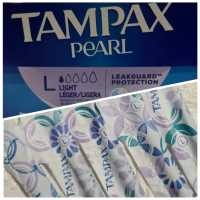
Tampax Pearl Tampons Light Unscented Single pack 1pc
₱28.00₱29.00
About Tampax
Overview
Tampax is an American menstrual-hygiene brand best known for its tampons, particularly those featuring applicators. The brand traces its origins to the early 1930s and played a significant role in establishing tampons as a widely marketed and commercially accepted form of menstrual protection. Today, Tampax is owned by Procter & Gamble (P&G) and is sold in numerous markets around the world.1
| Category | Information |
|---|---|
| Brand | Tampax |
| Industry | Personal care / menstrual hygiene |
| Main products | Tampons and related period-care products |
| Founded / commercial launch | 1930s; first Tampax tampons sold in 1936 |
| Original inventor | Dr. Earle Cleveland Haas |
| Early business leader | Gertrude Tenderich |
| Current owner | Procter & Gamble |
| Headquarters / corporate base | United States, through P&G |
| Major product line | Tampax Pearl |
| Product type | Primarily applicator and non-applicator tampons, depending on market |
| Website | tampax.com |
History
Origins
The history of Tampax begins with Dr. Earle Cleveland Haas, an American physician and inventor. During the late 1920s and early 1930s, Haas developed a menstrual tampon designed to be inserted using a disposable applicator. His design utilised compressed absorbent material and a telescoping cardboard applicator, allowing the tampon to be inserted without the user having to directly touch the absorbent material.
Haas filed a patent for his design in 1931, and it was granted in 1933. He named the product Tampax, a name that became synonymous with this new form of menstrual protection.1
Gertrude Tenderich and the Tampax company
Haas initially struggled to find companies willing to manufacture and market his invention. In 1933, he sold the patent and trademark to Gertrude Schulte Tenderich, a Denver-based businesswoman who subsequently built the business around the Tampax name.
Historical accounts emphasise Tenderich’s role as a female entrepreneur who helped establish a company focused on manufacturing and marketing menstrual products to women. Early production was remarkably small-scale; she reportedly made some of the tampons herself before the business expanded with machinery.
1936: Commercial launch
The year 1936 is generally regarded as the major commercial debut of Tampax. The company began selling its tampons to the public and invested heavily in educating consumers about a product that was still relatively unfamiliar and surrounded by social taboos.1
Early advertising promoted internal menstrual protection as a more convenient alternative to traditional menstrual pads. This marketing strategy helped establish the tampon as a mainstream consumer product.
Expansion during the 1940s and 1950s
The Second World War contributed to changing attitudes towards women’s participation in the workforce. As increasing numbers of women worked outside the home, products offering mobility and convenience became increasingly attractive.
In response, Tampax created an educational programme in 1941. Female educators, known informally as the “Tampax Ladies,” visited schools, colleges, conventions and other venues to explain how tampons worked and how they could be used.
The company also expanded manufacturing capacity as demand increased. By the post-war period, Tampax had become an important name in the developing American menstrual-products market.
Corporate development
Tampax eventually operated through Tambrands, Inc., which became the corporate entity associated with the brand. A major turning point occurred in 1997 when Procter & Gamble acquired Tambrands. This acquisition brought Tampax into one of the world’s largest consumer-goods companies, providing the brand with access to P&G’s extensive research, manufacturing, marketing and distribution capabilities.1 Tampax remains a P&G brand today.
Product innovation
A defining characteristic of Tampax has been its emphasis on applicator technology and leak protection.
Tampax Pearl
One of the brand’s most significant modern products is Tampax Pearl, introduced in 2002. It featured a plastic applicator with a rounded tip and incorporated design features intended to improve comfort, insertion and leakage protection.1
The modern Pearl range includes different absorbency levels designed for various menstrual flows. In the United States, the range includes Light, Regular, Super, Super Plus and Ultra absorbencies. Current Pearl products also advertise features such as a LeakGuard braid, an anti-slip applicator grip and an applicator designed to facilitate easier insertion.
Composition and materials
Tampax states that its tampons are primarily made from absorbent materials such as purified cotton, rayon fibres, or blends of the two, depending on the specific product. The company asserts that all ingredients undergo safety evaluation before use.
Applicator material varies by product line. Historically, Tampax was particularly associated with cardboard applicators, while modern products such as Pearl use plastic applicators.1 In the United States, tampons are regulated by the U.S. Food and Drug Administration (FDA) as medical devices.
Safety and regulation
Menstrual-product safety has been a critical issue throughout the history of tampons. Tampax states that it employs a multi-step safety evaluation process and tests its products against applicable regulatory requirements. The company also notes that its products have been independently tested under OEKO-TEX Standard 100, which evaluates products for numerous potentially harmful substances.1
As with all tampons, Tampax products carry instructions concerning proper use and the risk of toxic shock syndrome (TSS), a rare but potentially serious condition associated with tampon use.
Marketing and cultural significance
The significance of Tampax extends beyond its physical products. The company was among the early major advertisers to promote menstrual products directly to women at a time when menstruation was rarely discussed openly.
Its marketing history reflects a broader cultural transition from treating menstruation as a private or taboo subject towards discussing menstrual health, hygiene and women’s health more openly.1 In this respect, Tampax became not simply a manufacturer but one of the brands associated with the normalisation of commercially produced menstrual protection.
Major milestones
- 1931 — Earle Haas patents his applicator-tampon design.1
- 1933 — Gertrude Tenderich acquires the patent and Tampax name.
- 1936 — Tampax tampons are commercially launched.
- 1941 — Tampax establishes an educational department and begins formal consumer-education efforts.
- 1950s — Production expands as tampon use becomes increasingly widespread.
- 1986 — Tampax celebrates its 50th anniversary and reports more than 60% market share at the time.
- 1997 — Procter & Gamble acquires Tambrands.
- 2002 — Tampax Pearl launches with a plastic applicator and new expansion technology.
- 2012 — Tampax Radiant is introduced as part of a broader period-care offering developed with Always.
- 2015 — Tampax introduces a compact applicator format.
- 2019 — The brand emphasises choosing tampon absorbency according to menstrual flow.
Brand identity
Contemporary brand positioning for Tampax centres on several key concepts:
- Freedom and mobility — enabling individuals to continue everyday activities during menstruation.
- Comfort — focusing on insertion, fit and protection.
- Leak protection — a major theme in modern advertising and product development.
- Education — explaining menstruation, tampon use and absorbency.
- Innovation — developing new applicators, absorbency options and product designs.
- Menstrual normalisation — encouraging more open conversations about periods.
Current messaging describes the brand’s broader purpose as helping people feel educated, empowered and able to live more freely during their periods.1
Ownership
Today, Tampax is part of Procter & Gamble, the multinational consumer-goods company whose portfolio also includes brands such as Always, Gillette, Head & Shoulders and Pantene. P&G’s ownership allows Tampax to operate as part of a larger global personal-care business while retaining its distinct consumer identity. The acquisition took place in 1997 when P&G purchased Tambrands.
Significance
Tampax is historically significant because it helped transform the tampon from a relatively unfamiliar item into a mainstream menstrual-care product. Its history illustrates how product innovation, advertising, consumer education and changing social attitudes towards menstruation can interact.
From Haas’s early applicator design in the 1930s to modern products such as Tampax Pearl, the brand has spent roughly nine decades developing and marketing internal menstrual protection.1