Shop on Lazada
Tanduay products
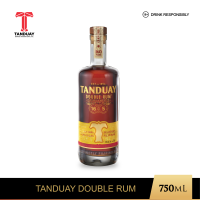
Tanduay Double Rum
₱3,200.00
Buy on Lazada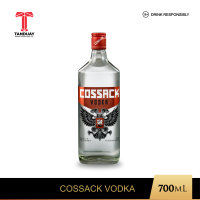
Cossack Vodka
₱200.00
Buy on Lazada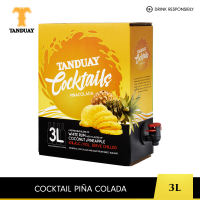
Tanduay Cocktail Piña Colada 3L
₱475.00
Buy on Lazada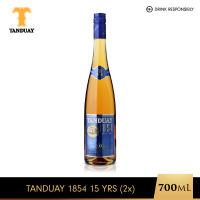
Tanduay 1854 15 Yrs
₱500.00
Buy on Lazada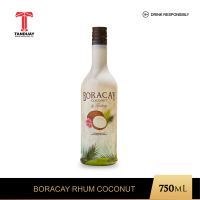
Boracay Rum Coconut
₱180.00
Buy on Lazada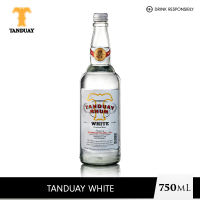
Tanduay White Rum 750ml
₱180.00
Buy on Lazada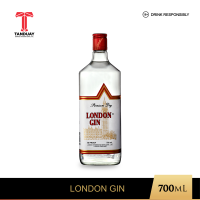
London Gin
₱210.00
Buy on Lazada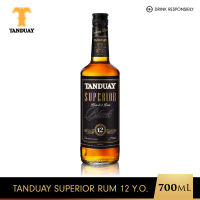
Tanduay Superior (Regular) 700ml
₱390.00
Buy on LazadaAbout Tanduay
Overview
| Field | Information |
|---|---|
| Brand | Tanduay |
| Industry | Distilled alcoholic beverages |
| Primary product | Rum |
| Country of origin | Philippines |
| Established | 1854 |
| Producer | Tanduay Distillers, Inc. |
| Parent group | LT Group, Inc. |
| Headquarters / principal operations | Manila and Laguna, Philippines |
| Known for | Filipino rum, extensive heritage, international sales |
| Brand positioning | “Distinctly Filipino, Undeniably World Class” |
| Major international recognition | Named the world’s No. 1 rum by sales volume in 2018 and 2019 by Drinks International, according to LT Group |
Tanduay is a Philippine rum brand with a history dating to 1854. Produced by Tanduay Distillers, Inc., it is one of the country’s best-known spirits brands and has developed from a 19th-century Manila-area distillery into an internationally marketed rum company. The brand is particularly associated with Filipino heritage, sugarcane-based rum production, and its long-running position in the domestic spirits market.
History
Origins: 1854–19th century
Tanduay traces its roots to the mid-19th century, when a distillery in Hagonoy, Bulacan became associated with the business interests of the Spanish-Filipino trading company Ynchausti y Compañía. The company adopted 1854 as the founding year associated with the Tanduay business.1
A significant development came in 1856, when the Hagonoy distillery was acquired by Valentín Teus e Yrisarry and incorporated into Ynchausti y Compañía. In 1860, the company established a rectifying plant on Isla de Tanduay, an area in Manila near the present-day Quiapo and San Miguel districts. This Manila operation eventually became the historical center of Tanduay’s distilling business.1
The name Tanduay therefore became closely connected with both the Manila distillery and the company’s rum-making tradition.
Development under Elizalde & Company
During the early 20th century, ownership and control of the business changed. In the 1930s, Elizalde & Company acquired important assets of Ynchausti y Compañía, including the Tanduay distillery. The business subsequently operated as Tanduay Distillery, Inc.1
During this period, Tanduay increasingly developed from a distillery into a recognizable consumer brand. By the 1930s, its rum was being sold under the Tanduay Rhum name in smaller glass bottles rather than primarily in large containers used for bulk distribution.1
The Lucio Tan era
A major turning point occurred in 1988, when Lucio Tan acquired the Tanduay trademark and related assets from Elizalde & Company through his company, Twin Ace Holdings Corporation.
The new ownership embarked on a modernization and expansion program. According to historical accounts, the modernization substantially increased production capacity and transformed Tanduay into a much larger industrial spirits producer.1
In 1999, Twin Ace Holdings was renamed Tanduay Distillers, Inc. The corporate structure was subsequently incorporated into what became LT Group, Inc., the holding company controlled by the Lucio Tan group.
Today, Tanduay Distillers remains a subsidiary of LT Group.
Products
Although Tanduay is primarily identified with rum, Tanduay Distillers has historically produced a broader range of distilled spirits. The company’s operations have included rum as well as products in categories such as gin, vodka, brandy and whiskey.1
Its rum portfolio has expanded considerably beyond its traditional products. Examples include:
- Tanduay 1854
- Tanduay Asian Rum Gold
- Tanduay Asian Rum Silver
- Tanduay Double Rum
- Tanduay Especia Spiced Rum
- Tanduay Reserve Rum 10 Years
- Tanduay Reserve Rum Overproof
- Tanduay Select
The exact portfolio varies by market, with products offered in the Philippines and different products distributed internationally. Tanduay’s U.S. brand presentation, for example, emphasizes its identity as “Tanduay Asian Rum.”2
Connection to Philippine sugarcane
A central part of Tanduay’s identity is its connection to sugarcane, one of the Philippines’ important agricultural commodities.
Rum production traditionally relies on sugarcane-derived materials, particularly molasses. Tanduay’s modern production network has a strong connection to Negros Occidental, the country’s major sugar-producing region. The company operates a large distillery in the Bacolod/Murcia area, where sugarcane-derived molasses is used in rum production.3
This connection to Philippine sugarcane agriculture is an important part of how Tanduay presents itself as a distinctly Filipino spirit rather than simply a rum brand manufactured in the Philippines.
Global expansion
Tanduay’s growth has not been limited to the Philippine market. The company has pursued international distribution and brand-building, particularly in the United States and other overseas markets.
The brand’s international positioning centers on combining its long Philippine heritage with modern rum-making and global distribution. Its U.S. presentation uses the themes “Distinctly Filipino” and “Undeniably World Class.”2
Tanduay has also received considerable international attention because of its sales performance. LT Group states that Tanduay was named the world’s No. 1 rum based on sales volume in 2018 and 2019, citing Drinks International.
Awards and recognition
Tanduay’s recent portfolio has received recognition from several international spirits competitions.
For example, according to the Philippine News Agency, recent products have received awards including:3
- Tanduay Double Rum — gold awards from the Beverage Testing Institute and SIP Awards.
- Tanduay Asian Rum Gold — recognition from the Beverage Testing Institute and an innovation award from SIP.
- Tanduay Asian Rum Silver — gold recognition at the San Diego Spirits Festival.
- Especia Spiced Rum — gold and Best in Category recognition at the New Orleans Spirits Competition.
- Tanduay Reserve Rum 10 Years — Master Medal and Taste Master Award.
- Tanduay Reserve Rum Overproof — gold at The Spirits Business’ Asian Spirits Masters.
Brand identity
Tanduay’s branding is strongly tied to Filipino identity and resilience. Its international marketing describes the brand as:
“Distinctly Filipino, Undeniably World Class.”
The company uses its age—dating the brand to 1854—as a major part of its identity. Rather than presenting Tanduay simply as an alcoholic beverage, its marketing generally frames the brand as an example of a Filipino product with a long history that has reached international markets.2
The historic Ynchausti family coat of arms has also been associated with Tanduay’s packaging and is described in historical accounts as appearing on Tanduay bottles, connecting the modern brand with its 19th-century origins.1
Corporate structure
Tanduay is operated by Tanduay Distillers, Inc. (TDI). TDI is part of LT Group, Inc., a Philippine holding company whose portfolio also includes businesses in areas such as tobacco, banking, beverages and property.
LT Group’s corporate history explains that the group acquired Twin Ace Holdings in 1999, after Twin Ace had acquired the Tanduay business in 1988. Twin Ace subsequently became Tanduay Distillers, while the holding company eventually became LT Group in 2012.
Manufacturing
Modern Tanduay production is considerably larger than the original 19th-century distillery operation.
One of its significant modern facilities is the Tanduay Negros Plant, located around Bacolod City and Murcia in Negros Occidental. The Philippine News Agency reported that the facility employs more than 400 people and has the capacity to manufacture up to 55,000 cases of rum per day.3
Tanduay also has production operations in Cabuyao, Laguna, where Tanduay Distillers lists a major facility. The company diversified into bioethanol production in 2016 as part of its broader industrial operations.
Cultural significance
Tanduay occupies an unusual position in Philippine consumer culture because it combines a very old industrial history with mass-market accessibility.
Its history spans several major periods of Philippine economic development:
- Spanish colonial-era commerce — through Ynchausti y Compañía.
- Early Philippine industrialization — through the development of commercial distilling in Manila.
- 20th-century Philippine business — through Elizalde & Company.
- Late-20th-century corporate consolidation — through Lucio Tan’s acquisition in 1988.
- 21st-century globalization — through international distribution and premium rum products.
Consequently, Tanduay is not merely a modern beverage label; it is one of the Philippine spirits brands whose history can be traced back to the 19th century. The National Commission for Culture and the Arts’ historical documentation likewise connects the Tanduay distillery’s origins with the commercial history of the Ynchausti family and the Spanish-era Philippine economy.1
Tanduay today
As of 2026, Tanduay remains one of the major Philippine rum brands and operates as part of LT Group’s beverage interests. Its strategy combines its historic 1854 heritage with product diversification, international expansion, premium and aged rum offerings, and continued emphasis on Filipino identity.2
The brand’s long history is arguably its most distinctive competitive asset: few contemporary rum brands can claim a documented Philippine heritage extending back to the 1850s while simultaneously operating at modern international scale.