Shop on Lazada
TEXTAR products
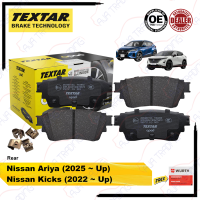
Genuine Textar Rear Brake Pads for Nissan Kicks (2022 - Up) Nissan Ariya (2025 - Up)
₱1,810.00₱2,353.00
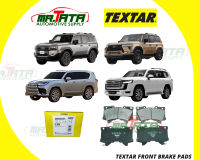
Textar Front BRAKE PAD for TOYOTA LANDCRUISER PRADO 250 2024 up LANDCRUISER 300 2022 up LEXUS GX550 2024 up LX600 2022 up 2683201SC
₱3,000.00
Buy on Lazada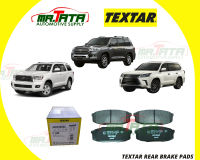
Textar Rear BRAKE PAD for TOYOTA LANDCRUISER 200 2008 to 2021 SEQUIOA 4.7/5.7 2007 to 2020 LEXUS LX570 5.7 2008 to 2021 2465301SC
₱2,300.00
Buy on Lazada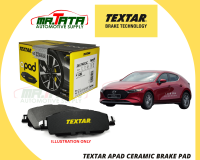
Textar Rear BRAKE PAD for MAZDA 3 SKYACTIV 2008 to 2019 2617401SC
₱2,050.00
Buy on Lazada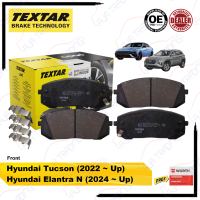
Genuine Textar Front Brake Pads for Hyundai Tucson (2022 - Up) Hyundai Elantra N (2024 - Up)
₱2,450.00₱3,185.00
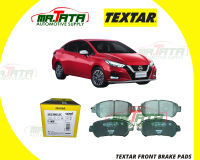
Textar Front BRAKE PAD for NISSAN ALMERA 1.0-T 2022 Up 2613801SC
₱1,800.00₱1,900.00
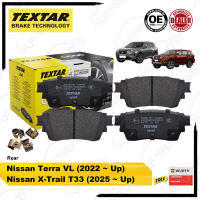
Genuine Textar Rear Brake Pads for Nissan Terra VL (2022 - Up) Nissan X-Trail T33 (2025 - Up)
₱1,810.00₱2,353.00
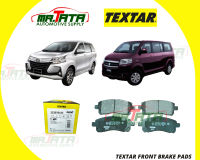
Textar Front BRAKE PAD for TOYOTA AVANZA 1.3/1.5 2006 to 2021 SUZUKI APV TYPE 1 2005 to 2025 2229701SC
₱1,500.00
Buy on LazadaAbout TEXTAR
Overview
TEXTAR is a German-origin automotive braking brand specialising in brake friction technology and braking components for passenger cars and commercial vehicles. Positioned as a premium original equipment (OE) quality aftermarket brand, it operates under TMD Friction, a global manufacturer of friction products. The brand traces its heritage to 1913 and currently markets its products in numerous countries worldwide.1
| Field | Information |
|---|---|
| Brand | TEXTAR |
| Industry | Automotive |
| Main sector | Braking systems / friction materials |
| Founded / heritage | 1913 |
| Origin | Germany |
| Parent company | TMD Friction |
| Positioning | Premium / OE-quality braking |
| Main customers | Vehicle manufacturers, distributors, workshops and vehicle owners |
| Main applications | Passenger cars and commercial vehicles |
| Core products | Brake pads, discs, drums, shoes, linings and related braking products |
| Aftermarket coverage | More than 99% of the European car parc, according to Textar |
| R&D / technology | Friction formulations, brake testing, NVH and OE engineering |
History
The history of TEXTAR is intrinsically linked to the development of the European friction-material industry. With a heritage dating back to 1913, the brand possesses over a century of experience in braking technology. Historical records from TMD Friction identify 1925 as a pivotal year when TEXTAR expanded across continental Europe and established a significant market presence.1
Over subsequent decades, the brand evolved from a friction-material business into a comprehensive supplier serving both the original-equipment (OE) market and the independent aftermarket. A major corporate milestone occurred in 2000 when the automotive friction business of BBA Group was sold, leading to the establishment of TMD Friction. TEXTAR became one of the core brands within this new organisation, alongside Mintex, Don, Pagid and Cobreq. Today, the brand leverages TMD Friction’s global engineering, manufacturing and research and development infrastructure.
Product Portfolio
Unlike generalist automotive parts brands, TEXTAR maintains a strong identity concentrated specifically on braking technology and friction products.
Passenger-car products
The passenger-car portfolio encompasses a wide range of braking and service components:1
- Brake pads
- Brake discs
- Brake drums
- Brake shoes and shoe kits
- ABS sensors
- Brake fluid
- Brake-maintenance products
- Lubricants
- Workshop tools and accessories
Commercial-vehicle products
For trucks, buses and other heavy-duty applications, the product range includes:1
- Disc-brake pads
- Brake discs
- Brake linings
- Wear indicators
- Other braking and service products
TEXTAR places specific emphasis on commercial-vehicle braking, recognising that heavy vehicles impose fundamentally different demands on friction materials compared to passenger cars.
Original Equipment Expertise
A central pillar of the TEXTAR value proposition is its relationship with original-equipment braking. OE components are developed to meet the precise technical requirements of vehicle manufacturers and their specific braking systems. The brand states that its aftermarket products are derived directly from this OE expertise rather than being designed as generic replacement parts.1
TEXTAR claims more than 80 years of OE braking experience, having supplied solutions for vehicles ranging from mainstream models to high-performance applications. Its stated OE history includes associations with vehicles such as the Bugatti Veyron, as well as modern hybrid and electric platforms. This connection underpins the brand’s positioning as a provider of premium aftermarket products based on genuine OE engineering expertise.
Technology and Friction Development
Braking performance relies heavily on friction formulation rather than solely on physical design or backing plates. TMD Friction has reportedly developed more than 50,000 friction formulations over three decades, evaluating hundreds of raw materials to create compounds tailored to specific vehicles, brake systems, loads and operating environments.1
This bespoke approach is necessary because brake pads must balance competing characteristics including braking power, friction stability, temperature resistance, wear life, noise, vibration, rotor compatibility, dust generation and environmental compliance. Consequently, TEXTAR operates on the philosophy that there is no universal friction material; different vehicles and systems require distinct formulations.
Testing and Quality Assurance
TEXTAR places significant emphasis on rigorous testing protocols. The development infrastructure includes test tracks, test fleets, dynamometer testing, extensive road evaluations, friction-material development and noise, vibration and harshness (NVH) engineering.
The testing programme involves approximately 38,000 hours of on-road testing annually, with around 300,000 km of road testing conducted for each new OE pad. Furthermore, next-generation friction formulations are developed to exceed ECE R90 requirements and meet demanding OE specifications. ECE R90 is a critical European regulatory standard governing replacement brake linings and pads.
Relationship with TMD Friction
It is important to distinguish between TEXTAR and TMD Friction. TEXTAR is the consumer-facing brand, while TMD Friction serves as the parent organisation responsible for global manufacturing and technology. TMD Friction describes itself as a global friction specialist with more than 140 years of expertise, operating 23 locations across 12 countries with four global R&D centres. Its aftermarket portfolio also includes Pagid, Mintex, Don, Cobreq and Bendix.1 This structure provides TEXTAR access to a technological and manufacturing network far exceeding what the brand name alone might suggest.
Market Positioning
TEXTAR occupies the premium segment of the automotive aftermarket. In the spectrum ranging from generic to OE-quality parts, TEXTAR targets the premium/OE-quality tier. Marketing efforts emphasise OE expertise, safety, performance, comfort, vehicle coverage, product consistency, technical support, testing rigour and friction-material knowledge. TMD Friction explicitly categorises TEXTAR as one of its premium aftermarket brands.1
Vehicle Coverage and Catalogue Expansion
Broad application coverage is a key competitive advantage. The brand claims more than 99% car-parc coverage in Europe, spanning small passenger cars, heavy commercial vehicles, hybrids and electric vehicles.1
The catalogue continues to expand rapidly. In 2025, the company announced 153 new products, including 43 applications described as “first-to-market” among premium braking brands. These additions covered brake pads, discs, ABS sensors, drums, shoes, wear indicators and service products.
Electric and Hybrid Vehicles
The rise of electric vehicles (EVs) has introduced new challenges for brake manufacturers. Because EVs typically utilise regenerative braking to recover energy, mechanical brakes function differently than those on conventional combustion vehicles. TEXTAR has expanded its focus toward braking solutions for hybrid and fully electric platforms, paying particular attention to braking comfort and NVH characteristics which are more perceptible in quieter EV drivetrains.1
Examples of OE involvement in modern electric mobility include applications associated with the BMW i3/i8 and Volkswagen ID-series.
Commercial Vehicle Significance
Commercial vehicles represent a vital component of the brand’s identity. Trucks and buses require friction materials capable of handling substantially higher loads, temperatures and duty cycles than passenger cars. TEXTAR states that its products are used extensively in European commercial vehicles, claiming that approximately 70% of trucks equipped with drum brakes leave production lines fitted with TEXTAR braking products. The brand also maintains a strong presence in disc-brake applications for this sector.
Motorsport and High-Performance Heritage
TMD Friction’s broader history connects the TEXTAR technology family with high-performance and motorsport applications. Historical records note that Stirling Moss won his first British Formula One Grand Prix in 1955 in a car fitted with TEXTAR brake linings. The organisation subsequently developed braking technology for increasingly demanding vehicles, working with manufacturers such as Ferrari, Porsche, Lamborghini, McLaren, Aston Martin, Audi and BMW. While the modern TEXTAR brand is primarily positioned for everyday passenger and commercial vehicles, this heritage contributes to its engineering credentials.
Digital Tools and Authenticity
Brakebook
To assist workshops and distributors, TEXTAR operates Brakebook, an online catalogue system allowing users to search by vehicle and technical criteria. The system contains more than 16,400 products and is updated weekly. Accurate part identification is critical in the aftermarket, as identical vehicle models may feature different brake systems depending on engine type, model year, axle configuration or market specification.
Counterfeit Protection
As a recognised premium brand, TEXTAR addresses authenticity concerns through the PROriginal seal on product packaging. The company also provides technical support and installation guidance for trade partners.
Global Presence
Despite its German and European roots, TEXTAR is now a global aftermarket brand supported by TMD Friction’s international network. With 23 locations in 12 countries and four global R&D centres, products are marketed internationally to distributors, workshops and vehicle owners.1
Brand Philosophy and Attributes
The essence of the brand is summarised as “OE braking expertise brought to the aftermarket.” Development focuses on matching friction materials to specific vehicles rather than producing generic compounds. Key attributes include:1
- Safety: Recognising braking as a critical safety function.
- OE expertise: Leveraging knowledge from original-equipment applications.
- Precision: Tailoring friction formulations to individual applications.
- Reliability: Ensuring consistent performance across varying conditions.
- Comfort: Prioritising noise, vibration and braking feel.
- Coverage: Maintaining an extensive vehicle and application catalogue.
- Innovation: Developing solutions for hybrid, electric and next-generation vehicles.
Competitive Position and Future Direction
TEXTAR is generally regarded as a premium European braking brand rather than a low-cost manufacturer. Its competitive proposition combines OE heritage, friction-material expertise, broad coverage, rigorous testing and global distribution.
As of 2026, strategic priorities include:
- Expanding aftermarket coverage through continuous product additions.
- Developing braking products suited to the unique patterns and NVH requirements of electric and hybrid vehicles.1
- Maintaining a strong position in truck and bus braking.
- Differentiating aftermarket products through OE-derived engineering knowledge.
- Supporting workshops via digital tools like Brakebook.
- Adapting friction materials and manufacturing processes to meet stringent environmental and sustainability requirements.1