Shop on Lazada
Three products
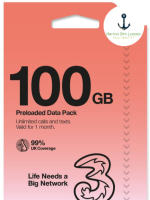
THREE UK SIM WITH 100GB DATA
₱2,350.00
Buy on Lazada
Japan THREE Ultimate Diaphanous Loose Powder (#Glow 01 / #Glow 02) 17g
₱2,498.90₱3,298.30
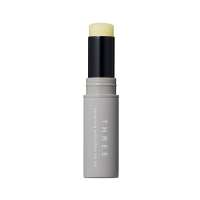
Japan THREE Balancing Protective Lip Bar SPF20/PA++ 3g
₱1,842.90₱2,431.80

THREE Balancing Cleansing Oil R (185ml)
₱1,793.00₱3,945.00
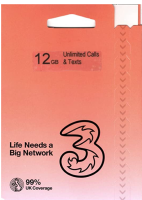
THREE UK SIM WITH 10GB DATA
₱1,150.00
Buy on LazadaAbout Three
Three, commonly stylised as 3, is a global telecommunications brand associated with CK Hutchison Holdings, a multinational conglomerate based in Hong Kong. Established in the early 2000s alongside the emergence of third-generation (3G) mobile communications, it became one of the first international mobile brands built specifically around mobile data, multimedia, and video services.1
The Three brand is currently active in several telecommunications markets, including the United Kingdom, Ireland, Austria, Sweden, Denmark, Hong Kong, Macau, and Indonesia. Corporate ownership and operating structures vary significantly by country.1
Note on Indonesia: In Indonesia, the brand is generally known as Tri Indonesia or 3. It now operates as a consumer brand of PT Indosat Tbk / Indosat Ooredoo Hutchison (IOH) rather than as a standalone Hutchison 3 Indonesia entity.
Overview
| Field | Information |
|---|---|
| Brand name | Three / 3 |
| Industry | Telecommunications |
| Origin | Hutchison Whampoa |
| Brand introduced | 8 October 2002 |
| First commercial services | 2003 |
| Original focus | 3G mobile communications |
| Parent group | CK Hutchison Holdings |
| Main products | Mobile telecommunications, mobile broadband, data, 4G/5G services |
| Major markets | UK, Ireland, Austria, Sweden, Denmark, Hong Kong, Macau, Indonesia |
| Indonesian brand | Tri Indonesia |
| Indonesian operator today | PT Indosat Tbk / Indosat Ooredoo Hutchison |
| Official global site | Three Global three.com |
| Indonesian site | Tri Indonesia tri.co.id |
History
Origins
The history of Three traces back to Hutchison Whampoa, the predecessor to CK Hutchison. During the late 1990s and early 2000s, the telecommunications industry began shifting from traditional 2G voice and SMS services towards mobile internet and multimedia.
Hutchison invested heavily in 3G licences and networks across multiple countries. Rather than marketing each network independently, the company sought a recognisable international identity. On 8 October 2002, Hutchison Whampoa officially unveiled the 3 brand for its worldwide mobile multimedia services, deliberately choosing a short numerical name that could function across different languages and cultures.
The concept was intrinsically linked to 3G: Three was intended to represent the next generation of mobile communications beyond conventional 2G services.
Launch in 2003
Three’s first major commercial launches took place in the United Kingdom and Italy in 2003. Historical records from CK Hutchison describe the rollout of 3G mobile video and multimedia services in the UK during March 2003, with the Italian operation also commencing commercial service that year.
In the UK, Three was significant as a 3G-first network. Instead of treating mobile data as an add-on to a traditional voice network, Three positioned mobile internet, video calling, multimedia, and entertainment as central to its value proposition. The original concept included:
- Video calling
- Mobile internet
- Multimedia content
- Music
- Games
- News
- Location-based services
- Mobile television/video
- Mobile broadband
Contemporary Hutchison material described the service as a convergence of telephony, media, and information.
The Three brand
Name
The name 3 was chosen for its simplicity and international recognisability. Its primary association was with 3G, the technology upon which the original business was founded. The company also intended the number to signal a departure from conventional mobile operators. Original brand material described 3 as representing a new multimedia communications category beyond 2G and 2.5G.
The name functions in two forms:
- 3 — the numerical/visual brand
- Three — the spoken and written name
Different markets utilise slightly different variations, including Three UK, Three Ireland, 3 Austria / Drei, 3 Denmark, Tre Sverige, 3 Hong Kong, and Tri Indonesia.
Logo and visual identity
The original Three logo was distinctive within the telecommunications sector. The early design featured a three-dimensional “3”, intended to resemble a physical object. Brand documentation described the outer shell as representing reliability and usefulness, while the changing interior symbolised the entertainment and possibilities of 3G technology.
The logo was designed to be dynamic rather than static, allowing for different versions and colours while retaining the recognisable three-dimensional form. Over time, the visual identity evolved towards a flatter, cleaner black-and-white aesthetic, reflecting the company’s broader transition from a 3G multimedia brand to a mobile-data brand, and subsequently to a digital connectivity brand.
International expansion
Three was conceived as an international telecommunications brand rather than solely a British operator. During the early 2000s, Hutchison expanded the 3 concept across Europe and Asia-Pacific, rolling out the brand in multiple countries while adapting advertising and marketing to local cultures.
At various points, the Three family included operations in the United Kingdom, Italy, Austria, Ireland, Sweden, Denmark, Hong Kong, Indonesia, Australia, and Israel. The portfolio has since changed considerably through mergers, acquisitions, and disposals.
As of the current Three global website, the brand identifies operations in eight markets, although Italy is now represented by WINDTRE rather than a standalone Three-branded consumer network.1
Three and CK Hutchison
The modern Three brand belongs to the telecommunications interests of CK Hutchison Holdings. CK Hutchison operates across several industries, including ports, retail, infrastructure, energy, and telecommunications. Within this portfolio, Three became one of the group’s most recognisable international consumer brands.
The group’s telecommunications business currently describes its European operations as 3 Group Europe, covering the UK, Italy, Sweden, Denmark, Austria, and Ireland. At the end of 2025, these European businesses had approximately 60.6 million registered mobile customers and 56.9 million active mobile customers combined.
Three in the United Kingdom
The UK is the market most closely associated with the Three brand. Three UK launched in 2003 as Britain’s first 3G-only network, establishing the brand’s identity as an operator focused on mobile data and next-generation connectivity.2
Over the following two decades, Three UK evolved from a 3G specialist into a mainstream mobile operator offering 4G, 5G, mobile broadband, smartphones, SIM-only plans, pay-monthly services, home broadband, and business connectivity. Three launched its UK 5G network in August 2019.2
Vodafone–Three merger
A significant development in Three’s history occurred in 2025. Vodafone UK and Three UK completed their merger on 31 May 2025, creating VodafoneThree. The combined company is owned 51% by Vodafone and 49% by CK Hutchison Group Telecom.23
Crucially, Three did not cease to exist as a consumer brand. VodafoneThree announced it would continue operating consumer brands including Vodafone, Three, VOXI, SMARTY, and Talkmobile, while progressively integrating the underlying networks.3 The combined company announced an intended £11 billion investment over ten years in UK network infrastructure.2
In May 2026, CK Hutchison agreed to sell its 49% investment in VodafoneThree for approximately £4.3 billion, subject to regulatory approvals. Consequently, as of 2026, the UK situation differs considerably from the original independent Three UK business.
Three in Indonesia
Tri Indonesia
In Indonesia, Three is known primarily as Tri Indonesia, often written simply as 3 or Tri. The Indonesian network launched commercially on 29 March 2007 and was originally operated by PT Hutchison 3 Indonesia. Tri became particularly associated with younger, highly digital consumers, utilising distinctive youth-oriented marketing and emphasising affordable mobile data.
From Hutchison 3 Indonesia to Indosat
A major turning point occurred in 2022 when PT Hutchison 3 Indonesia merged with PT Indosat Tbk’s telecommunications business, creating Indosat Ooredoo Hutchison. Consequently, Tri Indonesia is now a brand operated within Indosat rather than an independent telecommunications company.
Indosat’s corporate website lists Tri Indonesia and IM3 as its two principal consumer telecommunications brands. The official Tri website likewise identifies PT Indosat Tbk as the company behind the brand. This distinction is important: Three/3 is the global telecommunications brand family, while Tri Indonesia is the Indonesian consumer brand currently operated by Indosat.
Products and services
Although specific offerings vary by country, Three’s businesses have historically centred on mobile connectivity.
Mobile voice
Traditional cellular voice services remain part of the portfolio, although mobile data has become increasingly dominant.
SMS and messaging
Three originally offered conventional SMS alongside newer multimedia services. The rise of internet messaging has subsequently reduced the strategic importance of SMS.
Mobile internet
Mobile data is arguably the defining feature of the modern Three proposition. The brand’s origins were tied to the vision of mobile phones becoming portable internet and multimedia devices rather than merely voice telephones.
4G LTE
Following the decline of 3G, Three’s networks transitioned towards 4G LTE as the primary mass-market mobile technology.
5G
Three operations in several markets have introduced 5G. Three UK, for example, launched 5G in 2019.2
Mobile broadband
Mobile broadband has historically been particularly important to Three. The global brand states it was the first operator to offer mobile broadband, highlighting a longstanding focus on data connectivity.1
Home broadband
Some Three businesses have utilised mobile networks to provide home broadband through fixed-wireless access.
Business model
Three’s original business model was relatively disruptive for the early-2000s mobile industry. While traditional operators focused heavily on voice + SMS + premium calls, Three attempted to shift the market towards data + multimedia + internet + entertainment.
This strategy carried risk, as 3G networks required enormous capital investment, compatible handsets were initially expensive, and mobile data consumption was still developing. However, the long-term direction of the telecommunications market ultimately validated the model Three emphasised: mobile data became one of the central products of the industry.
Technology evolution
The history of Three can be viewed through successive generations of mobile technology.
| Era | Three’s role |
|---|---|
| Early 2000s | 3G pioneer |
| 2003–2010s | Video calling and mobile multimedia |
| 2010s | 4G and mass-market mobile data |
| Late 2010s–2020s | 5G and high-capacity mobile networks |
| 2020s onward | Broader digital connectivity |
This evolution explains why the brand has survived despite the obsolescence of 3G itself: the brand became larger than the technology that gave it its name.
Brand positioning
Three has historically positioned itself as a challenger brand. Its marketing tended to emphasise being different, value for money, generous data allowances, digital lifestyles, youth culture, entertainment, mobile internet, and simplicity. Historical brand material explicitly framed Three around being different, innovative, and focused on enjoyment and performance. This helped establish a recognisable personality distinct from older telecommunications brands.
Corporate structure
It is necessary to distinguish the brand from the individual companies operating the brand. Three is not a single worldwide corporation with identical operations in every country. The structure is broadly:
CK Hutchison Holdings
↓
Telecommunications businesses
↓
Three/3-branded operators in individual markets
Examples include:
- United Kingdom: Three UK → merged with Vodafone UK → VodafoneThree
- Indonesia: Hutchison 3 Indonesia → merged into Indosat → Tri Indonesia
- Hong Kong: Three Hong Kong
- Ireland: Three Ireland
- Austria: Drei Austria
- Sweden: Tre Sverige
- Denmark: 3 Denmark
This decentralised structure allows the brand to remain globally recognisable while each national operator manages its own spectrum, regulation, infrastructure, and market conditions.
Three today
As of 2026, Three is best understood not as a single conventional telecommunications company, but as an international telecom brand family whose businesses have evolved differently across countries. Its original mission was closely associated with bringing 3G multimedia communications to consumers. More than two decades later, while the underlying technology has progressed from 3G to 4G and 5G, the central concept remains similar: using mobile networks to connect people, devices, and digital services.
The global Three website describes the brand as operating across multiple international markets and identifies it as part of CK Hutchison Holdings.1
Major milestones
- 1999 — Hutchison 3G UK’s corporate predecessor is incorporated in the UK.
- 2002 — Hutchison Whampoa unveils the global 3 brand.
- 2003 — Three launches commercial 3G services in the UK and Italy.
- 2003 onward — The brand expands internationally across Europe and Asia-Pacific.
- 2007 — Tri Indonesia launches commercially in Indonesia.
- 2010s — Three’s businesses transition from 3G-centred propositions towards 4G and mass-market mobile data.
- 2019 — Three UK launches 5G.2
- 2022 — Hutchison 3 Indonesia merges with Indosat, creating Indosat Ooredoo Hutchison; Tri becomes an Indosat consumer brand.
- 2025 — Vodafone UK and Three UK merge to form VodafoneThree.2
- 2026 — CK Hutchison agrees to sell its 49% stake in VodafoneThree, subject to regulatory approval.
Official resources
- Three Global three.com — global brand and market information
- Three UK three.co.uk — UK consumer services
- Tri Indonesia tri.co.id — Indonesian consumer brand
- Indosat Ooredoo Hutchison ioh.co.id — current Indonesian corporate owner
- CK Hutchison telecommunications ckhutchisontelecom.com — group-level telecommunications information