Shop on Lazada
Tic Tac products
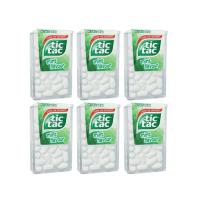
Tic Tac Mint Flavored Candies 14.5g - pack of 6
₱188.00₱192.00
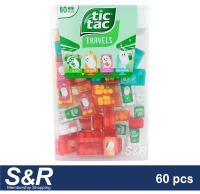
Tic Tac Travels Flavored Drops 60 mini boxes
₱639.00
Buy on Lazada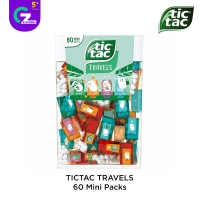
TIC TAC 40pcs Mini Pack MINT I ORANGE Flavor 40X3.4g I Big 60pcs GZESTORE
₱799.00₱1,000.00
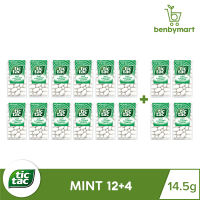
Tic Tac Mint Flavored Candies 14.5g (Pack of 12 + 4 Free)
₱576.00
Buy on Lazada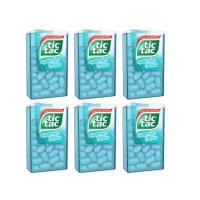
Tic Tac Spearmint Flavored Candies 14.5g - pack of 6
₱182.00₱192.00
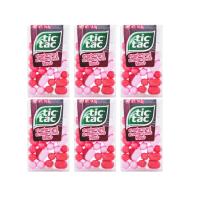
Tic Tac Strawberry Flavored Candies 14.5g - pack of 6
₱182.00₱192.00
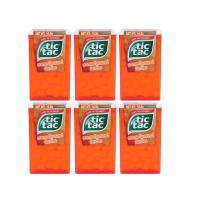
Tic Tac Orange Flavored Candies 14.5g - pack of 6
₱176.00₱192.00
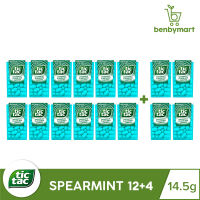
Tic Tac Spearmint Flavored Candies 14.5g (Pack of 12 + 4 Free)
₱576.00
Buy on LazadaAbout Tic Tac
Overview
Tic Tac is a globally recognised brand of small, hard confectionery mints owned and produced by the Italian company Ferrero. First introduced in 1969, the product began as a mint and has since developed into an international brand known for its distinctive oval-shaped candies, compact transparent packaging, and wide range of mint and fruit flavours.1 Today, Tic Tac is sold in markets worldwide and is positioned not only as a breath freshener but also as a convenient confectionery associated with freshness, fun, and positive everyday moments. Ferrero describes the brand around the concept of creating “little moments” that refresh people’s “inner good vibes.”1
| Category | Details |
|---|---|
| Brand | Tic Tac |
| Industry | Confectionery / Breath mints |
| Owner | Ferrero |
| Country of origin | Italy |
| Introduced | 1969 |
| Original name | Refreshing Mints |
| Main products | Mint and fruit-flavoured small hard candies |
| Packaging | Small plastic flip-top box |
| Market | International / worldwide |
| Major flavours | Freshmint, Orange, Spearmint and various fruit combinations |
| Brand positioning | Freshness, convenience, fun and positive everyday moments |
| Current parent company | Ferrero Group |
History
Origins (1969–1970)
Ferrero introduced Tic Tac in 1969, a period the company associates with major cultural and technological milestones such as Woodstock and the first Moon landing. The product was initially marketed under the name “Refreshing Mints”.1 It was designed to differ from conventional breath mints through its small size, distinctive shape, and portable packaging, which made it convenient to carry and consume throughout the day.
In 1970, the product was renamed Tic Tac. According to documented brand history, the name was inspired by the characteristic clicking sound made when opening and closing the package.2
Expansion during the 1970s
The product range expanded rapidly in the decade following its launch. A significant development was the introduction of the Orange flavour in 1974. Ferrero notes that additional flavours followed, contributing to substantial sales growth.1 This shift established Tic Tac as more than a traditional mint; fruit flavours gave it a broader confectionery identity and allowed it to appeal to consumers seeking taste alongside freshness.
International growth (1970s–1980s)
During the late 1970s and 1980s, Tic Tac expanded internationally. By the 1980s, the brand was being sold across all five continents.1 Its compact packaging was particularly well suited to global distribution, as individual units could be easily carried in a pocket or bag without requiring bulky packaging or complicated serving formats.
Product characteristics
The classic Tic Tac is a small, hard, coated confectionery piece. Although simple in appearance, Ferrero describes the manufacturing process as detailed: each piece takes approximately 24 hours to produce, with the centre surrounded by approximately 100 layers of flavour coating.1
The recognisable oval shape is one of the brand’s strongest visual identifiers. The packaging consists of a compact plastic container with a hinged flip-top lid, which provides several functional advantages:
- Easy portability
- Individual dispensing of pieces
- Protection of the candies
- Distinctive opening and closing mechanism
- Strong visual recognition
- Convenient storage in pockets, handbags, or vehicles
The package itself has become an integral part of the Tic Tac brand identity.
Flavours
Tic Tac has developed a broad portfolio of flavours over its history. While the specific range varies by country, it commonly includes both mint and fruit-oriented products. Examples include:
- Freshmint
- Orange
- Strong Mint
- Spearmint
- Strawberry
- Citrus combinations
- Various berry and fruit blends
- Multi-flavour products
Ferrero currently lists products such as Fresh Strong Mint, Orange, Strawberry Mint, and Citrus Mix in select markets.1 This flavour strategy allows Tic Tac to occupy a position between breath freshener and confectionery, enabling consumers to choose a traditional mint for freshness or a fruit flavour for a sweeter experience.
Freshmint
Tic Tac Freshmint is considered one of the brand’s signature products. Ferrero states that this flavour uses peppermint grown in Pancalieri, in Italy’s Piedmont region. The company highlights the area’s climate and soil as contributing factors to the mint’s characteristics, noting that the essential oil is produced through a traditional low-steam distillation process. The original Freshmint formulation combines mint essential oil with a distinctive vanilla note.1
Brand identity and marketing
Historically, Tic Tac’s identity has been built around several core concepts:
- Freshness: Providing a convenient refreshing experience.
- Small moments: Designed for quick, spontaneous consumption rather than formal eating occasions.
- Portability: Small boxes and individual pieces make the product easy to carry.
- Playfulness: The name, packaging, size, and colourful flavours convey a lighthearted personality.
- Recognition: The distinctive candy shape and flip-top container ensure visibility even without extensive branding.
Ferrero’s current positioning emphasises “good vibes” and everyday moments of refreshment.1
Packaging evolution
The classic Tic Tac container is a small, transparent plastic box with a flip-top lid, allowing consumers to see the contents and dispense them individually. Historically, the candies were produced in different colours corresponding to their flavour. In many markets today, however, the candies are white, with the packaging communicating the flavour through colour and graphics.2 Consequently, the packaging serves both a functional and a branding role.
Visual identity
Tic Tac maintains a simple visual identity centred on the words “tic tac.” In 2022, the brand introduced a visual refresh known as “Rays of Positivity.” Ferrero describes this design as rays extending from the iconic Tic Tac shape and logo, representing the radiation of positive energy.1 This update illustrates the brand’s effort to modernise its identity while preserving its most recognisable elements.
Advertising approach
Advertising has traditionally focused on the product’s small size, freshness, portability, and playful personality. Rather than presenting itself solely as a functional breath mint, the brand frequently uses humour and relatable situations to integrate Tic Tac into everyday social interactions. This positioning distinguishes it from products marketed strictly as oral care, placing it on a spectrum between breath freshener, mint, candy, and lifestyle product.
Corporate context
Tic Tac is part of the Ferrero Group’s portfolio of international confectionery brands. Ferrero originated in Alba, Piedmont, Italy, in 1946 and has grown into one of the world’s largest sweet-packaged-food companies. Its portfolio includes brands such as Nutella, Kinder, Ferrero Rocher, and Tic Tac, with products sold in more than 170 countries.1 Tic Tac benefits from Ferrero’s global manufacturing, distribution, marketing, and brand management capabilities.
Global presence and localisation
From its Italian launch in 1969, Tic Tac progressed to become an international brand sold on all five continents by the 1980s.1 The product portfolio differs somewhat between countries; certain flavours and formats are available in specific markets but not necessarily worldwide. This localisation allows Tic Tac to adapt to regional preferences while maintaining a consistent global visual identity.
Manufacturing
A notable aspect of Tic Tac production is the extensive coating process used to create its characteristic appearance and flavour. According to Ferrero, a single Tic Tac takes approximately 24 hours to produce, with a central core surrounded by around 100 layers of flavour.1 This process demonstrates how a seemingly simple confectionery product requires significant manufacturing precision.
Brand evolution timeline
The development of Tic Tac can be broadly divided into several stages:
- 1969 — Launch: Introduced as “Refreshing Mints.”
- 1970 — Rebranding: Adopts the Tic Tac name.
- 1974 — Flavour expansion: Orange becomes a key addition to the portfolio.
- 1970s–1980s — Globalisation: Expands internationally to reach all five continents.
- 1990s–2010s — Portfolio diversification: Develops additional mint, fruit, and combination flavours.
- 2022 — Visual refresh: Introduces the “Rays of Positivity” visual identity.
- 2020s — Contemporary positioning: Increasingly emphasises freshness, flavour, individuality, and positive everyday experiences.1
Distinctive characteristics
Several factors have contributed to the longevity of Tic Tac:
Physical form
The small oval candy is immediately recognisable and remains closely associated with the brand.
Iconic packaging
The compact flip-top container is highly portable and constitutes a major part of the brand’s identity.
Hybrid category
Tic Tac combines aspects of both traditional mints and confectionery, rather than belonging exclusively to one category.
Flavour innovation
The brand has expanded significantly beyond its original mint concept to include orange, strawberry, citrus, berry, and other flavours.
Global consistency
Although flavours vary by market, the core visual identity remains relatively consistent internationally.
Historical continuity
Having originated in 1969, Tic Tac has been part of the global confectionery market for more than five decades.1
Market positioning and audience
From a marketing perspective, Tic Tac is a mass-market, accessible, portable confectionery and breath-freshening brand. Its competitive proposition is a small, convenient, and recognisable treat that delivers freshness and flavour on demand. The product’s low-friction consumption model is significant; it requires no plate, utensil, refrigeration, or preparation.
The brand maintains a broad consumer audience rather than targeting a narrow demographic. Its positioning appeals to teenagers, young adults, working professionals, travellers, social consumers, and those seeking either breath freshness or small sweets. Portability makes it particularly suitable for consumption on the go.
Current brand concept
As of 2026, Ferrero presents Tic Tac around the concept of refreshing “good vibes.” The 2022 “Rays of Positivity” identity supports this positioning by transforming the familiar Tic Tac form into a visual representation of positive energy.1 This marks a shift from simply communicating “this is a mint” towards conveying “this is a small, enjoyable moment of refreshment.”
Significance
Tic Tac serves as an example of long-term brand building where success does not depend on product complexity. The fundamental offering—a small flavoured confectionery piece in a small package—is extremely simple. However, the combination of a recognisable shape, distinctive packaging, consistent naming, flavour innovation, international distribution, and memorable marketing has kept the brand relevant for over 50 years. Its history demonstrates the evolution of a product from a functional proposition (breath freshening) to a broader emotional proposition centred on enjoyment, spontaneity, and everyday positivity.
Summary
Tic Tac is an Italian-origin confectionery and breath-mint brand created by Ferrero in 1969. Initially introduced as “Refreshing Mints,” it became known as Tic Tac in 1970 and expanded internationally during the 1970s and 1980s. Orange was introduced in 1974, followed by numerous additional mint and fruit flavours.1 Its small oval candies, distinctive flip-top packaging, broad flavour portfolio, and highly recognisable visual identity have made it one of the best-known mint brands internationally. In recent years, Ferrero has increasingly positioned Tic Tac around freshness, flavour, and positive everyday experiences, reinforced by the 2022 “Rays of Positivity” redesign.1