Shop on Lazada
Splenda products
trolley cart organizer stainless steel foldable metal with wheels medical movable tool beauty hair products storage rack
₱3,099.00₱6,999.00

304 metal Stainless Steel Treatment cart Medical equipment Trolley Nursing Operation Mobile Support and storage trolley Kitchen Cart
₱2,999.00₱10,999.00
Car Thick Anticollision Block Car Parking Pile Parking Lock Parking Lock Parking Space Occupying Activities Stand Column Fixed Roadblocks
₱999.00₱3,600.00
Food containers storage large capacity rice bucket insulation commercial stall outdoor 304 stainless steel metal
₱2,470.00₱6,599.00
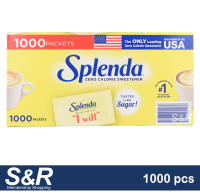
Splenda Zero Calorie Sweetener 1000pcs
₱1,874.00₱1,887.00
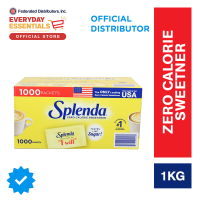
Splenda Original Zero Calorie Sweetener - 1000 Packets
₱2,020.00
Buy on Lazada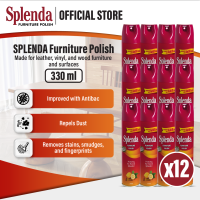
Splenda Furniture Polish 330ml x 12
₱3,593.00₱4,650.00
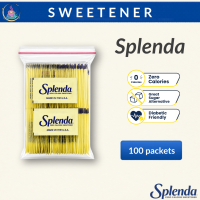
Splenda Zero Calorie Sweetener 100 Packets
₱266.31₱350.00
About Splenda
Overview
Splenda is a global brand of low- and no-calorie sweeteners and reduced-sugar food and beverage products. It is best known for Splenda Original, a tabletop sweetener whose principal high-intensity ingredient is sucralose.1 The brand is widely recognised for its distinctive yellow packets and its market positioning as an alternative to ordinary table sugar. Today, Splenda is owned by Heartland Food Products Group, a United States-based food and beverage company.3 While originally associated solely with sucralose, the portfolio has expanded to include products based on stevia, monk fruit, and other sweetening systems, as well as drink mixes, coffee creamers, syrups, and nutritional beverages.1
| Category | Information |
|---|---|
| Brand | Splenda |
| Industry | Food & beverage / sweeteners |
| Best known for | Sucralose-based sugar substitute |
| Original sweetener | Sucralose |
| Sweetness of sucralose | About 600× sweeter than sucrose |
| Origin of sucralose | United Kingdom |
| Sucralose discovered | 1976 |
| First Splenda market | Canada, 1991 |
| U.S. introduction | 1999 |
| Current owner | Heartland Food Products Group |
| Major earlier partners | Tate & Lyle and McNeil Nutritionals |
| Main positioning | Sugar reduction and lower/no-calorie sweetness |
| Major products | Sweeteners, stevia/monk-fruit products, liquid sweeteners, coffee products, drink mixes and other reduced-sugar products |
Distinction between brand and ingredient
It is important to distinguish that Splenda is a brand name and not simply a synonym for sucralose. While the original Splenda sweetener is built around sucralose—a high-intensity sweetener derived from sucrose that is approximately 600 times sweeter than table sugar—the brand’s portfolio has since broadened.2 Consequently, products carrying the Splenda name do not necessarily contain only sucralose; different formulations may utilise sucralose, stevia-derived sweeteners, monk fruit, or other ingredients.1
History
Discovery of sucralose (1976)
The origins of Splenda lie in the discovery of sucralose rather than the creation of the brand itself. In 1976, researchers associated with Tate & Lyle and Queen Elizabeth College, University of London, were studying modified compounds derived from sugar. During these experiments, researcher Shashikant Phadnis reportedly misunderstood an instruction to “test” a compound as “taste,” leading to the discovery that the substance was extraordinarily sweet.2 This accidental finding initiated the development of sucralose as a commercial sweetener. Chemically distinct from ordinary sucrose despite its sugar origin, sucralose’s extreme potency allows it to be used in minute quantities, making it suitable for products designed to provide sweetness with minimal or no caloric contribution.
Development and partnerships
Tate & Lyle subsequently developed sucralose in partnership with McNeil Nutritionals, a Johnson & Johnson company.2 This collaboration established a long-running commercial relationship regarding both the ingredient and the Splenda brand. Responsibilities evolved over time; in 2004, Tate & Lyle became the sole manufacturer of sucralose and assumed responsibility for worldwide ingredient sales to food and beverage manufacturers, while McNeil Nutritionals retained ownership of the Splenda brand and managed retail and food-service operations.
Launch and expansion
Splenda first entered the consumer market in Canada in 1991.1 In the United States, sucralose received FDA approval for use in 15 food categories in 1998. The following year, in 1999, the FDA approved it for general-purpose use under specified conditions, and Splenda was introduced to the U.S. consumer market.2 This launch marked the pivotal stage in transforming Splenda from a sweetener technology into a major consumer brand. Marketing emphasised the proposition of sweetness similar to sugar without the associated calories, distinguishing it from conventional sugar and established artificial sweeteners such as saccharin and aspartame.
Visual identity
A defining characteristic of Splenda is its bright yellow packaging. Individual yellow packets became integral to the brand’s visual identity in restaurants, cafés, offices, and households, eventually becoming almost synonymous with zero-calorie sweeteners for many consumers. The company states that more than 100 billion yellow packets have been sold since the brand’s launch.1
Science and formulation
Sucralose characteristics
The key ingredient in the original Splenda formulation is sucralose, a high-intensity sweetener derived from sucrose that is approximately 600 times sweeter than sucrose.2 Due to this potency, only a very small quantity is required to produce sweetness, contributing negligible energy compared to ordinary sugar. Sucralose is also heat stable, making it suitable for cooking and baking. Regulatory bodies note its applicability in baked goods, beverages, chewing gum, gelatin, and frozen dairy desserts.2
Formulation details
A packet of Splenda Original does not contain pure sucralose. Because sucralose is intensely sweet, it must be combined with bulking agents to create a practical, measurable volume that consumers can pour or spoon similarly to sugar. Therefore, the finished consumer product and the pure sucralose ingredient are distinct entities.
Regulatory status and safety
In the United States, sucralose is regulated as a food additive. The FDA approved it for use in 15 food categories in 1998 and as a general-purpose sweetener in 1999.2 The agency’s evaluation included over 110 studies examining toxicity, reproductive and nervous-system effects, carcinogenicity, and metabolism. Sucralose remains listed among high-intensity sweeteners approved for use in food in the United States.2
The FDA’s acceptable daily intake (ADI) for sucralose is set at 5 mg per kilogram of body weight per day.1 While regulatory approval confirms safety at established levels, scientific research continues to investigate the effects of various sweeteners on metabolism, the gut microbiome, and long-term dietary patterns. Such ongoing study does not imply that approved sweeteners are harmful at ordinary consumption levels.
Product portfolio
Although initially famous for sucralose packets, Splenda has expanded significantly to operate as a broader sugar-reduction consumer brand rather than solely a tabletop sugar substitute. The current portfolio includes:1
- Splenda Original / Zero Calorie Sweetener: Primarily associated with sucralose.
- Splenda Stevia: Sweeteners using stevia-derived ingredients.
- Splenda Monk Fruit: Sweetening products featuring monk fruit.
- Liquid water enhancers: Concentrated flavouring products designed for beverages.
- Coffee creamers.
- Syrups.
- Sweet teas and drink mixes.
- Nutritional beverages: Includes diabetic-care products.
This diversification reflects a strategic shift to compete in the growing market for products perceived as more naturally derived, moving beyond the original identity where Splenda was synonymous exclusively with sucralose.1
Ownership
The corporate history of Splenda involves multiple entities handling the brand, ingredient manufacturing, and marketing at different times.
- Tate & Lyle: Played a fundamental role in discovering and commercialising sucralose, later becoming the principal manufacturer of the ingredient.2
- McNeil Nutritionals: A division of Johnson & Johnson that served as a major commercial partner. For a significant period, McNeil owned the Splenda trademark and managed consumer retail and food-service business.2
- Heartland Food Products Group: The current owner of Splenda. Heartland describes itself as a major producer of low- and no-calorie sweeteners and related products, listing Splenda as one of its principal consumer brands.3
Brand positioning
Splenda’s marketing proposition has historically centred on three core concepts:
- Sugar reduction: Providing consumers with a method to reduce conventional sugar intake.
- Calorie reduction: Utilising high-intensity sweeteners in small quantities to provide sweetness without the caloric load of equivalent sugar.
- Taste: Positioning the brand around the idea that reducing sugar should not require sacrificing sweetness or enjoyment. The official brand philosophy describes this as helping people make healthier choices without sacrificing taste.1
Competition
Splenda operates in a highly competitive sweetener market. Major competitors and competing categories include:
- Equal: Primarily associated with aspartame.
- Sweet’N Low: Historically associated with saccharin.
- Stevia brands: Plant-derived high-intensity sweeteners.
- Monk fruit products.
- Allulose products.
- Traditional sugar.
- Honey and other caloric sweeteners.
The competitive landscape has evolved substantially since Splenda’s introduction, with consumers now having far more options than the traditional binary choice between sugar and artificial sweeteners.
Cultural and commercial significance
Splenda played a significant role in transforming high-intensity sweeteners from specialised food ingredients into recognisable consumer brands. Rather than appearing merely on ingredient lists, sucralose became associated with a specific trademark, packaging system, and consumer promise. The yellow packet achieved prominence across restaurants, coffee shops, hotels, offices, households, and food-service operations. Furthermore, the brand helped establish the precedent that alternative sweeteners could be marketed around taste and lifestyle attributes rather than solely on food science credentials.
Timeline
- 1976: Sucralose discovered by researchers working with Tate & Lyle and Queen Elizabeth College.2
- 1980s: Tate & Lyle and Johnson & Johnson/McNeil develop commercial arrangements surrounding sucralose.2
- 1991: Splenda launches in Canada.1
- 1998: U.S. FDA approves sucralose for use in 15 food categories.2
- 1999: Splenda introduced in the United States; sucralose receives general-purpose approval.1
- 2000s: Splenda expands into restaurants, cafés, and food products.
- 2004: Tate & Lyle becomes sole manufacturer of sucralose; McNeil retains Splenda brand and consumer business.2
- 2007: Tate & Lyle opens a major sucralose production facility in Singapore.2
- 2010s: Splenda expands beyond original sucralose products into additional sweetener categories.
- 2015: Splenda business acquired by Heartland Food Products Group.2
- 2020s: Brand continues expanding into beverages, creamers, syrups, stevia, monk fruit, and nutritional products.1
- 2025: Heartland describes Splenda as a core part of its broader portfolio of low- and no-calorie food and beverage brands.3