Shop on Lazada
Tilta products
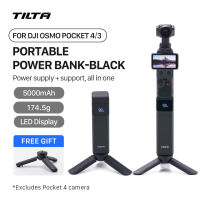
TILTA for DJI Osmo Pocket 4 Portable Charging 5000mAh with Tripod LED Display Charging Equipment Pocket 4 Pro for Vlog Photography
₱2,112.97₱2,469.00
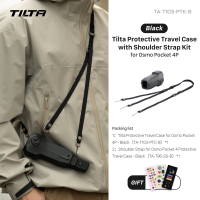
TILTA Protective Case for DJI Osmo Pocket 4P Waterproof Cage with Dual-sided Protection Built-in Filter Storage with Shoulder Straps Pocket 4Pro Shock-Resistant Cage
₱2,963.00
Buy on Lazada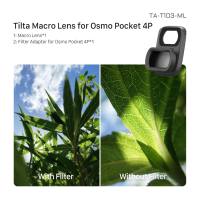
TILTA Magnetic Filter Kit for DJI Pocket 4P Pocket 4 Pocket 3 Gimbal Camera ND Magnetic Filter Black Mist Filter Variable Light Reducing Lens CPL Polarizer Lens Kit Accessories
₱4,680.00
Buy on Lazada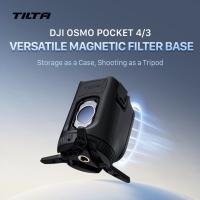
TILTA for DJI Osmo Pocket 4 Pocket 3 Powerful Magnetic Base Filter Storage Expander with Tripod Portable Stand for Outdoor Home Solo Vlog Photography
₱1,437.15₱1,669.00
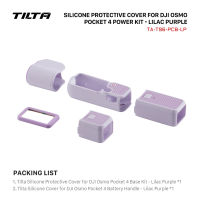
TILTA for DJI Osmo Pocket 4 Silicone Case Non-slip Shockproof Waterproof Cage Multi-color Pocket 4 Protective Cover
₱885.90₱1,139.00

Tilta Camera Carts | Boulder Camera Cart Aluminum / Indie Kit Gray / Studio Filmmaking & Video Production Equipment / Professional Camera Transport & Rigging Gear
₱9,890.00
Buy on Lazada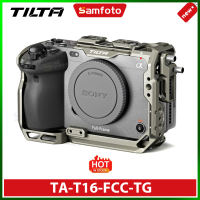
Tilta TA-T16-FCC-TG TA-T16-FCC-B for Sony FX3 FX30 Camera Cage
₱5,151.41₱6,305.77
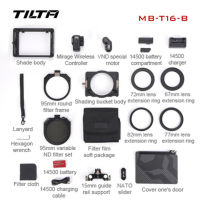
TILTA MB-T16 Mirage Matte Box Motorized VND Filter kit 4x5.65 filter Frame DSLR Mirrorless Camera Photography Accessories
₱36,222.00₱41,438.00
About Tilta
Overview
Tilta is a Chinese manufacturer and brand specializing in professional camera accessories, cinematography equipment, camera support systems, wireless lens-control technology, and filmmaking rigs. The company is headquartered in Shenzhen, China, with a major North American operation in Burbank, California. Its products range from relatively affordable accessories for mirrorless/DSLR cameras to equipment designed for professional cinema cameras and film sets. 1
| Category | Information |
|---|---|
| Brand | Tilta |
| Company | Tilta Technology Co., Ltd. |
| Industry | Film & television production equipment |
| Primary products | Camera rigs, cages, lens control, matte boxes, stabilization, car mounts, power systems, accessories |
| Headquarters | Shenzhen, Guangdong, China |
| U.S. headquarters | Burbank, California, USA |
| Founded | Officially stated by Tilta as 2010 |
| Earlier history | Tilta has also described its story as beginning in 2009, while some third-party sources list 2008 as the founding year |
| Main market | Professional cinematography, filmmaking, broadcast, independent production, content creation |
| Major product families | Nucleus, Hydra, Float, Mirage, Khronos, camera cages and DJI/Ronin accessories |
| Website | tilta.com |
There is a date discrepancy in published sources worth noting. Tilta’s current official “About” page says the company was founded in 2010, while some third-party profiles say 2008, and Tilta itself has described its story as beginning in 2009. Tilta’s own product literature also says the company was established in 2010 and that it established its own factory in 2011. Therefore, 2010 is the safest date to use when describing the company’s official founding, while 2008–2009 can be treated as the company’s earlier development period.
What is Tilta?
Tilta is best understood not as a traditional camera manufacturer, but as a camera-system and filmmaking-accessory company.
For example, companies such as Sony, Canon, ARRI, RED and Blackmagic Design primarily manufacture cameras and/or imaging systems. Tilta instead builds the equipment that surrounds those cameras:
Camera → Tilta cage → Tilta handles → Tilta rods → Tilta follow focus → Tilta matte box → Tilta power → Tilta monitoring/support → Tilta stabilization
This has become a central part of Tilta’s identity.
The company says it evolved from making DSLR accessory kits into an integrated solution provider for cinema cameras, with particular expertise in wireless lens control, camera cages, gimbal support, shock-absorbing car mounts and related systems.
In other words, Tilta’s ambition is not simply:
“Make a camera accessory.”
It is closer to:
“Build an entire filmmaking ecosystem around the camera.”
Origins and early history
Tilta’s roots are in Shenzhen, one of China’s major technology and manufacturing centers.
The company originally concentrated on DSLR camera rigs and accessories, at a time when DSLR filmmaking was rapidly becoming popular among independent filmmakers, commercial shooters and small production companies.
Tilta’s own historical material describes the progression roughly as:
DSLR rigs → professional camera accessories → cinema-camera systems → electronic lens control → stabilization → vehicle-mounted camera systems → broader filmmaking ecosystems.
This development is important because it explains Tilta’s current product philosophy. Rather than focusing on one individual product, Tilta increasingly designs interconnected systems.
Establishment of manufacturing
Tilta states that it established its own factory in 2011. Its manufacturing background is particularly important to the brand because many Tilta products are precision-machined mechanical components.
The company has described its manufacturing operation as using professional production teams and CNC machining equipment.
This is reflected in products such as:
- Camera cages
- Rod systems
- Follow-focus motors
- Lens supports
- Matte boxes
- Handles
- Quick-release plates
- Mounting systems
- Car-mounting components
Consequently, Tilta occupies an interesting position between a camera-accessory brand and a precision hardware manufacturer.
Expansion into professional cinema
One of the most important transitions in Tilta’s history was its move from DSLR accessories into equipment intended for professional cinema cameras.
The company says its electronic-control products successfully entered the Hollywood market in 2016, and it established its North American branch in the same year. A Los Angeles-area showroom followed in April 2017.
That expansion helped change Tilta’s perception. Early Tilta was strongly associated with:
DSLR rigs + cages + accessories
while modern Tilta is much more associated with:
cinema cameras + wireless lens control + stabilization + professional production systems.
International presence
Although Tilta originated in China, it has deliberately positioned itself as an international filmmaking brand.
Its principal Chinese operation is in Shenzhen, while its U.S. operation is based in Burbank, California, an important location for the American film and television industry.
Tilta describes its U.S. headquarters as a resource for both Hollywood and independent filmmakers.
Its products are now distributed internationally, and the company operates regional websites and dealer networks in different markets.
Product philosophy
Tilta’s products generally follow several principles.
Modularity
A major characteristic of Tilta equipment is modularity.
A camera cage may provide mounting points for:
- NATO accessories
- ARRI-style rosettes
- 15 mm rods
- 19 mm rods
- handles
- monitors
- batteries
- lens supports
- follow-focus systems
- wireless transmitters
This allows filmmakers to construct a camera package around their particular shooting style.
Ecosystems
Tilta increasingly designs products as interconnected ecosystems.
For example, the Nucleus family is centered on lens control, while Hydra focuses heavily on advanced camera movement and vehicle mounting. This approach is different from simply selling isolated accessories.
Professional features at relatively accessible prices
One of Tilta’s most significant market strategies has been bringing features traditionally associated with expensive cinema equipment into more affordable products.
Tilta itself describes this as helping make sophisticated filmmaking tools accessible to more creators. Its Nucleus systems, for example, were designed to make wireless lens control considerably more accessible than some traditional high-end systems.
This has helped make Tilta popular among:
- Independent filmmakers
- Commercial videographers
- YouTubers
- Documentary crews
- Music-video production
- Small film crews
- Rental houses
- Professional cinema productions
Major product categories
Tilta’s current product catalog is quite extensive. Its official store organizes products into categories including camera-specific accessories, DJI ecosystems, stabilization, lens control, matte boxes, power solutions, cables, handles, camera plates and shoulder rigs.
Camera cages
Camera cages remain one of Tilta’s foundational products.
A cage surrounds or partially surrounds a camera and provides additional mounting points while offering some physical protection.
Tilta makes cages and kits for cameras from manufacturers including:
- ARRI
- Blackmagic Design
- Canon
- DJI
- Fujifilm
- Nikon
- Sony
- RED
- Panasonic
- Kinefinity
- Leica
- GoPro
- Insta360
The company’s catalog currently contains a particularly large selection of camera-specific accessories.
Nucleus — Tilta’s lens-control ecosystem
If one product family is especially important to Tilta’s identity, it is probably Nucleus.
Nucleus is Tilta’s family of electronic/wireless lens-control systems.
The basic concept is:
Controller → wireless signal → motor → lens focus/iris/zoom
Instead of an operator physically rotating the lens’s focus ring, an electronic motor can control it remotely.
Nucleus-M
The Nucleus-M is one of Tilta’s best-known professional products.
It is a three-channel wireless lens-control system capable of controlling:
- Focus
- Iris
- Zoom
Tilta designed it so that the motors could communicate directly with the control system without requiring a separate conventional motor-control unit mounted to the camera.
Its architecture was particularly attractive for:
- Gimbal operation
- Handheld cinema
- Steadicam
- Camera assistants
- Commercial productions
- Narrative filmmaking
The Nucleus-M helped establish Tilta as a serious player in the wireless lens-control market.
Nucleus Nano
Tilta subsequently miniaturized the concept with the Nucleus Nano family.
The idea was essentially to take professional-style wireless lens control and make it significantly smaller and more accessible.
Tilta says its first Nucleus follow-focus system was announced in 2013, and that the Nucleus family has been used by more than 300,000 users worldwide according to the company’s own 2022 announcement.
The newer Nucleus Nano II continues this direction.
Nucleus-M II
By 2026, Tilta has continued developing the Nucleus platform with the Nucleus-M II.
The company released firmware updates for Nucleus-M II as recently as July 2026, including improvements to motor behavior and compatibility with the Nucleus Auto Focus system. 2
This illustrates an important characteristic of Tilta’s current strategy:
Tilta is increasingly combining mechanical filmmaking hardware with electronic control and software/firmware.
Hydra — camera movement and vehicle mounting
Another major Tilta product family is Hydra.
Hydra is essentially an ecosystem for advanced camera movement, especially:
- Car-mounted cinematography
- Shock absorption
- Remote camera positioning
- Motorized camera movement
- High-speed vehicle shooting
The Hydra family includes products such as:
- Hydra Alien
- Hydra Alien Mini
- Hydra Alien Pro
- Hydra Arm Mini
- Hydra Predator
- Hydra Motorized Slider
- Hydra Articulating Car Mounting System
- Hydra Electronic Suction Cup
- Speed Rail Car Mounting System
Tilta’s current catalog lists Hydra as one of its major stabilization-system families.
Hydra Alien
The Hydra Alien is particularly notable.
It is a camera car-mounting system designed to provide filmmakers with a comparatively accessible way to capture dynamic driving shots.
Traditional vehicle cinematography can require:
- Large camera cars
- Heavy stabilization equipment
- Specialized grips
- Expensive cranes
- Large production crews
Tilta’s Hydra concept attempts to simplify this process. The company has specifically described the Hydra Alien as making sophisticated car-mounted cinematography more accessible to creators. 3
Hydra Arm Mini
The Hydra Arm Mini represents the same philosophy at a smaller scale.
It is a portable camera-support/car-mounting solution intended to make complex vehicle cinematography possible without the infrastructure traditionally associated with large professional camera cars.
This has been an important part of Tilta’s effort to move beyond ordinary cages and accessories into camera-motion engineering.
Float
Another significant Tilta product is the Float Handheld Gimbal Support System.
Float is designed to make a gimbal-mounted camera easier to operate for extended periods by redistributing the camera’s weight.
The basic concept is:
Camera + gimbal → support arm → vest/body support
This gives operators more freedom to move while reducing the physical burden of carrying the camera.
Tilta compares the flexibility of Float with much more expensive traditional Steadicam-style systems.
Matte boxes
Tilta also has a substantial matte-box business.
Its catalog includes:
- Mini Matte Box
- Mirage
- Mirage VND
- Mirage Pro
- 4×4 matte boxes
- 4×5.65 matte boxes
- 6×6 systems
- Carbon-fiber systems
A matte box serves several purposes:
- Holds cinema filters
- Reduces unwanted light hitting the lens
- Provides mechanical support for filters
- Creates a professional cinema-camera configuration
Tilta’s Mirage systems are particularly interesting because they combine a relatively compact form factor with filter-management and variable-ND functionality.
Camera support and rigging
Tilta produces a huge range of smaller rigging components, including:
- Handles
- Rods
- Rod clamps
- NATO rails
- Rosettes
- Camera plates
- Quick-release plates
- Lens supports
- EVF mounts
- Monitor mounts
- Articulating arms
- Counterweights
- Cable clamps
- Shoulder rigs
These products might look relatively simple individually, but together they form the mechanical infrastructure around a cinema camera.
This is one reason Tilta is often described as an ecosystem brand rather than simply an accessory brand.
DJI ecosystem
Tilta also has an extensive relationship with DJI’s Ronin ecosystem.
Its catalog includes accessories designed for DJI gimbals and camera systems, including:
- Ring grips
- Power systems
- Handles
- Mounting brackets
- Support systems
- Run/stop accessories
- Expansion accessories
- Float systems
The official Tilta catalog currently has a dedicated “Ecosystem for DJI Ronin” section.
This is strategically important because DJI dominates a large part of the modern gimbal market. Rather than competing directly with DJI on every front, Tilta often acts as an expansion layer around DJI hardware.
Power systems
Modern cinema cameras require increasingly sophisticated power management.
Tilta therefore produces:
- Camera batteries
- Battery plates
- Chargers
- Power distribution accessories
- USB-C power solutions
- P-tap accessories
- Camera-specific power components
- Portable charging stations
This is another example of Tilta trying to cover the entire camera build rather than just one accessory category.
Khronos — mobile filmmaking
One of Tilta’s newer strategic directions is smartphone filmmaking.
The Khronos ecosystem is designed around smartphones, particularly iPhones.
Instead of treating a phone as simply a consumer device, Tilta approaches it more like a miniature cinema camera.
The system can incorporate:
- Smartphone cases
- Lenses
- Filters
- Handles
- Mounting systems
- Other filmmaking accessories
This reflects a broader industry trend:
professional filmmaking technology is increasingly moving into compact consumer devices.
Tilta has reported that its Khronos iPhone ecosystem received recognition including a TIME Best Inventions of 2024 selection and a NAB 2024 Product of the Year award. 3
Boulder Camera Cart
Tilta’s product strategy has also expanded beyond equipment directly attached to the camera.
The Boulder Camera Cart is a modular production cart intended for transporting filmmaking equipment around a set.
This is significant because it shows Tilta expanding from:
camera accessories
toward:
on-set production infrastructure.
The Boulder is currently listed among Tilta’s prominent products, including an XL version. 4
Relationship with professional cinematographers
Tilta emphasizes collaboration with professional cinematographers as part of its product-development process.
The company says it has worked with high-end production teams and cinematographers to obtain feedback and refine products around real-world production requirements.
Tilta has also had a relationship with the American Society of Cinematographers (ASC) and produced special Nucleus-M/Nucleus-Nano editions for the ASC’s centennial celebration.
This is important for the brand because professional cinema equipment is heavily influenced by cinematographers, camera assistants, operators and rental houses.
Tilta’s market positioning
A useful way to understand Tilta is to place it between several different markets.
Consumer camera accessories
Examples:
- Small cages
- Smartphone accessories
- Basic handles
- Mini follow-focus systems
Prosumer filmmaking
Examples:
- Mirrorless camera rigs
- Nucleus Nano
- DJI accessories
- Matte boxes
- Power systems
Professional cinema
Examples:
- Nucleus-M
- Cinema-camera cages
- Advanced matte boxes
- Professional lens control
- Camera-support systems
Specialized cinematography
Examples:
- Hydra
- Vehicle-mounted systems
- Float
- Motorized camera movement
That broad range is one of Tilta’s distinguishing characteristics.
Tilta compared with other brands
Tilta is often encountered alongside brands such as:
- SmallRig
- Kondor Blue
- Wooden Camera
- ARRI
- RED
- DJI
- Teradek
- Bright Tangerine
- Chrosziel
- Zacuto
But these companies do not all occupy the same market.
For example:
SmallRig
Strong emphasis on camera cages, rigging and accessories across consumer/prosumer markets.
Wooden Camera
Strong association with professional cinema-camera accessories and production workflows.
ARRI
A much larger high-end cinema ecosystem, including cameras, lenses, lighting and professional production technology.
DJI
Strong emphasis on drones, gimbals, stabilization, cameras and electronic imaging systems.
Tilta
Particularly distinctive for combining mechanical camera rigging + wireless lens control + stabilization + specialized camera movement + ecosystem accessories.
So Tilta’s real competitive advantage is arguably its breadth.
Tilta’s design language
Tilta products are recognizable by a distinctive industrial aesthetic.
Common characteristics include:
- Dark gray/black finishes
- CNC-machined aluminum
- Modular mounting points
- Mechanical locking systems
- Compact industrial forms
- Rosette and NATO interfaces
- Extensive use of rods and clamps
The company’s older products were often strongly associated with the “Tilta Gray” appearance. This has contributed to a recognizable visual identity among filmmakers.
Why Tilta became popular
There are several reasons for Tilta’s growth.
1. The DSLR revolution
As filmmakers began using DSLR and mirrorless cameras for serious video work, there was enormous demand for:
- Cages
- Handles
- Follow focus
- Shoulder rigs
- Matte boxes
- External monitoring
- Power solutions
Tilta entered this market at an advantageous time.
2. Affordable cinema technology
Cinema technology historically required very expensive equipment. Tilta helped bring some professional concepts down to lower price levels.
3. Modular ecosystems
Instead of selling one accessory, Tilta sells compatible families of accessories.
4. Electronic control
Nucleus helped differentiate Tilta from companies primarily focused on mechanical rigging.
5. Professional-market credibility
Its presence in Hollywood and collaboration with professional cinematographers helped it move beyond the perception of being merely a consumer-accessory manufacturer.
Tilta in the 2020s
The 2020s have seen Tilta broaden its scope considerably.
Its product portfolio now includes:
Traditional
- Camera cages
- Handles
- Rods
- Plates
- Follow focus
- Matte boxes
Electronic
- Wireless lens control
- Autofocus adapters
- Motorized systems
- Power solutions
Motion
- Gimbal support
- Hydra
- Car mounts
- Motorized sliders
Mobile
- iPhone filmmaking systems
Production
- Camera carts
- Portable power
The company’s recent news also shows continued development in Nucleus, Hydra, smartphone filmmaking, camera cages and production equipment.
Tilta today
As of 2026, Tilta is no longer simply a “camera cage company.”
Its current portfolio is better described as a broad cinematography hardware ecosystem.
The official store currently spans categories such as:
- Camera-specific accessories
- DJI/Ronin ecosystems
- Stabilization systems
- Lens-control systems
- Matte boxes
- Power solutions
- Cables
- Handles
- Camera plates
- Shoulder rigs
- Accessories
The company’s support infrastructure also covers products ranging from camera cages and batteries to Nucleus, Hydra, Float, Gravity and Khronos systems.
Corporate locations
Tilta’s official contact information currently identifies:
China
Shenzhen Tilta Technology Co., Ltd.
Shenzhen, Guangdong, China
United States
Tilta Inc.
Burbank, California, USA
The U.S. operation includes an office and warehouse/local-pickup facility.
Burbank is strategically significant because it places Tilta close to the Los Angeles film-production ecosystem.
Brand identity
Tilta’s brand philosophy can essentially be summarized around three ideas:
Professional
Build equipment capable of working in serious production environments.
Modular
Allow filmmakers to configure their cameras according to their needs.
Accessible
Bring sophisticated filmmaking technology to a wider range of creators.
This is why a Tilta setup can range from a relatively inexpensive cage for a mirrorless camera to a highly sophisticated cinema-camera system with wireless focus, matte box, stabilization and vehicle mounting.
Very broad ecosystem
One of Tilta’s greatest strengths is the sheer variety of compatible products.
Strong mechanical engineering
Cages, mounts, rods, clamps and other mechanical components are a core competency.
Wireless lens control
The Nucleus line gives Tilta a particularly recognizable position in the filmmaking-accessory market.
Innovation in camera movement
Hydra and Float show that Tilta is willing to tackle more complicated cinematography problems.
Wide camera compatibility
Tilta supports a very large number of camera platforms, from mirrorless cameras to professional cinema cameras. 5
Tilta’s importance to modern filmmaking
Tilta’s significance goes beyond individual products.
The company represents a broader transformation in filmmaking:
Old model
Cinema camera = expensive, specialized, relatively fixed system
Modern model
Camera body + modular accessories + electronic control + stabilization + wireless technology + software
Tilta has positioned itself directly in the middle of that transition. It helps turn relatively small cameras into more sophisticated production systems.
Simplified timeline
| Year | Development |
|---|---|
| 2008–2009 | Early origins of the business/product development period according to various sources |
| 2010 | Tilta officially describes the company as founded |
| 2011 | Tilta establishes its own factory |
| 2013 | First Nucleus follow-focus system announced |
| 2016 | Electronic-control products break into Hollywood; North American branch established |
| 2017 | Los Angeles showroom opens |
| 2018–2019 | Nucleus-M/Nucleus-Nano ecosystem expands |
| 2020 | Hydra Alien, Float and other systems broaden Tilta’s motion/stabilization portfolio |
| 2022–2023 | Nucleus Nano II and Hydra Arm Mini development |
| 2024 | Khronos smartphone ecosystem and Mirage/Hydra products gain industry attention |
| 2025 | Expansion into autofocus, camera cages, mobile filmmaking and production accessories |
| 2026 | Nucleus-M II, Nucleus Auto Focus, Boulder Camera Cart, Hydra products and expanded mobile ecosystem continue Tilta’s broader-system strategy |
The timeline combines Tilta’s own historical material and its current product/news archive; the early 2008–2009 dates are less consistent across sources than the company’s official 2010 founding date.
In one sentence
Tilta is a Shenzhen-based Chinese filmmaking-equipment company that evolved from DSLR rigs into a global manufacturer of modular camera systems, wireless lens control, stabilization, matte boxes, camera cages, vehicle-mounted cinematography systems, power solutions and mobile-filmmaking equipment.
Or, more simply:
Tilta is the company that builds much of the “infrastructure around the camera.”
That is probably the most useful way to understand the brand.
Bottom line
If ARRI represents the traditional high-end cinema ecosystem, DJI represents electronic stabilization and aerial/mobile imaging, and SmallRig represents modular camera rigging, Tilta sits at the intersection of all three worlds.
Its most distinctive characteristic is that it has progressively expanded from physical camera accessories into complete filmmaking systems—especially through Nucleus for lens control, Hydra for advanced camera movement, Float for operator support, and Khronos for mobile filmmaking.