Shop on Lazada
Tramontina products
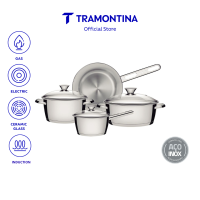
Tramotina Allegra 4 Pcs Cookware Set 18/10 Stainless Steel/Induction/Tri/3/Ply
₱6,500.00
Buy on Lazada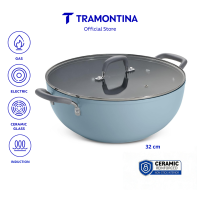
Tramontina Velo 24/28/32cm Kadai Ceramic/Induction/Aluminum
₱3,250.00
Buy on Lazada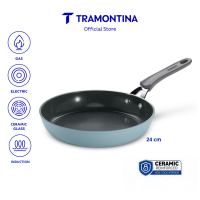
Tramontina Velo 20/24cm Frying Pan Ceramic/Induction/Aluminium
₱1,500.00
Buy on Lazada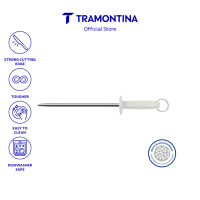
Tramontina Professional Master 10″ Smooth Sharpener Stainless Steel
₱1,400.00
Buy on Lazada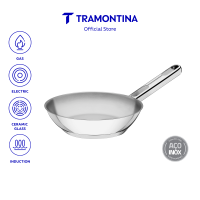
Tramotina Allegra 20cm Frying Pan 18/10 Stainless Steel/Induction/Tri/3/Ply
₱1,500.00
Buy on Lazada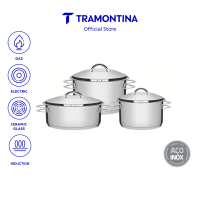
Tramontina Solar Cookware 3pieces Set 18/10 Stainless Steel/Induction/Tri/3/Ply
₱5,000.00
Buy on Lazada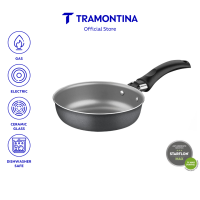
Tramontina Turim 13cm Egg Frying Pan Aluminium/Non-Stick/Starflon Max
₱275.00
Buy on Lazada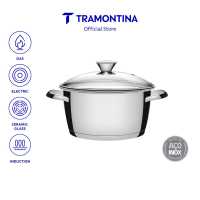
Tramontina Allegra 16/20/24cm Deep Casserole with Tempered Glass Lid 18/10 Stainless Steel/Tri/3/Ply/Induction
₱3,000.00
Buy on LazadaAbout Tramontina
Overview
Tramontina is a Brazilian industrial and consumer-goods brand internationally recognized for its kitchen knives, cookware, cutlery, kitchen utensils, and tools. Founded in 1911 in Carlos Barbosa, Rio Grande do Sul, the company began as a small blacksmith shop and has evolved into a large, diversified Brazilian industrial group. It currently offers more than 22,000 products, employs over 10,000 people, and sells in more than 120 countries.
The brand is notable for maintaining its association with its founding family and Brazilian manufacturing heritage for over a century while expanding from simple metalworking into cookware, appliances, tools, furniture, electrical products, agricultural equipment, and other consumer and industrial goods.
Quick Facts
| Category | Information |
|---|---|
| Brand | Tramontina |
| Company | Tramontina group / Tramontina S.A. |
| Founded | 1911 |
| Founder | Valentin Tramontina |
| Founding Location | Carlos Barbosa, Rio Grande do Sul, Brazil |
| Industry | Manufacturing / Consumer Goods / Metalworking |
| Best Known For | Knives, cookware, cutlery, kitchen products, and tools |
| Products | 22,000+ |
| Employees | 10,000+ |
| Countries Served | 120+ |
| Manufacturing | Multiple facilities in Brazil and international operations |
| Ownership | Family-controlled/family-governed |
| Milestone (2026) | 115th anniversary |
According to the company’s current figures, it lists 22,000+ items, 10,000+ employees, and presence in 120+ countries. 1
Origins
Tramontina’s history begins in 1911, when Valentin Tramontina established a small blacksmith shop in Carlos Barbosa, a town in the Serra Gaúcha region of southern Brazil. The location was strategic because Carlos Barbosa was developing around the railway, creating opportunities for a small metalworking business. The original workshop performed repairs and produced practical metal goods, including horseshoes and knives. 2
Valentin was the son of Italian immigrants, linking the company to the cultural background of the Italian-Brazilian communities in Rio Grande do Sul. His wife, Elisa De Cecco Tramontina, subsequently played a crucial role in the survival and development of the business.
Early Family Business
In 1920, Valentin married Elisa De Cecco. Together they had three sons: Ivo, Henrique, and Nilo. 3 During its early decades, the company remained fundamentally a small workshop. One of its most significant early products was the Santa Bárbara pocketknife, introduced in 1930. Tramontina identifies this as product number 1 and one of the most important items from the company’s early period. This highlights that the modern cookware and kitchenware company originated as a cutlery and metalworking business.
Leadership Transition
A major turning point occurred in 1939, when Valentin Tramontina died. Rather than closing the business, his widow Elisa took over its operation, establishing herself as a central figure in Tramontina’s history by keeping the company operating during a difficult period. 4
Elisa later transferred the business into a new era of management. In 1949, her son Ivo Tramontina and Ruy J. Scomazzon became partners. Their involvement helped transition Tramontina from a purely artisanal workshop toward a more modern industrial enterprise.
Industrial Transformation
During the 1950s and 1960s, Tramontina expanded beyond its original workshop model, opening additional manufacturing operations and diversifying into forged metal products and tools. Key milestones included:
- 1959: Establishment of Forjasul in Porto Alegre to manufacture forged products.
- 1961: Death of Elisa De Cecco Tramontina; the company became a corporation.
- 1963: Creation of a manufacturing unit in Garibaldi, Rio Grande do Sul.
- 1966: Beginning of international exports, with Chile among the first foreign markets.
This period established a pattern that continues today: Tramontina grows by building manufacturing capabilities and entering adjacent categories rather than focusing on a single product line.
Product Portfolio
While knives and cutlery remain fundamental to Tramontina’s identity, the portfolio has expanded significantly. The company describes its range as extending from kitchenware and appliances to agriculture, gardening, industrial and automotive maintenance, construction, electrical materials, furniture, and utility vehicles.
Kitchen
- Chef’s knives and kitchen knives
- Cutlery and tableware
- Frying pans, sauce pans, and pressure cookers
- Stainless-steel and non-stick cookware
- Kitchen utensils, cutting boards, and baking products
- Kitchen appliances
Tools
- Hand tools, garden tools, and agricultural tools
- Construction tools
- Industrial maintenance equipment
- Automotive maintenance tools
Home and Lifestyle
- Furniture, plastic products, and wood products
- Electrical products
- Barbecue equipment
- Porcelain tableware
Industrial and Specialized
- Agricultural equipment and utility vehicles
- Industrial products and electrical materials
- Other metal and manufactured goods
Manufacturing Philosophy
Tramontina is distinct for being more than just a brand that contracts out production; it has historically developed significant internal manufacturing capabilities. Its factories cover various specialties. For example, Tramontina Cutelaria in Carlos Barbosa is the company’s first manufacturing unit, focusing on professional, household, and sporting cutlery. The company operates multiple units across Brazil and has developed international manufacturing operations. This base supports a brand positioning centered on Brazilian manufacturing, engineering, scale, product diversification, and long-term durability.
Global Expansion
Tramontina is now a genuinely international brand, with products available in more than 120 countries. It maintains distribution centers, regional sales offices, distributors, and representatives to support these markets. Its expansion has been visible in the United States, Latin America, Europe, the Middle East, Asia, India, and other regions. The company established an American presence in the 1980s, initially selling knives before expanding into cookware and other categories. 5 Today, Tramontina is best understood as a Brazilian multinational manufacturing group with a global consumer brand.
Brand Reputation and Quality
If encountered outside Brazil, the products most likely to define the brand are its knives, cookware, and cutlery. Knives represent the historical heart of the brand, ranging from inexpensive everyday kitchen knives to professional chef’s knives and outdoor specialty cutting products. Cookware has also become well-known, particularly stainless-steel, aluminum, non-stick, tri-ply, pressure cookers, and cast-iron items. This category helped transform Tramontina from a traditional cutlery manufacturer into a broader kitchen and home brand.
Stainless-steel flatware is another major category, offering everything from everyday sets to premium collections for restaurants and hotels. The tool business is equally important, covering household DIY, gardening, agriculture, construction, industrial maintenance, and automotive applications.
Design Philosophy
Tramontina’s identity differs from luxury European cookware companies. Its proposition focuses on well-made, practical products intended for everyday use. The company emphasizes “doing things well,” linking manufacturing quality with daily experiences. Its stated mission is to make products that inspire people’s daily lives and create value and satisfaction for customers, employees, and communities. 6 This explains why the portfolio includes inexpensive household knives alongside professional kitchen equipment, premium cookware, agricultural tools, and industrial equipment. The common denominator is functionality and manufacturing competence.
Positioning
A useful way to position Tramontina is: Brazilian industrial heritage + everyday utility + broad product range + strong manufacturing base. It sits between a traditional industrial manufacturer and a consumer lifestyle brand.
| Characteristic | Rating |
|---|---|
| Heritage | ⭐⭐⭐⭐⭐ |
| Manufacturing Depth | ⭐⭐⭐⭐⭐ |
| Product Breadth | ⭐⭐⭐⭐⭐ |
| Kitchen Reputation | ⭐⭐⭐⭐⭐ |
| Knife/Cutlery Heritage | ⭐⭐⭐⭐⭐ |
| Luxury Positioning | ⭐⭐ |
| Mass-Market Accessibility | ⭐⭐⭐⭐ |
| International Presence | ⭐⭐⭐⭐ |
| Brazilian Identity | ⭐⭐⭐⭐⭐ |
Note: These are qualitative characterizations.
Corporate Governance
Tramontina has retained a strong family-business character throughout its history but operates with sophisticated corporate governance including Family, Shareholders, and Board of Directors councils. According to current information, the Board of Directors consists of five members appointed by controlling holding companies. A Corporate Executive Board was created in 2025, led by CEO Marcos Tramontina. Eduardo Scomazzon serves as chairman, Ricardo Tramontina as vice-chairman, and Clovis Tramontina as a consulting board member. 7 Thus, Tramontina is a large corporate group with family governance, not merely a family workshop at scale.
Sustainability and Social Responsibility
Sustainability is an explicit component of Tramontina’s corporate strategy. The company states its manufacturing processes are designed to use natural resources responsibly and emphasizes responsibilities toward employees, customers, suppliers, and communities. 8 Initiatives include responsible resource use, environmental management, social projects, education, nutrition, community development, and employee well-being. Many of these are organized under Tramontina Transforma. 9
The company’s social philosophy is built around doing things well to improve everyday life, identifying two major causes: inclusion through education and quality nutrition for quality living. The philosophy posits that education provides a foundation for social mobility, while good nutrition contributes to quality of life.
Significance in Brazil
In Brazil, Tramontina is considerably more significant than its international image might suggest. While outsiders often associate the name primarily with knives and cookware, inside Brazil, the name encompasses a wider industrial ecosystem. Consumers encounter Tramontina in kitchens, gardens, workshops, construction sites, farms, restaurants, barbecue areas, homes, and electrical installations. This breadth is a key competitive advantage.
Historical Milestones
The knife arguably best explains the company’s entire history, tracing a straightforward chain from the 1911 blacksmith shop to metalworking, then knives/cutlery, followed by tools, cookware, household products, and finally a global industrial group. Today’s businesses are extensions of the original expertise in working metal and making durable everyday objects. The company still highlights the Santa Bárbara pocketknife of 1930 as a foundational product.
Anniversary and Future
2026 marks Tramontina’s 115th anniversary. Anniversary material describes this milestone as a celebration of legacy, trust, craftsmanship, and innovation. Current figures highlight 115 years of history, 10,000+ employees, 22,000+ products, 10 factories, 120+ countries, and more than 598 million cumulative kitchenware/pot and pan products. 10 The theme emphasizes continuing to innovate while preserving historical identity.
Why Tramontina Stands Out
Several factors distinguish Tramontina among Brazilian companies:
- Longevity: Few brands trace origins continuously back to 1911.
- Manufacturing Focus: Development of own industrial capabilities rather than outsourcing.
- Diversification: Expansion from knives into thousands of categories without abandoning heritage.
- International Reach: Sales in 120+ countries make it one of Brazil’s more recognizable manufacturing brands globally.
- Everyday Association: Present in ordinary activities, not restricted to specialist markets.
- Family Continuity: The Tramontina family remains closely involved in governance across generations.
Comparison with Typical Brands
It is inaccurate to view Tramontina simply as a “cookware company.” Unlike brands such as Le Creuset, which are strongly identified with premium cookware, Tramontina’s identity follows the path: industrial manufacturer → kitchen → tools → home → agriculture → professional equipment. This structural difference allows it to sell relatively inexpensive kitchen knives while also manufacturing professional cookware, industrial tools, and agricultural equipment.
Timeline
| Year | Event |
|---|---|
| 1911 | Valentin Tramontina establishes a small blacksmith shop in Carlos Barbosa |
| 1920 | Valentin marries Elisa De Cecco |
| 1930 | Santa Bárbara pocketknife launched |
| 1939 | Valentin dies; Elisa takes over the business |
| 1949 | Ivo Tramontina and Ruy J. Scomazzon become partners |
| 1959 | Forjasul manufacturing operation established |
| 1961 | Elisa dies; company becomes a corporation |
| 1963 | Garibaldi manufacturing unit established |
| 1966 | International exports begin |
| 1980s | Stronger international expansion, including the United States |
| 2013 | Tramontina T concept stores begin expanding in Brazil |
| 2025 | Corporate Executive Board established |
| 2026 | Tramontina celebrates 115 years |
Summary
Tramontina is a 115-year-old Brazilian manufacturing group founded in 1911 by Valentin Tramontina in Carlos Barbosa, Rio Grande do Sul. What began as a small blacksmith shop evolved through several generations into a diversified industrial company producing knives, cutlery, cookware, kitchen equipment, appliances, hand and garden tools, agricultural products, electrical materials, furniture, and other goods. Today, Tramontina has more than 22,000 products, over 10,000 employees, and a presence in more than 120 countries. Its defining characteristics are Brazilian industrial heritage, family continuity, extensive manufacturing capabilities, product diversification, practicality, and an emphasis on quality and everyday usefulness. 11
For authoritative information, Tramontina’s official global website provides details on its history, factories, global presence, sustainability, and current product portfolio. 12
References
- Anniversary 2026
- Valentin Tramontina
- Our Story – Tramontina Dubai
- Tramontina | Quality, tradition, and innovation for your home since 1911 | Tramontina
- TRAMONTINA INTERNACIONAL S/A – CNPJ 04693723000174 – Casa dos Dados
- TRAMONTINA S/A – CNPJ 55314965000140 – Casa dos Dados
- suz-20251231
- Brasileña Tramontina inaugura operaciones de manufactura en México
- Pessoa Jurídica
- About Tramontina – Tramontina
- Η ιστορία της Tramontina – Tramontina
- Sobre a Tramontina: história, presença e sustentabilidade | Tramontina