Shop on Lazada
Stanley 1913 products
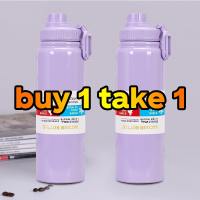
Buy 1 Take 1=2PCS tumbler hot and cold 24 hours 600ml/1000ml tumbler Stainless steel water bottle outdoor sports bottle tumbler
₱305.00₱9,999.00
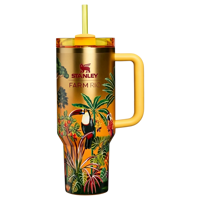
Stanley × FARM RIO Quencher H2.0 FlowState Tumbler 40oz
₱3,000.00₱4,700.00
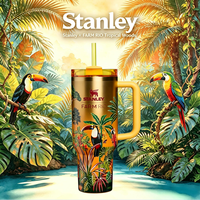
Stanley 1913 x FARM Rio Quencher® H2.0 Flowstate™ Tumbler 40OZ Tropical Woods
₱3,200.00₱5,300.00
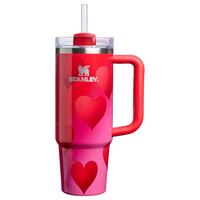
Stanley 40 oz Stainless Steel H2.0 Flowstate Quencher Tumbler -Valentine’s Collection
₱2,800.00₱4,400.00
About Stanley 1913
Stanley 1913 is an American lifestyle and drinkware brand best known for its vacuum-insulated stainless-steel bottles, tumblers, mugs, food containers, coolers, and other reusable products. The brand traces its origins to 1913, when inventor and physicist William Stanley Jr. developed an all-steel, double-wall vacuum-insulated bottle.1
Although Stanley spent most of its first century associated with rugged thermoses, workers, camping, and outdoor activities, it underwent a major cultural transformation in the late 2010s and early 2020s. The Stanley Quencher—particularly the 40-ounce Quencher H2.0 FlowState Tumbler—became a significant social media phenomenon, transforming the century-old industrial-style brand into a fashion and lifestyle name.2
Quick facts
| Category | Information |
|---|---|
| Brand | Stanley 1913 |
| Founded | 1913 |
| Founder | William Stanley Jr. |
| Origin | United States |
| Industry | Drinkware, food storage, outdoor/lifestyle products |
| Best known for | Vacuum bottles, tumblers and Quencher products |
| Signature technology | Double-wall vacuum insulation |
| Famous product | Stanley Quencher |
| Headquarters | Seattle, Washington |
| Parent/operating company | PMI WW Brands, LLC |
| Current owner structure | PMI WW Brands is an operating company owned by Morgan Street Holdings |
| Markets | Global |
| Brand promise | Built For Life® |
| Official website | Stanley 1913 |
Stanley currently describes itself as a global lifestyle company offering hydration, café and barware, coolers, accessories, and other food-and-beverage products. Its headquarters are in Seattle, with offices in several other cities worldwide.
History
1913: William Stanley Jr.’s invention
The brand’s history begins with William Stanley Jr., an American physicist, engineer, and inventor. In 1913, Stanley developed an all-steel vacuum-insulated bottle. Earlier vacuum bottles generally relied on glass, which provided good insulation but was fragile. Stanley’s key innovation was combining vacuum insulation with steel construction, creating a container that was substantially more durable for everyday and outdoor use.
The official patent date for Stanley’s bottle was September 2, 1913.3 This invention became the technological foundation of what would eventually become the Stanley 1913 brand.
A vacuum works as an insulating barrier because there is very little material between the inner and outer walls through which heat can travel. Stanley combined that principle with steel, creating a reusable container capable of keeping beverages hot or cold for extended periods. This basic concept—durability + vacuum insulation + portability—remains central to Stanley products more than a century later.
Early Stanley
The Stanley bottle was commercially introduced in the years following the invention. Historical accounts place the first announcement of the bottle in 1915, after which Stanley-related manufacturing operations developed around the product.4
The company became associated with products designed for people who needed reliable food and beverage storage rather than fashionable drinkware. Its early audience included workers, tradespeople, drivers, soldiers, campers, hunters, fishermen, travelers, and outdoor enthusiasts. This helped establish the traditional image of Stanley: a tough green thermos belonging in a workshop, truck, campsite, or hunting trip. That image remained remarkably persistent for much of the 20th century.
The classic Stanley bottle
One of the most recognizable elements of the brand became its Classic Vacuum Bottle, particularly versions finished in Stanley’s distinctive Hammertone Green. The traditional Stanley bottle was designed around practicality rather than fashion. It was heavy, rugged, and highly durable, with an appearance that became almost synonymous with the word “thermos.”
Stanley later experimented with different insulation technologies and construction methods. One historical Stanley design, Char-Vac™, used material between steel walls as part of its insulation system. The company eventually moved away from Char-Vac and introduced newer construction approaches designed to reduce weight while maintaining durability.5
20th-century reputation
For decades, Stanley’s principal selling point was essentially that its products last. The brand developed a reputation for items that could survive rough treatment and remain useful for years. That reputation helped create an unusual characteristic of Stanley products: generational ownership. It was common for an older Stanley bottle to remain in a family for many years, sometimes being passed from parents or grandparents to younger generations. Stanley itself has emphasized this aspect of its history as part of its “Built For Life” identity.6
Consequently, the Stanley brand became associated with durability, reliability, longevity, and outdoor adventure rather than fashion or social status.
Evolution of the product line
Stanley eventually expanded beyond the traditional thermos. Its products have included vacuum bottles, water bottles, tumblers, travel mugs, coffee mugs, food jars, lunch boxes, growlers, flasks, coolers, camp cookware, barware, and accessories. The company describes its contemporary portfolio as encompassing hydration, café and barware, coolers, accessories, and other food-and-beverage products.7
This represented an important shift. Stanley was no longer simply a thermos company; it was becoming a broader food-and-beverage lifestyle brand.
The Quencher
2016 launch
The product that ultimately transformed Stanley’s fortunes was the Quencher. The original Quencher was introduced in 2016 as a large reusable tumbler. Unlike the traditional Stanley bottle, it had a more modern shape and was designed around convenience, including a handle and straw-oriented drinking experience.8
At first, however, it was not a major success. The Quencher was reportedly selling poorly enough that Stanley stopped actively restocking and marketing it around 2019. That could have been the end of the product; instead, it became the beginning of Stanley’s biggest transformation.
The Buy Guide and the turnaround
A lifestyle and shopping site known as The Buy Guide played an important role in reviving interest in the Quencher. The site’s founders had developed an audience that particularly liked the product. Their enthusiasm demonstrated something Stanley had not fully recognized: the Quencher could appeal to a demographic considerably broader than the traditional Stanley customer.9
Stanley subsequently worked with the group and developed a stronger direct-to-consumer and influencer-oriented marketing strategy. This was a significant departure from the company’s traditional marketing model. Instead of primarily positioning the item as a rugged bottle for outdoor use, Stanley increasingly communicated that it was a useful product that could also fit into consumers’ lifestyles and personal aesthetics.
2020: The beginning of the modern Stanley
In 2020, Terence Reilly, previously associated with Crocs, became Stanley’s president. His experience was relevant because Crocs had itself undergone a major transformation from an unfashionable practical product into a culturally recognizable lifestyle brand.
Stanley began investing much more heavily in social media, influencers, women-oriented marketing, bright colors, limited editions, collaborations, direct-to-consumer sales, and community-driven marketing. The Quencher became central to this strategy.
Social media expansion
The biggest transformation occurred during the early 2020s. The Stanley Quencher began appearing extensively on TikTok, Instagram, and other social platforms, particularly among younger consumers and lifestyle influencers. Rather than simply being a container for water, the Quencher became a fashion accessory, a collectible, a lifestyle symbol, a social media prop, a wellness accessory, a gift, and a status symbol. Marketing analysis has described this as a dramatic change from Stanley’s traditional positioning toward workers and outdoor enthusiasts.13
The phenomenon accelerated dramatically in 2022–2023.
The “Stanley Cup” phenomenon
The term “Stanley Cup” began appearing constantly online. Importantly, this is not the same thing as the Stanley Cup, the championship trophy awarded in the National Hockey League. In internet culture, “Stanley cup” became a casual nickname for the company’s large tumblers.
The most famous was the 40-ounce Quencher. Its characteristics were unusually well suited to social media: large capacity, distinctive silhouette, large handle, straw, car-cup-holder compatibility, numerous colors, limited-edition releases, easy customization, and highly recognizable branding. By 2023, Stanley’s revenue had reportedly risen to roughly $750 million, compared with approximately $70–75 million several years earlier.10
That represented one of the more remarkable modern examples of an established consumer brand becoming a viral cultural phenomenon.
The car-fire viral moment
One particularly famous event further reinforced Stanley’s “Built For Life” image. In late 2023, a TikTok user posted footage after her car caught fire. A Stanley Quencher was found among the damaged remains, and the tumbler appeared to have survived with ice still inside. The video became extremely popular online. Stanley’s president responded publicly and offered to replace the woman’s car, turning the incident into an enormous piece of organic publicity for the brand.
The episode aligned with Stanley’s existing brand message: Built For Life.
Limited editions and collector culture
Stanley’s modern success changed how consumers interacted with its products. Instead of buying one Stanley bottle, some customers began collecting multiple versions. Important characteristics of this culture include seasonal colors, limited editions, retailer exclusives, celebrity collaborations, brand collaborations, special patterns, matching accessories, and customization.
This transformed a functional object into something closer to a fashion product. A consumer might therefore choose a Stanley based on color and design as much as insulation performance.
Starbucks collaborations and retail frenzy
Stanley’s collaborations with other major brands helped reinforce this phenomenon. Perhaps the most famous were collaborations involving Starbucks, where limited-edition Stanley tumblers attracted enormous attention. By late 2023 and early 2024, some consumers were lining up outside retailers to obtain specific colors and editions. The phenomenon became sufficiently large to generate mainstream news coverage.
Stanley had effectively crossed over from outdoor equipment to mainstream consumer product, lifestyle accessory, and collectible.
Brand identity
Modern Stanley 1913 combines several identities that might initially appear contradictory:
- Heritage: The brand emphasizes its 1913 origins and William Stanley Jr.’s invention.
- Durability: Stanley continues to emphasize products designed to last.
- Adventure: Its traditional association with camping and outdoor activities remains part of the brand.
- Sustainability: Reusable products are positioned as an alternative to disposable drink containers.
- Fashion: Modern Stanley products are available in numerous colors, finishes, and collaborations.
- Community: Social media users have become an important part of the brand’s identity.
This combination is one of the reasons Stanley is unusual: it has managed to preserve an old industrial heritage while becoming a contemporary lifestyle brand.
Logo and bear
The Stanley visual identity has evolved over its history. One recognizable modern element is the Stanley bear, which has roots in the brand’s older folklore and outdoor imagery. Stanley describes the bear as a recurring character in stories associated with the brand. It was reintroduced as part of the company’s visual identity in 2019, linking the modern brand to its historical outdoor character.11
The bear, mountains/outdoor imagery, and industrial styling help connect the fashionable modern products to the older Stanley identity.
“Built For Life”
One of Stanley’s central brand promises is Built For Life®. The idea goes beyond simply claiming that a bottle is durable. It is intended to communicate that Stanley products are designed to be long-lasting, reusable, reliable, suitable for everyday life, suitable for outdoor use, and passed between generations.
Stanley also connects this philosophy to sustainability, arguing that reusable products can reduce dependence on disposable food and beverage containers.
Sustainability
Sustainability has become an increasingly important part of Stanley’s corporate messaging. The brand emphasizes reusable products, long product lifespans, stainless steel, recycled materials, sustainable packaging, supply-chain practices, and product take-back and recycling initiatives. Stanley has specifically framed durability as a sustainability strategy: a product that remains useful for many years does not need to be continually replaced.
At the same time, the enormous popularity of collectible tumblers has generated a broader debate about whether buying multiple reusable products is genuinely sustainable. That tension has become part of the discussion surrounding Stanley’s modern popularity.
Manufacturing and corporate structure
Stanley is an American-origin brand, but its modern operations are global. Stanley 1913 currently identifies Seattle, Washington as its headquarters and says it maintains offices internationally.
The company’s official newsroom identifies Stanley 1913 as a brand of PMI WW Brands, LLC, an operating company owned by Morgan Street Holdings.12 Historically, the brand has passed through several corporate owners and operating companies, including the Stanley Insulating Company, Landers, Frary & Clark, Aladdin Industries, and Pacific Market International.
Modern Stanley products are manufactured through a global supply chain, with production historically concentrated particularly in China and Brazil.
Product categories today
Stanley 1913 has expanded considerably beyond the classic thermos.
Drinkware
- Quencher tumblers
- Vacuum bottles
- Water bottles
- Travel mugs
- Coffee mugs
- Cups
- Flasks
Food storage
- Food jars
- Lunch boxes
- Food containers
Outdoor
- Coolers
- Camp cookware
- Large-capacity bottles
- Adventure-oriented products
Café and bar
- Mugs
- Barware
- Drink accessories
Lifestyle
The company has increasingly expanded into accessories and bags. In 2026, for example, Stanley announced its Vitalize collection, extending the brand into totes, backpacks, and other active lifestyle products.17
This demonstrates how Stanley is continuing to evolve from a drinkware specialist into a broader lifestyle company.
Why Stanley became so successful
Stanley’s modern success is not simply the result of making a good tumbler. It represents the combination of product, marketing, social media, and cultural timing.
- The old Stanley: Durable + practical + masculine + outdoors + industrial
- The modern Stanley: Durable + colorful + collectible + social + lifestyle + fashion
The underlying product philosophy did not completely change. What changed dramatically was who Stanley was talking to and how it communicated with them. The Quencher allowed Stanley to retain its historical association with durability while adding characteristics that made the product particularly attractive to social media consumers.19
Cultural significance
Stanley’s resurgence is often studied as a marketing case study because it demonstrates how a very old brand can become culturally relevant again without completely abandoning its heritage. The transformation resembles other successful brand revivals in which companies take a product once associated with a particular demographic and reposition it for a much broader audience.
Stanley’s case is particularly striking because the company went from being strongly associated with blue-collar workers, fathers, and outdoorsmen to becoming particularly visible among younger consumers, women, influencers, and lifestyle communities.19
In other words, Stanley didn’t become a new brand; its existing brand was given a new cultural context.
Criticism and controversies
The Stanley phenomenon has also attracted criticism.
Overconsumption
Collectors purchasing many colors and limited editions have raised questions about whether repeatedly buying new reusable tumblers undermines the environmental argument for reusable products.14
“Stanley Cup” confusion
The casual use of “Stanley Cup” can be confusing because the name is also famously associated with the NHL championship trophy.
Product-safety discussion
Stanley has faced public discussion about materials used in some products, including concerns about lead in manufacturing components. These concerns generated substantial online discussion in 2024. The existence of such discussions should not automatically be interpreted as evidence that ordinary use of every Stanley product is unsafe; product-specific construction and regulatory compliance matter.15
Hype and scarcity
Limited releases and social-media-driven demand have contributed to a collector culture in which products can become difficult to obtain temporarily, sometimes encouraging resale and speculative purchasing.16
Stanley in 2026
As of 2026, Stanley 1913 is attempting to move beyond being defined solely by the Quencher. The company describes itself as a global lifestyle brand, with a broader portfolio covering hydration, café, barware, coolers, accessories, and newer lifestyle categories. Its 2026 announcements include the Vitalize bags and accessories collection and continued expansion of its philanthropic and sustainability programs.17
The strategic challenge is relatively straightforward: How do you remain culturally relevant after your viral product has become mainstream? Stanley’s answer appears to be diversification—expanding beyond the iconic tumbler while retaining the heritage, durability, and visual identity that made the brand recognizable in the first place.
Legacy
More than a century after William Stanley Jr.’s original invention, Stanley’s history can be divided into several distinct eras:
- 1913–mid-20th century: Invention and industrial utility
- Mid-20th century–2000s: Outdoor and worksite durability
- 2010s: Product diversification
- 2016–2019: Introduction and initial struggle of the Quencher
- 2020–2022: Marketing transformation and influencer growth
- 2023–2024: Global viral phenomenon and collector culture
- 2025–2026: Expansion from drinkware into a broader lifestyle brand
The remarkable aspect of Stanley is not simply that it became famous for a tumbler. It is that a company whose foundational technology dates to 1913 managed to remain relevant for more than a century—and then, after decades of being perceived primarily as a rugged thermos brand, became one of the most recognizable consumer-product phenomena of the social media era.
In that sense, Stanley 1913 is simultaneously an old industrial brand, an outdoor heritage brand, a modern lifestyle company, and a case study in viral marketing.18
References
- About Stanley| Since 1913 | Built For Life – Stanley 1913
- Newsroom – Stanley 1913
- Since 1913 | Built For Life | Stanley PMI – Stanley 1913
- Stanley 1913 Anniversary
- Stanley 1913 Brand Pairs Legendary Vacuum Insulation – Stanley 1913
- Stanley (drinkware company)
- Old Stanley 1913 Vs New Stanley 1913 – Stanley 1913 CA
- Why are Stanley Cups trending on TikTok?
- Stanley Cup Craze Floods TikTok Feeds, Raises $750 Million In Revenue
- TikTok’s Stanley Cup Craze Has Hit A Wall — Of Lead
- The Stanley 1913 Bear Story | Stanley 1913
- PMI Strongly Refutes Stanley Black & Decker’s Legal Filling
- Unveiling Stanley’s Hype: Quencher’s Impact & TikTok Viral – Bigblue Blog
- About Stanley | Since 1913 | Built For Life – Stanley 1913 CA
- About Stanley
- About – Stanley 1913 Singapore
- About Us | Stanley 1913 | Built For Life – Stanley 1913 UK
- About Stanley – The history of Stanley Drink Gear – Stanley 1913 Australia
- Inside Stanley 1913’s evolution from utility to lifestyle