Shop on Lazada
Valeo products

Valeo | Auto A/C Compressor
₱16,449.82
Buy on Lazada
Valeo | Original Equipment Front Fog Light Assy For Multiple Nissan Models
₱2,064.15
Buy on Lazada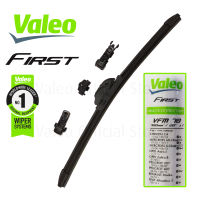
Valeo First Wiper Blade Multiconnection Single 14″ 16″ 17″ 18″ 19″ 20″ 21″ 22″ 24″ 26″ 28″
₱764.32₱1,227.69
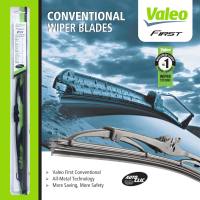
Valeo First CONVENTIONAL Wiper Blade for TOYOTA PREVIA 2003-2005 (26″ / 18″)
₱496.14₱796.92
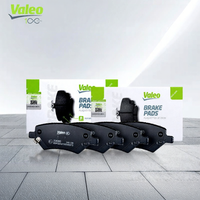
Valeo | Specific Car Models Suitable Brake Pads
₱4,454.82
Buy on Lazada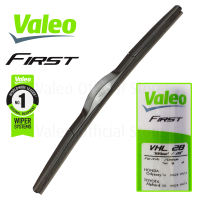
Valeo First Wiper Blade Hybrid Single 18″ 22″ 24″ 26″ 28″
₱965.46₱1,550.77
Valeo First CONVENTIONAL Wiper Blade for ISUZU D-MAX 2002-PRESENT (22″ / 19″)
₱419.51₱673.85
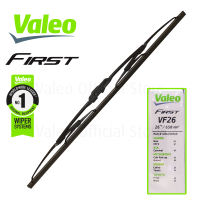
Valeo First Wiper Blade Conventional Single 12″ 14″ 16″ 17″ 18″ 19″ 20″ 21″ 22″ 24″ 26″
₱342.89₱550.77
About Valeo
Overview
Valeo is a French multinational automotive technology company and one of the world’s major suppliers of automotive components, systems, software, and technologies. The company operates primarily on a business-to-business basis, supplying automakers and mobility companies rather than selling most of its technology directly to consumers.
Founded in 1923 as a French company originally associated with the Ferodo brand, Valeo adopted its present name in 1980. Today, its technology focuses heavily on vehicle electrification, advanced driver assistance, software-defined vehicles, thermal management, lighting, visibility, and the vehicle interior. 1
Company Profile
| Item | Information |
|---|---|
| Company | Valeo |
| Legal name | Valeo SE |
| Industry | Automotive technology / automotive components |
| Founded | 1923 |
| Original company | Société Anonyme Française de Ferodo |
| Current name adopted | 1980 |
| Headquarters | Paris, France |
| CEO | Christophe Périllat |
| Stock exchange | Euronext Paris |
| 2025 sales | €20.9 billion |
| Employees | ~100,000 |
| Countries | 29 |
| Production plants | 149 |
| R&D centers | 59 |
| Distribution platforms | 19 |
| Main customers | Global automobile manufacturers and mobility companies |
| Main markets | Automotive OEM, new mobility, aftermarket |
The company’s latest figures, released in 2026, report €20.9 billion in 2025 sales, around 100,000 employees, operations in 29 countries, 149 production plants, and 59 R&D centers. 2
Valeo is publicly traded on the Paris Stock Exchange.
Business Model and Operations
Valeo functions as a technology company behind the car. When consumers purchase vehicles from manufacturers such as Toyota, BMW, Mercedes-Benz, Stellantis, Volkswagen, Hyundai, or Ford, many of the internal technologies may have been developed or manufactured by specialist suppliers like Valeo.
Valeo describes itself as a technology partner to automakers and new-mobility players worldwide, with a focus on making mobility safer, smarter, and more sustainable. 3
Core Technologies
Valeo provides a wide range of technologies, including:
- Vehicle cameras and sensors
- Advanced Driver Assistance Systems (ADAS)
- Parking assistance
- LiDAR-related technologies
- Vehicle lighting and headlamps
- Wipers
- Electric motors
- High-voltage electrification systems
- Battery and power electronics thermal management
- Air-conditioning and HVAC systems
- Engine and electric-vehicle thermal systems
- Vehicle access and safety systems
- Interior electronics
- Software
- Automotive displays and interaction technologies
- Replacement parts and aftermarket products
Valeo is not primarily a car manufacturer; it develops the technologies and systems that automobile manufacturers integrate into their vehicles.
1923–1932: Origins
Valeo’s history began in 1923 when the company was founded in Paris as Société Anonyme Française de Ferodo. Initially, the company distributed brake linings and clutch facings under license from Ferodo. This established its roots in traditional automotive mechanical components, particularly braking and clutch systems.
In 1932, the company began producing complete clutch systems, expanding from distribution into manufacturing. It was also listed on the Paris Stock Exchange during this period.
1950s–1970s: Expansion
During the post-war expansion of the automobile industry, the company broadened its manufacturing footprint throughout France and diversified its technology portfolio. Activities expanded into braking systems, thermal systems, lighting, electrical equipment, and clutch systems. International expansion followed, first in Europe and later in North America, Asia, and other regions.
1980: Adoption of the Valeo Name
A major milestone occurred in 1980 when shareholders decided to change the company’s corporate identity from Ferodo to Valeo. The name “Valeo” is derived from Latin, commonly associated with meanings such as “I am well” or “to be strong/healthy.” From this point onward, Valeo positioned itself as a diversified global automotive supplier rather than solely a brake and clutch manufacturer.
International Growth
Valeo expanded aggressively through international investment and acquisitions, entering markets in Europe, the United States, Brazil, South Korea, Turkey, Mexico, China, India, Central and Eastern Europe, and North Africa.
China became particularly significant to Valeo’s development. The company entered China in 1994, and by 2026 reported 22 production sites, 10 R&D centers, and more than 17,000 employees there. Chinese automakers accounted for 63% of Valeo’s orders in China in 2025.
Organizational Structure
Valeo’s current organization is built around three major divisions, plus its aftermarket business. This structure reflects the company’s strategic priorities in modernizing its operations.
Valeo Brain
Valeo Brain focuses on the electronic, software, and intelligent aspects of modern vehicles. Key areas include:
- Advanced Driver Assistance Systems (ADAS)
- Automated driving
- Vehicle perception
- Cameras and sensors
- Computing and vehicle software
- Interior technologies and human-machine interaction
- Smart cockpit technologies
- Software-defined vehicles
Valeo describes the Brain division as being focused on the Software Defined Vehicle (SDV) and automated driving, while also reinventing the vehicle interior experience.
Software Defined Vehicles
A traditional car is primarily defined by its mechanical hardware. A software-defined vehicle behaves more like a computing platform where hardware provides physical capabilities, and software determines many functions. This allows features to be updated remotely, improved after production, configured through software, enhanced through artificial intelligence, and connected to cloud services.
ADAS and LiDAR
One of Valeo’s most important areas is ADAS (Advanced Driver Assistance Systems). Examples include automatic parking, blind-spot detection, lane assistance, collision detection, pedestrian detection, traffic-sign recognition, surround-view cameras, autonomous emergency braking, and highway assistance. Valeo has developed technologies involving cameras, radar, ultrasonic sensors, and other perception technologies. Its history in parking assistance dates back to the early 2000s.
Valeo has also become associated with LiDAR, a technology using laser light to measure distances and construct detailed representations of the surrounding environment. This helps vehicles identify cars, pedestrians, objects, road boundaries, obstacles, and other elements. LiDAR represents a shift beyond conventional components into the perception and intelligence layer of the vehicle.
Valeo Power
The Power Division focuses on vehicle propulsion, electrification, and thermal management. Technologies include electric motors, powertrain systems, high-voltage systems, energy management, electric vehicle components, and cooling systems.
Valeo describes the Power division as combining thermal-management and powertrain expertise to provide solutions for the electrification market.
Thermal Management
Thermal management is critical for electric vehicles, which contain components requiring carefully controlled temperatures, such as batteries, electric motors, inverters, power electronics, charging systems, and passenger cabins. Improper temperature control can affect efficiency, performance, reliability, and battery life. Valeo’s historical expertise in automotive thermal systems positions it significantly in the transition toward electric vehicles.
Valeo Light
The Light Division focuses on vehicle visibility and lighting. Technologies include headlamps, rear lighting, interior lighting, adaptive lighting, automotive lighting electronics, wiper systems, and visibility technologies.
Modern automotive lighting has evolved beyond simple illumination to incorporate adaptive beams, automatic light distribution, LED technology, intelligent lighting patterns, communication through lighting, and design-oriented ambient lighting. This makes lighting both a safety technology and a software/electronics technology.
Valeo Service
In addition to supplying original equipment, Valeo operates Valeo Service, its aftermarket business. This division supplies replacement parts, service components, repair products, accessories, and automotive maintenance products to automobile dealer networks and independent aftermarket distributors. This ensures Valeo’s presence across the vehicle’s lifecycle, from factory installation to replacement and maintenance.
Competitive Landscape
Valeo operates in a highly competitive industry alongside companies such as Bosch, Continental, Denso, ZF, Aptiv, Forvia, Magna, Hitachi Astemo, and Panasonic Automotive. However, Valeo has developed a distinctive combination of electrification, ADAS, software, thermal management, and lighting, allowing it to participate in several major technological transitions affecting the automobile industry.
Strategic Focus
Valeo’s strategy centers on the idea that the future automobile will become:
- Electrified: Requiring motors, power electronics, thermal systems, and energy-management technologies.
- Safer: Utilizing sensors, cameras, radar, LiDAR, and software for hazard detection and driver assistance.
- Software-defined: Increasingly dependent on software for functionality and user experience.
In November 2025, Valeo introduced its “Elevate 2028” strategy. Intended to build on restructuring and profitability improvements achieved since 2022, its objectives include improving profitability, increasing cash generation, reducing leverage, returning to sales growth, strengthening its position in future automotive technologies, and expanding opportunities in China, India, and North America.
Sustainability
Valeo’s corporate strategy is closely connected to reducing the environmental impact of transportation. Its technologies contribute to lower vehicle energy consumption, vehicle electrification, more efficient thermal systems, reduced CO₂ emissions, safer transportation, and more efficient mobility. The company describes its purpose as contributing to mobility that is greener, safer, and more diverse.
Financial Performance
For 2025, Valeo reported revenue of €20.9 billion. In the first half of 2026, the company reported:
- €10.4 billion in sales
- €514 million operating margin
- 5.0% operating margin
- €242 million free cash flow
- €3.828 billion net financial debt
Valeo confirmed its 2026 objectives based on these results.
Regional Presence: Thailand
Valeo has a long-standing history in Thailand, with operations beginning in 1974 initially focused on thermal-system solutions. The company subsequently expanded its footprint:
- 1974: First Thai location established.
- 1996: Additional site opened in Rayong.
- 2006: Two production sites opened in Chonburi.
- 2011: New facility in Rayong for Visibility Systems.
- 2019: Powertrain Systems activities added.
Valeo Thailand covers multiple areas of the company’s global business. Additionally, Valeo operates Valeo Service ASEAN from Thailand, supporting aftermarket activities in the region.
Global Footprint
As of the beginning of 2026, Valeo reported approximately 100,000 employees across 29 countries, with 149 production plants, 59 R&D centers, and 19 distribution platforms. Its manufacturing and engineering network covers major automotive markets including France, Germany, Italy, Spain, the United Kingdom, the United States, Mexico, China, Japan, South Korea, India, Thailand, Poland, Czech Republic, Slovakia, Romania, Turkey, Brazil, Egypt, and Tunisia.
Timeline
| Year | Milestone |
|---|---|
| 1923 | Ferodo company established in France |
| 1932 | Begins producing clutch systems |
| 1950s | Expands manufacturing in France |
| 1960s | Expands into braking and thermal systems |
| 1970s | Expands into lighting/electrical systems and international markets |
| 1974 | Valeo’s operations in Thailand begin |
| 1980 | Ferodo adopts the Valeo name |
| 1980s–90s | Major international expansion |
| 1994 | Enters China |
| 2000s | Expands into parking assistance and electronics |
| 2010s | Strong expansion into ADAS, electrification, and software |
| 2017 | Acquires FTE automotive |
| 2022 | Integrates Valeo Siemens eAutomotive |
| 2023 | Celebrates 100 years |
| 2025 | Introduces Elevate 2028 strategy; reports €20.9 billion sales |
| 2026 | Reports ~100,000 employees across 29 countries |
Brand Identity
Valeo maintains a dual brand identity:
- OEM Technology Company: Developing hidden technologies integrated into new vehicles by manufacturers.
- Aftermarket Brand: Providing visible consumer-facing products such as wiper blades, clutches, braking components, thermal components, and electrical parts.
This structure gives Valeo a presence both inside newly manufactured cars and in the vehicle repair and maintenance ecosystem.