Shop on Lazada
Victorinox products
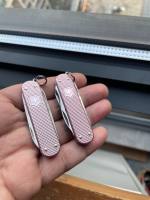
Victorinox 58mm Rambler Alox SAK 0.6361.201 Pocket Tool Survival kits
₱3,125.61₱3,859.19
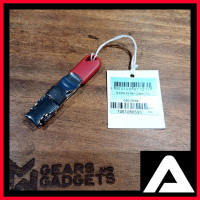
Victorinox Nail Clipper in RED - 8.2050.B1 - Nail Clip / Nail Cutter
₱799.00
Buy on Lazada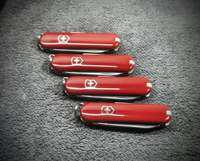
Refurbished Original VICTORINOX Swiss Knife Classic SD Red 58mm
₱900.00
Buy on Lazada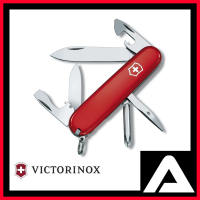
Victorinox Tinker - RED - 1.4603
₱1,819.00
Buy on Lazada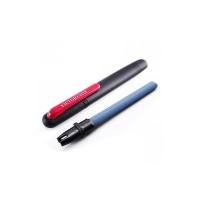
Victorinox Swiss Army Knives Dual Knife Sharpener Gaff Tari | Sharpy 100% Original
₱1,499.00₱1,999.00
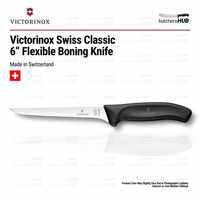
VICTORINOX Swiss Classic 6” Flexible Boning Knife Black Handle Made in Switzerland
₱2,999.00
Buy on Lazada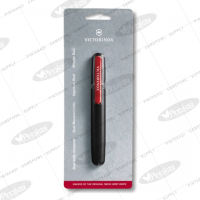
PINTAKASI Original USA Victorinox Swiss Army Super Fine Sharpener Gaffing Tari Sharpener for Gamefowl Rooster : Gaffing Accessories : Tari ng Manok Panabong : Sabong : Gamecock : Gamebirds : Poultry Supply : Pintakasi Gamefowl Supply
₱1,600.00₱1,750.00
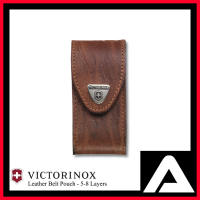
Victorinox - Leather Belt Pouch 4.0545 - Brown - 5-8 Layers
₱1,529.00
Buy on LazadaAbout Victorinox
Overview
Victorinox is a Swiss family-owned manufacturer globally recognised for the Swiss Army Knife. Established in 1884 in Ibach, Switzerland, the company has grown from a small cutlery workshop into an international brand producing knives, multi-tools, watches, and travel gear. Victorinox states that it operates in more than 120 countries, building its identity on Swiss precision, functionality, quality, and durability.1
Basic Information
| Field | Information |
|---|---|
| Brand | Victorinox |
| Founded | 1884 |
| Founder | Karl Elsener I |
| Origin | Ibach-Schwyz, Switzerland |
| Industry | Cutlery, tools, watches, travel goods |
| Best Known For | Swiss Army Knife |
| Ownership | Family-owned / foundation-controlled |
| Global Presence | 120+ countries |
| Core Identity | Swiss precision, functionality, quality, and durability |
| Logo | Cross & Shield |
| Official Slogan | “Makers of the Original Swiss Army Knife™” |
The current core portfolio of Victorinox is organised around Swiss Army Knife & Tools, Cutlery, Watches, and Travel Gear. Some regional operations also list fragrances as a product category.2
Origins and Early History
The history of Victorinox began in 1884 when Karl Elsener I opened a small knife-making workshop in Ibach, in the canton of Schwyz, Switzerland. His mother, Victoria, supported the business during its formative years.3 At the time, Switzerland already possessed a strong tradition of precision metalworking and cutlery, and Elsener aimed to produce high-quality knives capable of competing with established European manufacturers.
A significant milestone occurred in 1891 when Elsener helped establish the Association of Swiss Master Cutlers and supplied the Swiss Army with its first major order of soldier’s knives.4 This relationship with the Swiss military laid the historical foundation for what would eventually become the famous Swiss Army Knife.
Birth of the Swiss Army Knife
In 1897, Karl Elsener patented the “Original Swiss Officer’s and Sports Knife.” Designed as a versatile pocket knife incorporating multiple functions into a single compact tool, this product eventually became internationally known as the Swiss Army Knife.5 The underlying concept was simple: one compact object capable of performing many different tasks. This philosophy became central to the design language of Victorinox.
Rather than manufacturing a knife for a single purpose, Victorinox developed tools combining various implements depending on the model, including:
- Blade
- Screwdriver
- Can opener
- Bottle opener
- Reamer
- Scissors
- Saw
- File
- Pliers
- Corkscrew
- Tweezers
- Toothpick
- Other specialised tools
This combination of compactness, functionality, and reliability gave the Swiss Army Knife cultural significance far beyond its original military context.
Brand Name and Logo
Origin of the Name
In 1909, Karl Elsener named the brand “Victoria” in memory of his mother. In 1921, as stainless steel became increasingly important to the cutlery industry, the company adopted the term “Inox”, derived from the French word inoxydable (stainless steel). The combination of these two elements created the modern name: Victoria + Inox = Victorinox.
The Cross & Shield Emblem
Also in 1909, Elsener registered the now-famous Cross & Shield emblem. Consisting of a white cross on a red shield with a distinctive outline, the logo evokes Switzerland while remaining visually distinct from official national symbols. Victorinox states that this emblem is registered as a trademark in more than 120 countries.67 The logo simultaneously communicates Swiss origin, craftsmanship, reliability, heritage, and preparedness.
The Swiss Army Knife as a Design Icon
The Swiss Army Knife is the product most closely associated with Victorinox and is widely regarded as a design icon. Victorinox describes the Original Swiss Army Knife as embodying the essence of the company, emphasising compact functionality and preparedness.8
Key characteristics contributing to its iconic status include:
- Compactness: Multiple tools integrated into a pocket-sized form factor.
- Multifunctionality: A single product performing numerous tasks.
- Reliability: Engineered for repeated everyday use.
- Recognisable Design: Red scales and the shield logo create an immediately identifiable appearance.
- Swiss Manufacturing Heritage: Closely linked to Switzerland’s reputation for precision engineering.
- Longevity: Traditionally associated with products that remain useful for decades.
From a design perspective, every millimetre of space matters. Successful models must balance the number of functions, weight, ergonomics, strength, manufacturing complexity, portability, cost, and safety. Recognising its significance in industrial and product design, the Museum of Modern Art (MoMA) in New York added the Original Swiss Army Knife to its permanent design collection in 1977.9
Cultural Significance and Space Exploration
Following World War II, large quantities of Victorinox pocket knives were purchased through U.S. Army Post Exchanges, and soldiers stationed in Europe frequently brought them home as souvenirs. By the second half of the twentieth century, the Swiss Army Knife had transcended its military origins to become associated with camping, hiking, travel, DIY, outdoor activities, everyday carry, engineering, adventure, and preparedness.
The brand’s reputation for reliability in extreme environments was further cemented in 1978 when NASA ordered 50 Master Craftsman knives, a variant of the Officer’s Knife model. This reinforced the notion that a product designed for ordinary daily tasks could also be trusted in extraordinary conditions.
Product Portfolio Expansion
While originally a knife manufacturer, Victorinox transformed throughout the twentieth and twenty-first centuries into a multi-category lifestyle and utility brand.
Swiss Army Knives & Tools
This remains the heart of the brand, encompassing classic pocket knives, multi-tools, outdoor knives, rescue tools, Swiss Tools, and specialised professional tools.
Cutlery
Connecting directly to its original heritage, Victorinox produces a wide range of kitchen and professional knives, including chef’s knives, paring knives, bread knives, Santoku knives, utility knives, butcher knives, professional kitchen tools, and household cutlery.
Watches
Expanding into horology in the late twentieth century, the watch business developed an identity centred on Swiss manufacturing, durability, and practical design. Victorinox entered the North American watch market in 1989, initially using the Swiss Army brand.10
Travel Gear
Victorinox entered the travel gear category in 1999 through a licensing relationship and later acquired the travel gear business outright in 2014.11 The category includes luggage, suitcases, backpacks, travel bags, business bags, and accessories. This expansion aligns strategically with the brand’s original concepts of mobility and preparedness.
Acquisition of Wenger
Wenger was another renowned Swiss manufacturer historically associated with Swiss Army Knives. In 2005, Victorinox acquired Wenger, a long-established knife and watch manufacturer based in Delémont.12 Victorinox subsequently integrated Wenger’s knife business into the Victorinox brand in 2013, while the Wenger brand continued in selected categories, particularly watches and travel gear.13 This acquisition strengthened Victorinox’s position as a defining name in Swiss pocket knives.
Global Expansion Milestones
Victorinox gradually evolved from a domestic manufacturer into an international consumer brand. Key milestones include:
- 1993: First sales subsidiary established in Japan.
- 1999: Entry into the travel gear category.
- 2001: Opening of the first Victorinox store in SoHo, New York.
- 2005: Acquisition of Wenger.
- 2008: Opening of the first European flagship store in London.
- 2014: Acquisition of the travel gear business.
- 2016: Establishment of the Watch Competence Center in Delémont.
- 2017: Production of the 500-millionth Original Swiss Army Knife.14
The production of the 500-millionth unit illustrates the enormous scale achieved by a product originating from a small Swiss workshop.
Ownership and Leadership
Unlike many major consumer brands, Victorinox retains strong family ownership and foundation involvement. In 2000, the Victorinox Foundation was established and received 90% of the share capital of Victorinox AG. The remaining 10% belongs to the non-profit Carl and Elise Elsener-Gut Foundation.15 This structure supports long-term thinking, family values, independence, sustainability, continuity, and social responsibility over short-term shareholder returns.
Leadership has remained closely tied to the Elsener family across generations:
- Karl Elsener I: Founder; established the original cutlery workshop.
- Carl Elsener II: Took over management in 1918; introduced industrial modernisation and automation.
- Carl Elsener III: Took over management in 1950.
- Carl Elsener IV: Took over management in 2007; played a major role in expanding Victorinox as a global multi-product brand.16
Manufacturing and Brand Philosophy
Manufacturing Heritage
Victorinox’s brand promise is intrinsically linked to manufacturing quality. In 1931, Carl Elsener II commissioned Brown Boveri to establish what Victorinox describes as the world’s first all-electric hardening plant in Ibach to achieve consistent knife quality through automation.17 This demonstrates that Swiss craftsmanship at Victorinox has historically combined traditional skills with engineering and industrial precision rather than relying solely on manual production.
Core Attributes
Victorinox identifies three key attributes defining its brand:18
- “Best prepared”: Products help users handle unforeseen situations.
- “Smart”: Emphasis on intelligent solutions over unnecessary complexity.
- “Masterful”: Commitment to expertise, craftsmanship, precision, and quality.
Sustainability
Sustainability is integrated into the corporate philosophy across environmental, social, and economic dimensions.19 This aligns with the traditional emphasis on durable products, promoting a consumption model based on buying well, using items for extended periods, repairing where possible, and reducing waste.
Competitive Position and Aesthetic
Victorinox occupies a unique market position as simultaneously a cutlery company, tool manufacturer, Swiss heritage brand, outdoor brand, travel brand, design brand, and lifestyle brand. Its primary competitive advantage is brand trust built over more than a century. It is not primarily a luxury brand in the traditional sense; its appeal derives from quality, engineering, heritage, and usefulness.
The visual aesthetic remains consistent across categories, characterised by signature red, the White Cross & Shield emblem, stainless steel materials, functional geometry, and minimal ornamentation. This cohesive visual language reinforces the brand’s identity across knives, watches, luggage, and accessories.
Historical Timeline
- 1884: Karl Elsener I opens his cutlery workshop in Ibach-Schwyz.20
- 1891: Elsener supplies soldier’s knives to the Swiss Army.21
- 1897: The Original Swiss Officer’s and Sports Knife is patented.22
- 1909: The Victoria name and Cross & Shield emblem are introduced.
- 1921: “Victoria” + “Inox” produces the name Victorinox.
- 1931: Modern automated manufacturing technology is introduced.
- 1945: Victorinox pocket knives become popular among U.S. soldiers and tourists.
- 1977: The Swiss Army Knife enters MoMA’s permanent design collection.
- 1978: NASA orders 50 Master Craftsman knives.
- 1979: The company becomes Victorinox AG.
- 1989: Victorinox enters the North American watch market.
- 1999: The company enters travel gear.
- 2000: Victorinox Foundation becomes the principal shareholder.
- 2005: Victorinox acquires Wenger.
- 2007: Carl Elsener IV takes over management.
- 2013: Wenger’s knife business is integrated into Victorinox.
- 2014: Victorinox acquires its travel gear business.
- 2017: Victorinox produces its 500-millionth Original Swiss Army Knife.
- 2020: Victorinox opens a European distribution centre in Seewen and acquires Zena Swiss AG.
- 2022: The Original Swiss Officer’s and Sports Knife reaches its 125th anniversary.
Victorinox Today
As of 2026, Victorinox is a global Swiss brand whose portfolio spans knives and tools, kitchen and professional cutlery, watches, and travel gear, while retaining the Swiss Army Knife as its defining product. Operating in more than 120 countries, the company continues to apply the principles of functionality, reliability, precision, and durability that made the Swiss Army Knife successful to its broader product range.1
References
- All about Victorinox | Victorinox (USA)
- All about Victorinox | Victorinox International
- Victorinox International | Victorinox Homepage
- Our History | Victorinox International
- Unsere Geschichte | Victorinox Schweiz
- All about Victorinox | Victorinox Canada
- sec.gov
- Our History | Victorinox Republic of Korea
- Notre histoire | Victorinox International
- Victorinox (USA) | Victorinox Homepage
- Nuestra historia | Victorinox (USA)
- All about Victorinox | Victorinox United Kingdom
- Victorinox International | Victorinox Homepage
- Victorinox (USA) | Victorinox Homepage
- Victorinox Switzerland | Victorinox Homepage
- What we stand for | Victorinox (USA)
- More Info
- Home
- The History of Victorinox – Victorinox Australia
- What Victorinox Stands For – Victorinox Australia
- Lifelong companions
- Victorinox | Switzerland Tourism