Shop on Lazada
weyd products
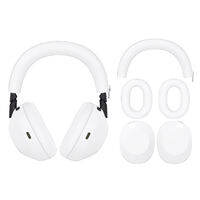
weyd | Full Cover Replacement Headphone Case Protective Shell for Headphones
₱331.00
Buy on Lazada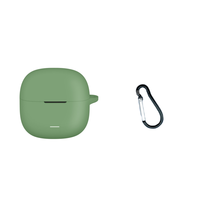
weyd | Anti-drop Full Coverage Earbud Case for Xiaomi Redmi Buds 8 Lite Soft Silicone
₱125.00
Buy on Lazada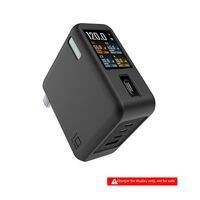
weyd | Shockproof Silicone Protective Case For 120W GaN Charger
₱148.00
Buy on Lazada
weyd | Dustproof Anti-scratch Headphone Case
₱404.00
Buy on Lazada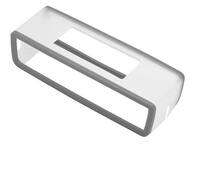
weyd | Mini 2 Wireless Speaker Protective Case
₱247.00₱1,103.00
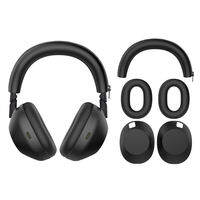
weyd | Headphone Protection Case for XM6
₱432.00
Buy on Lazada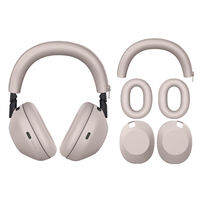
weyd | Full Cover Replacement Headphone Case Protective Shell for Headphones
₱331.00
Buy on Lazada
Dust Scratch Protection Headphone Case Ear Pad Replacement
₱328.00
Buy on LazadaAbout weyd
Weyd is an AI-powered learning strategy platform designed to help individuals and organizations acquire skills through personalized planning, progress tracking, and adaptive recommendations. While its initial focus is on language learning, the platform is expanding its methodology to cover music and other structured skills.1 Unlike conventional learning applications that primarily provide lessons or track study streaks, Weyd functions as a learning strategist. It analyzes a learner’s goals, current proficiency, study activity, and progress to determine specific areas of focus, aiming to measure actual skill progression rather than merely time spent studying or course completion.2
Overview
| Field | Information |
|---|---|
| Name | Weyd |
| Industry | Education technology / AI learning |
| Primary product | AI-powered learning strategy and coaching platform |
| Initial focus | Language acquisition |
| Other domain | Music / structured skill acquisition |
| Technology | Artificial intelligence, adaptive planning, skill mapping |
| Language framework | CEFR, A1–C2 |
| Music framework | ABRSM Grades 1–8 |
| Platforms | Web and Apple devices |
| Business models | Individual, classroom/institutional, teams and enterprise |
| Free tier | Yes |
| Paid individual tier | Pro |
| Enterprise offering | Teams / Enterprise |
History and development
Weyd is a relatively new entrant in the AI-learning sector. Public materials from 2026 describe a product centred on AI coaching, adaptive learning plans, progress measurement, and skill acquisition, distinguishing it from traditional course libraries. The company has developed a broader methodology intended to function across various types of structured learning. Its team offering utilizes a common architecture of composable micro-skills, applying this approach to both language and music disciplines.
The platform’s public blog began publishing methodology-oriented content in 2026, addressing topics such as CEFR progression, Japanese language learning, intermediate plateaus, AI-assisted learning, and integrating disparate learning tools into a coherent system.
Core functionality
The central premise of Weyd is that learners frequently utilize multiple disconnected resources without a unifying system to coordinate them. For instance, a language learner might simultaneously use Duolingo, Anki, YouTube, tutors, podcasts, textbooks, conversation practice, and grammar exercises. Rather than attempting to replace these services, Weyd acts as a coordinating layer. Learners record or synchronize their activities, and Weyd uses this data to construct and refine a personalized learning strategy.2 Consequently, the platform operates more like a learning operating system or personal strategist than a conventional language course.
AI learning coach
A primary feature of the platform is the AI learning coach, which is designed to assess:
- The learner’s objective
- Current ability level
- Available study time
- Learning history
- Activities performed
- Areas of weakness
- Rate of progress
- Potential plateaus
Based on this analysis, the system generates recommendations and a personalized plan. Weyd states that its system attempts to identify the specific constraint preventing further progress rather than assigning generic exercises. For example, it may distinguish between a learner who has sufficient vocabulary but insufficient speaking output and one who studies frequently but neglects the specific skill currently limiting advancement.2
Adaptive learning plans
Weyd creates plans around an individual’s goals and schedule rather than assigning a fixed curriculum to all users. These plans adjust as the learner’s performance changes. According to product descriptions, a weekly plan may include specific activities, recommended durations, learning resources, targeted skills, and adjustments based on recent performance.2 The intended workflow follows a cycle of goal setting, assessment, planning, study, measurement, and adjustment. This approach serves as an alternative to rigid programmes that assume uniform progression rates for all learners.1
Skill and progress measurement
The platform emphasizes measurable progression. For language learning, it utilizes the Common European Framework of Reference for Languages (CEFR), covering levels A1 through C2. Progress is presented in terms of proficiency and individual skills rather than exclusively relying on streaks or hours studied.1 The enterprise product describes a system containing 68 composable language micro-skills mapped to CEFR levels, allowing the platform to identify specific gaps rather than treating language ability as a single metric. This enables distinctions between learners at similar overall levels; for instance, two B1-level learners may have vastly different needs regarding speaking practice versus listening comprehension.
Plateau detection
Plateau detection is a key component of the Weyd methodology. A learning plateau occurs when measurable ability ceases to improve at the expected rate despite continued study. The system monitors learner activity and progress to identify these periods and recommend strategic changes.1 The underlying philosophy focuses on determining why progress has slowed and adjusting activities accordingly, rather than simply increasing study volume. This concept is particularly relevant to intermediate language learners, a topic discussed extensively in the company’s educational materials.
Integration with external tools
Weyd is designed to operate alongside existing learning platforms. Its App Store description lists integrations or connections with services including Duolingo, Anki, LingQ, WaniKani, Bunpro, Babbel, Pimsleur, and YouTube.2 The pricing page specifies synchronization capabilities with Duolingo and Anki, with additional integrations planned. This distinguishes Weyd from traditional educational applications; whereas a standard app provides a fixed curriculum to follow, Weyd coordinates the resources a learner already uses to achieve specific goals.
Language learning
Language learning remains the most developed use case for Weyd. The platform supports CEFR-oriented progression and currently promotes Spanish, French, Italian, Portuguese, Japanese, and English. App Store materials also indicate support for Korean, German, and Chinese.1 The system accommodates learners from beginner to advanced levels, with progress represented via the CEFR scale.
Weyd Music
Weyd is extending its methodology beyond languages through Weyd Music, an ABRSM-aligned skill-acquisition system. Using ABRSM Grades 1–8 as a progression framework, it applies the same concept of mapping learning into individual skills. The proposed music system includes instrument-specific micro-skills, practice plateau detection, progress reporting, and applications for music schools, studios, conservatories, and performing arts organizations. This expansion suggests an ambition to develop a general AI system for structured skill acquisition rather than remaining solely a language-learning application.
Products and services
Individual learning
For individual users, Weyd offers a Free tier and a paid Pro subscription. The free version includes AI coaching, personalized planning, progress tracking, practice drills, and skill-level information. The Pro plan adds unlimited coaching, automatic adaptation, additional integrations, plateau alerts, unlimited drills and assessments, and access to both language and music modules under a single subscription. The public pricing page lists Pro at US$19/month when billed annually.
Classroom and institutional learning
Weyd supports educational institutions with functionality described in its terms of service, including organization management, student cohorts, student-progress tracking, single sign-on, custom branding, data exports, and cohort analytics.1 This positions the platform as both a consumer learning product and an education-technology solution for institutions.
Teams and enterprise
The enterprise version targets organizations where language proficiency is a measurable business requirement. Applications include cross-border operations, bilingual customer-support teams, sales and account-management teams, professional-services firms, law firms, consulting companies, and financial-services organizations. The enterprise system utilizes CEFR measurements, team dashboards, skill mapping, plateau alerts, and progress reports. Weyd offers a six-week enterprise pilot for up to 15 team members, while the full Enterprise offering includes SSO/SAML, API access, dedicated support, and customized methodology configuration.
Technology and methodology
The Weyd methodology is built upon several core principles:1
- Personalization: Plans are generated around the learner rather than a generic curriculum.
- Measurement: Progress is represented through structured proficiency and skill metrics.
- Micro-skills: Larger abilities are broken down into smaller competencies.
- Adaptation: The learning plan evolves as the learner changes.
- Plateau detection: The system actively identifies stalled progress.
- Resource coordination: Activity from multiple learning tools is incorporated.
- Outcome orientation: Emphasis is placed on actual improvement rather than engagement metrics.
The company frames AI not as a replacement for teachers or educational content, but as a strategic layer that determines how a learner should utilize different resources.
Relationship with teachers and existing apps
Weyd explicitly states that it does not claim to replace teachers, tutors, courses, or other learning applications. The App Store description notes that the platform is intended to work alongside a learner’s existing methods, tutors, or programmes.2 Furthermore, the terms of service clarify that the service does not provide tutoring, courses, or direct instruction and may instead recommend third-party resources.1 This fundamentally differentiates Weyd from platforms whose primary product is educational content.
Privacy and data
As personalization requires the collection of user data, Weyd tracks learning activity. The privacy policy states that the platform may collect account information, conversation data, learning plans, reported progress, and information extracted from screenshots or connected learning tools. The company asserts that it does not serve behavioural advertising or sell children’s data. Its institutional privacy framework addresses educational records and references compliance with FERPA when the platform is used by U.S. educational institutions.
Brand positioning
Weyd’s branding is centred on the proposition that learning should be strategic, measurable, and adaptive. Rather than competing directly with every language-learning application, it occupies a distinct market layer.
| Category | Main purpose |
|---|---|
| Duolingo-style apps | Deliver structured practice |
| Anki | Spaced-repetition memory |
| Tutors | Human instruction and feedback |
| Courses | Structured educational content |
| Weyd | Coordinate, measure, and optimize the learning process |
The primary conceptual differentiator is meta-learning: helping learners understand not only what to study, but what they should do next and why.
Name and identity
The name Weyd is presented simply as the brand name across the website, application, and business offerings. Principal product materials do not emphasize an elaborate acronym or expanded meaning. The visual and verbal identity focuses on concepts such as progress, strategy, skill acquisition, measurement, and overcoming plateaus.
Criticism and limitations
As an emerging product, Weyd has a considerably smaller publicly available evidence base than established education companies. Performance claims regarding faster plateau resolution or learning-rate improvements are presented in the company’s own marketing materials and should be treated as company-reported claims rather than independently established industry benchmarks. Additionally, there is a distinction between planning learning and teaching a skill. Weyd acknowledges that it does not provide underlying tutoring or courses but instead coordinates resources and recommendations.